
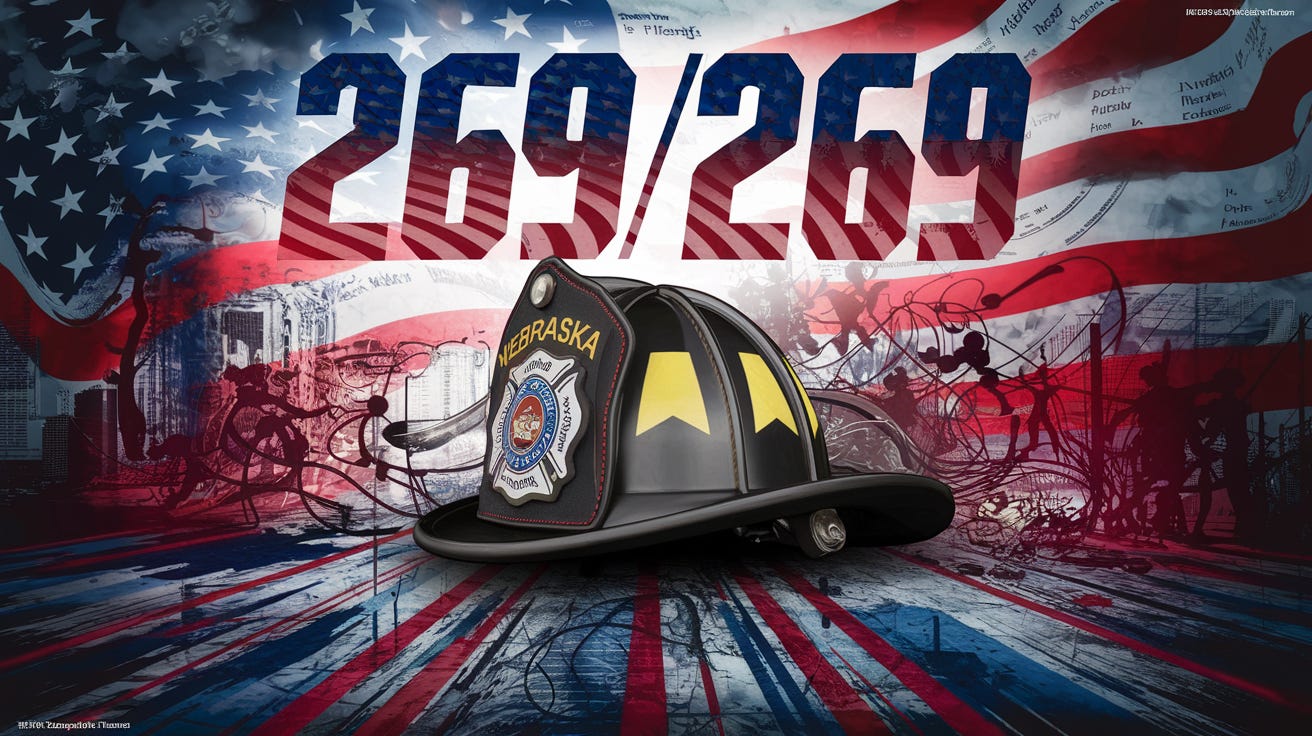
As the 2024 U.S. presidential election approaches, the political landscape is becoming increasingly complex and intriguing. One of the most unusual scenarios to consider is a potential tie in the Electoral College, with each candidate receiving 269 votes. This scenario raises significant questions about the electoral process and the candidates involved, including an unexpected figure: a Nebraska firefighter who recently switched from the Democratic Party to the Republican Party and is now vying for the position of mayor in Omaha.
The Electoral College is the mechanism established by the Constitution for the indirect election of the president and vice president of the United States. Each state is allocated a number of electoral votes based on its representation in Congress, with a total of 538 electoral votes available. A candidate needs a majority—at least 270 votes—to win the presidency.
In the event of a tie, the 12th Amendment of the Constitution comes into play. The election of the president is then decided by the House of Representatives, with each state delegation casting one vote. This is a rare occurrence, with the last significant tie in the Electoral College dating back to the 1824 election.
Nebraska has a unique system for allocating its electoral votes, awarding three of its five votes by congressional district. This method has allowed for the possibility of splitting electoral votes between parties, as seen in the past when Barack Obama and Joe Biden both won the electoral vote from the Omaha congressional district.
Recently, State Senator Mike McDonnell, a former firefighter who transitioned from Democrat to Republican due to his opposition to abortion, faced intense pressure to change this system to a winner-take-all approach that could benefit Donald Trump. However, McDonnell firmly rejected these attempts, stating that it was not the right moment for such a significant change just weeks before the election. His decision reflects both local sentiment and the complexities of party dynamics within Nebraska.
Amidst these political maneuverings, our Nebraska firefighter—now a key political figure—has emerged as a candidate for mayor in Omaha. His switch from the Democratic Party to the Republican Party underscores a broader trend of voters reassessing their affiliations in response to current political realities. As he sets his sights on the mayoral race, his campaign strategy will likely emphasize his community service and hands-on experience in public safety.
The contrast between his local aspirations and the national stage of the presidential election creates a unique narrative.
While the firefighter's candidacy may not directly influence the presidential election, it does highlight the unpredictable nature of politics and the diverse backgrounds of candidates. A tie at the Electoral College could result in a chaotic situation in the House of Representatives, where political maneuvering and negotiations among state delegations would determine the next president.
Moreover, McDonnell’s stance on the electoral vote allocation adds another layer of complexity. His refusal to alter the current system may preserve the potential for splitting votes, further complicating the calculations for candidates vying for the presidency.
As election day approaches, many factors will influence the political landscape. The potential for a 269-269 tie in the Electoral College is a reminder of the complexities of American democracy. It raises questions not only about electoral mechanics but also about the candidates who emerge to shape the future of their communities and the nation.
Voters will need to consider the implications of their choices, both at the local level and nationally. As candidates like our Nebraska firefighter step into the spotlight, their stories will add layers to the electoral narrative, reminding us that every election is a unique intersection of personal journeys and political realities.
Happy readings,
André Cardoso
Comments
Nothing yet. Say the first thing.
Sign in to join the conversation.