
The second week of the French Open hasn’t even started yet and we are already going through the emotions of one of the biggest shock upsets in recent years. Jannik Sinner, before the tournament the overwhelming favourite to win Roland Garros, is out. Are you a glass half-full or a glass half-empty person? The answer to this question matters for every single male player left in the field. Right now is the time to become a glass full-full person.
It might sound self-evident but it’s not. What we don’t talk about enough is how easily players can and will hide behind the big superstar favourite. They play in their half of the draw, try to win matches and are left alone for the most part. With Jannik Sinner out, that is not the case anymore. Now, the headlights are bright and shining into everyone else’s eyes. Their form will be dissected and analysed, carefully watched and prodded for any kind of weakness. It’s important to focus on the possibility in this new development of the draw and not contemplate the possibilities you could squander.
I had a similar situation once in my career and it’s fair to say I failed at mastering it miserably. A big seed fell in my section in Wimbledon and as one of the top seeds I ended up losing my next match to a qualifier because I had looked too far ahead. In my case, it wasn’t arrogance in the way I looked ahead and smelled the opportunity of reaching the Wimbledon quarterfinals for the first time. The glance into the future was rather tinged with fear that I wasn’t able to execute which, of course, came true. Plus, even though it seems like you get a new chance in tennis every week, when a real big fat chance actually presents itself, you actually don’t know whether it is a once in a lifetime opportunity.
I’ve seen a bunch of chatter online about Jannik going off the court in the middle of a service game and a lot of people screaming “favouritism” again. I like that we are discussing these things as it will equalise the interpretation of rules for everyone when officials know that they will be closely watched and possibly criticised for their decisions. In order for us to have a fruitful discussion about it, however, it’s important to know what the rules state exactly.
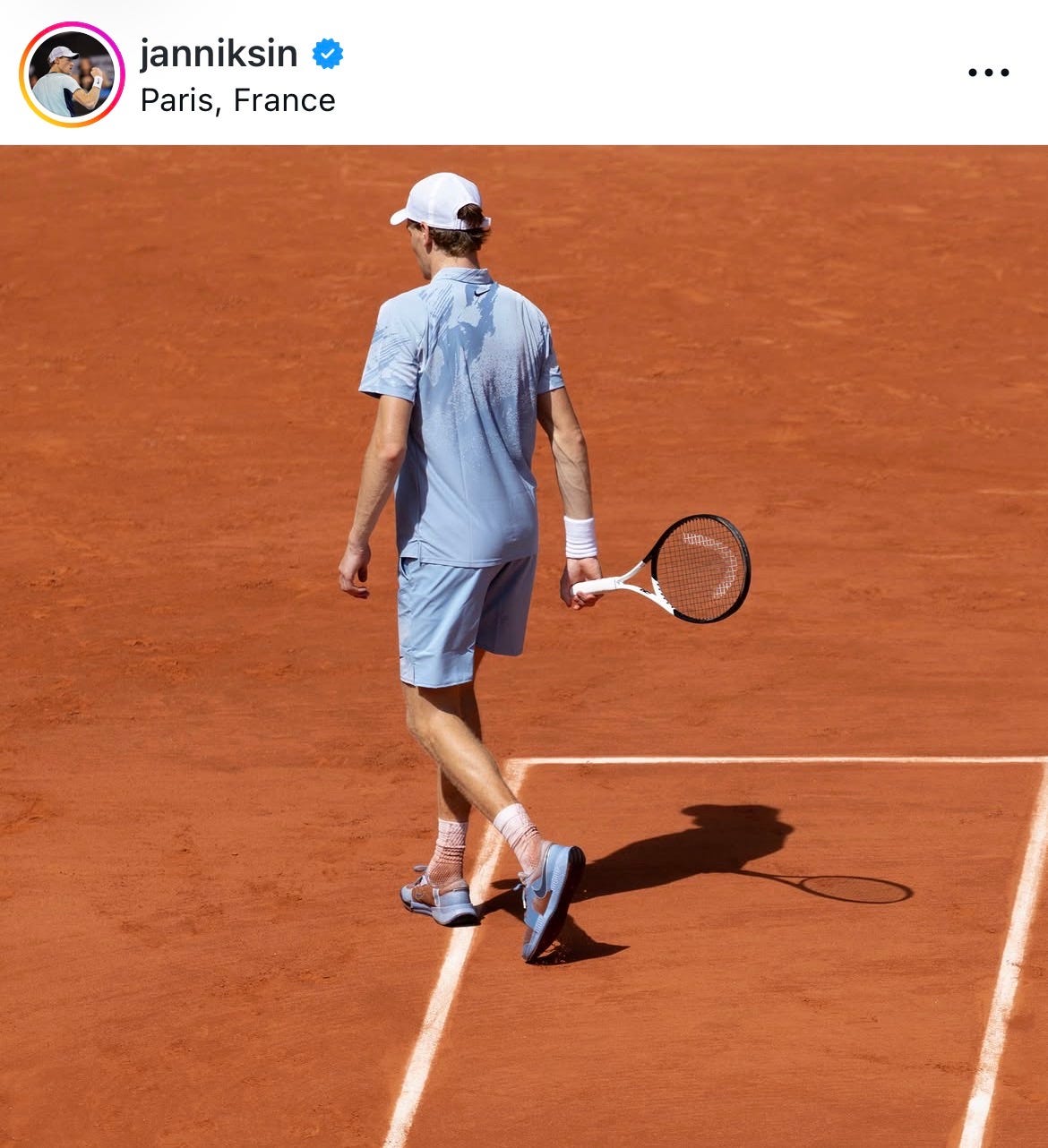
Technically, most of the things that transpired on Philippe Chatrier yesterday were within the rules. The only aspect that I thought was grey-zone-territory was the fact that the chair umpire came down from her chair to basically advise Jannik on what his options are. If he doesn’t seek advice, as an impartial party on court you shouldn’t give it out freely. To be fair to the chair umpire though, it is a very human instinct to go down and help a person that is clearly suffering and I’ll get to that later to showcase how chair umpires are often stuck in dilemmas and are doomed if they do and doomed if they don’t.
When a player suffers from heat illness, the player is allowed to be assessed by a medical professional on the court and if the medical professional in their diagnosis confirms the symptoms as heat illness, the medical team is allowed to take the player off-court for a medical timeout. The only exception to this rule is if the medical professional decides that the player is suffering from general fatigue (which involves cramps etc.) rather than a proper heat illness. I’m not a doctor but having had heat illness before in my life, the symptoms Sinner described that were picked up by stadium microphones were along the lines of heat illness. Dizziness, nausea, feeling tired and lethargic. It is obviously very hard to diagnose anything in the few minutes you have in front of thousands of people watching intently but therein lies the factor of trust we, as the audience, have to have in the doctors and physios assessing players. Because there’s nothing else we can do.
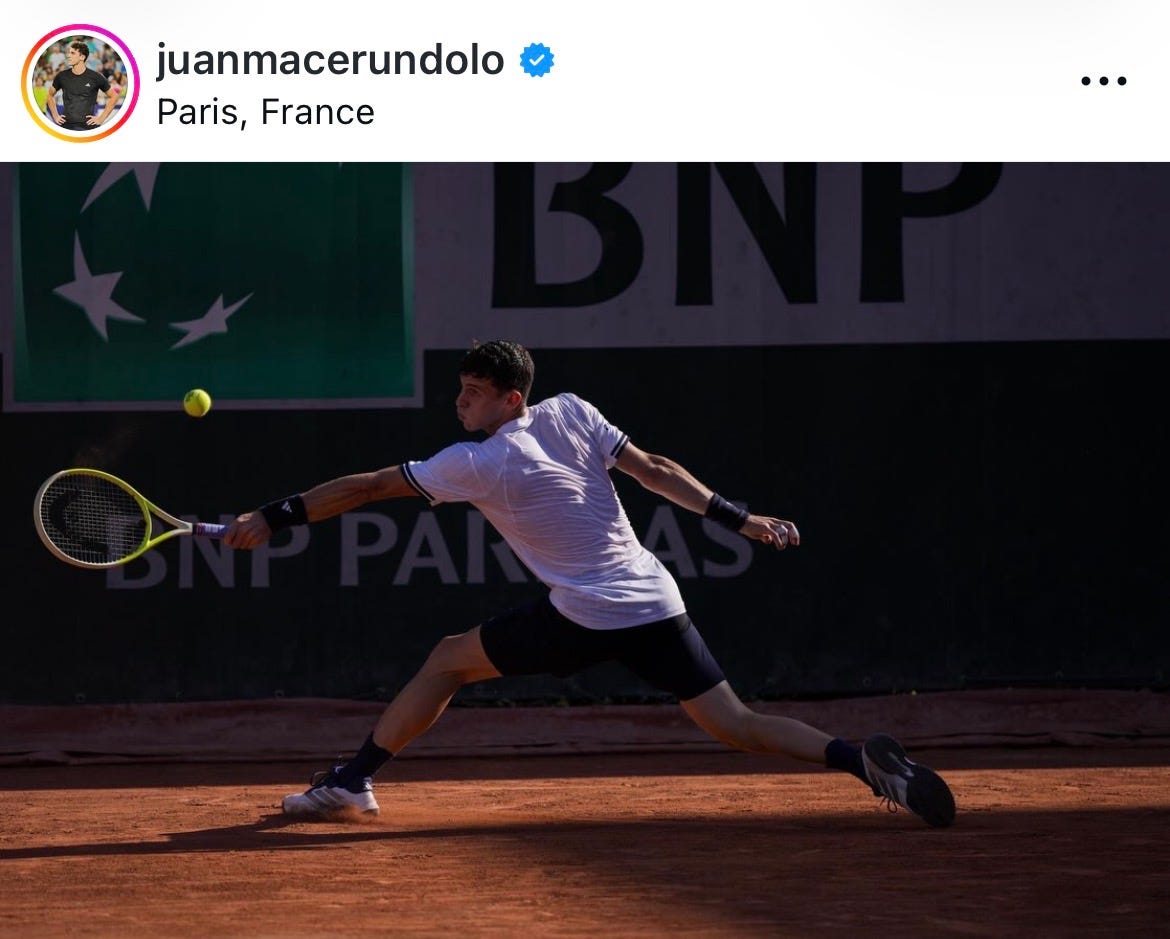
Despite all the controversy online whether Sinner was or wasn’t ill or whether he was suffering from cramps, in the end it was very evident that it would be extremely hard for Jannik to bounce back. He looked like a fancy designer lamp you pull the cable from and then hide the plug behind your back. There was no coming back. Especially not with how well Juan Manuel Cerundolo, Jannik Sinner’s opponent, responded to the situation. Juan Manuel played disciplined, self-possessed tennis, focused only on the aspects of the situation he could control and did an outstanding job in seeing the match through until the end. The grasp this young man has on his emotional state was astonishing to watch. It’s easy to get distracted not only by what’s happening on the other side but also by what all of it might mean for you and your career and Juan Manuel just simply concentrated and let everything else wash over him. It was very impressive.
Jannik Sinner later stated that he didn’t think it was the heat and that he had felt unwell from the morning. But that is information the tournament doctors and physios don’t have when they assess the ailing player.
I want to get back to chair umpires for a moment. In the Jakub Mensik match that was played for nearly five hours in the blistering heat, in the fifth set tie break Jakub was suffering from cramps. He couldn’t hide it either, that’s how big the bulges on his thigh muscles came forth whenever another one of those little bastards hit him. The chair umpire kept taking serves away from Jakub whenever he exceeded the time limits. When Jakub somehow won in the end (I don’t know how he did it), he fell to the ground, shaken by cramps, unable to get back up. His physio jumped on the court to help him but the chair umpire ushered him away and it took hellishly long minutes before the official tournament physios showed up and tended to Mensik. Both decisions, taking serves away and forbidding a private physio from stepping on court, are correct but the more human choice would have been to at least let the physio take care of his player after the match was already finished.
I use this example to showcase how difficult the job of a chair umpire really is. If your interpretation of the rules is very strict, you will be attacked for not showing any empathy and when you show empathy, you will be attacked for not sticking strictly to the rules.
My solution to it would be to give every player a certain amount of timeouts they can pull whenever and for whatever they want. The length and amount would have to be discussed with the board, of course, but it could take away some of the discussions that surround every controversial medical timeout or change of attire. Such a timeout could be used tactically to receive coaching before you serve for a match, for example, or it could be used medically for whatever you want, no questions asked. I think it would elegantly simplify things and might even bring some more excitement to the drama of a match. It would be implied that the timeout can be used to throw your opponent off and it would further test mental strength and concentration abilities of players.
The world is not going to get any cooler. We will have more extreme weather conditions for the players to contend with. These are some of the best athletes in the world. If they can’t survive the heat, who can?
As always, a Grand Slam tournament has so many storylines and all seem to be happening at the same time in the same place. I tried to focus on this one today. Forgive me if I have forgotten to mention your favourite. There’s plenty more tennis to be played and plenty more storylines to be written by the protagonists of this year’s Roland Garros: the tennis players.
Things that make me happy
I recently watched the 2025 Paolo Sorrentino movie La Grazia that I hadn’t seen yet and all his movies always make me extremely happy. This one is set in Rome again which incidentally happens to be one of my favourite cities in the world. So, a nice little double-whammy for yours truly.
Things that make me unhappy
I was devastated to hear that one of the breakthrough stars of the year Hailey Baptiste tore her ACL in her second round match. The bad news is: she will be out for a long time and the rehab will be dull and dreary. The good news is: this is not a career-ending injury. I tore my ACL and had a much better career after I came back because I had learned so much about myself. And the even better news is: Hailey is a much more talented player than I ever was.
Greetings from Paris sent with a mouth full of pain-au-chocolats (the small kind) and a belly full of Sancerre.
Yours truly, Andrea
No posts
Comments
Nothing yet. Say the first thing.
Sign in to join the conversation.