
That’s right, it’s a guest post! Because I don’t actually know everything, I’m excited to share from-the-trenches pieces by authors and publishing professionals. This galvanizing one is from Substack favorite Jo Piazza, whose sweeping literary thriller, The Parisian Heist, is out now. (Be sure to check out the giveaway at the end.) Enjoy!
I launched a new novel last month! Whooo hoo! Yay me.
So why am I so depressed about it just four weeks later? And what can I do to recover from it?
What I know is that I’m not alone. Some authors refer to it as a sort of postpartum depression, the lull after the excitement and anticipation of the launch.
But I think this somewhat half-assed metaphor could also supply the cure for the ailment.
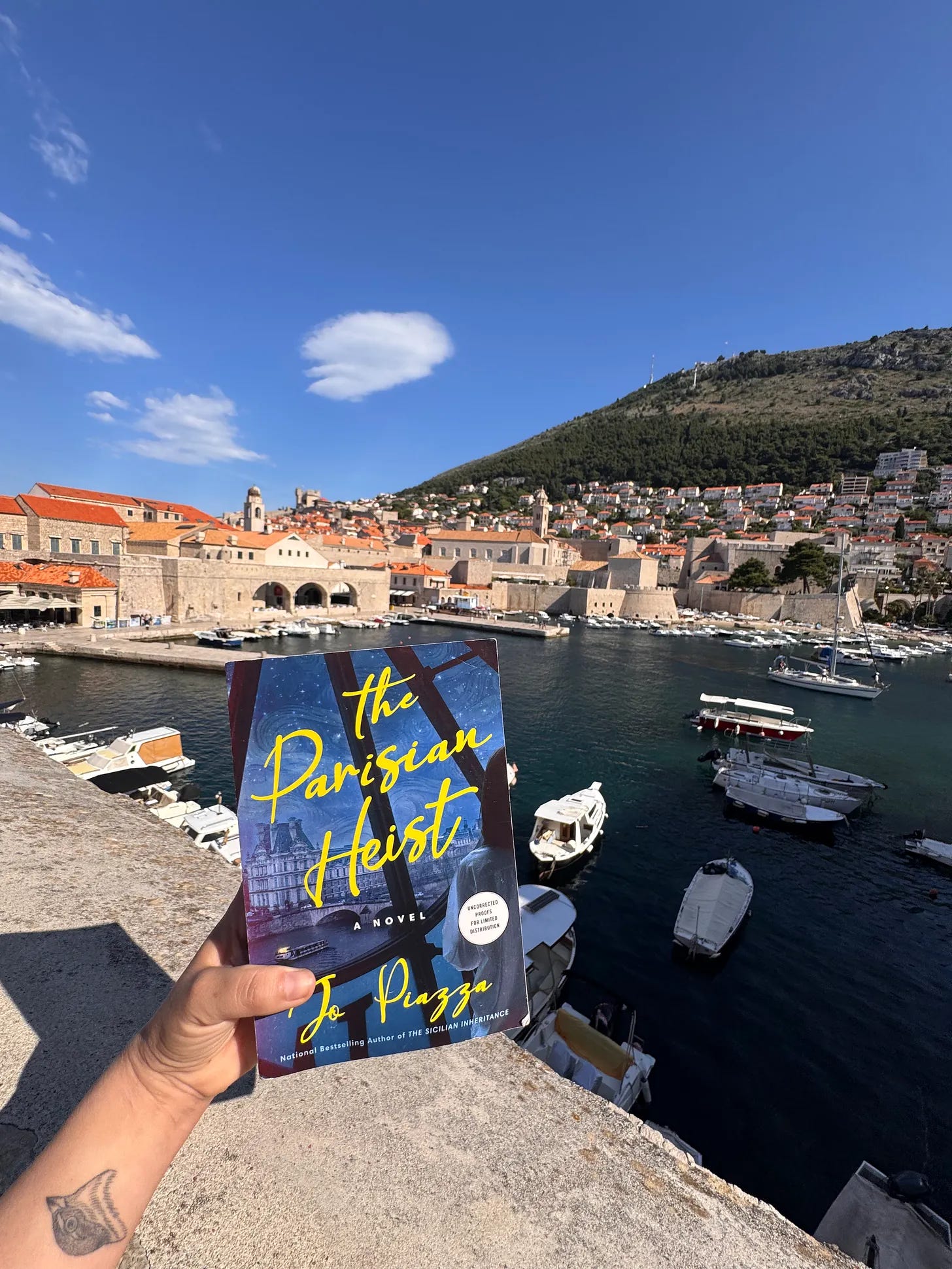
The Parisian Heist made its way into the world on Bastille Day, July 14. So, in birth terms this book is still a newborn.
This book is just finding its way in the world, and I’m just finding my way in the world with it. We are kind of in a postpartum period together. The two of us are just getting to know one another out in the world.
But more importantly, readers are just getting to know my book.
I’ve been to 25 book events in the past three weeks. At the vast majority of them, the readers I met hadn’t actually read The Parisian Heist yet. They were excited about it. Many of them picked up a copy that night. They asked thoughtful questions, waited in line to have it signed, and told me they couldn’t wait to dive in.
But they didn’t really know the book yet.
They hadn’t spent enough time with it to recommend it to someone else, to press it into a friend’s hands, or to become the kind of passionate advocates who create that magical thing every author dreams about: word of mouth.
A month after, the book is just beginning to make friends, starting to find it’s voice.
Thinking about it this way is really helping me.
Because despite claims to the contrary, the publishing industrial complex at large does only give your book about two weeks to launch and prove itself.
You have five days after publication to hit a bestseller list like the New York Times or USA Today. In many ways, the first week is your best shot because all of your preorders count toward that total. Most of the advertising budget is spent before and immediately after publication. Almost all of the publicity happens in week one, maybe trickling into weeks two and three if you’re lucky. But then……nothing.
We need to think about books launching into the world different. Publication day is not the finish line. It is simply the beginning.
A good book is evergreen. Unless your book is about a very specific event that happened on your exact day of release, it can always find new readers. It can always be pitched to the media. It can always be relevant. It can always spark a conversation.
So why do we act like launch day is the only day that matters? We shouldn’t and I’m gonna stop.
And in stopping I found an enormous sense of relief.
Before I made this shift, I actually felt a little ashamed every time I pitched The Parisian Heist to a media outlet in the weeks launch. And by “media outlet,” I mean everything from a TikTok creator to a Substack newsletter to the Today Show. I caught myself thinking, Isn’t it too late? Didn’t I miss my chance?
No. What chance? A launch date isn’t a news hook, your damn book is. A book isn’t a news story with a 24-hour shelf life.
A book will live in the world for years and be passed from human to human. It should be discovered by someone browsing the shelves of a bookstore. This is increasingly harder and harder as more and more books are pumped into the world every Tuesday and booksellers feel the urgency to keep replacing backlist with something newer and shinier. I talk to book sellers all the time who tell me this pressure is very, very real and they would love to be able to keep hand pressing things that came out months and even years ago. The best of booksellers still do every single day. I love you all.
Every publisher and author says they want the “long tail,” for books. But the system just isn’t set up for it. We’ve somehow built an industry that often behaves as though those first two weeks are the only weeks that matter.
But they don’t have to.
Readers discover books on BookTok six months after publication. They hear an author on a podcast a year later. They stumble across a Substack essay, a Reel, a bookstore recommendation, or a friend’s Instagram post and decide that’s the day they’re finally going to buy the book.
It’s time for new rules. Your book doesn’t stop being interesting because it has been on shelves for three weeks instead of three days.
And neither do you.
Pitch that outlet. Book that event. Send out that mass email telling everyone about your book. Do it whenever it suits you. Launch day is just a day, not THE day. If we want books to have a long tail and if we want to truly generate word of mouth this is one of the things that has to shift.
Jo will send a signed copy of The Parisian Heist to one lucky subscriber. (US only; subscribe to both Get It Write and Jo Piazza’s Over the Influence Substack to be eligible; enter by 11:59pm ET on Thursday, August 20)
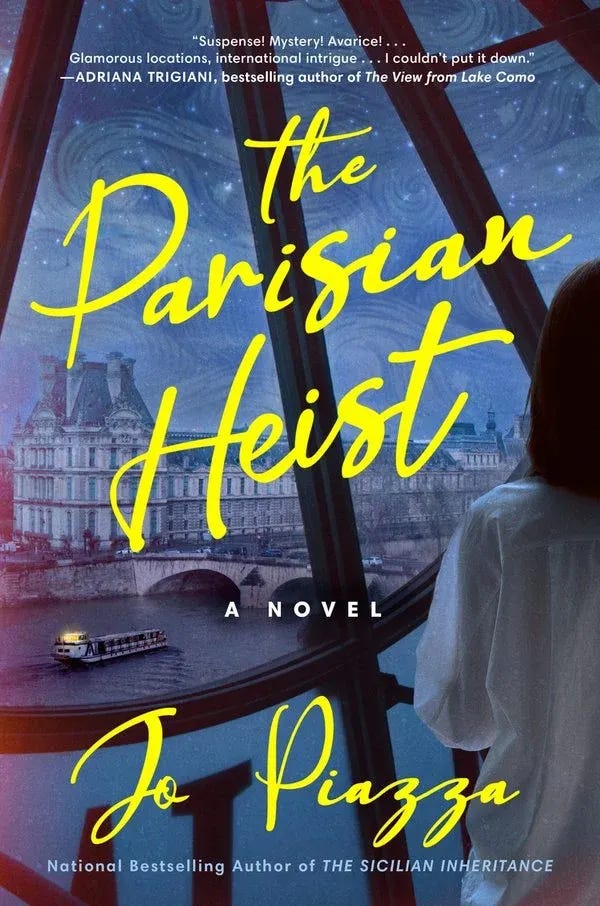
From the bestselling author of The Sicilian Inheritance and Everyone Is Lying to You comes a propulsive dual-timeline mystery drenched in art-world intrigue and brimming with family secrets, betrayal, and the intoxicating lure of power.
Emma, a struggling American artist in Paris, thought she had left her dreams behind when she took a job cleaning for the city’s wealthy elite. Then she meets Stella Swanson, the widow of one of the most notorious art dealers in the business. The Swansons move in a world where billionaires, oligarchs, and heads of state pay fortunes for masterpieces. Drawn in by their dazzling wealth and the pull of a dangerously charming grandson, Emma becomes both a player and a pawn in a family battle to protect their empire and conceal its crimes.
In the late 1800s, the young widow Jo van Gogh inherits hundreds of paintings from her brother-in-law Vincent that the art world deems worthless. Determined to prove their genius, and to secure a future for herself and her young son, she becomes consumed by Vincent’s legacy. As her devotion deepens, a vanished painting and a thwarted love affair leave her unsure who she can trust and how much of herself she’s willing to lose in the process.
From glittering auction houses to the idyllic canals of Amsterdam and the grand museums of Paris, the lives of these two women converge as Emma uncovers the Swanson family’s darkest secrets and agrees to mastermind a daring heist inside the Musée d’Orsay. The stakes have never been higher, and these women refuse to be written out of history, no matter the cost.
To enter, comment #parisianheist below.
Comments
Nothing yet. Say the first thing.
Sign in to join the conversation.