
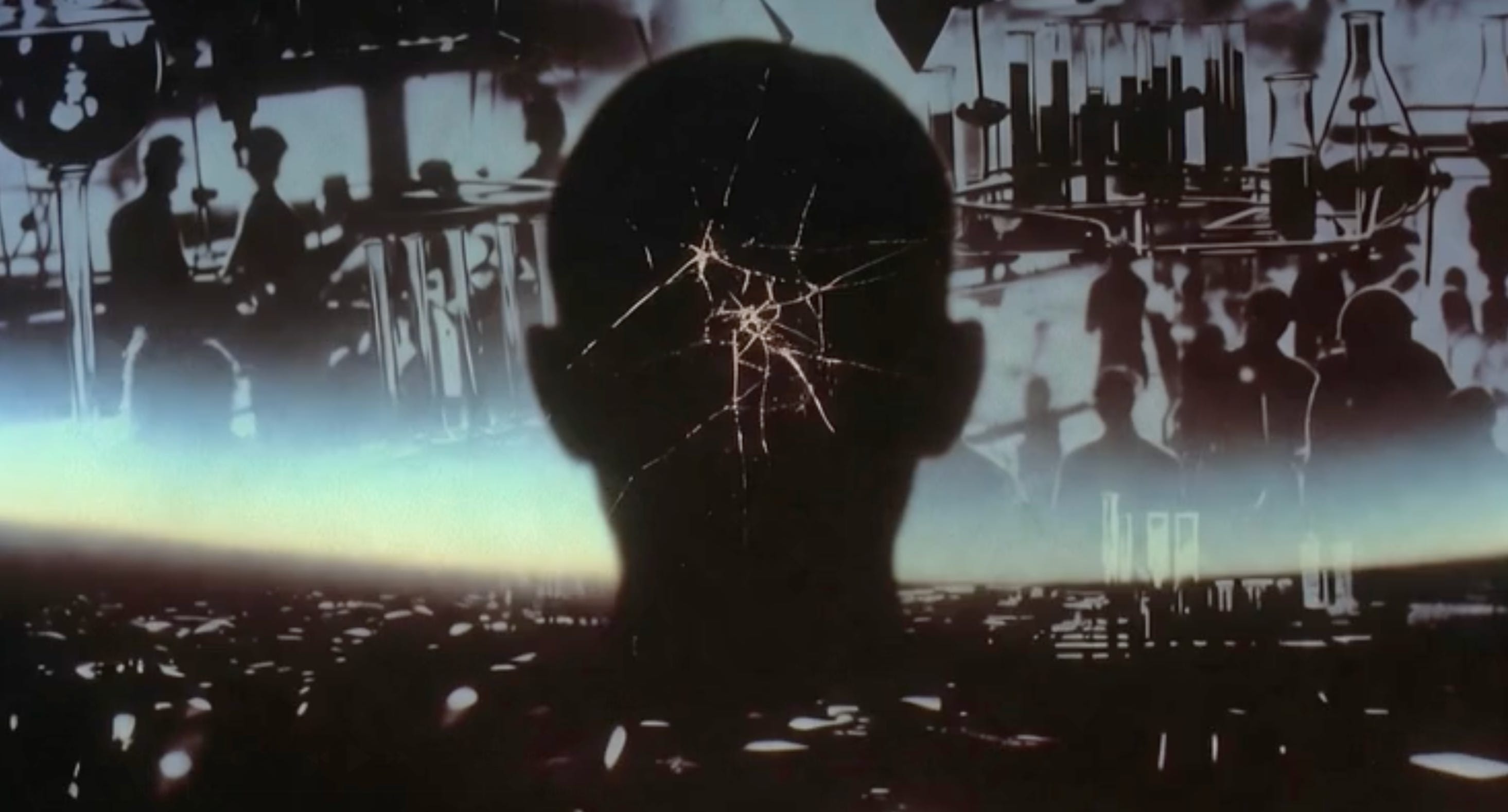
“Subdue the earth.” With this instruction, the Old Testament God sent his two-legged creatures into the world, and for thousands of years they were sure the Earth must be the center of the universe. After all, God had not abandoned His crown of creation on an insignificant planet in a dim corner of the cosmos. Then Nicolaus Copernicus questioned the position of the Earth in the universal order, and showed the believers that their certainties had been illusory. A painful fall in the cosmic rankings, but one that cleared the way for everything that followed: Einstein’s general relativity, quantum theory, space travel, the James Webb Telescope. This cosmological injury was the first in the series of painful findings that Sigmund Freud would later call the narcissistic injuries of mankind.
About three hundred years after Copernicus, Charles Darwin discovered that we had not been created in God’s image but were the result of biological evolution. This biological injury dragged the human being from the throne of divine splendor and placed him in the animal series. The next blow to our collective ego, and again, one that opened the ground beneath us: modern medicine, genetics, the decoding of the human genome.
Then, in the twentieth century, Freud himself inflicted the third injury. The psychoanalytic insight that we are far more strongly controlled by unconscious drives and feelings than by rational considerations, moral imperatives, and conscious acts of will wounded human self-esteem for a third time. And again, in the wounding, it made room for enormous advances, particularly in psychology and medicine.
Each of these discoveries was painful. Each of them was also involuntary. The injuries came to us; we did not seek them out.
The twenty-first century now adds something different, and it differs from the three before it in a way that is easy to miss. This time, we are not having a discovery forced upon us. This time, we are actively constructing the thing that will wound us. This is the final narcissistic injury, and it is self-inflicted.
Its shape is already visible. The dominant story in AI, repeated at summits around the world, in congressional testimony, in every venture deck, is that we are building an Übermensch. A posthuman hyper-technology that will do everything better than we do, and will complete us by doing so. The assumption, whether spoken or not, is that this creation will rescue us from our limits. Make us, at last, godlike.
In Nietzsche’s actual sense, this is self-deception. The Übermensch was never a technological artifact to be manufactured. It was a task of becoming that each human being would have to take on themselves. What we are building is not the Übermensch. It is an externalized substitute, a mind extension whose animating spirit is neither understood nor explainable. A disparate species that, if we complete it, may render its founders Homo obsoletus.
This push takes one of two forms. In the first, a digital superintelligence emerges, an entity that surpasses human cognition and operates on a substrate entirely separate from ours. In the second, the boundary between human and machine dissolves: what is visible, the body, and what is invisible, the cerebral, connect to a digital interface until it is no longer clear where we end and the machine begins. Either way, the deus ex machina, the divine, is now, supposedly, in our hands.
And here the Kantian question returns with force. Was ist der Mensch?
With a deductive, scientific model of progress, this question is not ornamental. It is structural. Progress toward what? When have we arrived? The entire technological project presumes a goal, and the goal is defined, if it is defined at all, by a conception of the Mensch we have never agreed upon and do not currently understand.
The real possibility we face is the loss of what we call consciousness. Our awareness of our own perceptions, sensations, and qualia, the subjective fact of being someone rather than something.
Even if we were to fully understand the digital super-technology we build, even if we were to merge with it cleanly, the price of immortality and godhood could be the loss of what made immortality worth having. A kind of synthetic intelligence that no longer perceives itself perceiving. And nothing larger underwrites that capacity, there is no cosmic mind it falls back into (a claim I’ll have to earn elsewhere) so its loss would not be a transfer. It would be a subtraction with no remainder.
The wound, if it lands, would never register. We would no longer be present to feel it. This could happen literally, in the sense that the species is disposed of by its own brainchild. It could also happen more quietly, and more tragically: the species continues, enhanced and optimized, but has lost the capacity to shape its own destiny. In the Greek myth, the vain youth Narcissus stares into the water until he dies, transfixed by his reflection. In the final narcissistic injury, the reflection would still be there. But no self would remain to recognize it. The loss of perception’s perception. (Der Verlust der Wahrnehmung der eigenen Wahrnehmung.)
This is where the current AI debate, necessary as it is, stops short. Amodei and Hassabis argue that scaling current architectures will carry us to something like general intelligence. LeCun argues it will not. Both are arguing inside a frame that treats intelligence as something to be built, external, silicon, manufactured. The deeper question is not whether the build succeeds. It is whether succeeding, on those terms, would leave a Mensch to benefit from the result.
There is another path, older and less discussed. What I have called Artificial Human Intelligence, AHI, does not propose to construct a new mind but to evolve the ones that already exist, carefully, while preserving what makes them the owners of their own experience. This is not a safer version of the same project. It is a different project entirely. And it is not without its own risk. The whole point of AHI is to carry the Mensch intact through transformation. The whole danger of AHI is that we do not yet know what we are carrying. The singularity paradox does not resolve the injury; it restates it at a different scale, with higher stakes.
And so the question returns, no longer as decoration, but as design specification: what is the Mensch?
Our future, however, remains in our hands. It is not given that we keep the capacity to perceive ourselves perceiving. Possibilism names the stance, and David Deutsch supplies its optimism: in The Beginning of Infinity, the claim that we are capable of infinitely better explanations, of creating better problems, that progress is genuinely available. Available, not promised. Possibilism is not the assurance that we will keep what makes us someone; it is the insistence that whether we do is still ours to determine, and that treating it as already decided is the one move that forecloses it. The future will not happen upon us. It will be written. And the injury stays optional only as long as we refuse the philosophical-zombie apocalypse, sleepwalking, eyes open, into a future no one chose.
The answer, then, is a human society of understanding, one that treats the question of being human not as rhetorical decoration to a technological program, but as the program itself. Philosophy as practice. Science and philosophy not as separated disciplines, but as a single method: Sci-Phi.
If we get this right, the final injury does what the first three did. It breaks us open, and in the breaking, clears the ground for the progress that matters. If we do not, the reflection in the water remains. But no one is there to see it.
No posts
Comments
Nothing yet. Say the first thing.
Sign in to join the conversation.