
Last week, I sat with a founder who has been working on her idea for almost a year.
Almost a year of research, refining, second-guessing. Almost a year of building something beautiful in her head that no one has actually seen yet.
She came to me asking for a strategy. But the first thing I asked her stopped her in her tracks.
“How much of your assumptions have you actually validated with real clients?”
She paused. Then she laughed a little nervously. “Not many,” she said. “I’m not really ready to show it to people yet.”
I hear this all the time. And every time I do, I think about my own story.
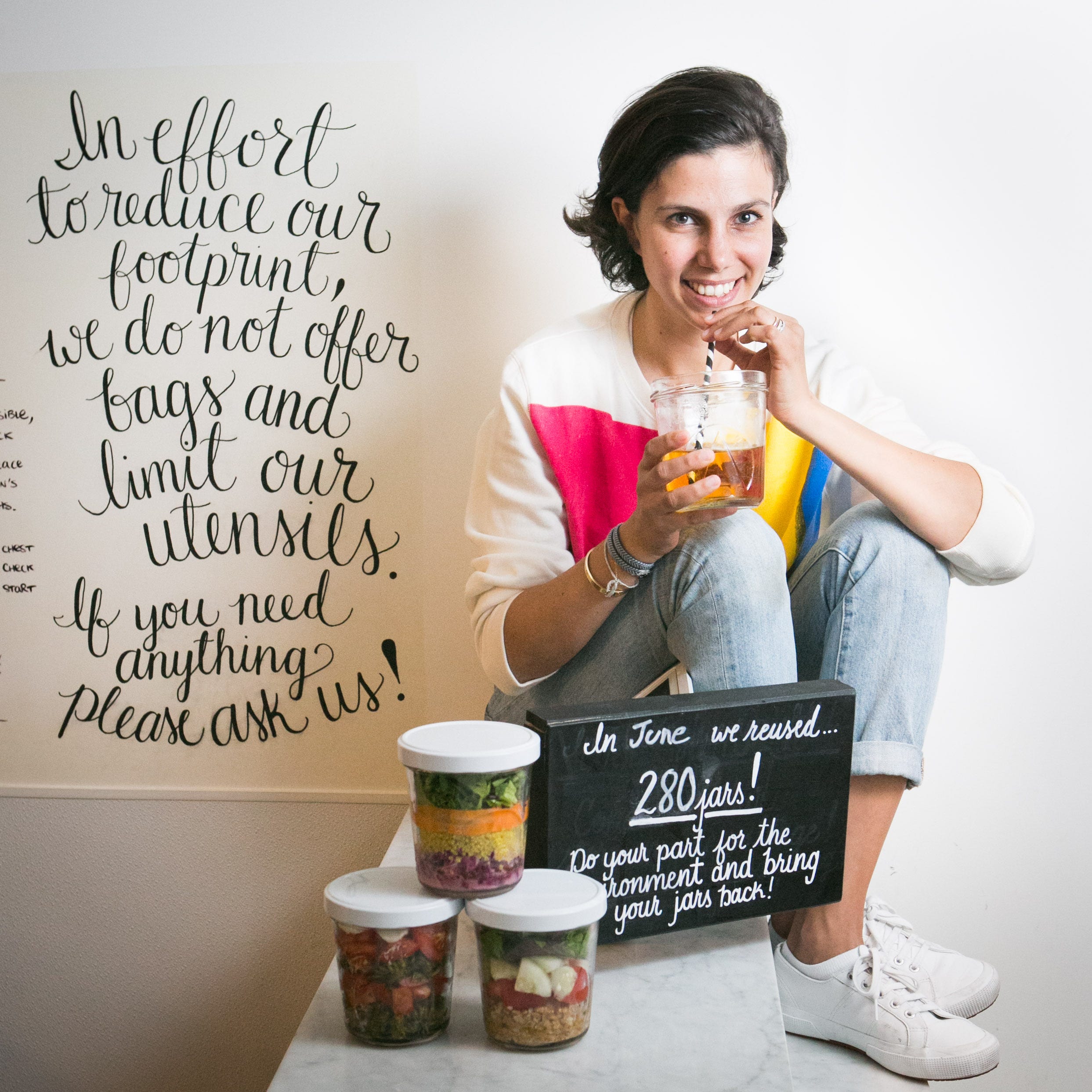
I know this firsthand. When I started Ancolie, I stalled. I took an office, hired an intern, brought in consultants. We brainstormed strategy, branding, design — all based on an idea I had entirely in my head. By the time I opened my doors, I had spent close to $100,000 from the savings I had built during my banking years. Some of it was necessary — the branding, a few foundational pieces that gave the business its soul. But a lot of it was fear dressed up as strategy. It took me months to organize my first tasting, months to get real feedback from real people. I was so focused on the perfect business plan, the perfect jar, the perfect concept — that I forgot the most important step: finding out if anyone actually wanted it.
What I actually needed — and what nobody pushed me to do — was to get out there. To get feedback. To try to make money from any source, before my jars were perfect, before I had the physical space. Because at the end of the day, money is king. A paying client is the only thing that truly validates your concept.
You will never feel ready. So you might as well jump into the pool fully clothed and figure out how to get out of it on the way down.
Six months of waiting costs you six months of learning. And that gap is almost impossible to make up later.
How I actually work with founders who are stuck
When someone comes to me with some ideas and zero momentum, I don’t start with a business plan. I start with a process. Here’s what it looks like.
Step 1: Pick your real best opportunity.
Not the one that sounds most impressive. The one that sits at the intersection of four things: financial potential, genuine excitement, existing relationships that could open doors or become clients, and and alignment with the business — and the life — you're actually trying to build.
When we map this out honestly, one direction almost always rises to the top — not because I pushed it, but because you already knew. You just hadn’t let yourself say it out loud yet.
Step 2: Map your network before you go anywhere near cold outreach.
Your first clients are almost never strangers. We look at who’s already in your life, who would genuinely benefit from your offer, and — yes — who you’ve been avoiding reaching out to.
We practice those ones. We write the message together. We decide: text, voice note, email, call? And we set a specific goal for each conversation. Not “put myself out there” but something concrete. A discovery call. A feedback conversation. A beta tester. A paying client.
Step 3: Have the real conversations. Especially about price.
This is the step most founders skip. And it’s the one that matters most.
We gather answers to three simple questions from every conversation:
Is this person interested? Yes or no.
Would they actually try it? Yes or no.
Would they try it at this price? Yes or no.
That’s it. Repeated across a dozen real conversations. The pattern that comes back tells you more than any market research ever could — and it removes the story you’ve been telling yourself about what people will or won’t pay for.
Step 4: Launch, surface your assumptions, and iterate fast.
This is where most people think the work ends. Actually, it’s where it begins.
Every founder goes into a launch carrying a suitcase full of assumptions. About who their client really is, what problem they’re actually solving, what people will pay. These feel like facts. But they’re hypotheses — and the only way to test them is to get in front of real humans.
One of the first things I have clients do: write down every assumption baked into your offer. Then for each one, ask — what would happen if this were wrong? How would the product change? And then, as you start testing, bring those questions directly into your conversations. Ask your early clients or testers. Actually validate them. You'll be surprised how often the answer changes everything.
This exercise alone has redirected several businesses I’ve worked with. Not because the original idea was bad — but because one untested assumption was quietly running the whole show.
Real feedback is what catches a wrong turn before you’ve built an entire road in the wrong direction. You refine your positioning, adjust your format, update your pricing — and each iteration makes the next launch faster and the next yes more natural.
A paying client isn’t just revenue. It’s proof. It’s the only validation that actually counts.
A story I keep coming back to
One of my clients came to me with an existing revenue stream and a restlessness she couldn’t quite name. She had ideas — several of them — but couldn’t figure out which one to pursue.
In our very first session, it became clear: a group program for women. Not because I told her but because when we mapped her options honestly and rated them together, that was the one that rose to the top. The highest score, and the biggest smile. By the end of that meeting, she had eight people in mind she could reach out to.
So we got to work. We rehearsed the calls together — what to say, what price to propose, and crucially, what to do if someone said no. She had planned to text. But after rehearsing, she picked up the phone instead.
Within three weeks, she had five paying clients and her first group was launched.
The following month, she launched a second group. And the month after that — because she now knew exactly how to get feedback, how to test an idea, how to have the conversation — she relaunched her website, built another offering, and signed her first paying client for that too. She didn’t need me to tell her what to do anymore. She had the process.
The ideas were hers all along. I just helped her see them clearly — and take the first step before she talked herself out of it.
That’s not luck. That’s a process. And it’s what I do, every day, with founders who are ready to stop waiting and start moving.
One action you can take this week
Take a step back and make a list of every idea you’ve been sitting on. Next to each one, rate it from 1 to 10 across four dimensions: how excited you are about it, how many contacts you already have in that space, what the revenue potential could be, and how aligned it is with the business, and the life, you're actually trying to build.
Add up the scores. The one that rises to the top is probably the one worth pursuing first.
And if you still feel like you need a hand getting started — book a free 1-to-1 call here. No pitch, no strings attached. I’d love to brainstorm with you on that very first step.
To finish: if you too have been sitting on an idea, or feeling stuck between too many of them, I invite you to close your eyes for a moment. Imagine you’ve launched that business — the one you’ve been carrying around, the new product line you’ve been dying to build. How does it feel? Who are you, in that version of your life? What does this business mean for you — really?
And then ask yourself honestly: what is waiting six more months actually costing you?
No posts
Comments
Nothing yet. Say the first thing.
Sign in to join the conversation.