
This is the first in our new series focusing on the people we today call ancient Egyptians. What were their lives like? What drama can we tease out from the fragmentary record? This aims to be a fun, lighthearted, yet scholarly exploration into the lives of the ancient Egyptians. Not the royals—see Kara’s books for that—but the elites who lived while the “big” history was happening, with all of life’s mundanity.
In this first post, we look at Heqanakht— priest, farmer, and ladies’ man. Intrigued? Read on…
Heqanakht was a gentleman farmer and priest who lived around 1950 BCE, during the Middle Kingdom (probably during the reign of Senwosret I). Information about his life is preserved through a series of discarded letters found in the tomb of Meseh, who had a side passage and crypt in the tomb complex of the vizier Ipy, near the mortuary temple of Mentuhotep II in Thebes.
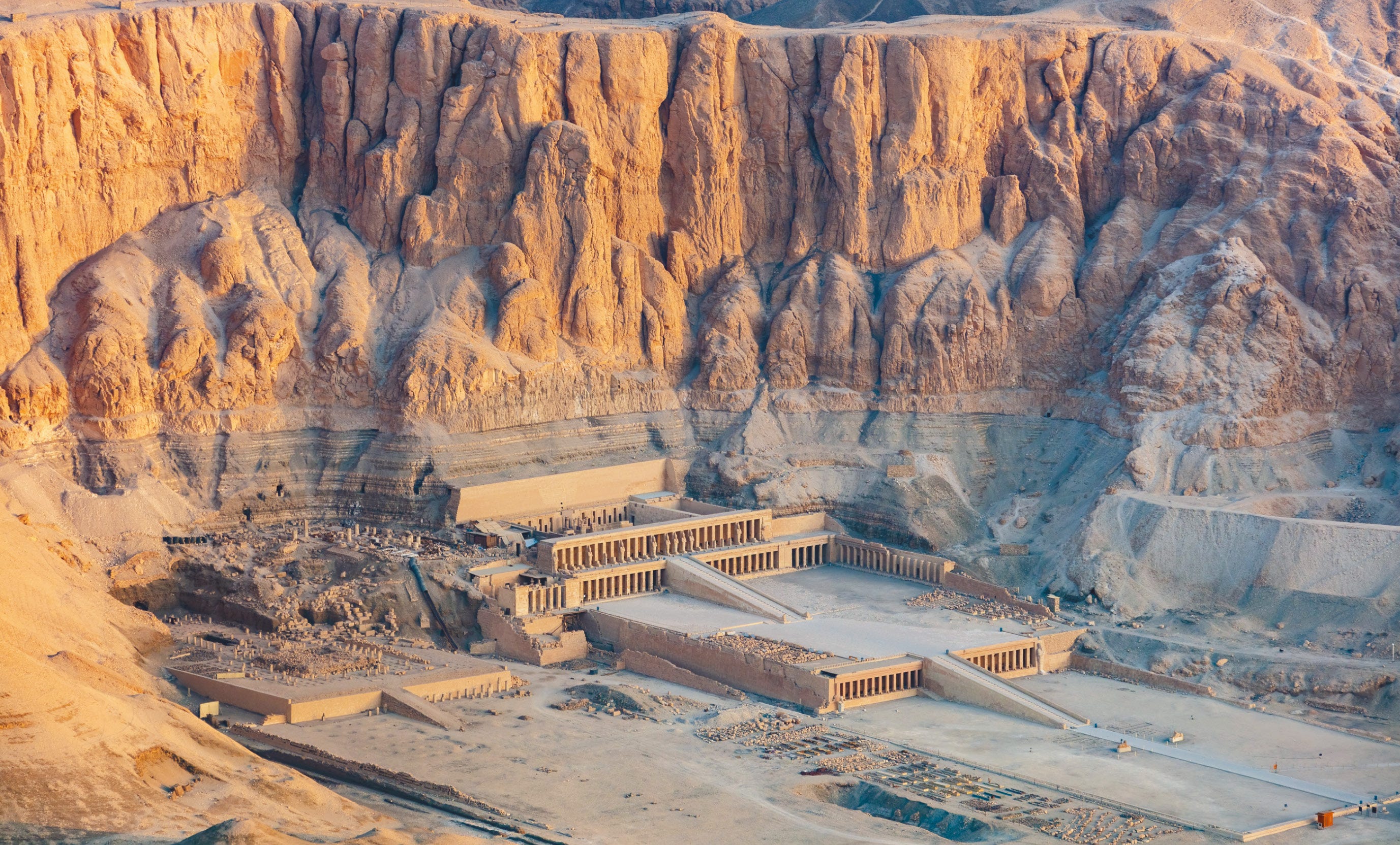
The letters, amazingly, were found still tied and sealed in the tomb passage, discovered almost 4000 years later by Herbert Winlock, archaeologist with the Metropolitan Museum of Art in the 1921-1922 season. These letters provide a unique insight into the daily life of a lower elite during the Middle Kingdom.
Heqanakht served as a ka-priest, working in the tomb chapels of rich men making sure endowments paid out and that offerings were made on schedule, but also, given his elite status and his funerary role, he held land further north in Middle Egypt. Most of the letters show Heqanakht writing to his household about the functioning of his land holdings. He provides direction on how to cultivate the land after the inundation, which land to rent for cultivation, and how much the men should pay for that rent. He instructs his household to sell the linen sheet he presumably told them to weave in an earlier letter, or if they don’t have the sheet, to use the grain. We can see here that all commodities could be equated and exchanged for other commodities. Everyone knew the comparable value of grain, flax, woven linen, livestock, sandals, and so on.
Arrange to have Heti’s son Nakht and Sinebniut go down to Perhaa to cultivate for [us] an area of land on lease. They should take its lease from that sheet to be woven there (with you). If, however, they will have collected the equivalent value of that emmer that is (owed me) in Perhaa, they should use it there as well.
And like any good boss, he gets upset with his household staff, chastising them for sending poor-quality barley. Why bad barley was sent at all is unclear, but what the staff got from it was a mouthful about what they did wrong from Heqanakht.
Now, what is this, having Sihathor come to me with old, dried-up full barley that was in Djedsut, without giving me those 10 sacks of full barley as new, fresh full barley? Don’t you have it good, eating fresh full barley while I am outcast? Now, the barge is moored at your harbor, and you act in all kinds of bad ways. If you will have had old full barley brought to me in order to stockpile that new full barley, what can I say?
Besides all the business negotiations, which are interesting for their economic relevance, some of Heqanakht’s family drama is mentioned in the letters (which, let’s be real, is way more interesting than the prices of grain).
At the end of the first letter, Heqanakht references an incident involving his wife:
“Now, what is this, doing bad things to my wife? Have done with it. Have you been given equal rights with me? How good it would be for you to stop.”
To understand this situation better, we need to take a close look at Heqanakht’s household—because it’s way more interesting than you would expect.
Households were composed not only of genetic family members but also household staff, and even the staff’s families and dependents. In some cases, the relationship of a particular person mentioned in the letters to Heqanakht himself is unclear, but this is who we’ve got:
Mother- Ipi
Sister, Aunt, or wife?- Hetepet
Staff member- Heti’s son, Nakht, and his dependents
Head of Staff; a younger brother perhaps?- Merisu and his dependents
Staff member- Sihathor
Staff member- Sinebinut
Son?- Anubis
Son?- Sneferu
Sister or daughter- Sitinut
Wife- May’s daughter Hetepet
Sister or daughter- Nefret
Sister or daughter- Sitwerut
Now, as quoted earlier, Heqankaht referenced mistreatment of his wife, who we believe is Hetepet, May’s daughter, by the household. And this is confusing, because we need to differentiate her from another woman named Hetepet, who, given the high grain rations, must be a widowed sister or aunt, OR Heqanakht’s first wife. WAIT WHAT? Now this is where it gets a bit complicated…
The term used to describe his “wife” is not the normal word (hmt), but another term, namely hbswt. This has led to speculation that either Heqanakht was a widower, divorced, or he took on another wife. Many scholars argue that this term hbswt should not be translated as ‘wife,’ but as ‘concubine.’ Now we understand that this word concubine is now considered problematic by scholars and is often avoided. But it’s a descriptive way of describing a lower-status wife, that is, a woman who lives with a man but without full legal status and without the same social and economic benefits as his legal wife.
Concubinage and polygamy in ancient Egypt were complicated. Besides the king, legal and social documents suggest it was exceedingly rare for a man to take another wife. Perhaps he and his first wife could not conceive children, or perhaps his first wife was not able to fulfill her duties as “mistress of the house” (nbt-pr) anymore for whatever reason. Who in the above list could be Heqanakht’s first wife then (assuming she was alive)? The other Hetepet? It would be extraordinary if both his wives shared the same name, but certainly easier for him to remember.
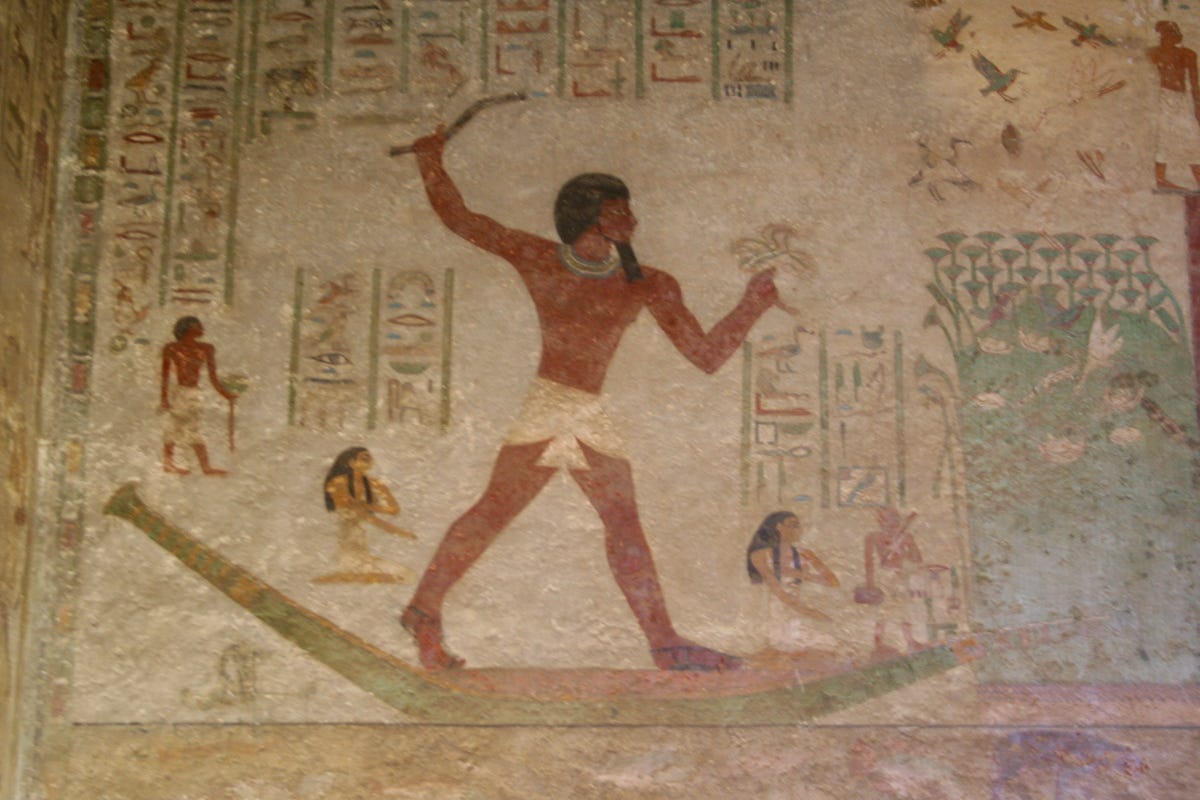
There is further evidence that the household did not welcome this woman into the house. Even the maidservant was mistreating her, and we read that Heqanakht had to fire the maid:
Now, get that housemaid, Senen put out of my house—mind you—on whatever day Sihathor reaches you. Look, if she spends a single day in my house, take action! You are the one who lets her do bad to my wife.
Apparently, Merisu was the staff member who is in charge while he was gone, and he was allowing said mistreatment to occur.
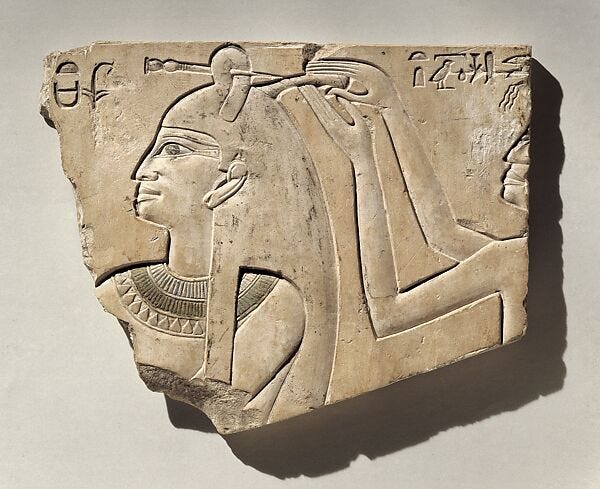
In another incident, the lower status wife in question is named Hetepet, nicknamed Iutenhab. Maidservants and hairdressers were being kept from her, and Heqankaht was pissed:
Now, before I came here, didn’t I tell you (all) “Don’t keep a friend of Hetepet from her, whether her hairdresser or her domestic”? Mind yourselves around her. If only you would be (as) firm in everything as (you are) in this. Now, if you (Merisu) don’t want her, you’ll have to have Iutenhab brought to me. As this man lives for me—I speak about lp—whoever shall make any affair about the wife on the battlefield, he is against me and I am against him. Look, that is my wife, and the way to behave to a man’s wife is known. Look, as for anyone who will act for her, the same is done for me. Furthermore, will any of you bear having his woman denounced to him? Then I would bear it. How can I be in one community with you (all)? Not when you won’t respect the wife for me!
Again, the staff member Merisu was implicated, given that he was the ‘man in charge’ while Heqanakht was away. Clearly, Heqanakht needed to return home and get things under control. But what about his poor Hetepet? It was a raw deal—joining a new household, probably being decades younger than your new husband who was away all the time, and now everyone in the household, even the servants, are treating you poorly.
Was all of this drama orchestrated by a bitter Mother-in-Law or the first wife, if she was somehow still around? Or was something else the cause of all this animosity? Was the maidservant Senen treating her poorly out of allegiance to the first wife?
As with all ancient evidence, the data is sadly incomplete. We have neither the responses to Heqanakht’s letter nor the greater context to which these letters refer. Yet the fundamental truth remains clear: Heqanakht and his relatives grappled with the same messy family dynamics we face today. While he never would imagine broadcasting his grievances on social media or reality television like families today—and would likely be mortified to discover that strangers four millennia later are poring over his private correspondence—his neighbors almost certainly still whispered about his family troubles anyway.

So the next time you fire off a cutting text or craft a pointed subtweet, consider the possibility that some future scholar, five thousand years in the future, might be equally fascinated by your drama.
Sources:
Allen, James P. 2002. The Heqanakht papyri. Publications of the Metropolitan Museum of Art Egyptian Expedition 27. New York: Metropolitan Museum of Art
Comments
Nothing yet. Say the first thing.
Sign in to join the conversation.