
By Alex Joffe

What is The Odyssey, really? Is it an accurate historical depiction of the travails of a hero returning to his island home on the west coast of Greece after a war against a city in northwestern Anatolia? Does it describe palatial competition in the Late Bronze Age at the end of the second millennium? Or does it describe the palaces of the first centuries of the first millennium BCE, when the epic was first composed?
Is The Odyssey a poem recited by bards at elite dinners which lauds heroes and their adventures, their bravery and cunning, dedication to a cause and ultimately to their homelands? Or is it a tale of existential crisis about a brave man drawn into a foolish and destructive war, who gains insight into his failures only at the expense of his comrades? What, of all this, is “historical”?
Or, is The Odyssey a new film by Christopher Nolan?
The Odyssey is of course all those things and more; a touchstone of Western literature, a transposable tale that could be set anywhere there is war and a home to return to, and a source of endless speculation and conflict among scholars, critics, and a global public that has been bombarded with carefully crafted media controversy long before Christopher Nolan’s movie actually appeared.
Humanity spoke thousands of languages at the dawn of farming — now many of them are lost (Nature)
Long-lost Byzantine-era vines are again cultivated on ancient Negev terraces (The Times of Israel)
Cracking the code: can AI help us decipher ancient languages? (The Conversation)
Syria’s ancient sites face widespread looting and systematic bulldozing, satellite images reveal (Phys.org)
Silkworm cultivation predates the Silk Road in southern Central Asia, ancient cocoons suggest (Phys.org)
“Secrets of Huqoq” Revealed: New exhibition provides the first glimpse of an ancient Jewish village. (Israel Antiquities Authority | Youtube)
Egyptian Mummies: The Great Deception (SLICE History; French Documentary with English subtitles)
Nine quarters of Jerusalem (Stories from Jerusalem Podcast)
Odyssey? Shmoddesy? Or, the Gang Goes to the Movie. (This Week in the Ancient Near East)
How were letters sent in the Ancient Near East? (Dr George Heath-Whyte - Instagram)
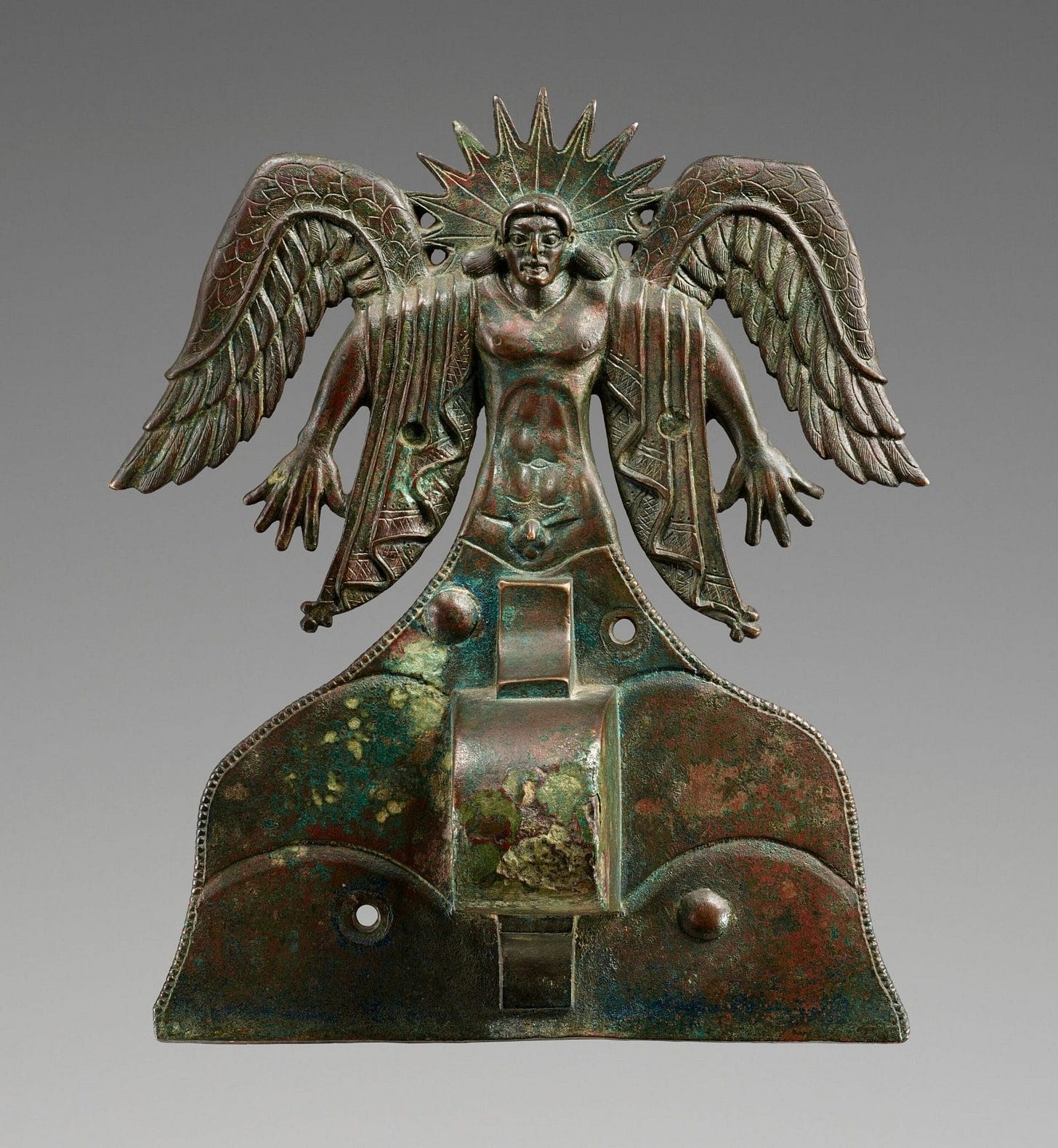
In ancient Etruscan religion, Usil was a solar deity. Our earliest depictions of him in Etruscan art date to the 6th century BCE. Appliqués depicting Usil are associated with burials, which often held grave offerings of funerary carts and chariots. Figural reliefs such as this are believed to have served as decorative attachments on the sideboards, used to cover structural elements of the vehicle.
Although part of the Getty museum collecction, this particular appliqué is currently on display at the Legion of Honor, San Francisco, as part of the exhibition The Etruscans: From the Heart of Ancient Italy, running until September 20. If you can’t make it to SF, don’t worry, you can still see and hear about the exhibition directly from the curator, Dr. Renée Dreyfus, via a Zoom lecture sponsored by BAF/BASONOVA. More info below!
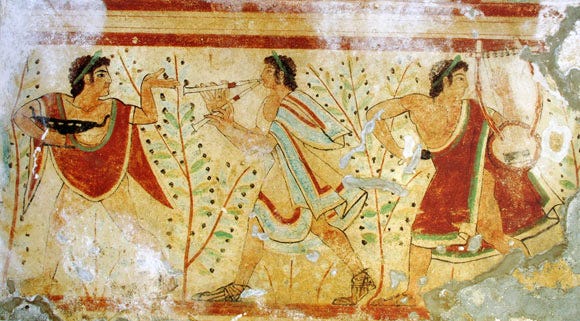
The Biblical Archaeology Forum and Biblical Archaeology Society of Northern Virginia (BASONOVA) will be presenting the final lecture of their summer series, Examining the Elusive Etruscans by Dr. Renée Dreyfus (Fine Arts Museums of San Francisco), on Wednesday, August 12, 2026 at 8 pm EST via Zoom.
The Etruscans significantly influenced Western culture, particularly in architecture, engineering, urban planning, and art. However, most knowledge of their society derives from material remains found in tombs, temples, and settlements, as well as from Greek and Roman accounts. Their own written records have largely not survived.
Illustrations in this presentation are drawn from an exhibition at the Fine Arts Museums of San Francisco, The Etruscans: From the Heart of Ancient Italy, which highlight Etruscan civilization by presenting recent archaeological discoveries, current scholarship, and advances in the understanding of the Etruscan language.
Register here (cost is $10): https://basonova.org/next-lecture-reservation.html

Eisenbrauns is pleased to announce the publication of The Dawn of Philology: Textual Practices Between the Tigris and Nile by Eva Cancik-Kirschbaum and Jochem Kahl, in collaboration with Klaus Wagensonner. Examining evidence from 3000 BCE through the first centuries CE in Egypt and Mesopotamia, this engaging study explores the invention of complex writing systems and the origins of philology, the disciplined engagement with written knowledge that has shaped scholarly traditions for millennia.
Originally published in German in 2018 and updated and presented here in English translation, The Dawn of Philology will be essential for anyone interested in Assyriology, Egyptology, and the history of knowledge.
Use promo code 036ANE26 to save 30% on this title when you visit Eisenbrauns.org. Sign up for BookNews to stay up to date on new and forthcoming titles in archaeology from Eisenbrauns.
By Eberhard Zangger
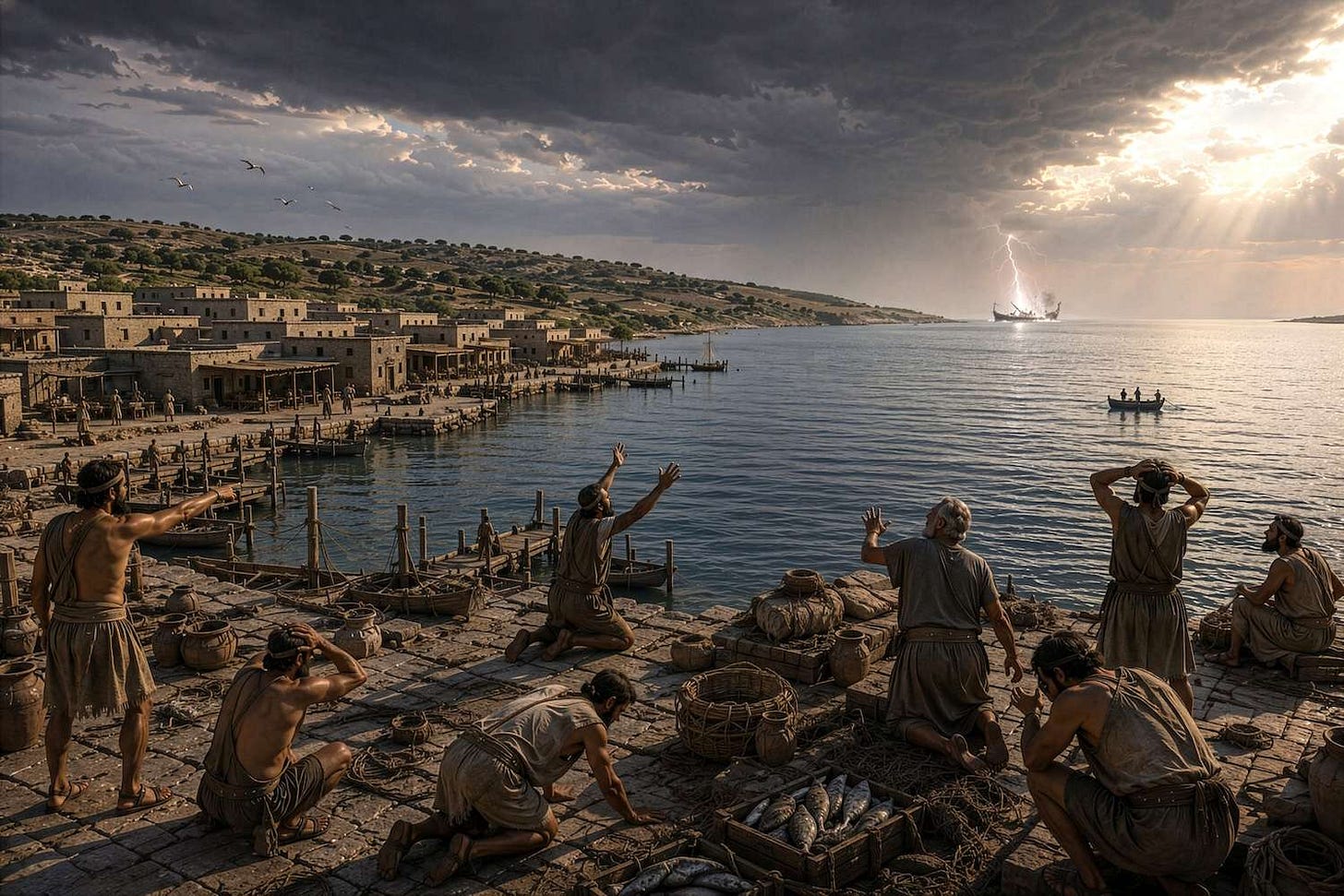
It seems that Christopher Nolan felt that Odysseus did not need to go to Scheria — Nolan’s Odyssey omitted this part of Homer’s original tale. Yet, as Zangger points out, Odysseus’ extended stay with the Phaeacians on Scheria serves as the dramatic center of Homer’s Odyssey — the hero spends nine books there, at least physically. It is amongst the enigmatic Phaeacians that Odysseus relates the fantastic events for which The Odyssey is famous; it is there that he also grapples with loss and his own identity. If you haven’t already, read Zangger’s article to find out why Odysseus’ visit to Scheria was so important to Homer’s narrative, and decide for yourself whether its omission from the film matters.
Magic in the Ancient Near East and Hebrew Bible, by Ilan Peled
(Cambridge Elements in the Ancient Near Eastern World and Bible)
This latest installment of the Cambridge Elements in the Ancient Near Eastern World and Bible Series introduces the reader to the fascinating world of magical rituals performed in the ancient Near East and ancient Israel, and is designed for a diverse audience of professionals, students, and general readers
This book is free to download until August 7, so grab it quick!
ANE Today is free to read, but not free to produce. If you appreciate what we’re doing, consider making a donation. Head over to ASOR’s donation page and be sure to choose “ANE Today” in the drop down menu.
Or, consider joining ASOR and becoming part of a community dedicated to the cultural history of the Near East and Mediterranean World. Membership starts at $46 per year ($35 for students) and includes benefits such as a subscription to Near Eastern Archaeology. Your dues support scholarships and other ASOR programs, including ANE Today.
Published with the assistance of The Lanier Theological Library and Stevan Dana
No posts
Comments
Nothing yet. Say the first thing.
Sign in to join the conversation.