
The Ministry of Tourism and Antiquities of Egypt has announced a second fortress at Tell el-Kharouba in North Sinai, along with a granite block bearing the cartouches of Ramesses II and the remains of a mudbrick temple. The site sits on the Way of Horus, the military road that ran along the Mediterranean coast from the eastern Delta into Canaan.
It is the same site that produced the large New Kingdom fortress announced last autumn, covering some 8,000 square metres with eleven towers and a southern wall over a hundred metres long. Pottery from foundation deposits there carried the name of Thutmose I.
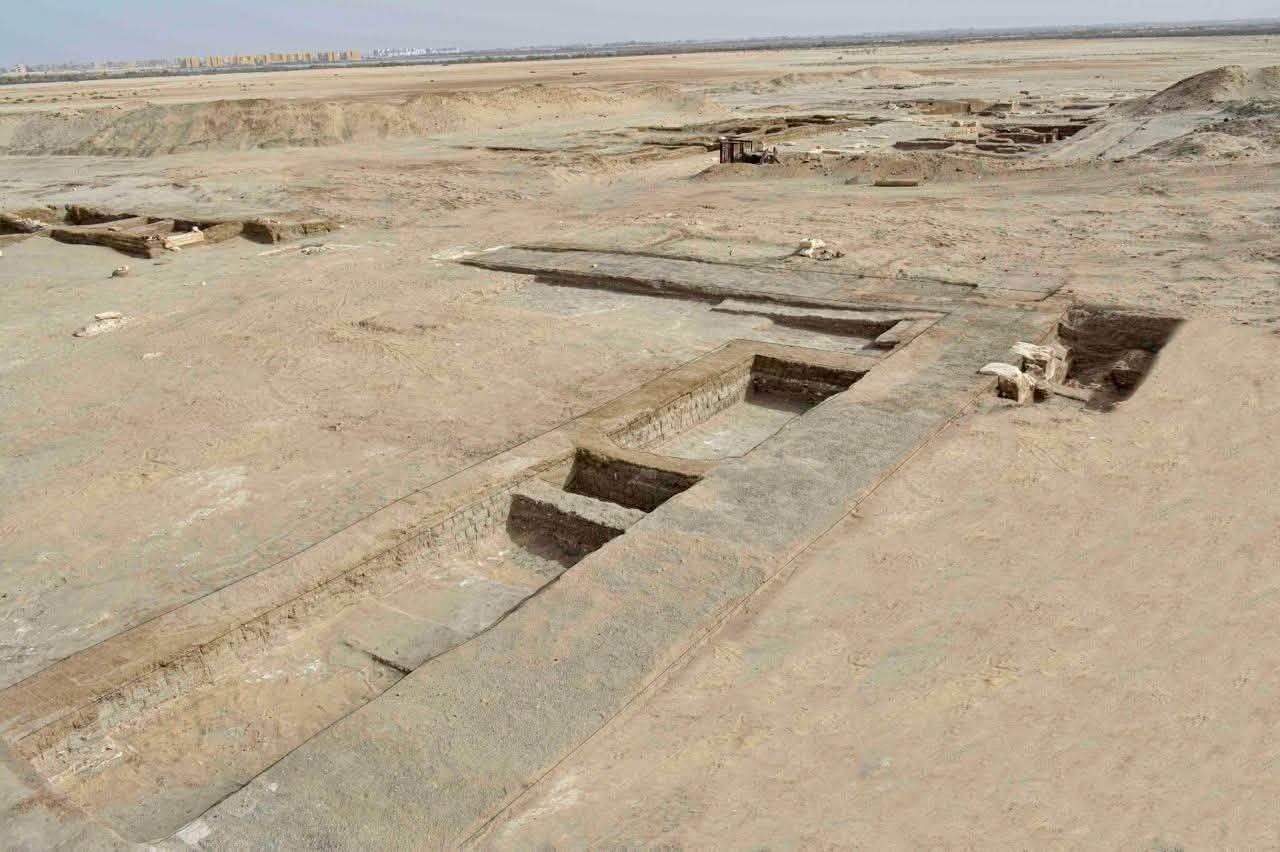
The mission has located a second fortified enclosure to the east of the first, separated from it by a gap, and has begun exposing its walls and towers. Both structures belong to the same defensive line, which the ministry describes as evidence of successive phases of fortification at the site rather than a single building programme.
The temple is mudbrick and stands within the fortified area. Its plan is being cleared and its relationship to the fortresses established.
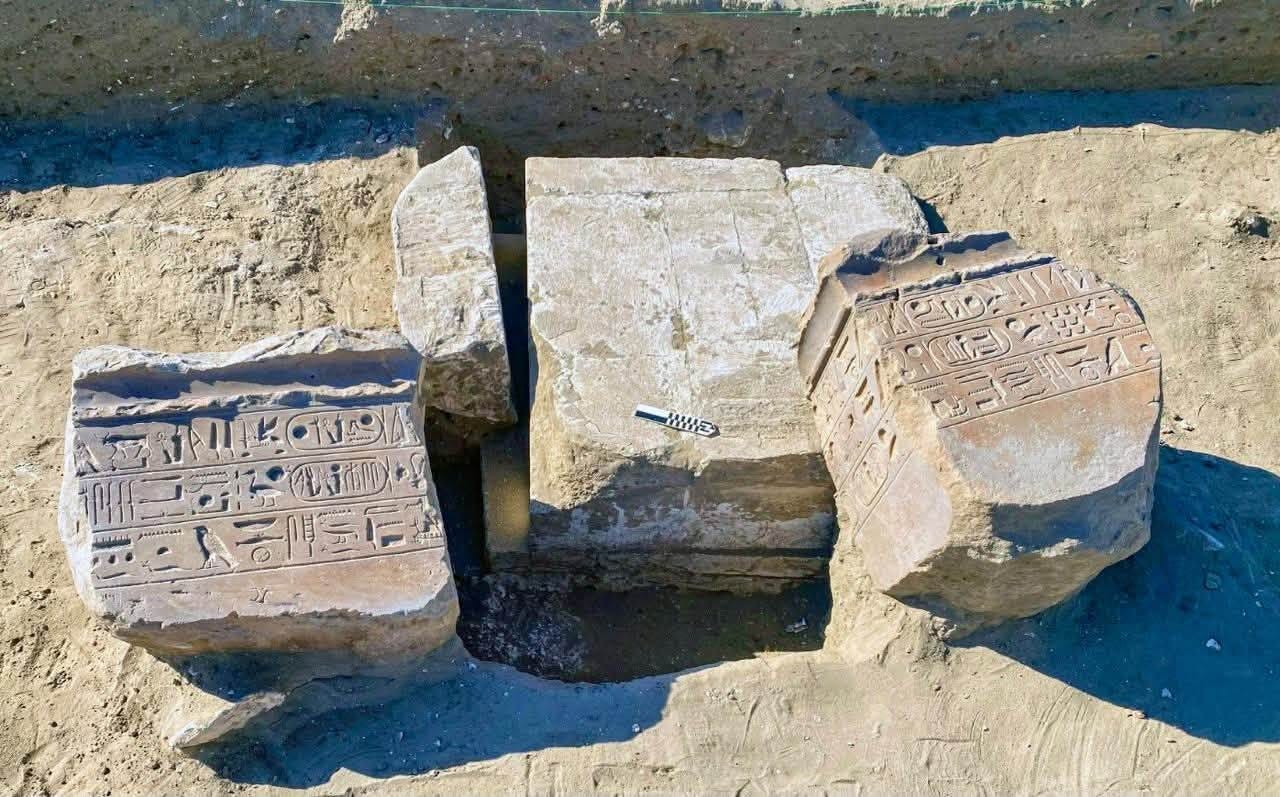
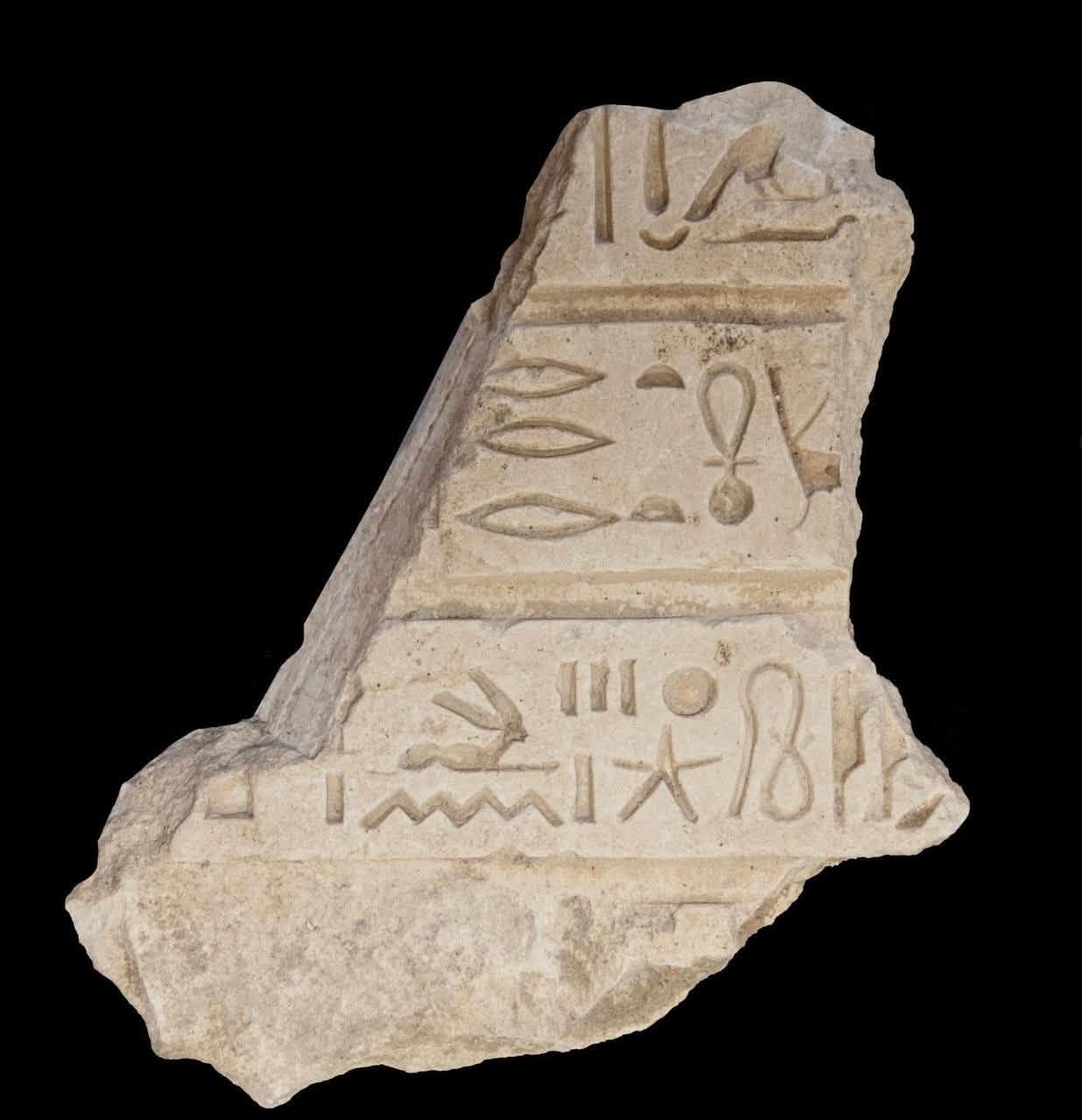
The granite block carries the cartouches of Ramesses II. That places royal activity at Tell el-Kharouba in the Nineteenth Dynasty, several centuries after the Thutmoside material from the earlier fortress, and gives the site a documented span rather than a single moment.
The Way of Horus, wawt Hr in Egyptian, was the land route between Egypt and the Levant, and the only practical one across northern Sinai. It carried armies and trade in both directions, and the New Kingdom pharaohs fortified it heavily.
Seti I recorded the road on the walls of Karnak, showing his march from Tjaru toward Gaza past a sequence of forts and wells. Around eleven such installations are thought to have lined it. Tjaru itself has been identified with Tell Hebua, and other excavated stations include Tell el-Borg, where a temple of Ramesses II was found in the excavations of 1999 to 2001.
That last point is worth holding alongside the new block. Ramesside temple building on this road is attested elsewhere, so a temple and a royal inscription at Tell el-Kharouba fit a known pattern rather than standing alone.
The road is also the one the Book of Exodus calls the way of the land of the Philistines, described as the shorter route that the Israelites did not take. Coverage of the site last year leaned heavily on that connection. It is worth saying plainly that the identification of the road is secure and everything built on it is not.
The ministry has not published dimensions for the second fortress, and the relationship between the two enclosures, whether they were in use simultaneously or one replaced the other, is not yet established. The temple has not been dated independently of the Ramesses block.
Excavation is continuing.
Source: Ministry of Tourism and Antiquities وزارة السياحة والآثار
Comments
Nothing yet. Say the first thing.
Sign in to join the conversation.