
In the fall of 2018, I gave reporters tours of Facebook’s election war room. They were skeptical, and fair enough — they knew a song and dance when they saw one. They knew what we couldn’t say: the work might be real, but we had no idea if it would work. I was one of the faces of the operation. I wanted to be. But with every interview, every question I answered on camera, I had the same pit in my stomach — not knowing whether we’d be able to stand behind the promises we were making. Eventually, for many of them, we could. Until then, we all fumbled forward.
One big reason for the war room is that we knew that not every threat could be mapped. Some could. Others we were guessing at. So we would have to build processes for the unknown: we might not know what we’d be dealing with, but at a bare minimum, we’d know how to triage it and get the right people in the room fast. The hardest part wasn’t the unknowns. It was getting senior leadership to plan ahead for the toughest calls. Only so much we could do there.
That playbook — catalog what you can, build triage for what you can’t — has run every election cycle since. It’s the one I helped write. Heading into 2026, it needs an update.
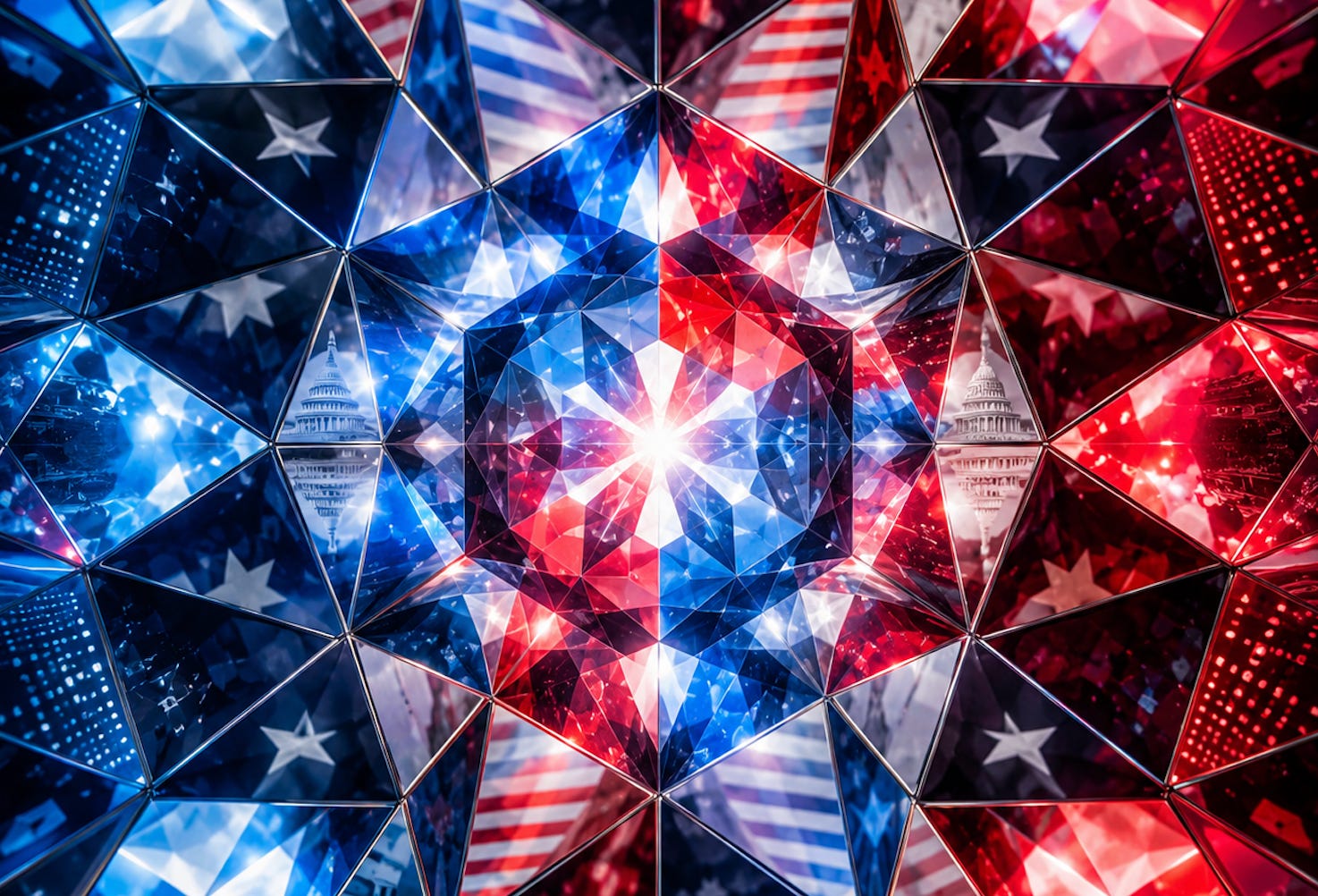
Back in 2023, I described the platform landscape as a kaleidoscope: every company approaching politics differently, a dozen configurations visible at once. It was a kaleidoscope then. It’s more complicated now — the number of vectors has multiplied, and they rearrange faster. That’s the update I’m making to my own framing: the environment heading into the midterms, and through 2028, is a kaleidoscopic minefield.
The environment heading into the midterms and through 2028
is a kaleidoscopic minefield.
Some of the vectors for 2026 and 2028 are known. Deepfakes. Creator monetization programs pay for engagement on every major platform. The federal preemption fight is in the courts. None of this is hidden.
But even the known pieces won’t hold still. Take those deepfake laws. The same statute is a shield in one configuration, a First Amendment scandal in another, and a preemption casualty in a third — depending on what the courts, the DOJ, and one viral controversy do to the lens. The mines don’t just hide. They change what they are.
And a lot of the vectors aren’t known at all. The threats will change between now and November, and again between November and 2028. A midterm is a different election than a presidential — different electorate, different stakes, different configuration by the time the lens turns again. If the midterms go well, we can’t breathe a sigh of relief.
2016 was about a shock result and the role tech played in it. What made it a shock wasn’t that the threats were invisible — it’s that many of them were new, or new combinations of old problems. Teenagers in Macedonia weren’t running a disinformation operation anyone had modeled. They’d combined two old things — propaganda and ad economics — into something nobody was watching for.
I worry about that now. We’ve been running roughly the same playbook for ten years, and it’s gotten genuinely good at the threats we’ve already seen. I’m less worried about deepfakes — those are the best-mapped mines on the board. I’m more worried about the threats we haven’t named yet: agents acting on a voter’s behalf, world models, and how AI models are responding to political information when millions of people ask them what’s true.
The threat is not any one thing. Many things play off one another in different ways as various events unfold. The parts of the playbook built for the unknown — triage fast, get the right people in the room — still hold. What’s outdated is the threat list at the front.
Next week, I’m publishing my map of those forces: fifteen vectors across five clusters, from super PAC money to AI agents. It’s the reference document for everything I’ll write about this cycle and about 2028, where the turning gets faster.
Some of the pieces are knowable. None of them are static. That’s not a reason to panic. It’s a reason to prepare differently: plan for the turning, not just where the mines are.
In Case You Missed It
If you want to go deeper into my thoughts on AI and elections, Matt Robison recently had me on his Worth Knowing with Matt Robison Substack to talk all about it. You can watch the full replay below. We get into everything from how campaigns are using AI, AI as a campaign issue, how voters are using AI, and the lessons I’m taking from what we at Facebook didn’t do in 2016 as we go into the 2026 and 2028 elections.
No posts
Comments
Nothing yet. Say the first thing.
Sign in to join the conversation.