
As an avid reader (usually over 100 books per year), I am always looking for reading recommendations and for opportunities to meet the authors. I follow book bloggers, listen to book podcasts, and visit independent bookstores; it’s still not enough for me. So I attend book fairs and festivals, too.
It sounds simple: you just attend and do whatever. Buy books, listen to the talks? What is there to discuss? But actually, in Germany, all the regular things have their stable internal structure (which isn’t obvious, as I whined in the post about cultural shock).
It took me some time to understand it, and I’d like to share what I’ve learned with you. Please add your suggestions in the comments. I still haven’t been to any bookish event outside Berlin, by the way. Do let me know if I’m missing anything 🙏🏻
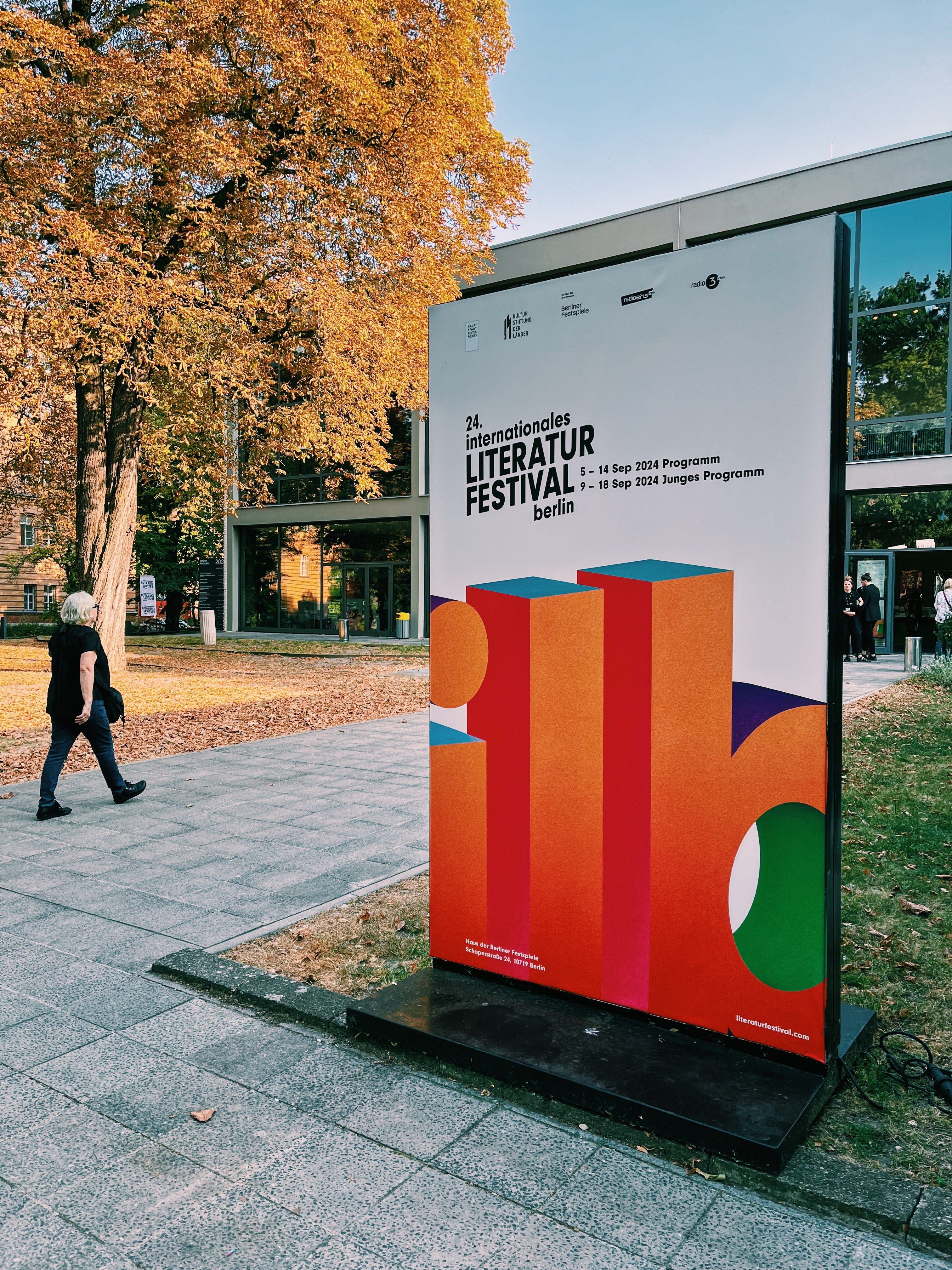
The biggest and most German event. A lot of books and talks are in German first or with synchronous translation into German. Usually, there is a yearlong focus led by the Curator in Residence — last year, it was Cristina Rivera Garza, bringing in many Spanish-speaking authors (with simultaneous translation into German). But there are so many events that they cover a wide range of authors, languages, and topics.
Last year, it was the 25th annual festival, well-visited but not too crowded (up to 20-25K). Usually located at Haus der Berliner Festspiele (in Wilmersdorf) that has several event areas and a cafeteria, it also covers other locations — for example, Dokumentationszentrum (at Anhalter Bahnhof). Do check the location of the specific event closely for better planning, and check for last-minute stage changes once you’ve arrived; the Berliner Festspiele’s stages are sometimes switched due to too many or too few tickets sold for a given event.
Happens for a week in September. Some events sell out very quickly (Wim Wenders’ reading, for example, or the interview with R. F. Kuang). It’s best to plan just after they release the program. They release the “young program” first (a week before the ilb event), then the regular one.
There is a festival pass to get unlimited access, but it is quite pricey. The thing is, buying several event tickets will also cost you three digits in euros. One event could be 15 or even free, but if you want to go to many things as I usually do, it’s not cheap.
Books sold at the reception area are mostly provided by Dussmann, with some also provided by publishers and authors.
Some events happen outside the festival timeframe but are still considered part of it: for example, in March 2025, Chimamanda Adichie was in Europe and was invited to give a talk. It was advertised on IG and quickly sold out.
A good way to follow the news is their newsletter and IG account.
Happens over a weekend in June on Bebelplatz: Sat-Sun. Very hot during a sunny day 🥵
There are several tents/stages with an extensive program. Usually there are discussions with authors, panel discussions, and readings (when the authors sit and read for 50 minutes and everyone listens; haven’t seen this before arriving in Germany). If the author is on the stage, you can usually buy their books and stand in the signing queue.
Around the stages, kiosks from the publishing house and bookstore representatives sell books and merchandise.
There are several lunch and coffee kiosk options (try the chicken barbecue if you can!); a toilet is available in the nearby building.
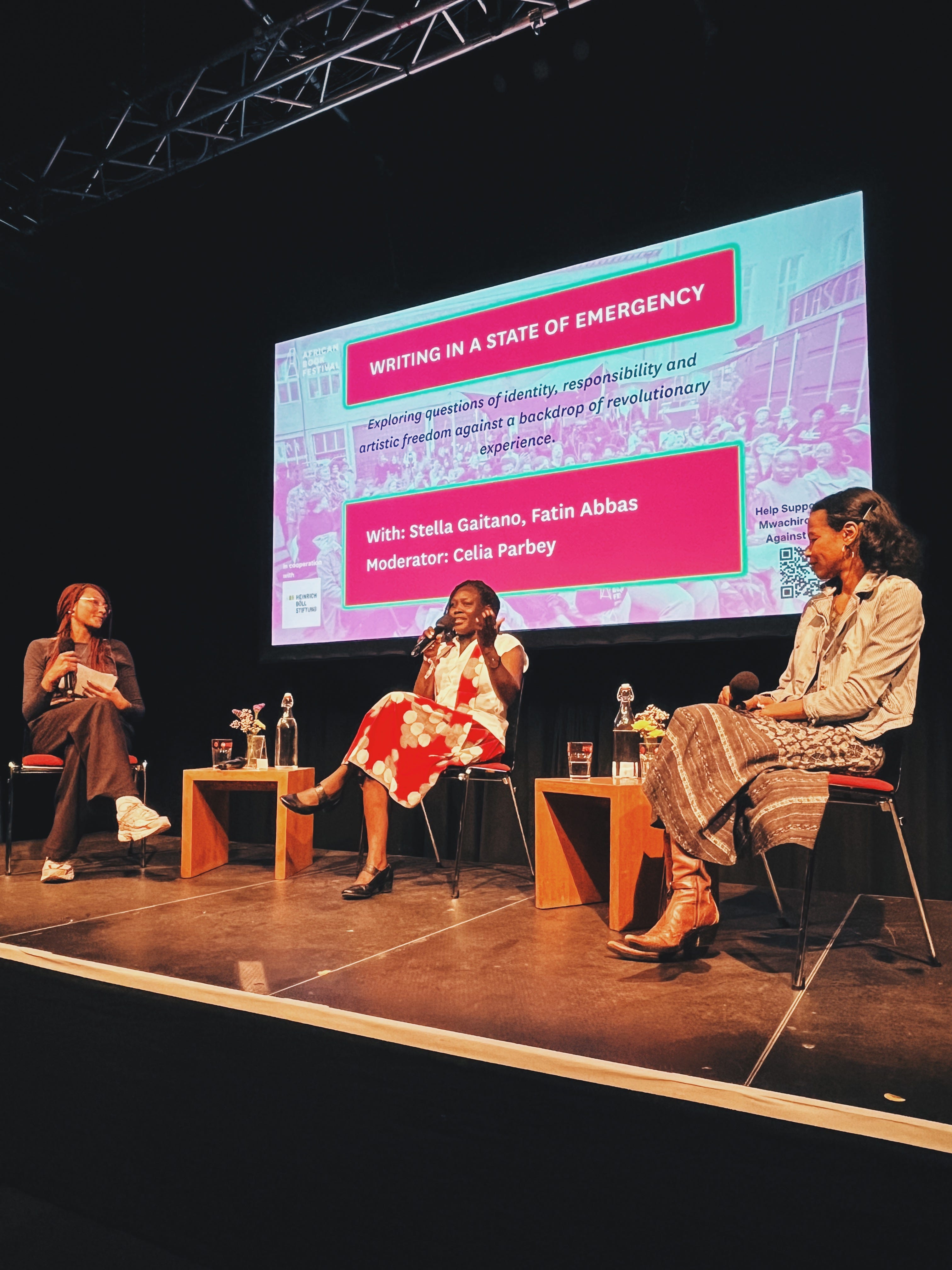
Language: mostly English, but some talks and books are in German.
Happens in May or June for a long weekend: from Fri to Sun.
Organized by InterKontinental (a publishing house & a bookstore in F-hain) — books sold are provided by their store and sometimes by the authors themselves. Books are subject to availability; for example, the English version will be sold while stocks last. So don’t postpone buying if you’re really into something; there might be no more copies for weeks.
The setup: several stages, author discussions, and panel discussions. Books are sold in parallel. Spicy food available for lunch.
Usually, everything happens in one location, though that location can change from year to year.
There is a topic of the year. In 2024, it was “queer literature”. This year, the festival was curated by the community, bringing fresh air to the planning process.
A three-day pass is always cheaper; early-bird tickets in March sell out quickly. But it’s a leap of faith, as you don’t know in advance which events you’d like to visit.
A good way to keep up with the news is to follow their IG account.
Happens in April.
Has book discussions and even guided tours.
I haven’t been there yet.
A gathering for 300 independent publishers. In German.
Happens in October-November over the weekend.
I haven’t been there yet.
Established by HKW and the foundation Elementarteilchen (Hamburg). It is the Prize for Contemporary Literatures in Translation (into German). Supports bringing diverse literature to German readers.
This event helped me to better understand the local landscape of translation. It was also very stylish. I loved the ceremony in HKW (which was free to attend). I was curious to listen to how translators speak about their important work.
It was in German and in English with synchronous translation into German.
From the website:
The International Prize for Literature (ILP) is awarded for the eighteenth time in 2026. It honours an outstanding work of contemporary international literature and its first translation into German. This dual focus makes it unique in the German award landscape.
The International Literature Prize is endowed with 35,000 euros (20,000 euros for the author, 15,000 euros for the translator).
The International Prize for Literature concentrates on heterogeneous forms of contemporary narration and focuses on the relationships between texts and realities as well as the dialogue between different cultures and languages. By focusing on translations, it aims to overcome national canonizations and limited understandings of the literary and thus takes into account the current conditions of literary creation in a world shaped by diverse cultural interdependencies.
Art Fair and Book Festival spans over a week; the main event is on the weekend.
Entrance is free.
It changes locations and seasons. In 2024, it happened in October in HKW. This year, it will take place in June at Silent Green.
Some niche publishers come to present their work and interact. Some rare zines and objects could be found at the fair. During the festival week, there are events and happenings.
From the website:
Founded in 2009, Miss Read has grown into Europe’s leading art book fair, which functions as a vital platform for independent, artistic, and critical publishing. Locally rooted and globally connected, the festival is committed to promoting cultures and communities from all over the world.
Continuing its shared exploration into Decolonizing Art Book Fairs, Miss Read is committed to broadening the spectrum of what publishing represents and aims to nurture different cultures and communities from around the world. This year’s focus on Bibliodiversity is dedicated to publishing as artistic practice, to the cultural diversity of reading and writing and to the ecosystems of independent publishers and artists.
Happens in May over the weekend at the Museum of Communication. It’s a great location to visit in addition to the event!
The entrance is paid.
A lot of smaller independent artists present their work (stickers, zines, books, prints, etc). Items that usually require additional delivery charges can be purchased directly from the artist here. They prefer cash.
Supporting local (and migrant) artists is the best ✊🏻
Literally, “All Berlin reads the same book.” The concept originated in the US (“One City, One Book”) and supports writers and books, as well as readers, bookstores, and libraries.
Every year, a book is announced, and many events follow. Mostly, the author sits for an hour in a local library and reads excerpts from the chosen book. The catch is that the book sometimes is not new, so it might be that the author has already written something else. I wonder if they enjoy reading from an older book again and again. But I love the idea of promoting literature.
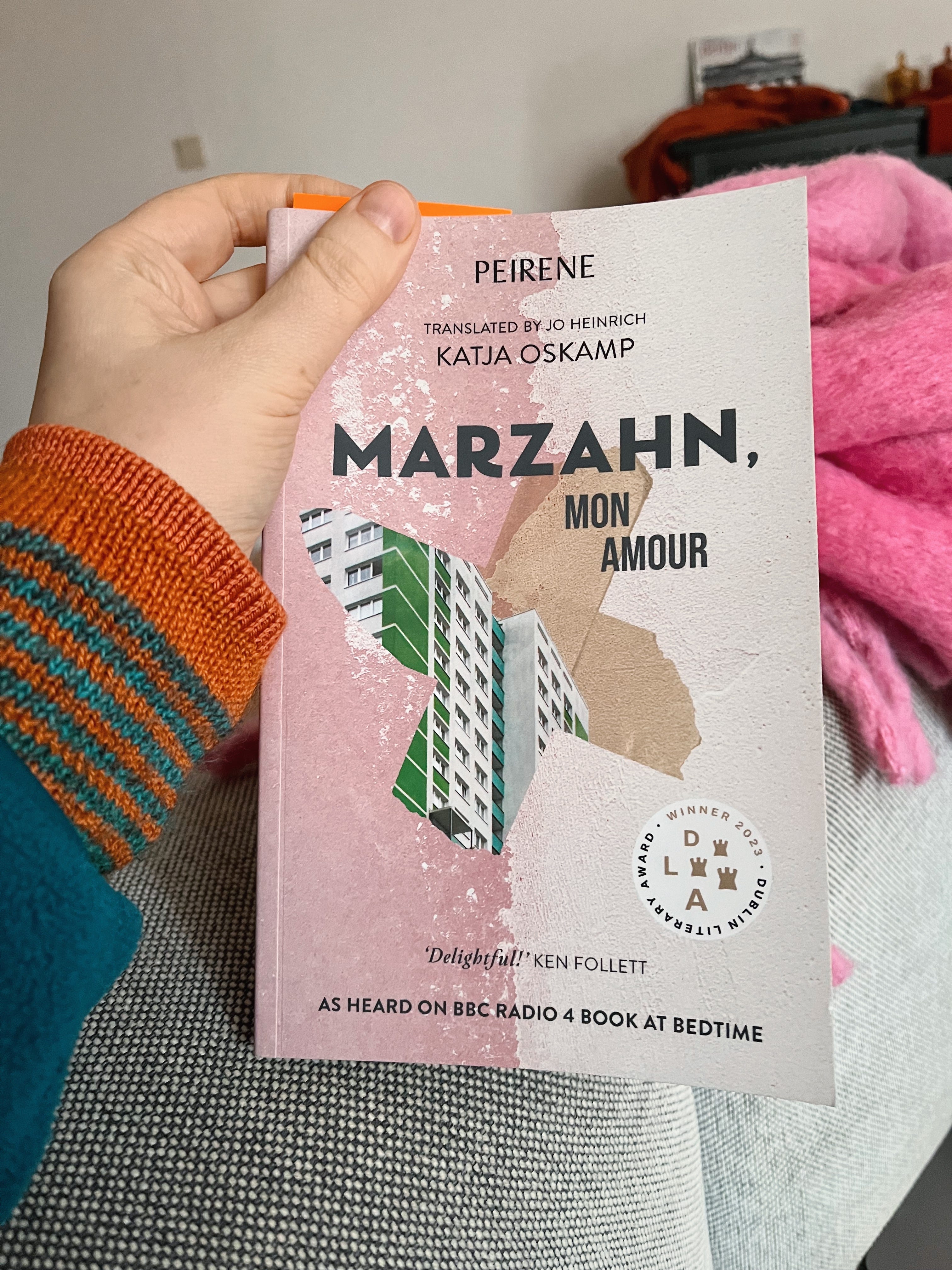
In Berlin, books of the year are mostly connected to the city (one example is “Marzahn, mon amour,” which you see in the photo below and is mentioned in my list of books about Berlin). The event is sponsored by Radio Eins.
There are similar events in many other German cities as well, for example:
A long weekend, Fri-Sun, in October.
Tickets: around €30 per day, €60 Fri-Sun.
Very busy: over 200K visitors in 2025.
A long weekend, Thu-Sun, in March.
Very busy: over 300K visitors in 2026.
Thank you for reading 🫶🏻
I am happy to hear your thoughts — in a comment or email.
No posts
Comments
Nothing yet. Say the first thing.
Sign in to join the conversation.