
Since I emigrated four years ago, I’ve been looking for a balance.
A balance between staying true to myself and inevitably changing according to the different environment.
A balance between looking inward and connecting with the world around me.
Here, you get your weekly updates on my anchoring process.
A balance between keeping up with existing (mostly online) friendships and building new connections.
A balance between German-speaking, English-speaking, and Russian-speaking activities, people, and communities.
A balance between work, study, rest alone, and time with people.
A balance between consuming and producing.
A balance between doing and being.
A balance between enjoying what I have today and investing in what I will need tomorrow.
A balance between learning the local history and connecting with the bigger world.
A balance between remembering and forgetting.
A balance between understanding the local rules and politics, keeping up with the homeland news (ideally, in a way that doesn’t rob me of all of my energy), and knowing what is happening everywhere else.
As you can imagine, I failed here and there, planning without a good result, overinvesting here and there, missing great opportunities, under- or overestimating myself and others, working too much or with a wrong focus, not resting at all, suffering from loneliness and misunderstanding, and then, on top of it all, having to process every change that I didn’t account for in my planning.
It was pretty chaotic. I still survived. I cannot say I’m doing amazing now, but I’m stable, and I enjoy the new life I’d built.
I managed to find local connections without losing (all) online friendships. I managed to learn my fifth language, and now I am balancing my first, second, and fifth (sometimes with overwhelm). I miss my fourth, but there is no space for it right now.
I learned to like and trust the city I’ve landed in. I know Berlin pretty well by now, and I enjoy living here.
The only thing that was still lagging was cultural and societal updates. The thing we call “news”, and the thing we call “politics”.
If I hadn’t unfollowed all the news from my home country in 2022 while emigrating, I wouldn’t have any headspace for new stuff. And there was a lot of new stuff. I needed some separation, even from the good, hard-working, independent journalist outlets. I needed to learn those der, die, and das. And then, the difference between Bundestag and Bundesrat (while wondering why there wasn’t any Bundesnacht).
A couple of years in, having earned a sehr gut B1 certificate together with 33 out of 33 questions answered correctly on the Einbürgerungstest, I could breathe a little. Reflect. And analyze what was missing.
I started asking questions. How were other immigrants drawing the line between that country and this country? How much energy and time did they put into consuming news, language, memes, and mass media here and there? How much can one person follow without falling apart?
The first difference was that most immigrants (and all the expats) I got to know regularly traveled home, at least once a year, sometimes more often. They had a family there; I didn’t. They had friends there; most of my friends emigrated the same year as I did.
Many were on the phone with their family and friends every day, keeping the connection alive: to the language, to the culture, to the news, to the heritage. Some planned to go back, now or “when I retire.” They were connected in a different way, and their cultural/political interests showed it.
I left the country that wasn’t accepting me. I went for ramen or indian food B.E. (before emigration) instead of working on elaborate salads with mayo at home to invite people to feast for this or that holiday. I wasn’t religious or connected to any cultural roots. I felt more like a “St. Petersburg citizen” than a citizen of the country. Here, I am Russian.
But during the New Year, the biggest holiday of the year (compare it with Catholic Christmas), I sleep with earplugs instead of sitting at the table with salads. I wasn’t even drinking alcohol for years, and I’ve never drunk vodka clean. One person who’d learned this recently said, “You’re not Russian, then”.
Our family was regularly changing cities before I was born because of the nature of my grandfather’s work, so we didn’t have any connections with his extended family even when he was alive. St. Petersburg was the city of my choice; there was no family history.
I was the only child, as was my mother. I didn’t have any aunts or uncles growing up, so I didn't have to lose the connection with them by emigrating either.
There is a well-known song in the “The Irony of Fate” Soviet film that everyone watches on the 31st of December, chopping boiled vegetables for the salad (I do only the watching part).
It’s called “To Have or Not to Have” (and every song from that movie is similarly philosophical).
If you don’t have a house at all,
Then fire won’t scare it one bit,
And your wife won’t run off with some other man,
If you don’t have a wife.
If you don’t have a dog of your own,
Your neighbor can’t poison it dead,
And you’ll never get in a fight with a friend,
If you don’t have a friend.
The orchestra blares with its basses,
The trumpet player blows out the brass.
Think for yourselves, decide for yourselves:
To have, or not to have.
If you don’t have an aunt of your own,
Then you can never lose her, you see,
And if you are not really living,
Then you don’t have to die.
Culture and identity
Russian immigrants in Germany are rarely single. Most of the people I got to know arrived with their partners, children, and pets. They speak Russian at home. I didn’t (and don’t plan to have anyone Russian-speaking at home now). I’m okay with my numerous voice notes from my bestie who lives 12 time zones away instead. But what I want to say, it’s difficult to compare my ‘lifestyle’ to what I see around. People usually live differently.
Russian immigrants in Germany buy certain food for the New Year. They celebrate on the 31st of December with red caviar and herring in the fur; they gather around the table with multiple salads that I never eat, New Year or not.
A friend celebrates Maslenitsa by not only cooking pancakes, but also teaching her child about this pagan celebration that comes before the Great Fast. She is also well-prepared before the Orthodox Easter, having painted all the eggs in the house and cooked a special Kulich.
For me, Kulich is too dry. And I can bake pancakes when I want them, not when the calendar allows me to. I don’t observe the Great Fast. I don’t even know when the Orthodox Easter is happening, and I’m always confused why it’s on different dates than the Catholic one. Can we merge them for efficiency? What I know by heart every year are the Ramadan dates, because I work with people who observe it, and I make sure to lighten their workload during the physically challenging time.
Having found too few similarities within the Russian emigrant circle, I tried to look in other pockets. But what I found were mostly differences, again.
People with stable friend groups were spending a lot of time together. Often this group was full of people from the home country.
After being coupled with a person from another culture, people put a lot of energy into actively fostering that new culture in their lives. Some partners learned their spouse’s language. Some foreign spouses frequented Orthodox churches—not because anyone was religious, but because this was what their partner grew up around. I cannot say I’m interested in this, although I also had seen a lot of them in my life.
Everyone was going back home, at least for Christmas, to see their families. To speak their mother tongue.
I could see that I, as always, was an outsider. But one question was still open, as it didn’t require a partner, a child, a big family, a love for specific cuisine, interest in religion, or traveling habits.
Identity. We know identity is flexible and it can change over time. It is also highlighted by the context, the surroundings you are in. When you move abroad, it can also adjust, as some characteristics were more visible before and others are more visible now.
“Maalouf spoke of identity as malleable and subject to the whims of society. According to him, an individual identified most strongly with the aspect of their identity that was under attack, and indeed in America it was not my gayness but my Arabness that was abject.”
— Guapa by Saleem Haddad
I definitely felt that my identity was being reassembled. It’s not that I could feel myself becoming German, but it’s that the distance between me and my home country helped me shape a new understanding. And the identity that was highlighted by the surroundings in St. Petersburg as something unusual (a single lesbian close to 40, no children or grandchildren in sight) is too unremarkable in Berlin; it doesn’t describe a person. Here, other characteristics are more visible. My Russianness. My higher education. My whiteness. My job or the sector I work in. My tax class. My interests.
I wanted to make sure that all my identities feel seen in my new life. And the question of rationing local and foreign news was still on the table.
Living in St. Petersburg, I was always looking for new queer books. Queerness was the identity that lacked representation back there, so I needed to feed it. Here, my life is pretty queer, openly so; this was the reason for my emigration. I now find books that were written by foreigners about my homeland.
The Day of the Homeland
After not following the news from the motherland closely for a couple of years (apart from the biggest ones that found me via friends and chats anyway), after trying to learn what all the political parties are up to in Germany and how the news is being made here in my spare time, I was kind of done.
I learned what there was to learn about the place I’m now in. I still don’t have any right to vote here, so it doesn’t matter what I think. I still can be politically active, too — and I am — but how do I want my information space to look? Do I still want to separate from the past with the focus on the current events of the country I have little influence on? It brings hopelessness to follow something you don’t have any say in. Familiar, burdening hopelessness. It didn’t feel right.
At the same time, I didn’t understand well what was happening with my friends back home. I lacked some context and asked stupid, foreigner’s questions, although I knew where to read. I didn’t want to place the burden of explanation on their shoulders, and now I had energy and space to look into it. And look into it I did.
In the last years, I watched movies and read books, followed independent sources again, and discussed things with my friends. My TikTok feed changed from language-learning German content to a political Russian-language one. YouTube became my television. Like in the days of MTV (ca. 2001) and Animal Planet (ca. 2007), I cut my onions and fried them for lunch while someone was chatting on the screen. Pretty soon I’d learned a lot — mostly sad and dark things — and became quite educated on the current events.
But I couldn’t stop. There was so much to know. In addition to the current news, bloggers were doing deep dives into history, my childhood, and the cultural layer. It was all exciting. But really far from my current life right here. It felt like a parallel world, and if I continued, it would have felt more real.
In a similar way, as I pulled too far away in the beginning, which was practical and useful, I pushed too close then. I needed to take a step back, and I didn’t know how. It was all relevant. But I didn’t have enough hours in the week to follow everything. And my physical life was now in German and English, and it felt neglected.
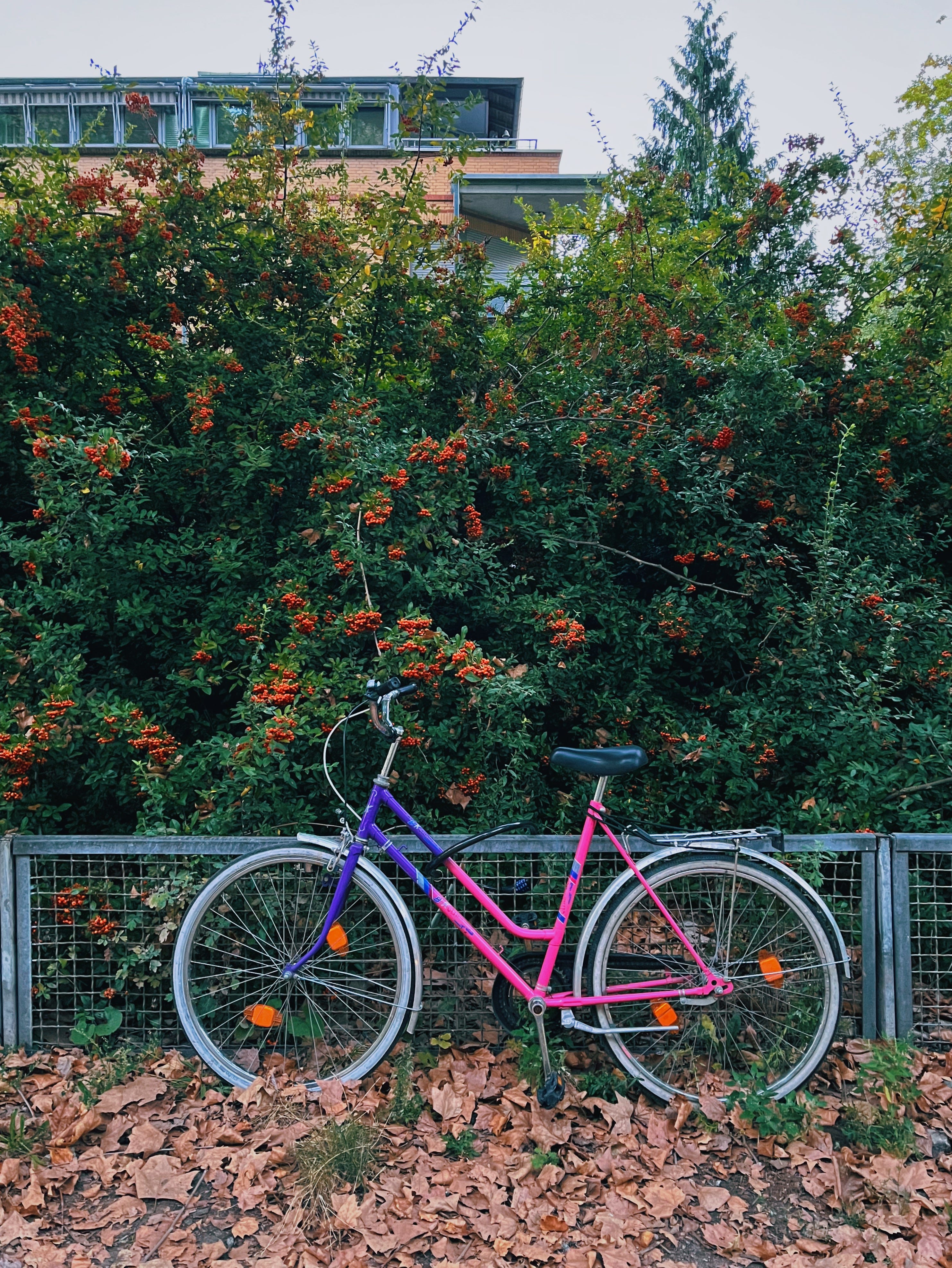
This is when the idea of ‘The Day of the Homeland’ surfaced. I declared one day of the week The Day of the Homeland. On that day, I am allowed to deep dive into any of the topics I wanted, be it politics, the 90s, or differences between supermarket chains. I feel connected without falling down the rabbit hole.
And if I notice anything curious on another weekday, I tell myself that The Day of the Homeland will come soon, and I’ll learn about it. It works.
It’s a balance. With these boundaries, I’m both informed and not overwhelmed. I am present in my life here, and I’m connected to the part of my identity that would be silly to pretend I don’t have. My curiosity is satisfied, even if it takes a couple of days of waiting.
During the recent call with my friend who didn’t emigrate, she referenced something I didn’t know about. A piece of news, quite dark and frustrating.
— That might have happened yesterday or the day before — I counted when the last Day of the Homeland was.
— Yes, the day before yesterday, — she agreed.
I’ll learn all the details next week.
Thank you for reading 🫶🏻
I am happy to hear your thoughts — in a comment or email.
Comments
Nothing yet. Say the first thing.
Sign in to join the conversation.