
A couple of months ago, I spent three wonderful weeks visiting my aunt in Italy. I was there filming recipes for my e-book, baking a lot, eating even more and, most importantly, picking up so many little cooking tips along the way.
My aunt’s fiancé is Italian, and over the years I’ve learned so many recipes and little kitchen secrets from his mum. Like every great home cook, she has her own rules and some of them are simply non-negotiable. She also has strong opinions about how certain dishes should be made, and after cooking with her, I have to admit she’s usually right.
And before we go any further, let me bust one myth: if you think Italians eat pasta for lunch and dinner every single day of the week, that’s simply not true. At least not in this family. During my stay, we enjoyed all sorts of meals — baked Romano peppers stuffed with meat and Parmesan, vegetable lasagne, eggplants prepared in different ways, hearty meat dishes, fresh salads and plenty of seasonal vegetables. I’ll be sharing many of those recipes here over time because they’re simply too good not to.
But today, I want to take you back to the lunch we put together on my last day in Italy.
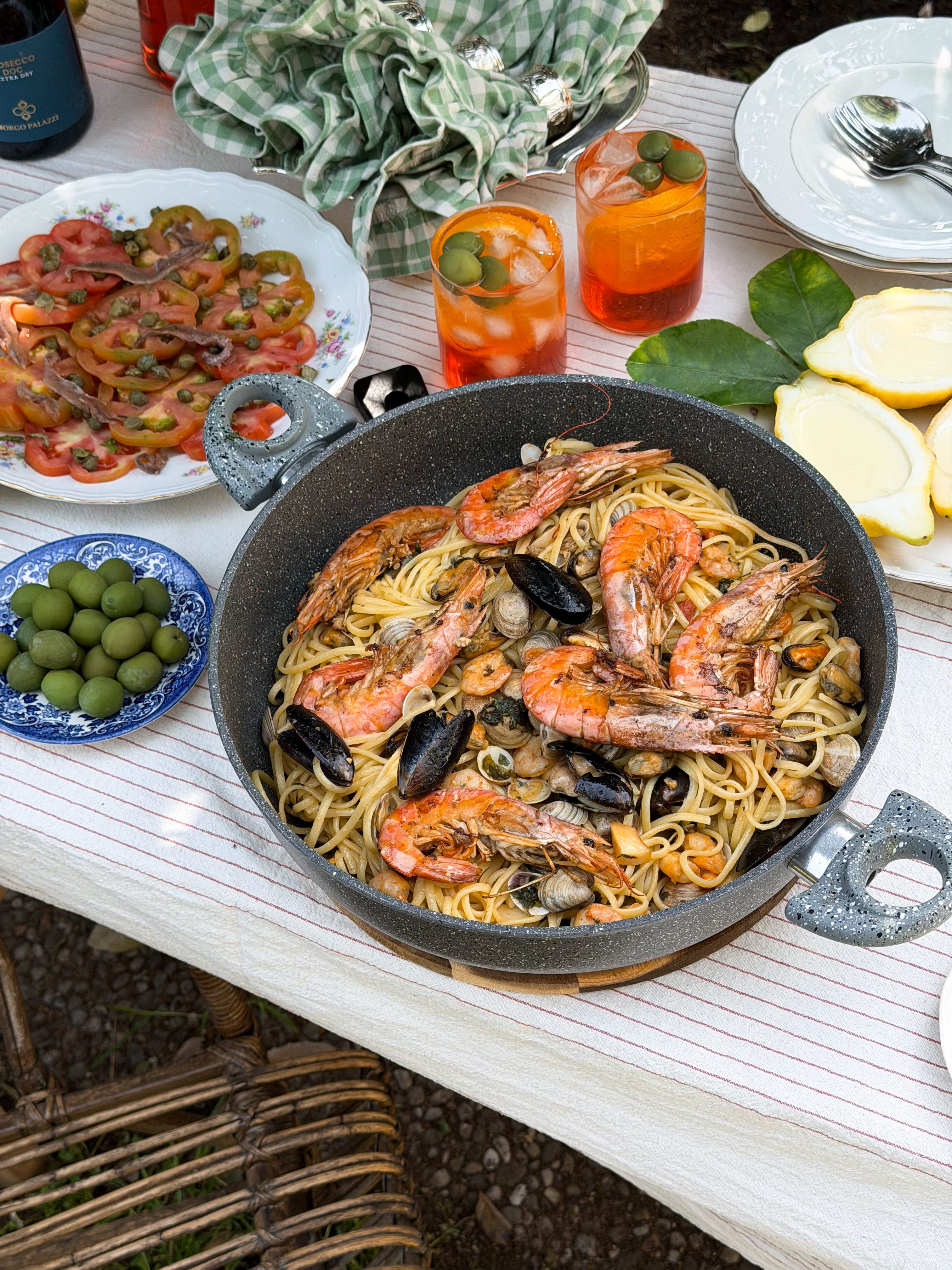
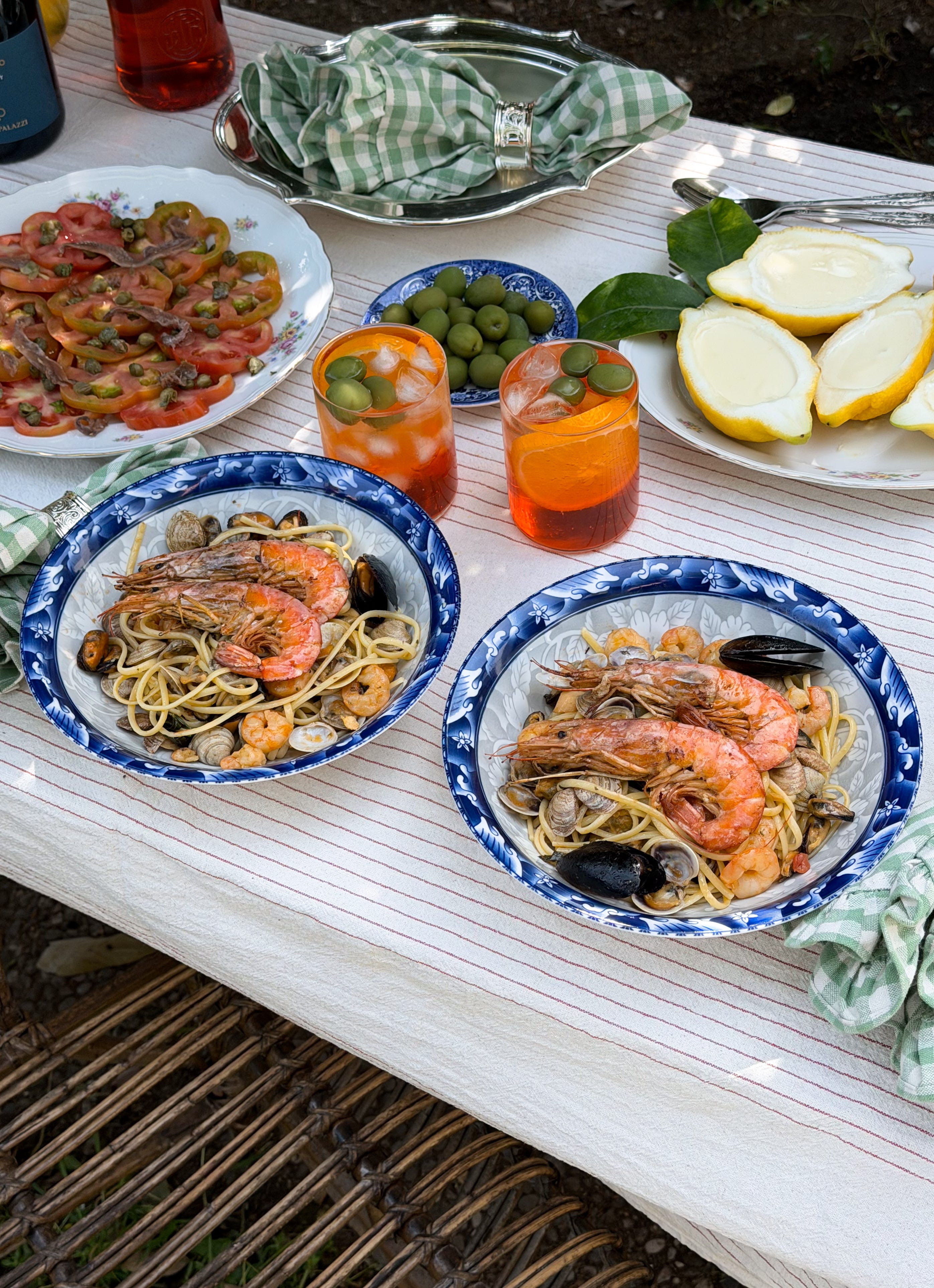
The beginning of May surprised us with beautiful warm weather, and after spending so much time in the garden, I couldn’t think of a better way to enjoy the afternoon than with a proper Italian-style lunch outdoors. I wanted something that felt simple but special, everything I love about Italian summer cooking: great ingredients, seafood, an Aperol Spritz and a table full of people.

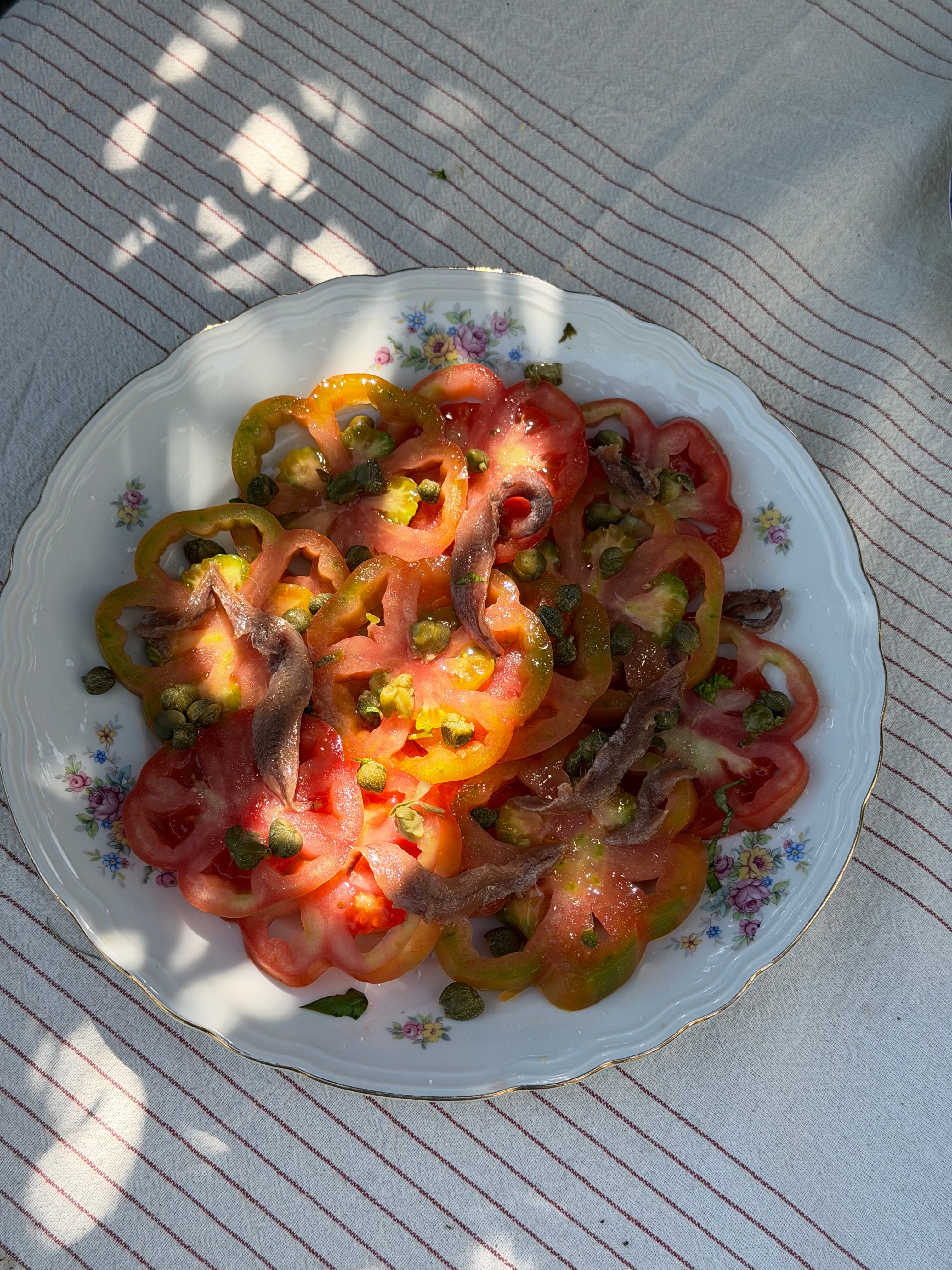
So the menu came together naturally: Pasta ai Frutti di Mare, tomato carpaccio with anchovies and capers, plenty of chilled Aperol Spritz and lemon possets served in lemon halves for dessert. I know, I know — lemon possets are British rather than Italian. But honestly, what could look more Mediterranean than little lemon cups filled with silky citrus cream? Exactly.
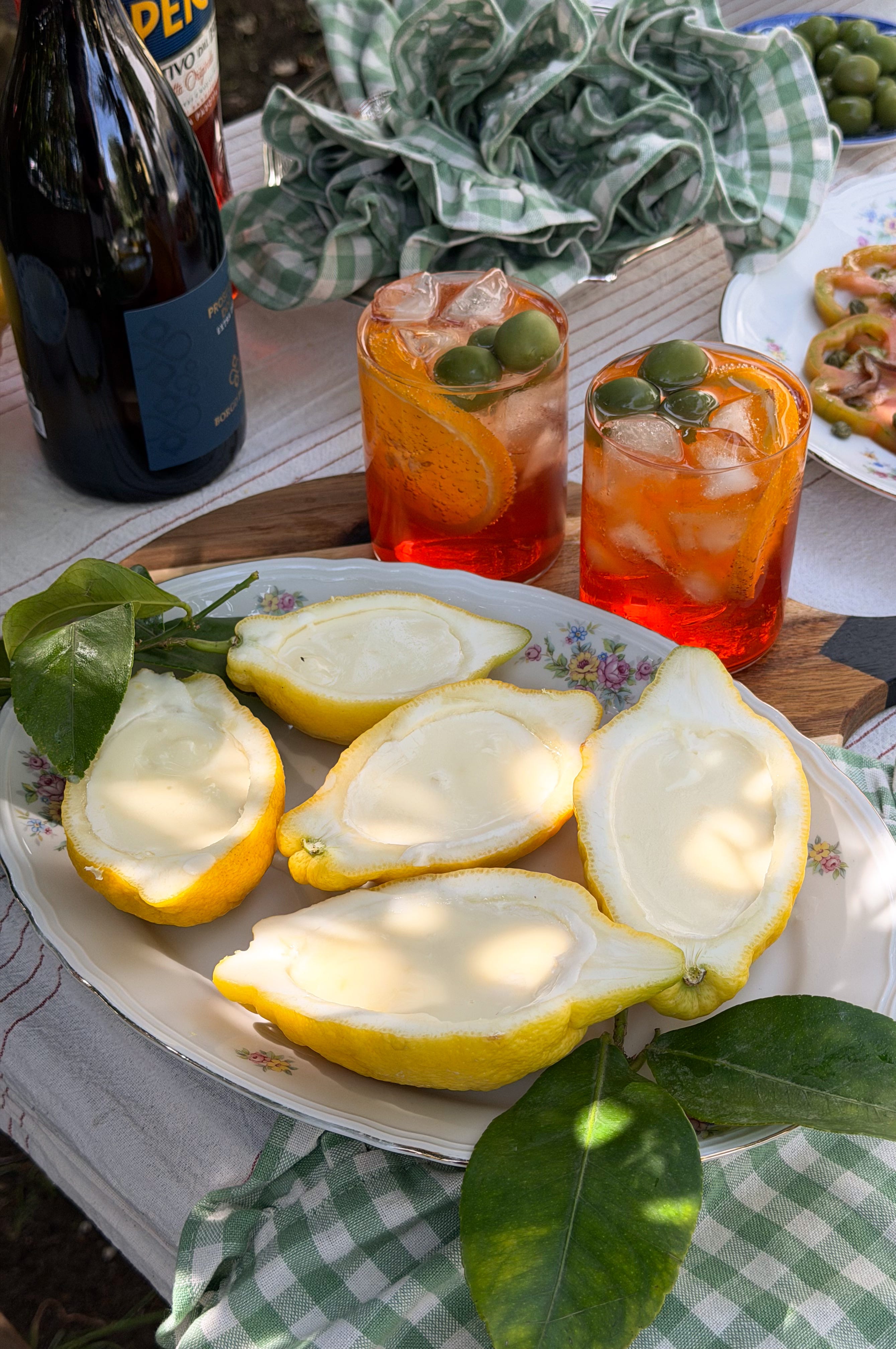
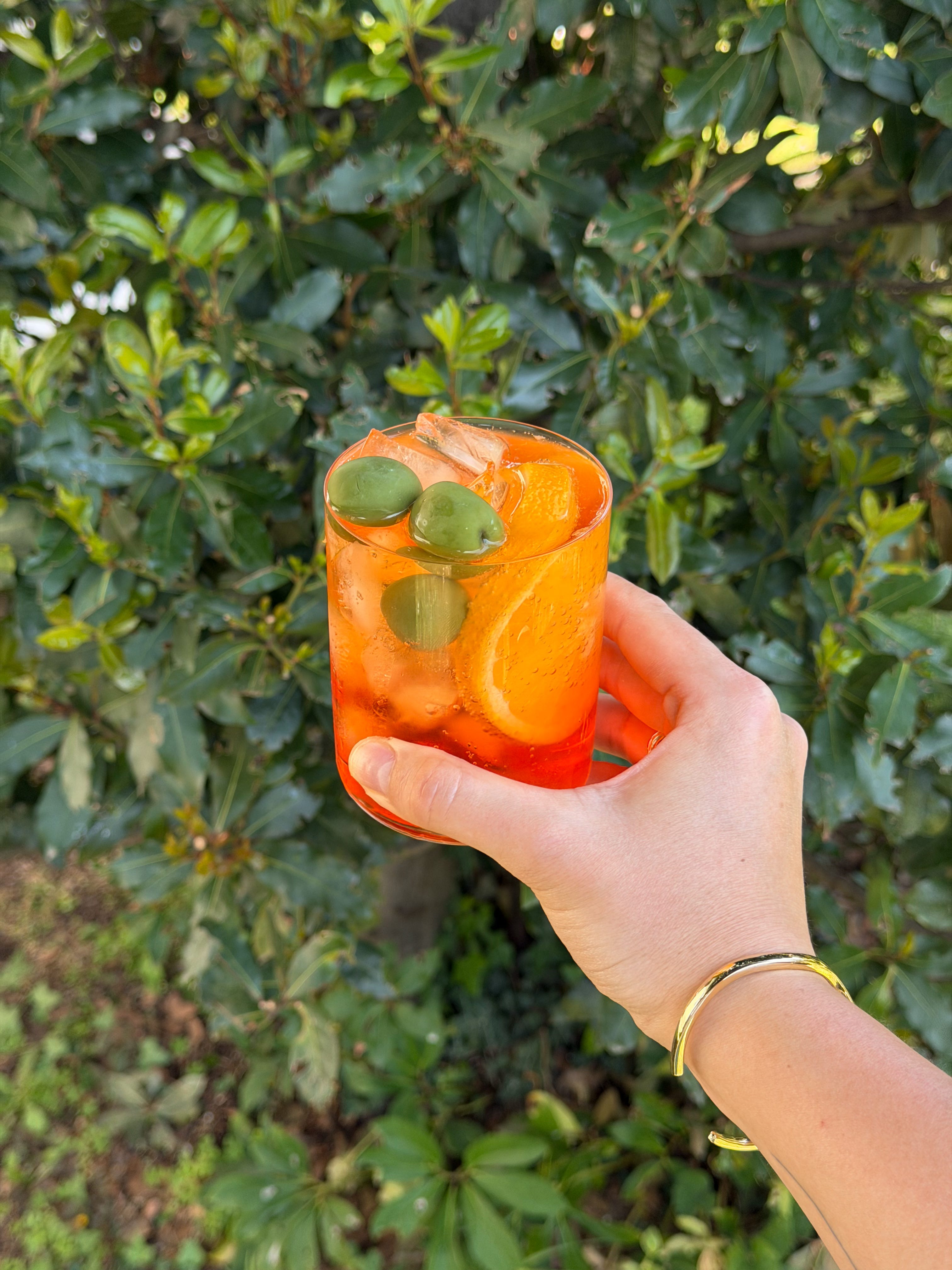
Soo…Let’s start with the Aperol.
To be completely honest, I never measure it. I just eyeball it every time. For me, the perfect balance is slightly lighter than you might expect: plenty of well-chilled dry Prosecco, a little Aperol, a splash of sparkling water (club soda or San Pellegrino both work beautifully), lots of ice and, of course, a generous slice of orange.
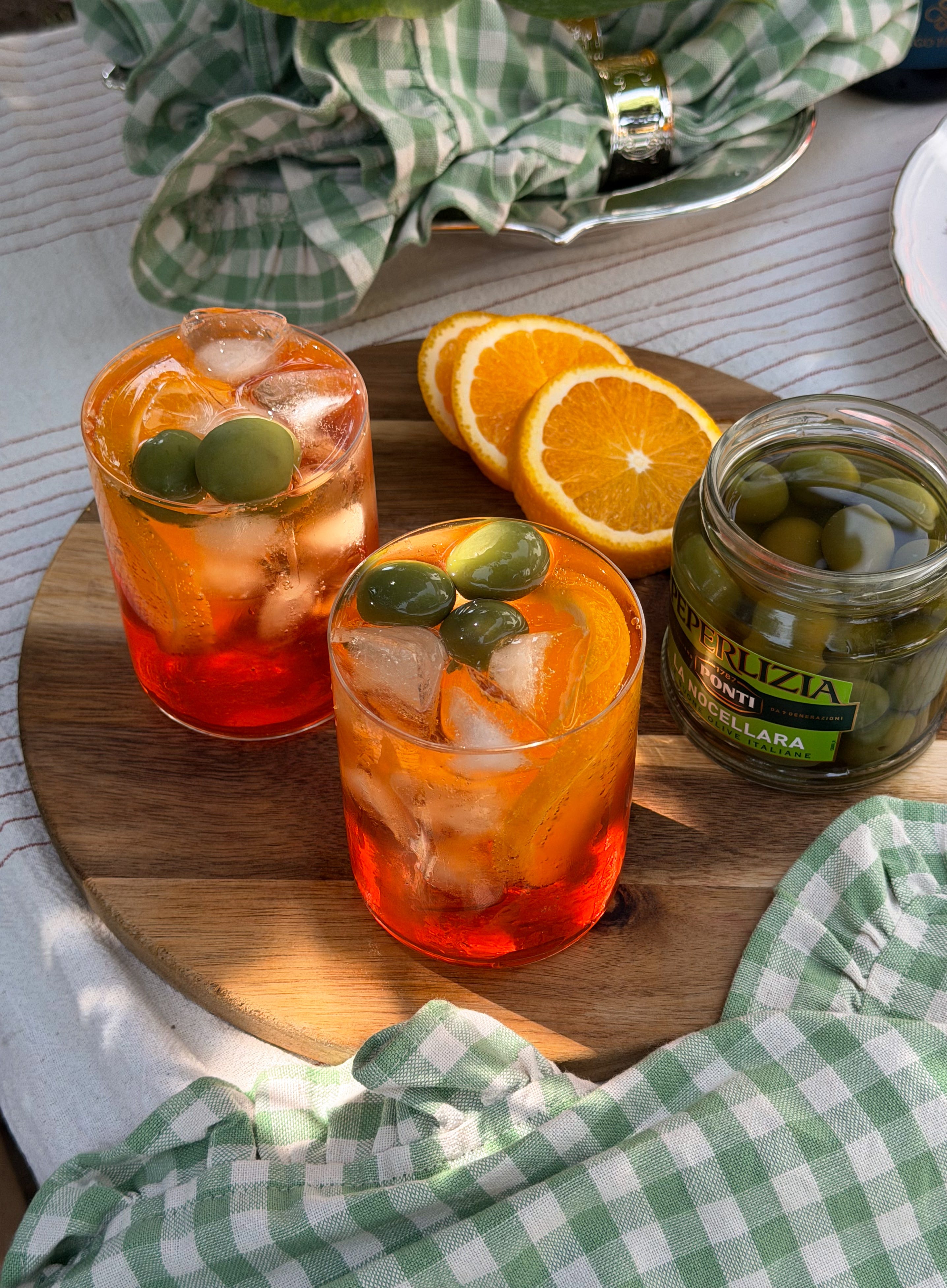
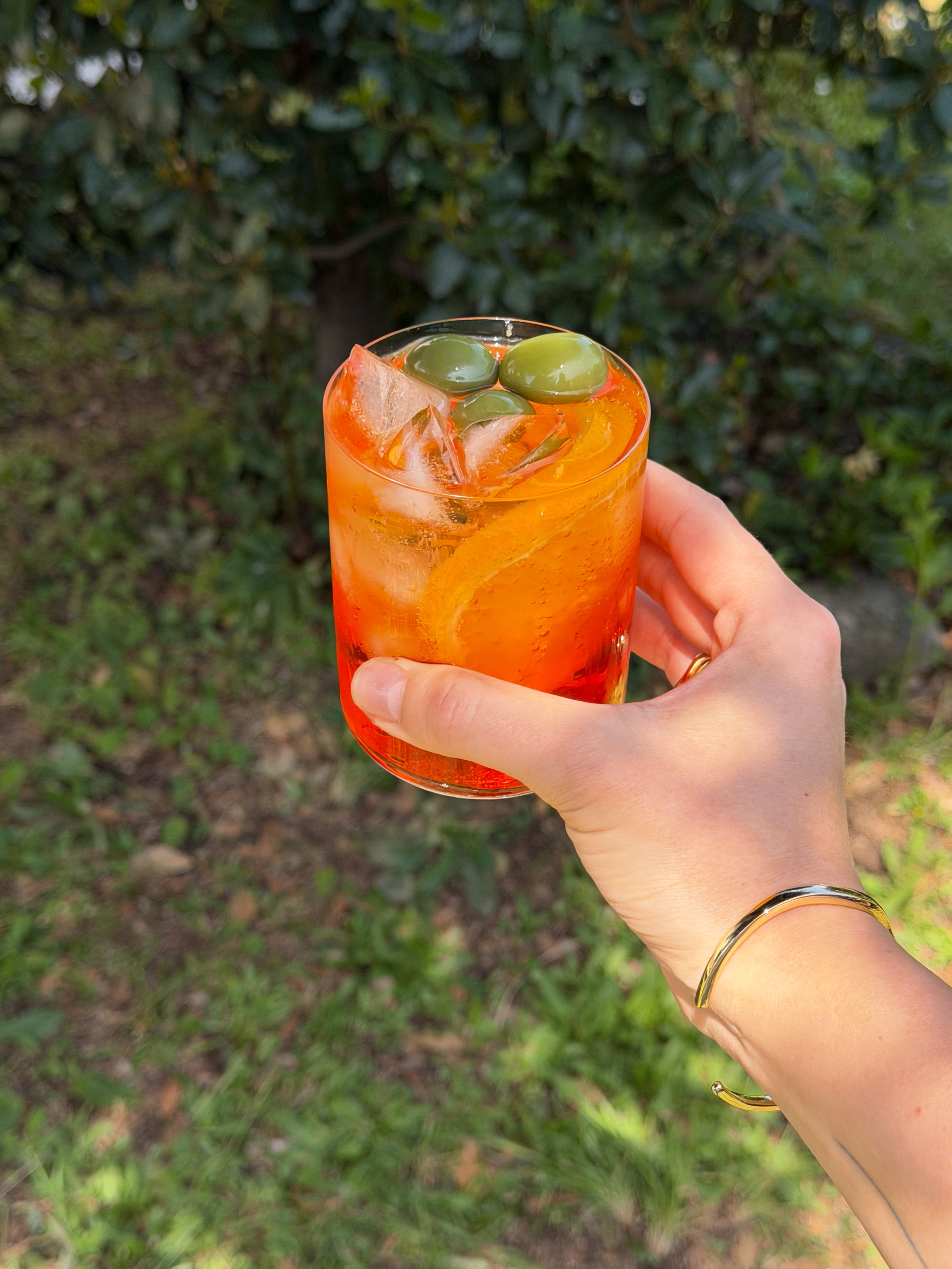
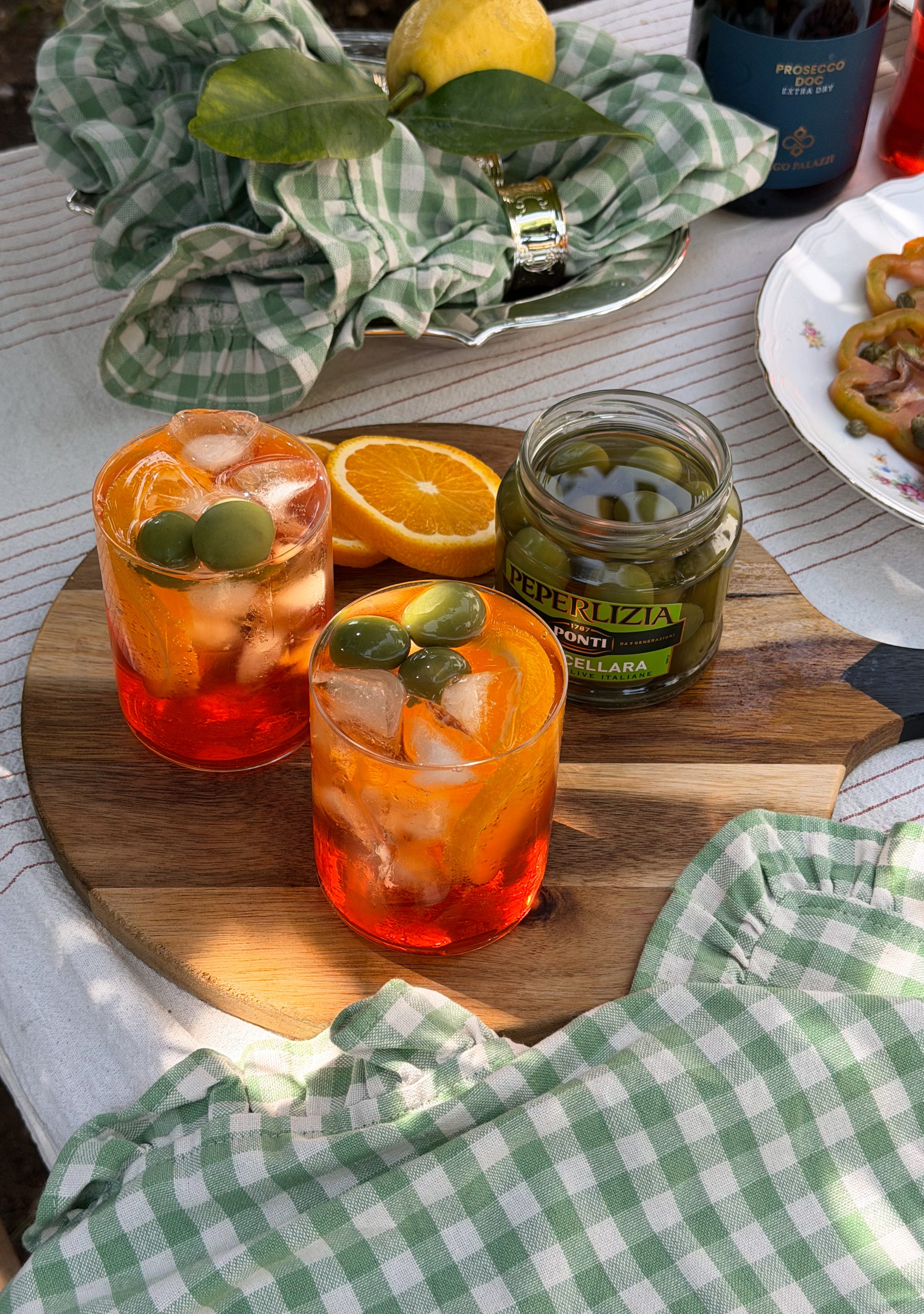
For one glass:
90 ml dry Prosecco
60 ml Aperol
30 ml club soda or sparkling mineral water
plenty of ice
1 orange slice
green olives for serving
Pour the Prosecco into a wine glass filled with ice, add the Aperol, top with the sparkling water and gently stir once or twice.
Finish with the orange slice and serve immediately.
Make sure everything is properly chilled before you start, I even like to chill the glasses beforehand
Now, onto the pasta.
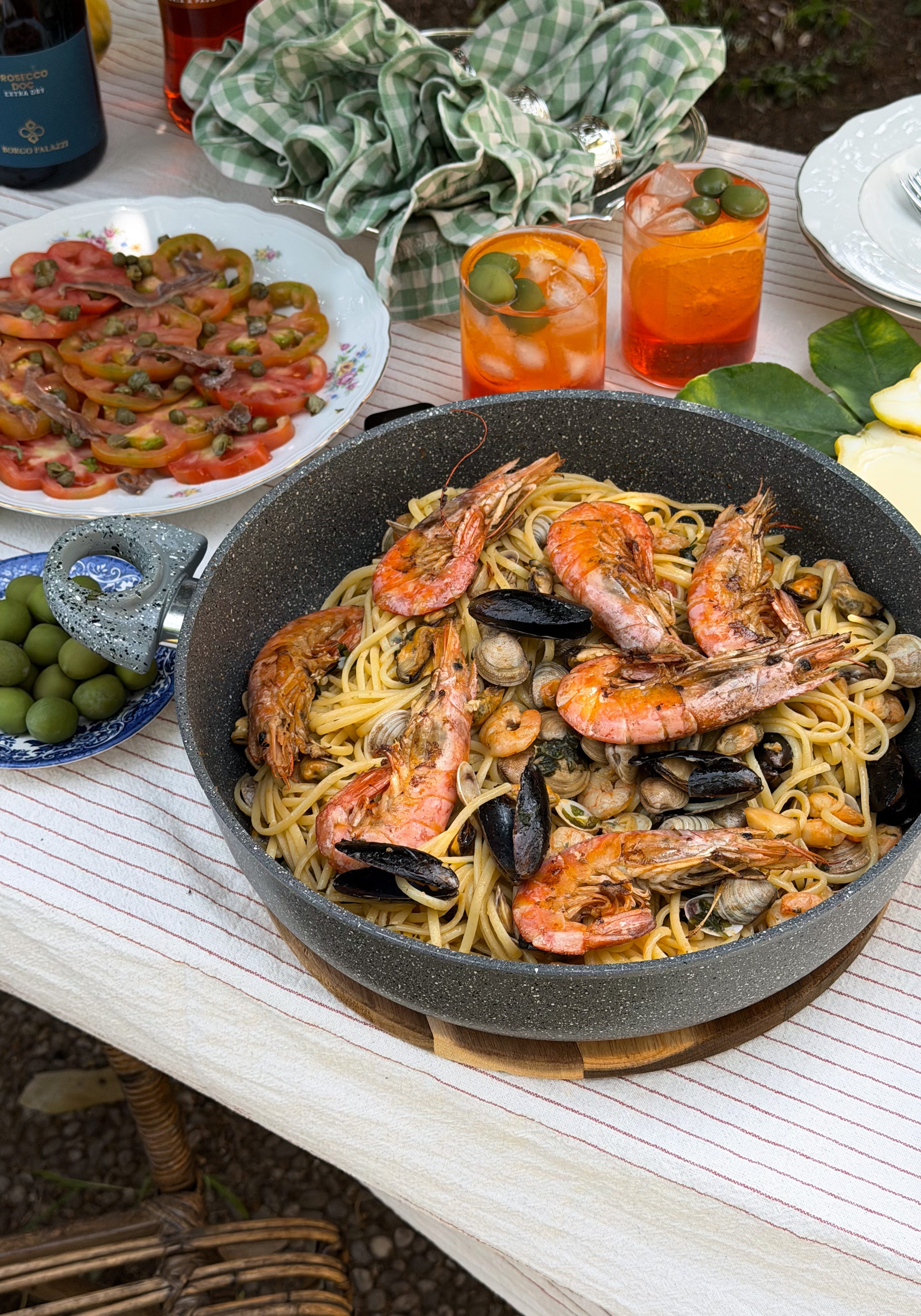
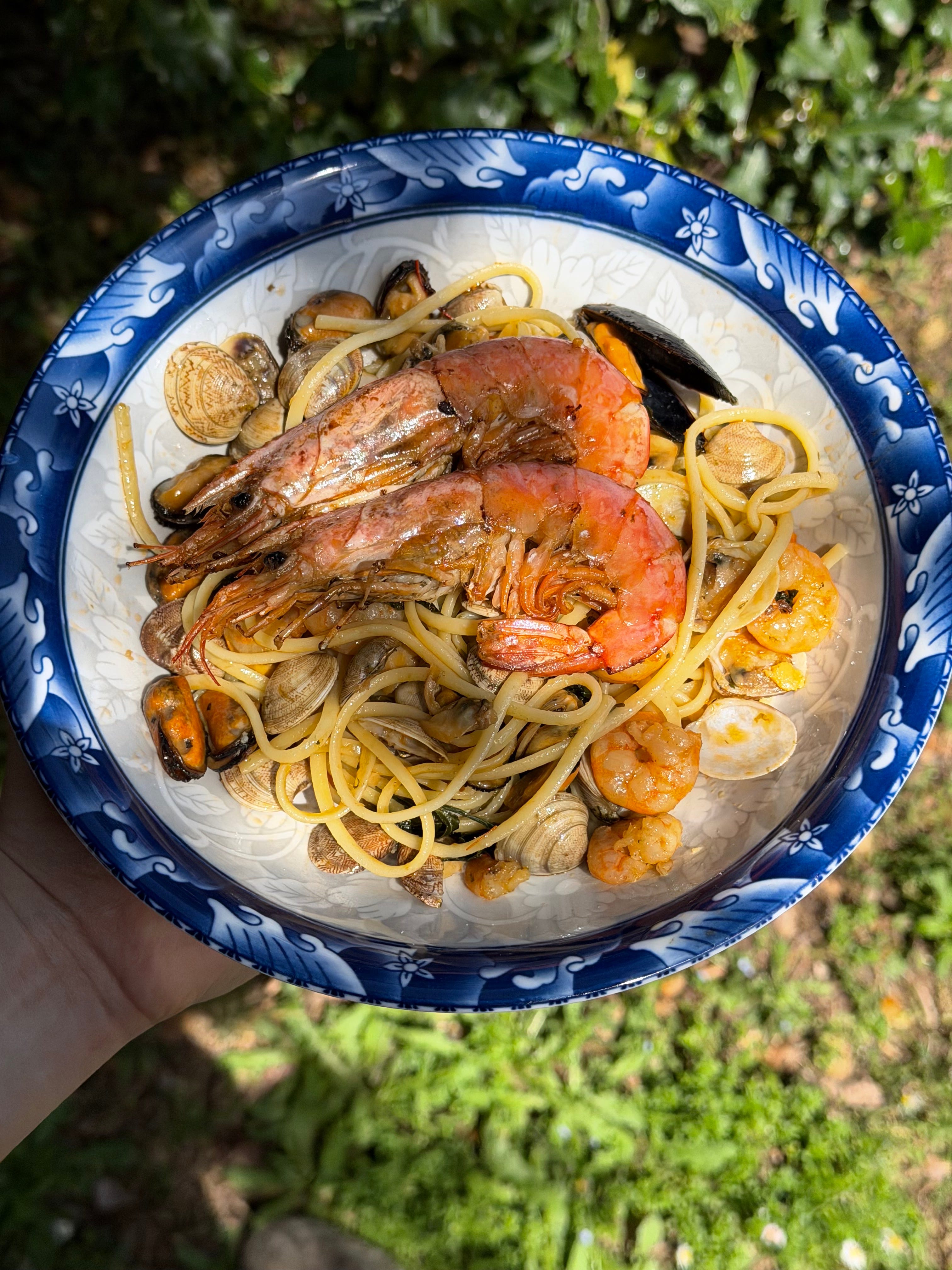
There are two classic versions of Pasta ai Frutti di Mare: in bianco, made without tomatoes, and in rosso, with a tomato-based sauce. We made the white version, which has always been my favourite because the seafood remains the true star of the dish.
I didn’t change a single thing about the recipe. We cooked it exactly the way my aunt’s future mother-in-law has been making it for years.
Like so many Italian recipes, it varies from region to region and from family to family. This version comes from northern Italy, and it’s the one I completely fell in love with.
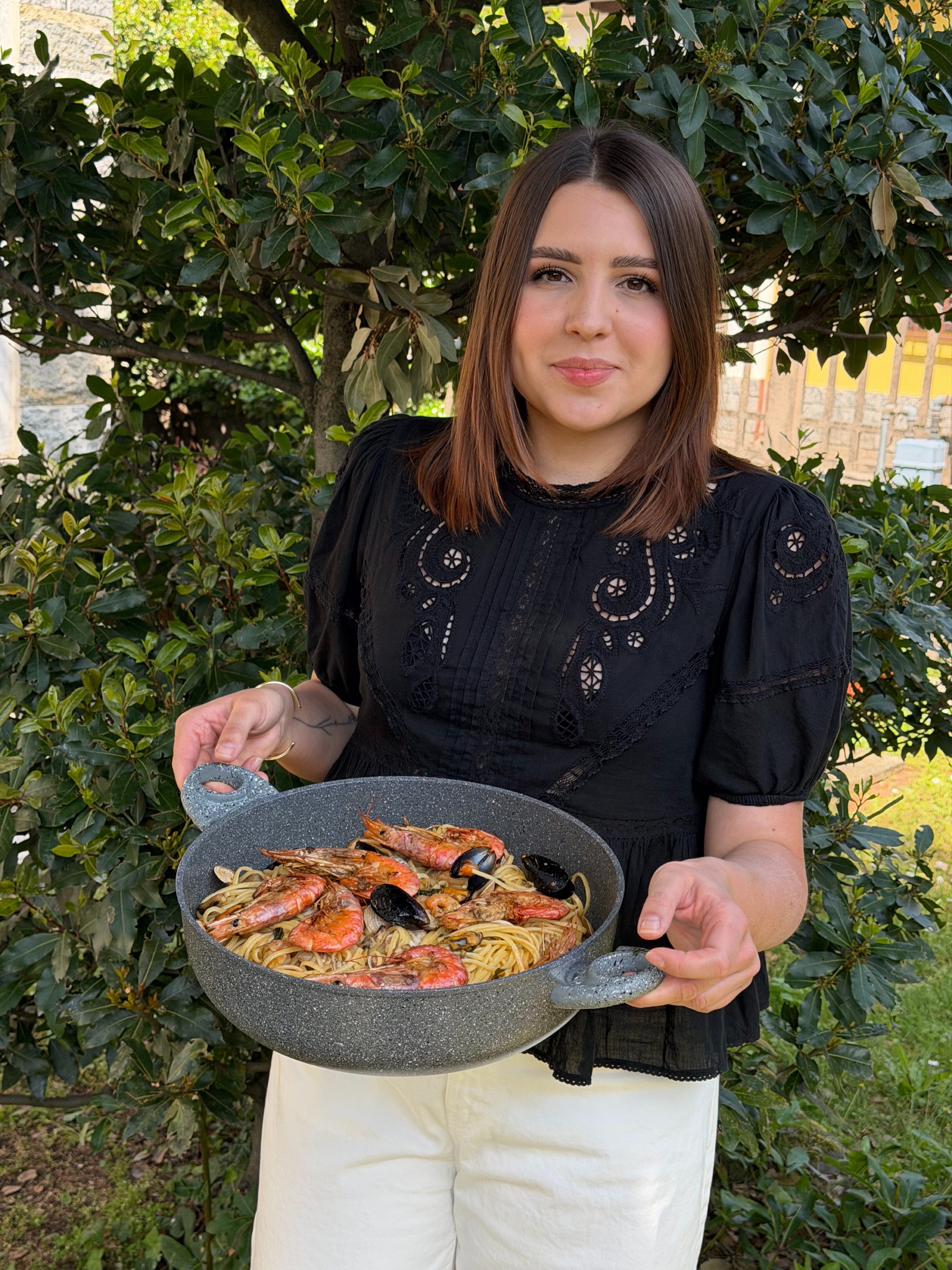
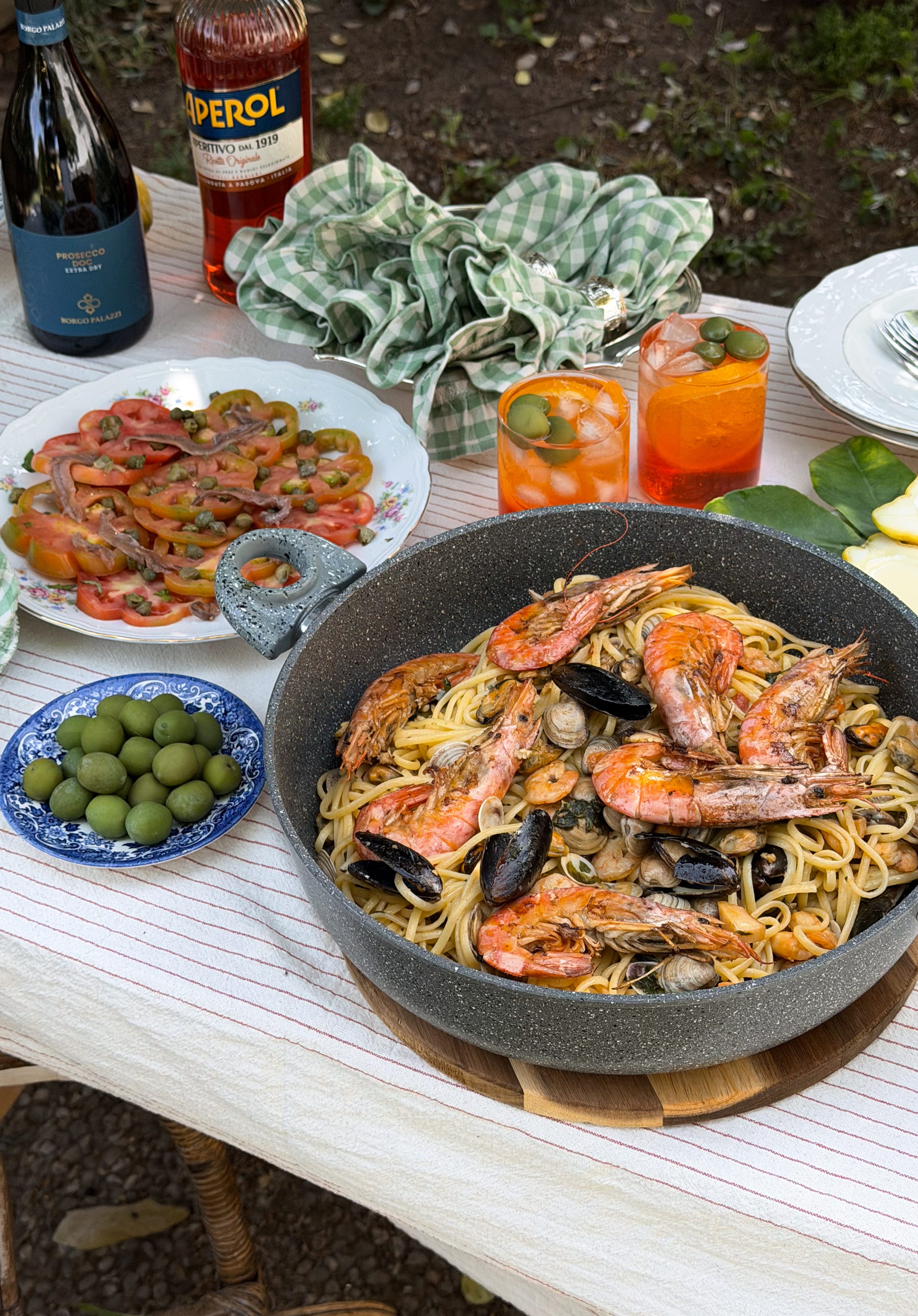
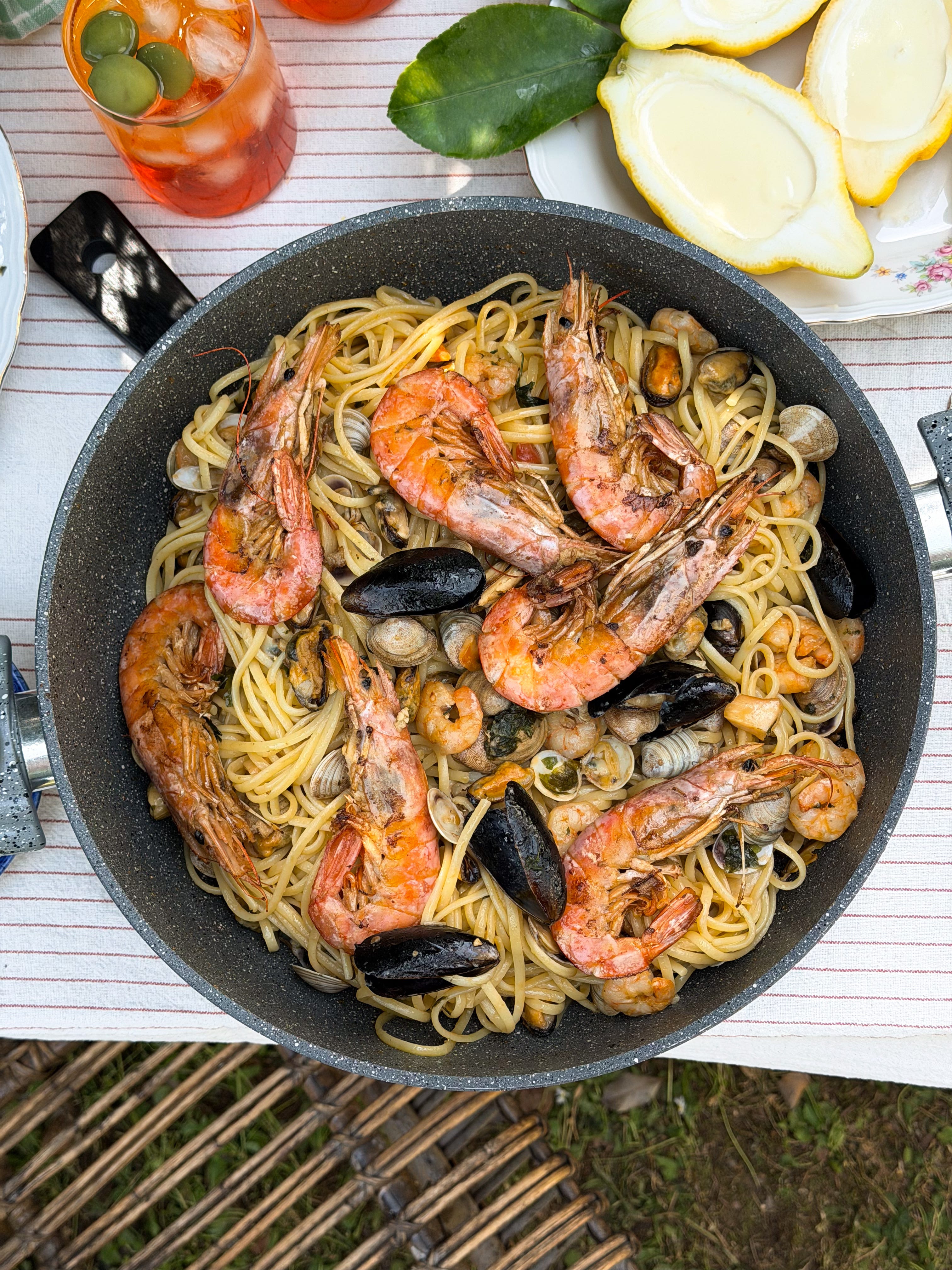
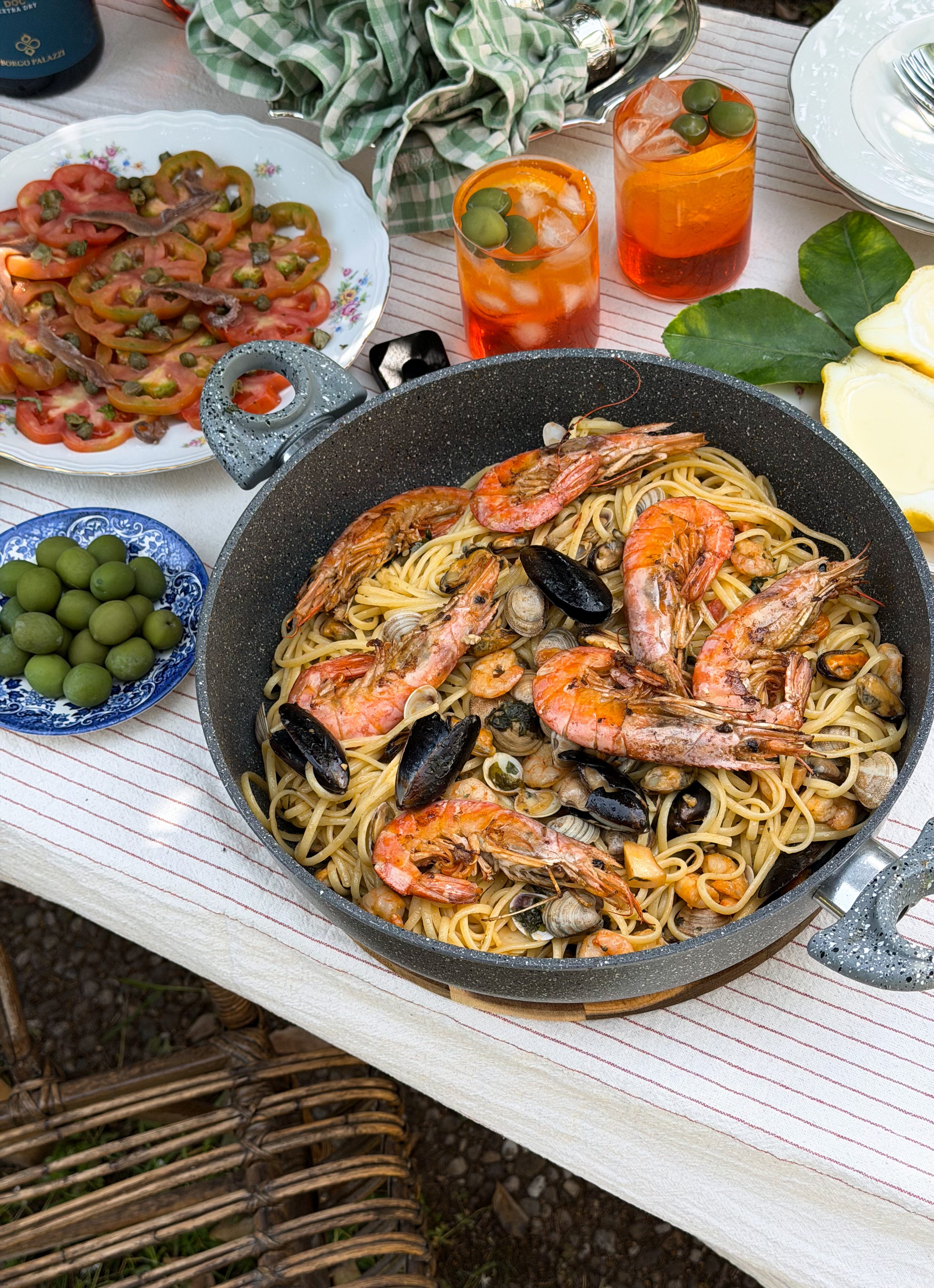
Serves 4
Before you start
Fresh mussels and clams should always be alive and tightly closed when you buy them. Soak them in cold water before cooking to help remove any sand. If any shell is open and doesn’t close when gently tapped, discard it. Likewise, once cooked, throw away any mussels or clams that remain closed.
If you’re using frozen mussels or clams, don’t discard the liquid they release as they thaw. Strain it through a fine sieve and add it to the sauce — it adds incredible depth of flavour.
Ingredients
400–450 g linguine or spaghetti
700 g–1 kg fresh mussels, cleaned
500–700 g fresh clams (vongole), cleaned
300–400 g raw prawns, peeled
6 langoustines (optional, for serving)
4–5 tbsp extra virgin olive oil
2–3 garlic cloves
100 ml dry white wine (optional)
a generous handful of flat-leaf parsley, finely chopped
sea salt
reserved pasta cooking water
Please read the recipe and all the notes before you start cooking. I’ve included lots of little tips that will help you get the best possible result
Method
Heat the olive oil in a large pan. Add the garlic cloves and let them gently turn golden to infuse the oil. Remove and discard the garlic.
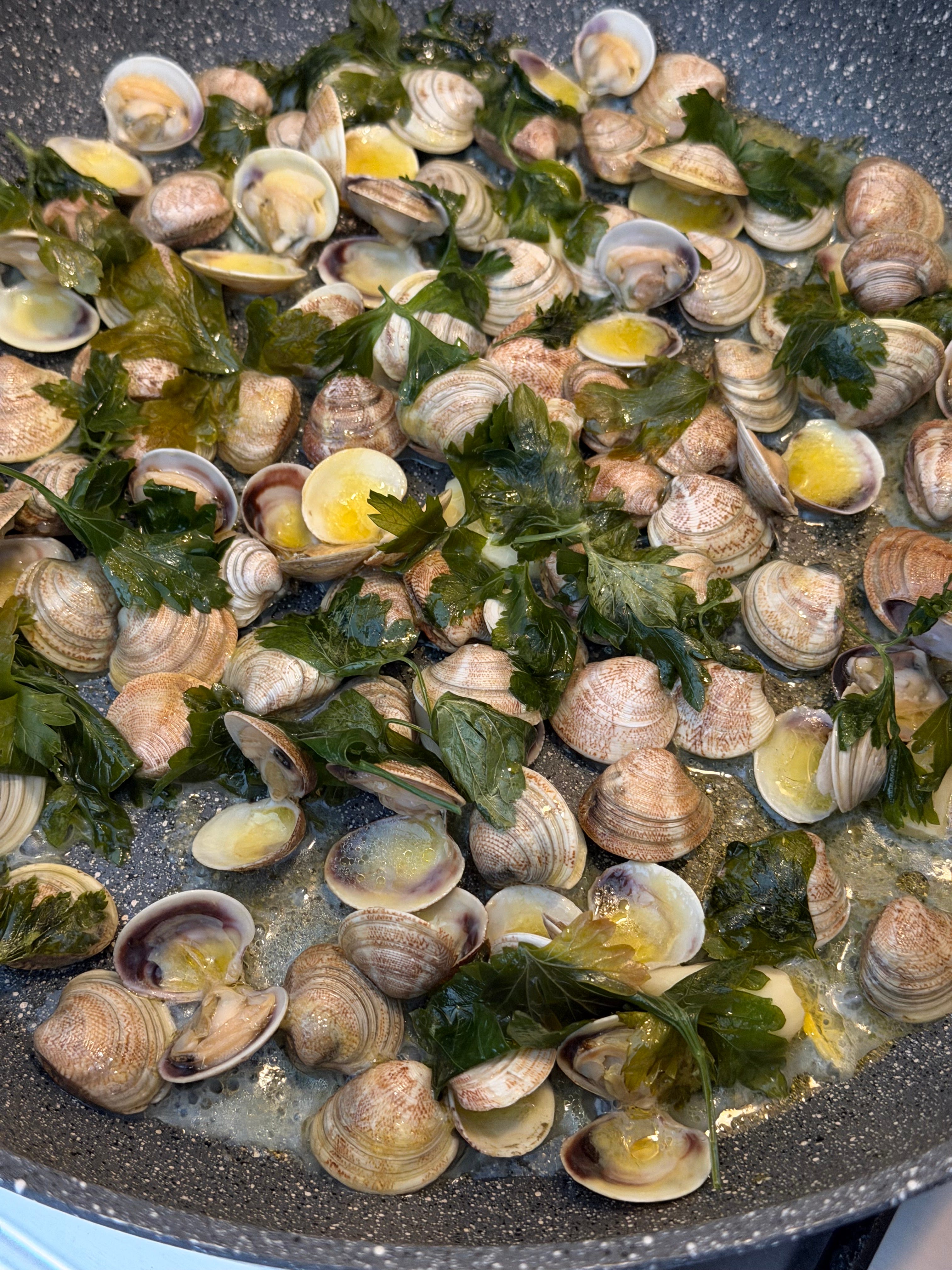
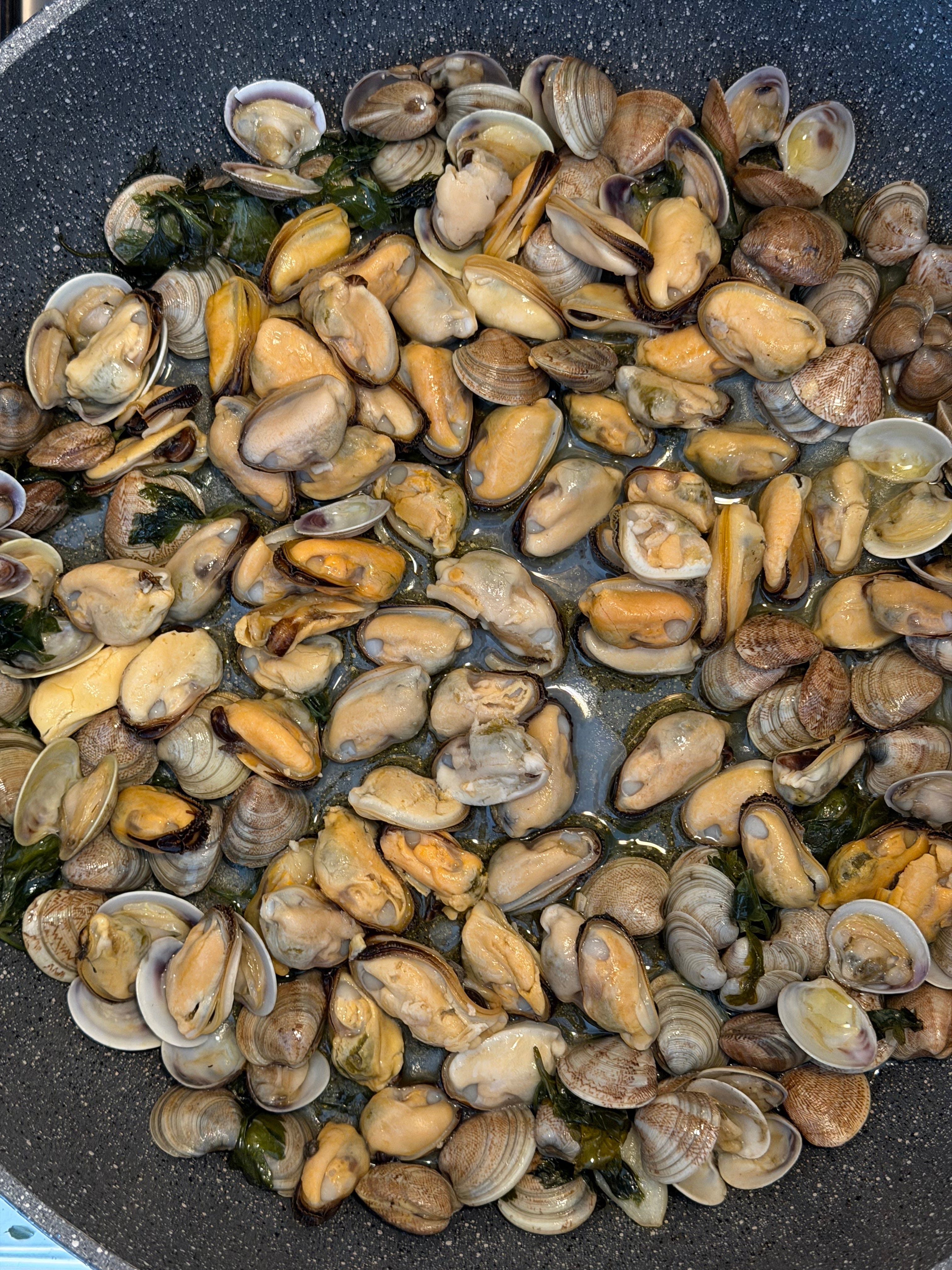
Add the mussels and clams, cover with a lid and cook for 5–10 minutes, or until they open. Pour in the white wine, if using, and let it simmer briefly. Stir in the chopped parsley while the shellfish are still in the pan.
Add any strained shellfish juices back into the pan. Leave the shellfish whole or remove about half from their shells for easier eating.
Add the prawns and cook for just 1–2 minutes, until pink and just cooked through.
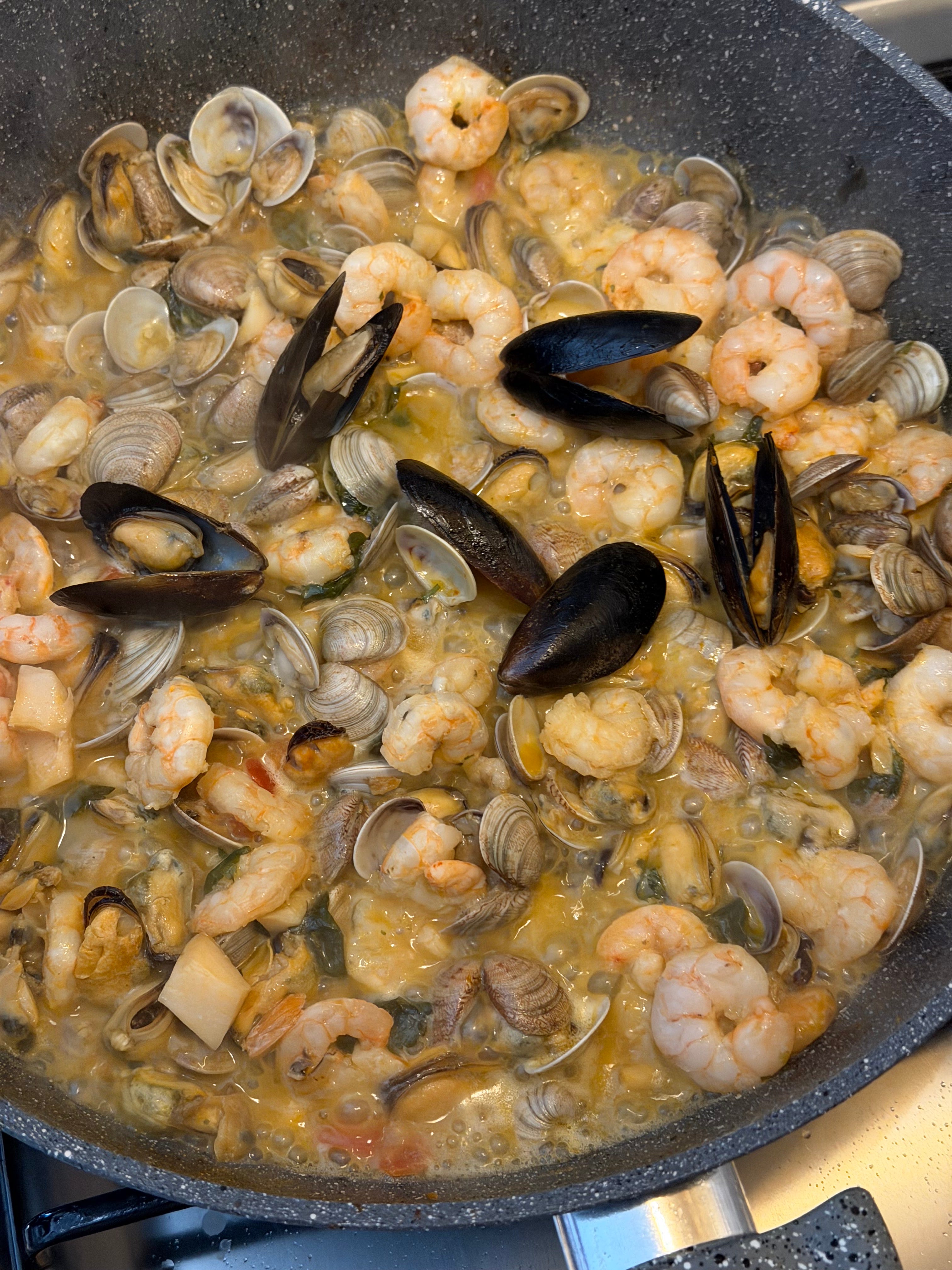
Only once the seafood is ready, start cooking the pasta. The sauce can wait, but perfectly cooked pasta shouldn’t.
Bring a large pot of generously salted water to the boil and cook the linguine or spaghetti until 1–2 minutes shy of al dente.
Transfer the pasta directly into the seafood pan together with a splash or two of the reserved pasta water. Toss over the heat until the sauce becomes glossy and coats every strand.
If using langoustines, sear them separately in a little olive oil and garlic and arrange them on top just before serving. Serve immediately.
NOTES:
Linguine or spaghetti are traditional for a reason. Their shape catches the sauce beautifully and gives you the perfect balance of seafood and pasta in every bite. Wider shapes work too, but they don’t coat in quite the same way.
I usually allow 100–120 g of dried pasta per person.
Use a large pot with plenty of water. A good rule is about 1 litre of water for every 100 g of pasta, so for 400–450 g pasta you’ll need around 4–5 litres of water. This gives the pasta enough room to move and cook evenly.
Salt the water generously. Italians often say pasta water should taste like the sea.
Save your pasta water. That cloudy, starchy water is the secret to a silky, glossy sauce without adding cream or butter.
I always use linguine or spaghetti for this recipe. Their shape catches the delicate seafood sauce beautifully.
Don’t overcook the seafood. It’s much better to slightly undercook it and let it finish gently with the pasta than end up with tough, rubbery shellfish.
Save your pasta water. That cloudy, starchy water is the secret to a silky, glossy sauce without adding cream or butter.
I personally love adding a splash of dry white wine, although many Italian families skip it entirely.
Feel free to vary the seafood. Scallops, squid or baby octopus all work beautifully alongside mussels, clams and prawns.
And perhaps the most important tip of all: don’t overcook the seafood. It’s much better to slightly undercook it and let it finish gently with the pasta than end up with tough, rubbery shellfish.
And finally, dessert.
No, I didn’t make tiramisu.
I wanted something that felt lighter, brighter and perfect for a warm afternoon in the garden after a big bowl of seafood pasta. Something fresh, citrusy and refreshing to finish the meal.
So I went with one of my favourite summer desserts: Lemon Possets.
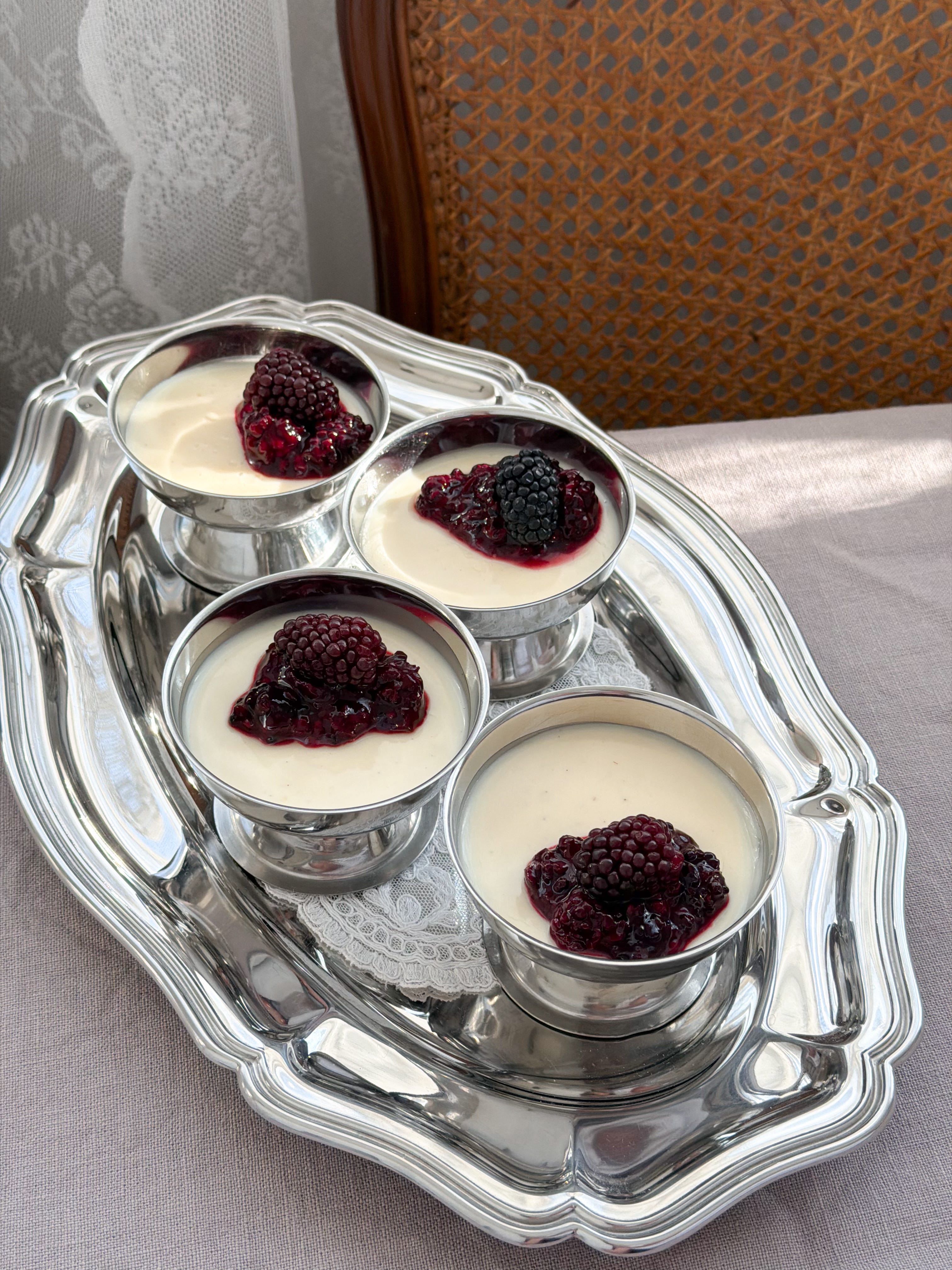
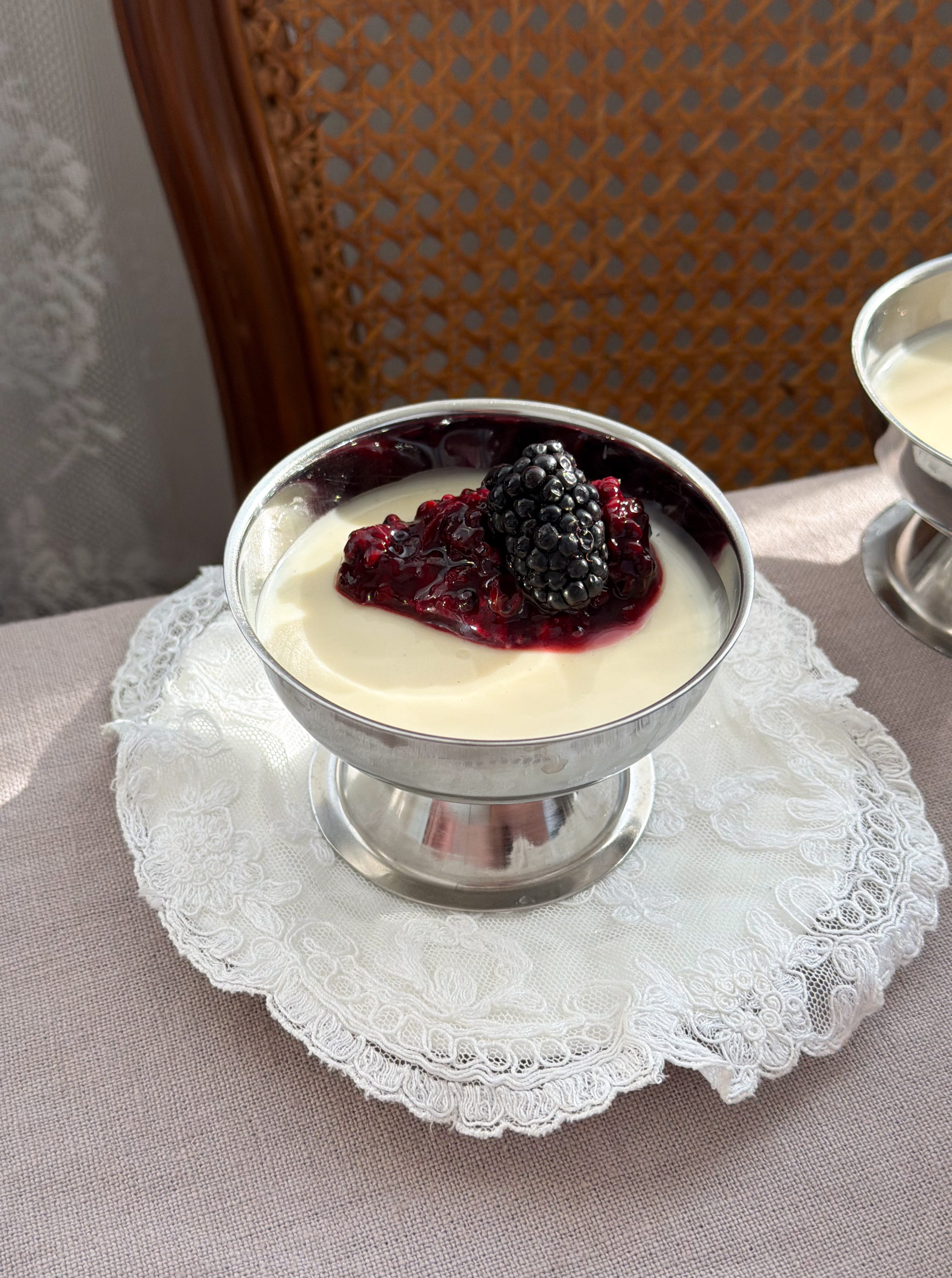
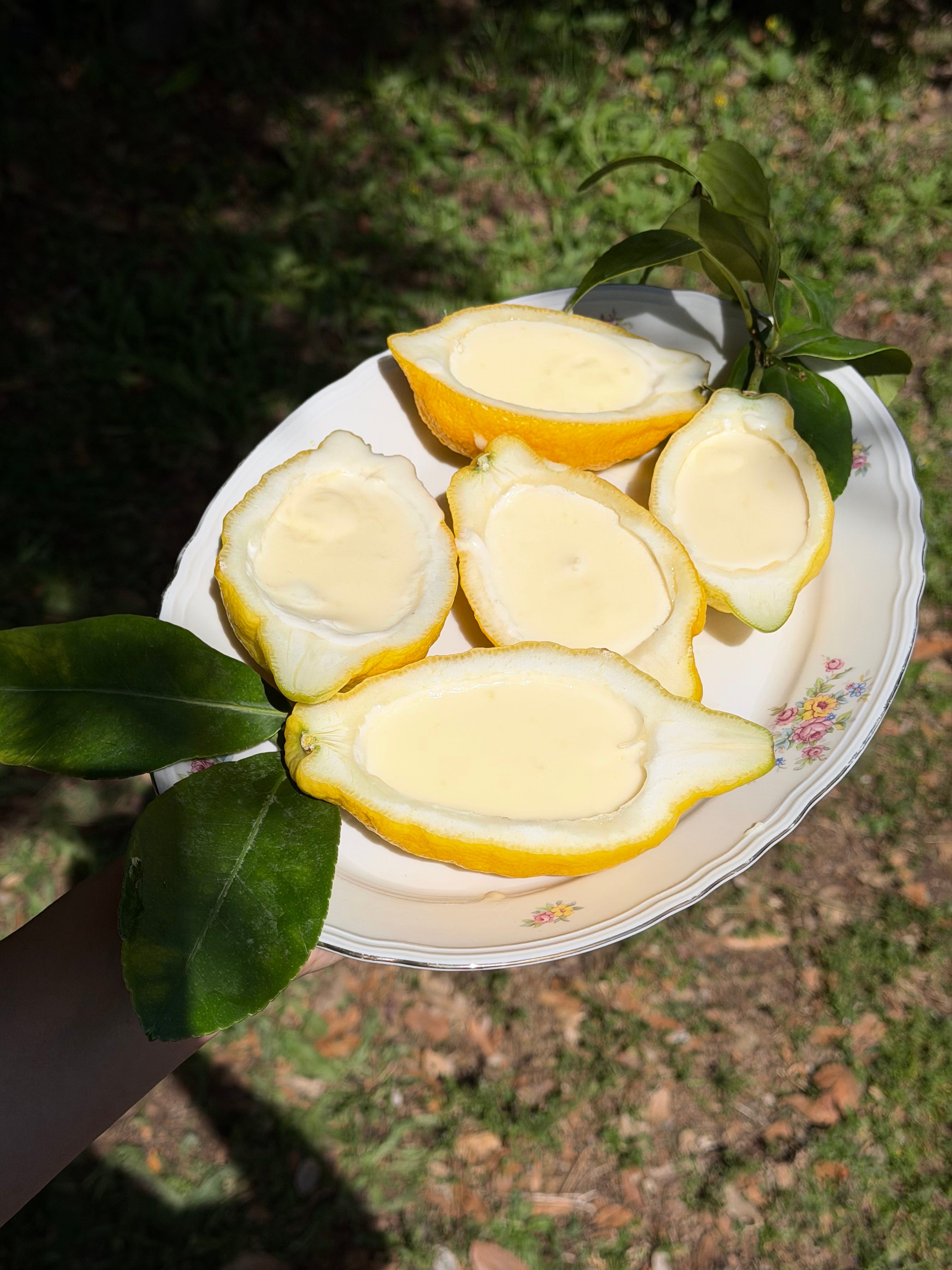
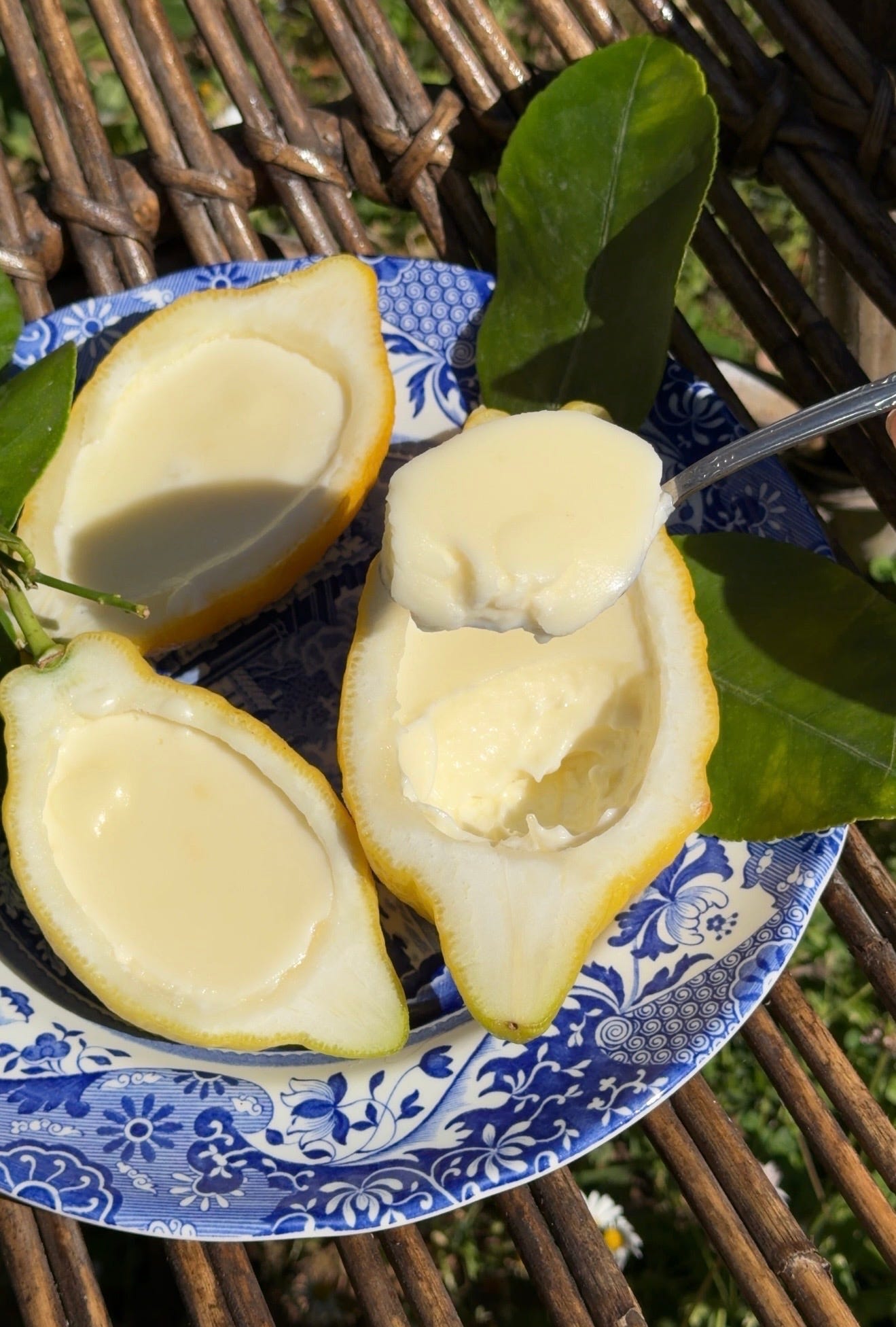
They’re made with just a handful of ingredients, don’t require gelatine or eggs, and yet set into the smoothest, creamiest dessert with the brightest lemon flavour. It’s one of those recipes that feels almost magical the first time you make it.
4-5 large lemons
480 ml double cream (30–33% fat)
150 g caster sugar
65–70 ml freshly squeezed lemon juice
zest of 1 lemon
Blackberry Compote (optional)
280 g fresh or frozen blackberries
20–25 g sugar or runny honey
1 tsp lemon juice (optional)
5–6 g cornflour
10 g water
Method
If serving the possets in lemon shells, choose 3 large, firm lemons with thick skins so they hold their shape well. Slice them in half lengthwise and carefully scoop out the flesh, trying not to pierce the peel. Strain the juice and use 65–70 ml of it in the recipe below. Gently pat the inside of the lemon halves dry and set aside until ready to fill.
Combine the double cream, sugar and lemon zest in a saucepan. Place over medium heat and stir until the sugar dissolves. Bring to a gentle simmer, then cook for 2–4 minutes, allowing the mixture to thicken slightly.
Remove from the heat and immediately stir in the lemon juice until smooth.
Strain the mixture through a fine sieve to remove the zest, then pour into serving glasses or prepared lemon halves. (If using lemon shells, don’t overfill them.)
Leave to cool to room temperature, then refrigerate for at least 4–6 hours, preferably overnight, until fully set.
Blackberry Compote
1. Combine the blackberries and honey (or sugar) in a small saucepan. Cook over medium heat until the berries soften and release their juices. Lightly mash some of the berries with a spoon if desired.
2. Mix the cornflour with the water until smooth, then pour it into the saucepan while stirring continuously.
3. Cook for another 1–2 minutes, or until the compote thickens. Stir in the lemon juice if using.
4. Remove from the heat and allow to cool completely before serving.
Serve the chilled lemon possets topped with a generous spoonful of blackberry compote.
Comments
Nothing yet. Say the first thing.
Sign in to join the conversation.