
So here I am.
What a dream of mine and what a dream of a destination. As soon as we jumped out of the Kawaramachi station, we found ourselves in a polished city, with busy main roads that open into peaceful alleyways.
It doesn’t take long before we’re in a street filled with the smell of something being grilled or fried, and restaurants whose windows have been blurred with steam, show slices of life that so far we’ve been intimidated to break into. There are occasions when we get a scent I can only describe as distinctly Asian, a mix of incense and spice that reminds me how far I am from home, and how much I love that feeling.
Not to compare, but Kyoto is waking up the same feelings that Florence does in me: it’s a place that overwhelms you with beauty but also with choice, so trying to see everything makes absolutely no sense, and you will burn out in the process of doing so. Even trying to see fifty per cent of what you had planned will feel overwhelming. It’s a place layered with ancient traditions, crafts, and wisdom, each of which takes time to find, understand and practice.
Because it is heavily overrun, people come for a few days and end up seeing the same crowded places, so I figured another online guide to Kyoto isn’t needed.
The way to really enjoy a place like this is to go at a slower pace, removing yourself from the crowds, which is not hard, and trying not to see everything, but to be present and observe. Immerse in the culture by going to a place where an English menu is not available—an easy option in Japan.
As in Florence, you will find your head swivelling left to right, capturing with your mind those real-life scenes that already look like framed postcards.
Yesterday, we walked by one of the most famous temples in the old town, and I saw how the parallels to a theme park are fair, with theme parks getting better at recreating iconic streets, and real streets losing their essence to chains and souvenir stores.
When I open YouTube, my cookies suggest a video against tourism in Kyoto. I click the bait and watch the intro. “Kyoto is not Disneyland,” says an old local woman: a montage of people showing overall disrespect. I don’t get past the intro, realising that these platforms feed rage and a warped sense of reality, since this hasn’t been my experience here. Except for the most famous landmarks, where we saw some questionable behaviour like a loud facetime conversation inside a Buddhist temple, most of us tourists have been on our best behaviour.
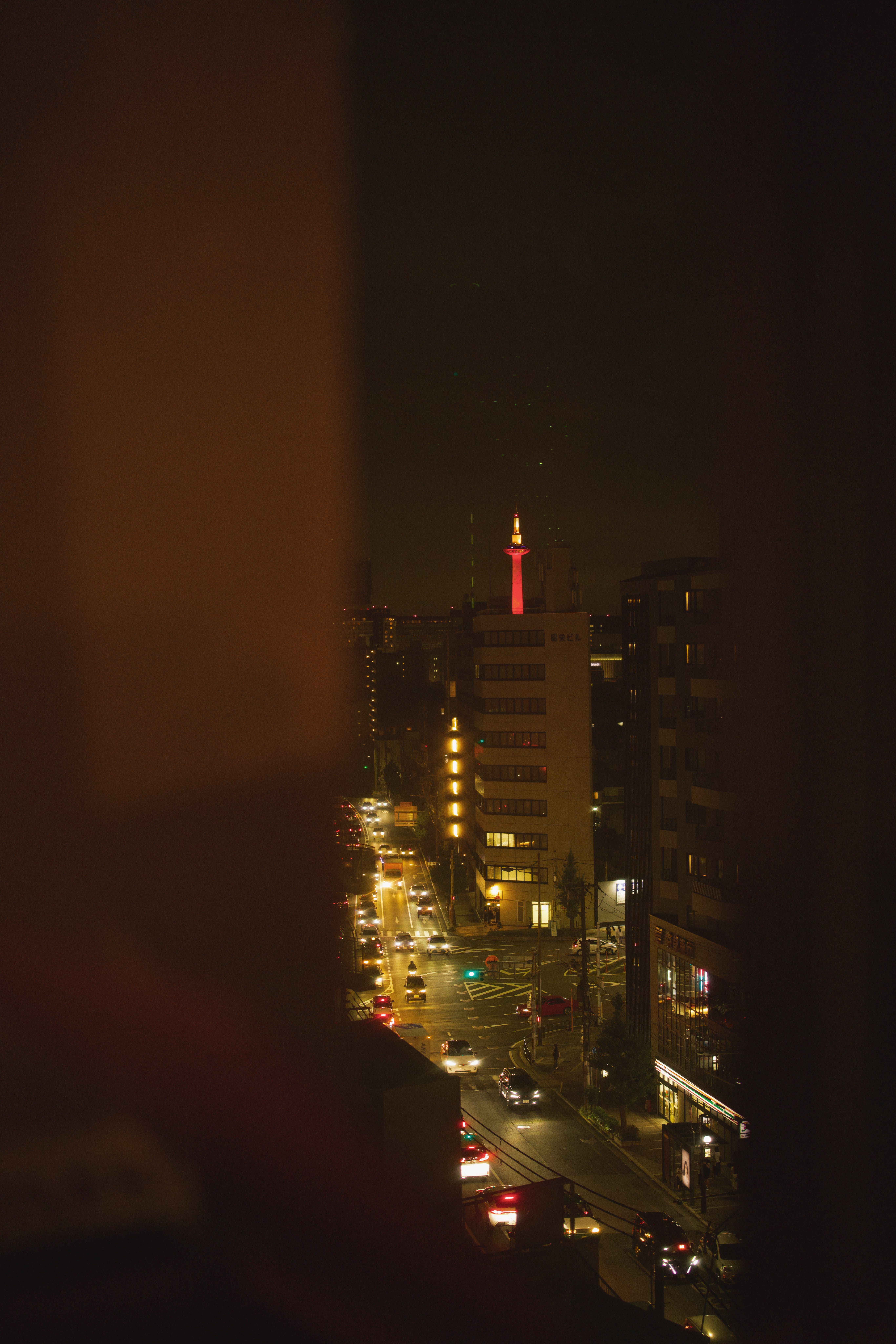
I find it more authentic at night, when the crowds have disappeared. That’s when I get to imagine it beyond the hustle and bustle, almost like a sensory deprivation exercise.
Last night, I walked along an empty street lit by lanterns, all perfectly aligned, illuminating the row of traditional buildings, when a girl in her full Geisha costume, makeup and all, was going back home and crossed my path. It was a magical, fleeting interaction, almost like going back in time, except that she was talking on her cell phone. It was gone in the blink of an eye, but it took me back to the period they are so stubbornly trying to recreate for us.
***
The next day, we took several trains up north, the colours still striking, when a tiny purple tram (the beloved Ramden Tram) took us to Arashiyama, a famous tourist spot and an overcrowded area. After our experience renting bikes the previous day to cycle up and down the Kamo-gawa river, we tried to outsmart the crowds by renting some bikes to explore the back roads, and it worked.
A couple of fleeting scenes of that day that I save for memory:
-The empty yet striking Buddhist temple we saw in Arashiyama.
-A man praying there, rubbing his hands with incense, then bowing at the gate.
-On the way back home, I caught a glimpse of a scene inside an elevated home by the riverside, with everyone dressed in kimonos and having dinner.
-Checking on Miles, and see that he has wrapped himself in his duvet like a little newborn. He’s still so little, my boy.
***
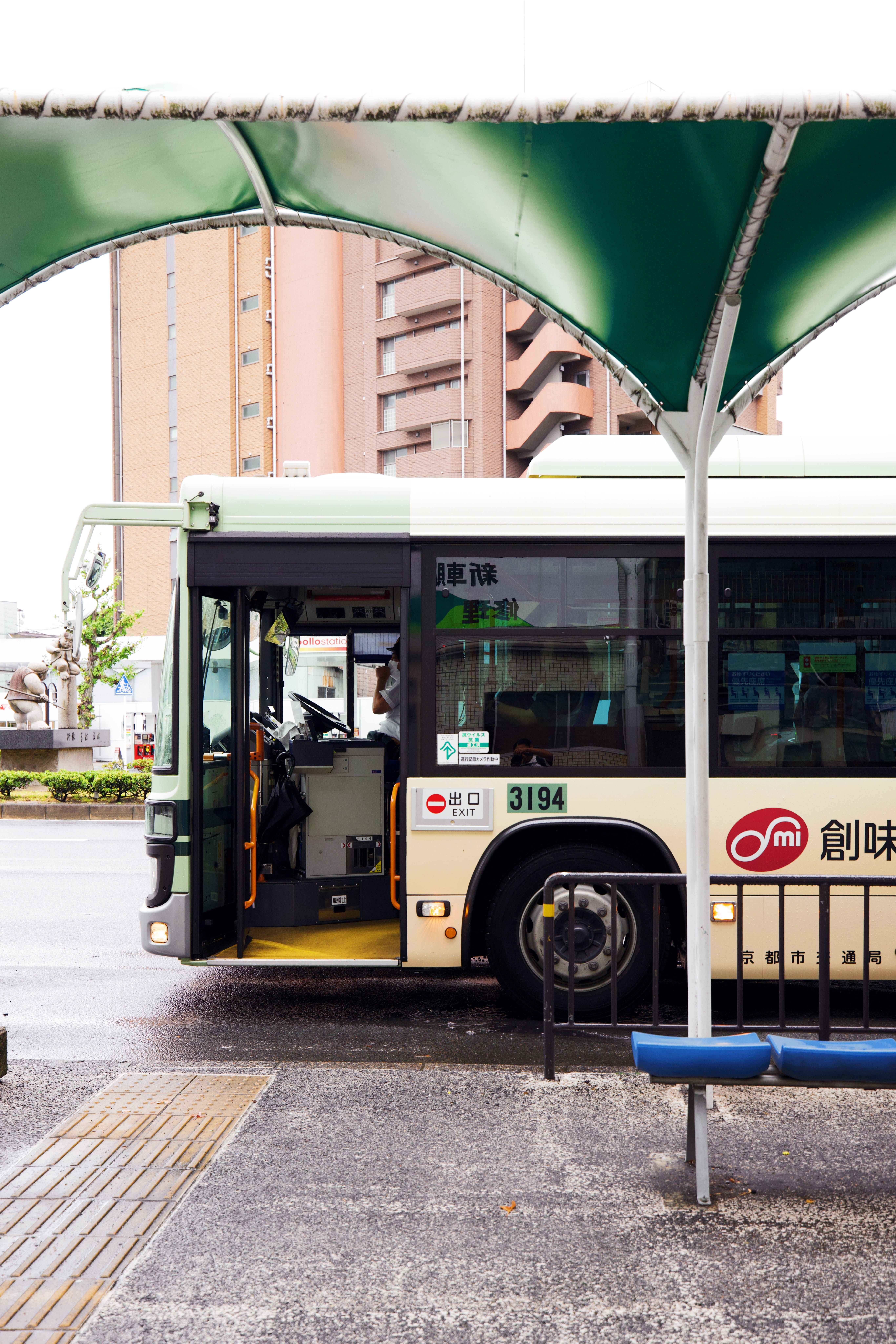
I can feel the designer in me reawakening. I’ve been noticing the colours and their perfect contrasts. I love the green colour of the traffic officers’ uniform, the burnt orange of old cabs, the cream and petrol blue of school buses, the yellow hats in contrast with the blue and white school uniforms, and the occasional and unexpected dust pink in a building. I’ve also noticed that the construction sites and buildings are all covered up, with a security guard controlling traffic, always wearing a blue shirt, black pants, and a flashy striped vest. No job here deserves a bad uniform. Maybe because I’m a photographer, I’ve also noticed that softboxes instead of harsh lights illuminate construction sites at night.
When it comes to fashion, it follows the same Asian trend of covering up, making Westerners stand out in tank tops, shorts and sandals. They are relentless in their fight against the sun, with long sunshades, arm covers, and rarely any feet or legs uncovered, which is ironic given how hot and humid it is here, but beauty standards are beauty standards.
I cross paths with people going to a funeral, and I admire their black suits and the tailoring in the women’s jackets, which I don’t recognise.
Looking back, I can see how my style has long gravitated towards wide, curvy, oversized cuts, especially those in men’s kimonos. I unconsciously borrowed so much from the East that, for me, being here almost feels like home. I constantly have a “yeah, you get it” feeling that I rarely have in the West: the culture of care, the incessant rules mixed with incessant politeness, the quietness, the thoughtfulness, the minimalism, the joy of efficiency in products that may seem mundane.
***
It hasn’t been two weeks here, and I have already noticed their harsh beauty standards, not only in clothing but also in the emphasis on making eyes bigger (a tragedy). On the silent subway, I see an ad for Amazon Prime of a sad-looking woman, looking pretty grey in her commute (a little too on the nose, don’t you think?) Until she starts shopping for flashier clothes on Amazon and becomes visibly happier and happier as she changes her appearance. It was shocking to see such a blatant transformation ad in an advanced society like this.
***
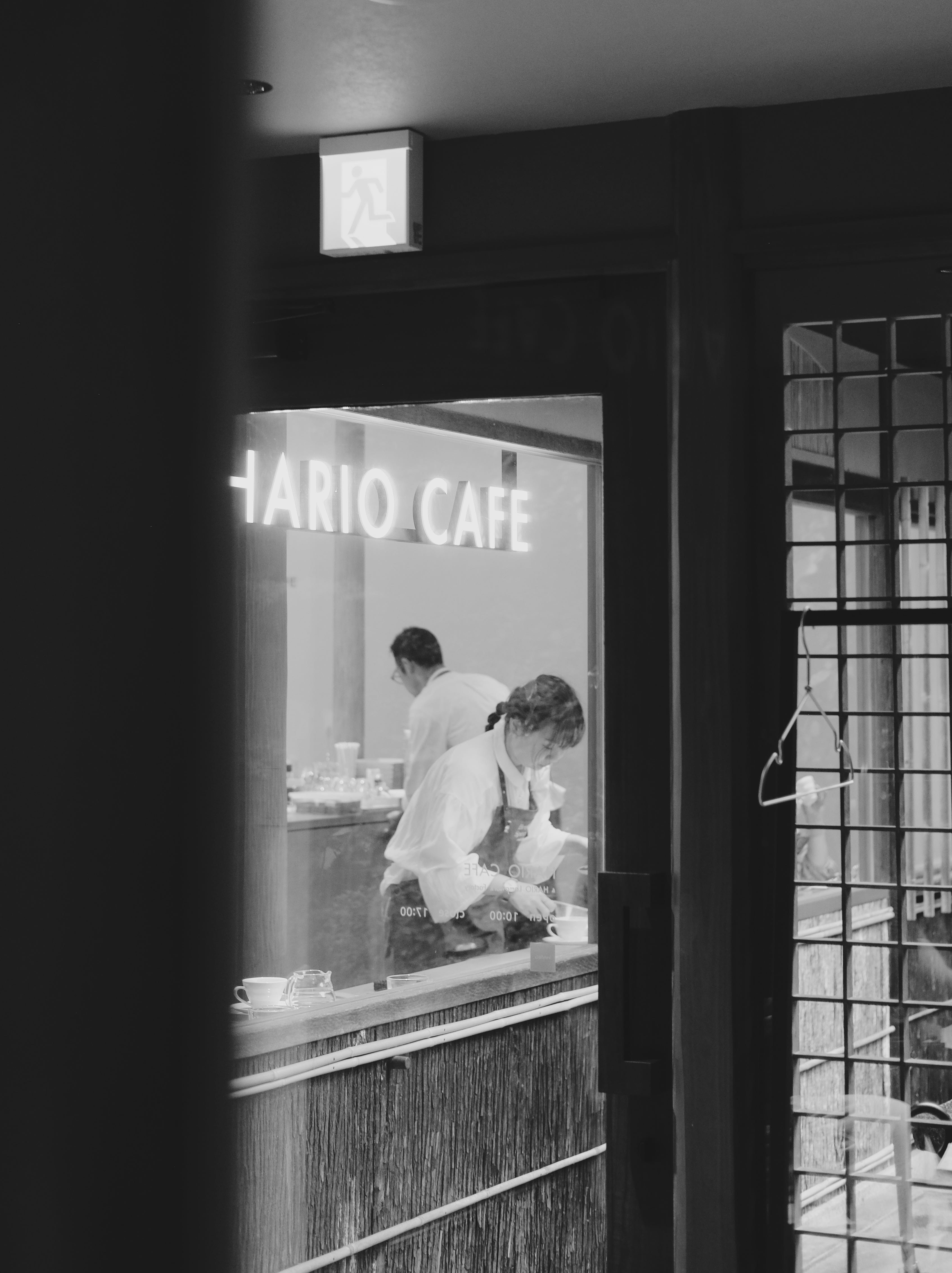
It’s a rainy and overcast day in Kyoto today, and I take a little break to go on a photowalk. I end up at a coffee place recommended to me with a zen garden in a rare, quiet street in the old town.
Still at the cafe, the rain has stopped, and I am in front of a craggy tree, the kind you only find here. The grey stones mark the path, and small pebble-like stones surround them. On the sides are a combination of rocks, bushes, trees, and a bamboo fountain with a ladle to clean your hands. Inside the cafe, the decor has that peaceful blend of light wood, bamboo, and white walls. Different coffee styles are displayed, and I order the siphon coffee because I’ve never heard of it. It’s a whole spectacle to see it get brewed. We are all tourists here (although some more than others), and we are all received with the same attention and hospitality that make the Japanese stand out. The music is a faint, melodic piano. The goal of this place is to inspire meditation despite all of us being on our phones. The only loud sounds are the beans grinding and the machine emptying. You can’t be in a hurry here, and by here, I mean Japan. You have to wait for your turn, usually on a bench outside. Even if there are seats available, you still have to wait.
After that, I meander through streets so captivating that they’ve put up signs forbidding photography. Here I am on my photowalk day, confronted by a no photography sign.
I follow the rules and have a mini existential crisis about travel photography and the preservation of historical, quiet, residential, timeless streets.—Okay, I half followed the rules because (don’t judge me) I was alone, and I thought it was striking, so I promised not to share it online and keep it for myself, to remember the feeling that took me when I saw it. I believe these signs are up to prevent improvised or loud photoshoots from happening in local people’s backyards.
It’s the end of our time here, and I’m wondering what visual story I want to tell about Kyoto.
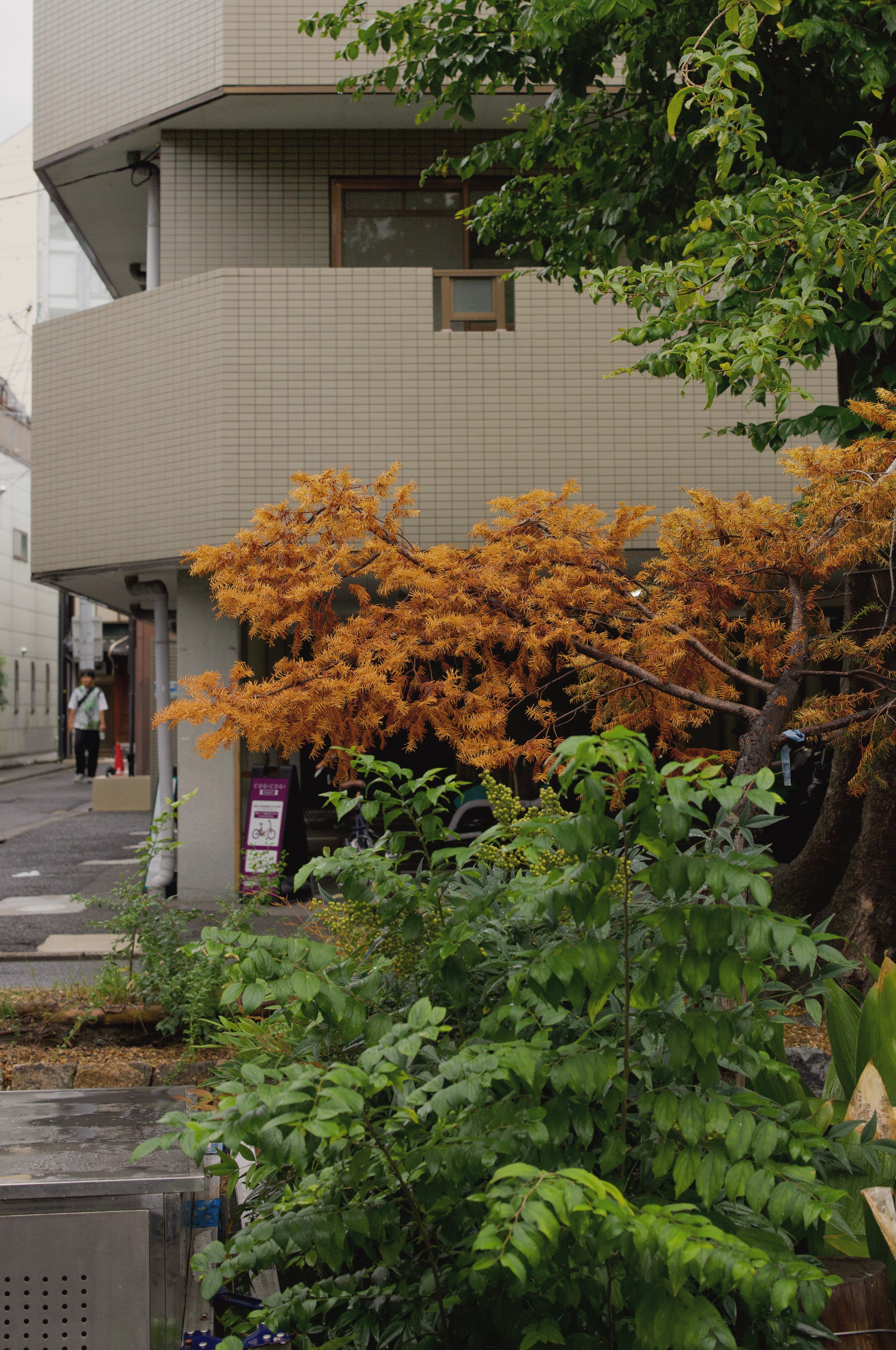
The kind of travel photography I want to make is experiential and observational yet still editorial. Do I need to photograph another temple or another girl in a kimono? I noticed how much my eye has been shaped by the endless stream of images online, and, to be honest, how little of the actual culture and daily life they have informed me. I can’t help but feel like I’m missing out if I don’t share these scenes: the temples, the geishas, the Torii gates, the bamboo forests. If I’m not participating in the commercialisation of Kyoto in my portfolio, will people take me seriously as a travel photographer?
Thank you for reading. If you enjoyed this post, you can show your support with these simple acts: Subscribe, tap the heart, leave a comment, share with a friend, or explore my Instagram page.
No posts
Comments
Nothing yet. Say the first thing.
Sign in to join the conversation.