
19 junio 2026
Hola y welcome back to CubaCurious.
Thanks for being here and giving Cuba a bit of your time and interest. With the world teetering around us, I know it’s a big ask. Your willingness to read tough news about a not so small island with some very big problems keeps me going.
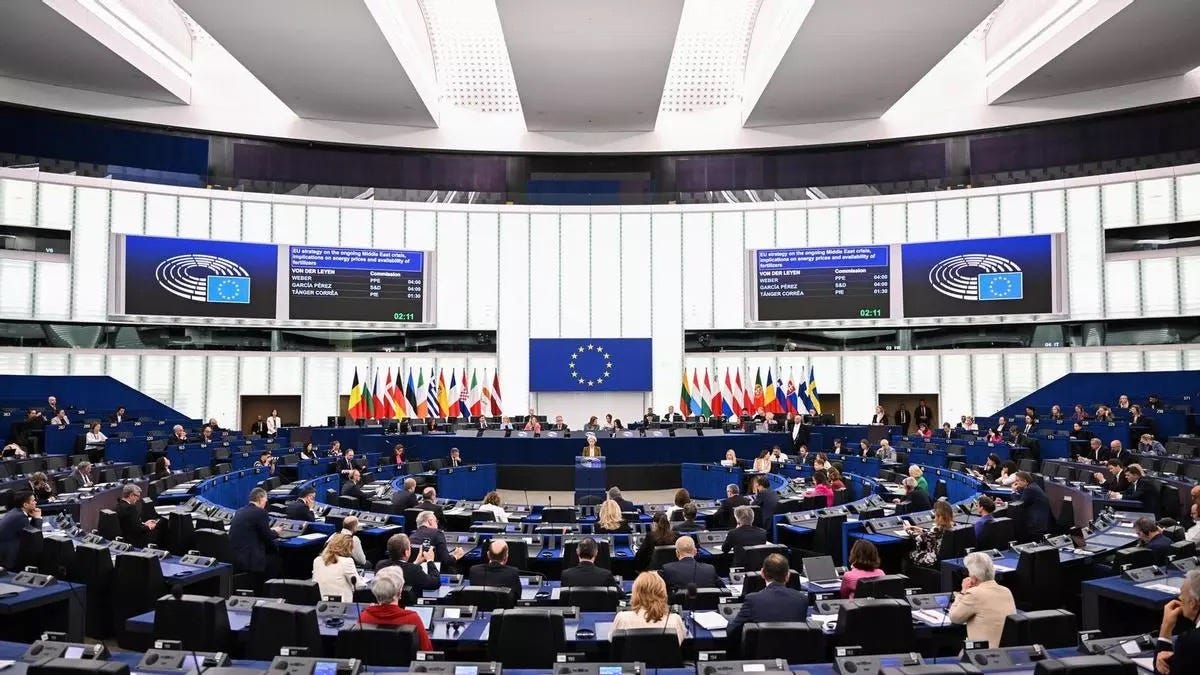
As I was writing this post yesterday, news broke of the European Parliament’s historic vote to suspend a 2017 agreement with the Cuban regime and hold it accountable for its abuses. I really needed that. I’d been immersed in heavy stories of abuses and suffering in Cuba all week, many told by mothers of political prisoners. I wondered, for the millionth time, if change would ever come for Cubans.
The EP’s vote tells me there’s hope, that people can set political ideology aside and see what so many of us are seeing in Cuba. A people depleted of hope, desperate to shake off the 70-year-old dictatorship that has trampled their freedoms and submerged them in misery. A people begging to be heard and seen.
The resolution’s sponsors didn’t have the votes. I assumed it wouldn’t pass. Yet here we are. Activists and rights groups have been reporting the regime’s abuses to the EP, the UN, and other organizations for many years, but in recent ones they’ve coordinated their efforts. Slowly, they seem to be nudging longtime supporters of the revolution toward a clearer view of Cuban reality, especially the record number of Cuban political prisoners and the role the military’s conglomerate is playing in the country’s economic collapse. Some former Communist Bloc countries have had the activists’ backs for a while. More liberal democracies seem to be joining them.
The resolution calls for:
Immediate release of a record 1,281 political prisoners, including minors
Sanctions against Cuban president Miguel Díaz Canel and the leaders of Cuban military conglomerate GAESA responsible for the systematic repression of the Cuban people.
Profound economic and political change.
The end of Cuba’s military cooperation with Russia and Belarus.
Suspension, in the absence of clear steps toward democratic transition, of the 2016 bilateral agreement with Cuba aimed at promoting democratic change and open trade.
After 10 years of increasing repression by the regime, waiting any longer for it to make significant progress on human rights seems pointless, and an insult to a suffering nation. In other areas, the resolution is unambiguous. For example, it states that the 89% of Cuban families living in severe poverty is “not the product of any external embargo but the direct consequence of the regime’s own model and failures.”
Now we wait to see how the European Council acts. The resolution calls for increased humanitarian aid to help Cubans through this horrible crisis. Let’s hope the aid flows through non-regime channels so it reaches the Cubans who need it, rather than being sold in state-run stores in dollars or euros.
Yup. I’ll keep hoping for now. And thanking you for keeping me company.
Below are three brief but revealing stories about Cuba that you’re unlikely to see elsewhere, unless you spend time on the news sites like CiberCuba, 14ymedio, and Martí Noticias, where I found:
Uno—An activist mother blames Cuba’s failed system for son’s murder. “They’re good at repressing, but not at helping our youth . . . there’s no police presence unless there’s a protest . . . no more violence, not one more mother’s cry . . . Justice for my son!”
Dos—Amid widespread hunger, the regime fines a rancher 5-years’ salary for grazing his livestock on idle state-owned land. “Who hurts the people more, me or them? I say them, because I produce something.”
Tres—The Communist Party of Cuba’s “new” reforms are drawing ridicule from Cubans who say they’re the same refried reforms they’ve been fed for decades. Officials’ declarations about “perfecting the socialist system” aren’t helping. But there are a few signs of a crack in the vault, like the possibility that doctors, lawyers, and journalists might be allowed to have private practices.
Hasta la semana que viene,
Ana
An anguished mother blames Cuba’s leaders for unchecked violence, repression of youth, and a failed system that produces only hopelessness.
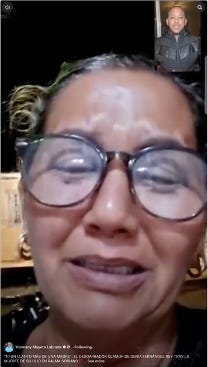
The video interview of pro-democracy activist Denia Fernández Rey is beyond gut wrenching. She is distraught and weeping throughout the clip. She repeatedly thanks a fellow activist, now in the U.S., for taking her statement and begs him to publish the video. “I don’t care what happens to me. I only want justice. Justice for my son.”
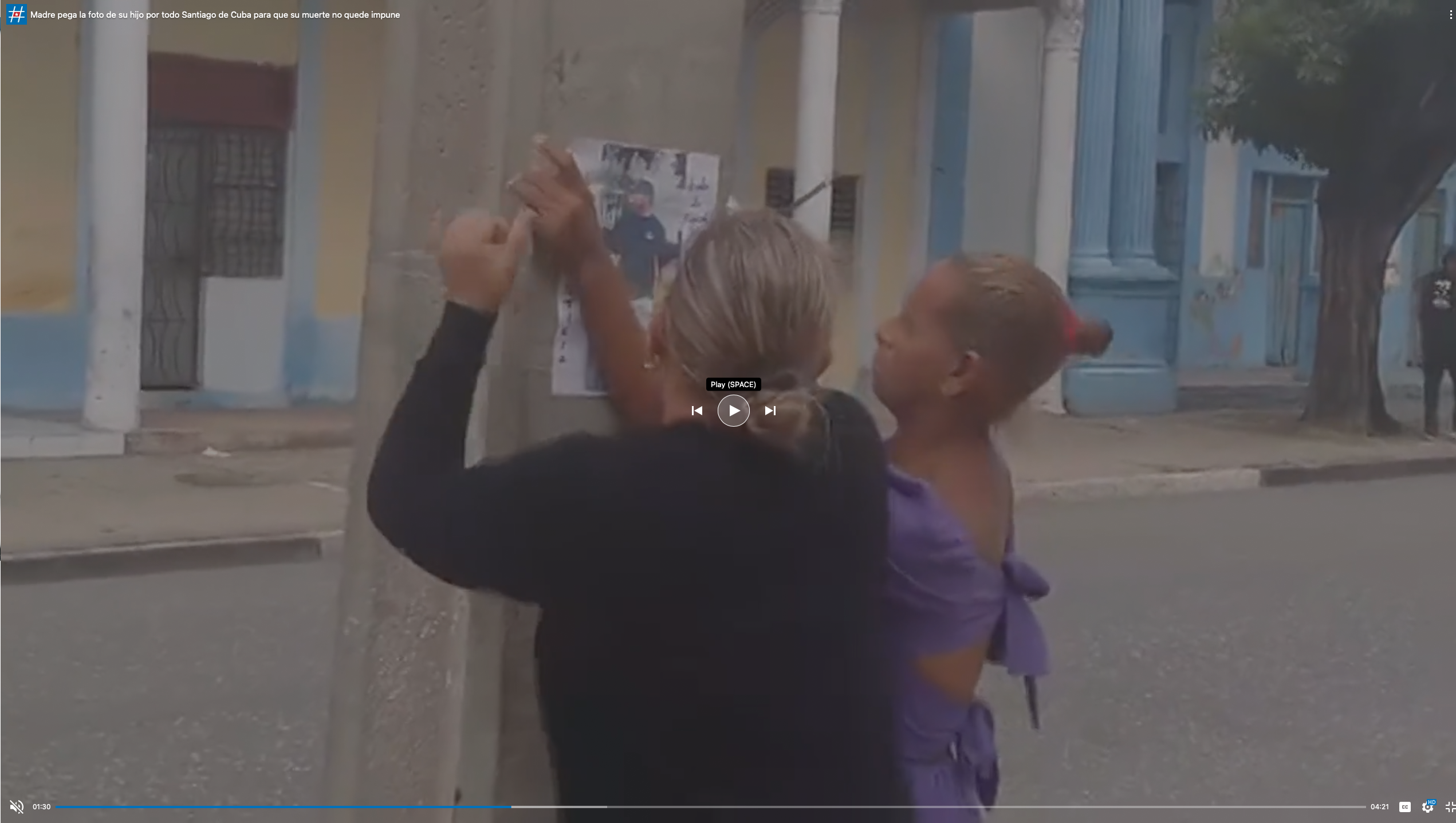
Denia’s 26-year-old son, Jesús Alberto Martínez Fernández, also an activist, was stabbed to death last Saturday in Palma Soriano, in Santiago de Cuba. Denia says the man who killed him was unknown to the family, that there was no motive, that her son was loved by the community, “otherwise why would hundreds of residents have filled the streets [for the funeral]?”
Denia blames the regime and Cuba’s failed system for her son’s murder. The police ignore the growing violence and rampant drug use that have taken the lives of many young people in the region, she says. “They only show up when we protest.”
“All these young people who’ve been killed recently in Palma Soriano. No more violence. The regime can repress but they’re no help to the youth, they don’t help the young people.”
Denia’s entire family is well known in the area for their longtime non-violent activism. “He [Jesús] told everyone what he believed, that the regime had to fall,” she says in the video.
“For me, yes [the regime is behind the murder], because my son had a community and he told everyone that this regime needed to be changed. He didn’t leave Cuba because he wanted a change for Cuba.”
“The regime exists to suppress, not to provide security to the youth or anyone else, they kill us with impunity and there isn’t a single police officer on the street, but when we protest, they immediately send the them after us.”
A large funeral procession for Jesús included a caravan of motorcycles. He was known passionate about motorcycles and had his own repair shop.
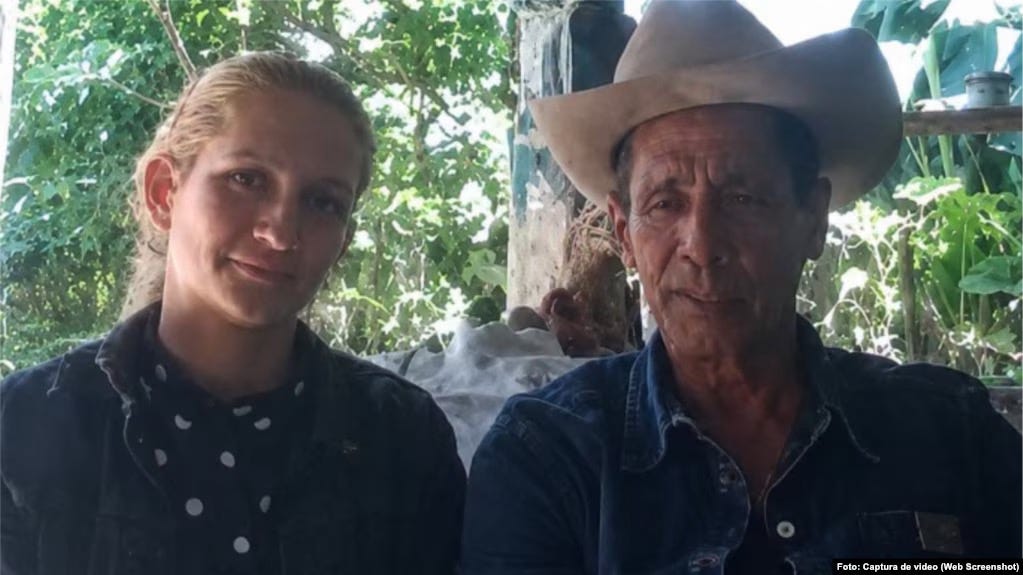
For the last twenty years, rancher Andrés Manuel Sosa Ramírez has been petitioning the Cuban government unsuccessfully for the right to use or buy the idle state-owned land adjacent to his farm. Last week, the Ministry of Agriculture responded by fining him 200,000 Cuban pesos for grazing his livestock on that land.
“I’m not accused of any other crime, only this,” he said after leaving the hearing about the case. His daughter had accompanied him but was not allowed to enter.
The government requires farmers to own enough land to graze the herd they are permitted to own. When they don’t own the required acreage, the government does not permit them to supply the state with the milk or beef quotas required, a situation that triggers additional government inspections and fines.
It amounts to a forced sale of the livestock, as Sosa told Martí Noticias, because the farmer doesn’t have the amount of land the state demands. Sosa criticized the regime for punishing working ranchers while it has land that it neither uses nor allows others to use.
With the severe food shortage in Cuba, ranchers say the state is prioritizing bureaucratic control and financial punishment over productivity, forcing agricultural workers to sacrifice further as they try to feed their communities and their families.
Sosa has resorted to social media denunciations in a last ditch effort to save his herd. “I’ll go on a hunger strike with my whole family at whatever agency takes my cattle.”
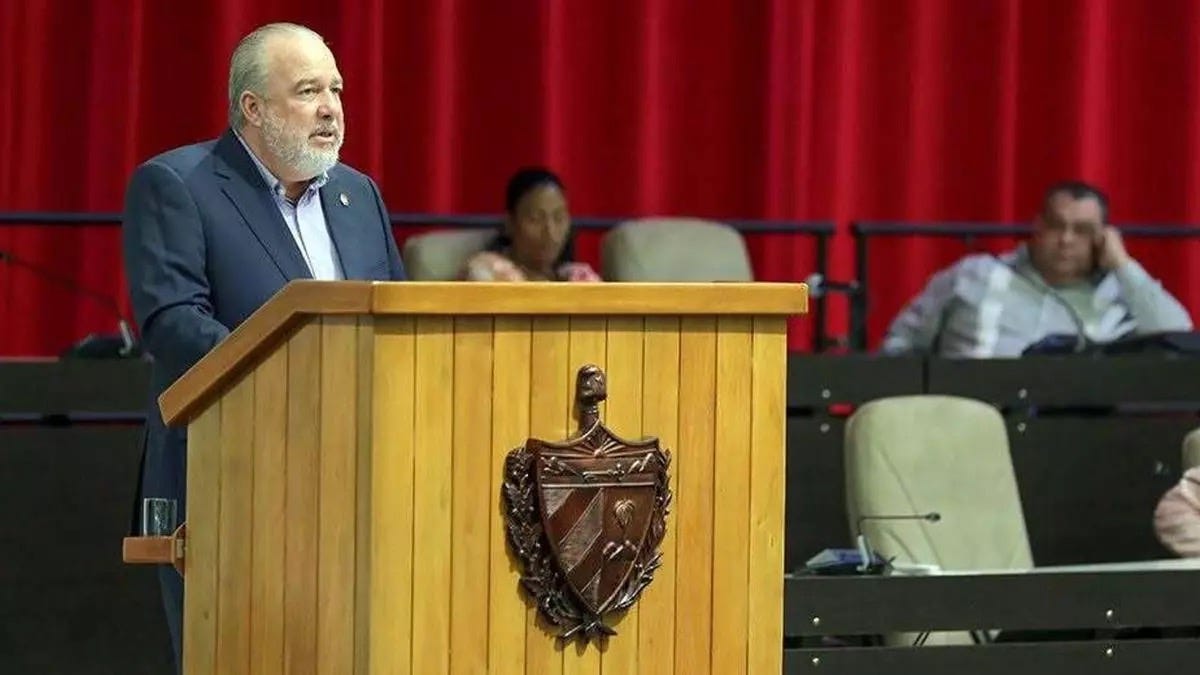
The Communist Party of Cuba, the only legal political party in the country, announced a new reform package this week to great fanfare. However, many Cubans greeted the news with mockery, saying it’s old news, meaningless without the political reforms needed to allow economic growth.
“More words, less words,” Cuban academic and activist Alina Bárbara López wrote on Facebook. “Look at what Raúl Castro said when he launched his famous pro-reform campaign, which he called “Updating the Cuban Economic and Social Model,” in 2007. It’s more or less the same as what he’s saying now, nineteen years later.
Prime Minister Manuel Marrero Cruz seemed to prove the historian’s point when he said, “The proposed economic and social transformations that are presented today will impact the improvement of the system of management of the Cuban economy.”
The National Assembly approved 176 reforms that sound capitalistic but Marrero insisted would aid in the “construction of prosperous socialism.”
Some of the changes sparked a bit of hope, at least in Yoani Sánchez. In her Thursday 18 June podcast, Cafecito Informativo, the independent Cuban journalist wondered if—finally—professionals might be permitted to open their own private practices.
The reforms include:
Lifting the 100-employee limit for permitted small and medium enterprises.
Allowing ownership of more than one company
Transition from the socialist state enterprise to a joint-stock or partnership company (considered the most significant of the reforms in Axis 1 [there are 23 axes]).
Allowing foreign investors to hire Cuban employees directly rather than through the state employment agency.
That last policy had allowed the regime to reward loyalists by placing them in coveted jobs in tourism, for example, and giving them access to dollars and euros, even if they were poorly qualified.
How and when the approved reforms will be implemented is uncertain, to say the least.
You can find more about the reforms in this CiberCuba article (English).
I’ll end with Alina’s Facebook post, where says . . .
“They are trying to buy time. That is an old ploy used by people in power. Here’s a list in chronological order of the strategies, projects and plans announced to reverse the situation of the Cuban economy [over the years]:
Process of rectification of errors and negative trends.
Business Improvement Process.
Creation of the GAESA (military’s holding company).
Dismantling of the sugar industry.
National electro-energy program.
Process of updating the Cuban economy.
Artemisa and Mayabeque Experiment
Mariel Special Development Zone.
Ordering Task.
Reorganization.
Government program to revive the economy and correct distortions.
They have not yet given a name to the one approved today in the extraordinary plenary session of the PCC [Communist Party of Cuba]. But they forget something, the crisis is eminently political. And time is up.”
Ouch. Writing like that, and activism like hers, keeps Alina on the regime’s menu. She was arrested today, her whereabouts were unknown for many long hours.
Her network didn’t let her down. Members issued alerts across social media and to media outlets until she was finally released.
So much reform, so little change.
Thanks for reading CubaCurious! This post is public so feel free to share it.
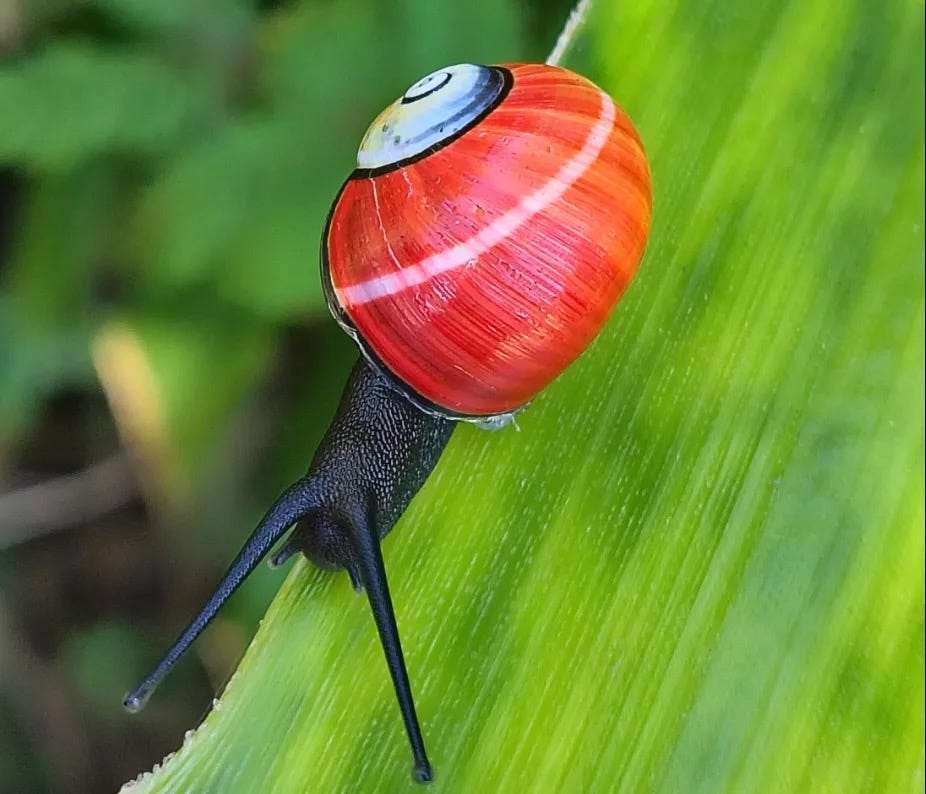
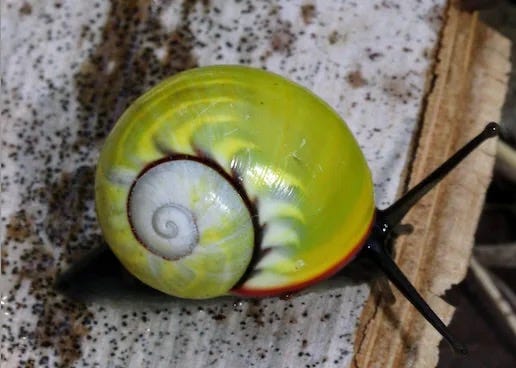
The six ‘painted’ tree snail species (known collectively as Polymita) have shells with exceptionally bright colours and complex patterns and are found in eastern Cuba.
Who knew?
More here.
No posts
Comments
Nothing yet. Say the first thing.
Sign in to join the conversation.