
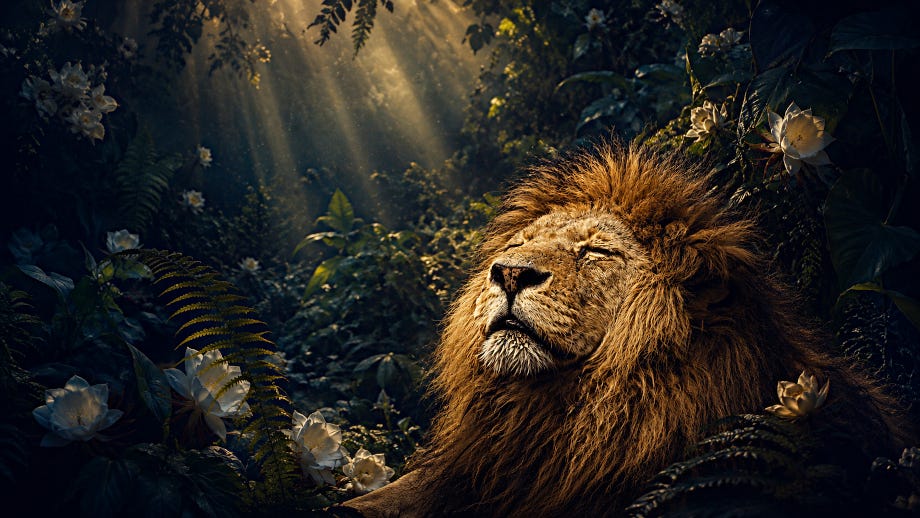
The Sky Closes Its Great Eyelid, And I Descend Into The Well Of Sleep — An Eclipse Of Another Day, Its Work And Worries Fade As A Dream.
Every evening the body prepares for a quiet eclipse of its own. Hormones shift. The pulse slows. The nervous system relinquishes its vigilant grasp. And it is as though creation itself remembers that the restoration every human body needs requires darkness.
As daylight recedes, a remarkable conversation begins between the eye, the brain, and a tiny gland hidden near the center of the head. As we surrender into the growing intoxication of it, the body slowly turns from outward engagement inward, toward restoration. The daytime ‘I’ reigns over waking life. It chooses, judges, decides, acts. The body begins preparing for our disappearance without consulting us.
One Thing Is Certain: The Human Must Sleep, involuntarily drifting into the realms of dreams. As the darkness of night descends, the pupils of the eyes widen — not in strain, but in receiving — opening like night-blooming flowers to gather the quietest traces of ambient light.
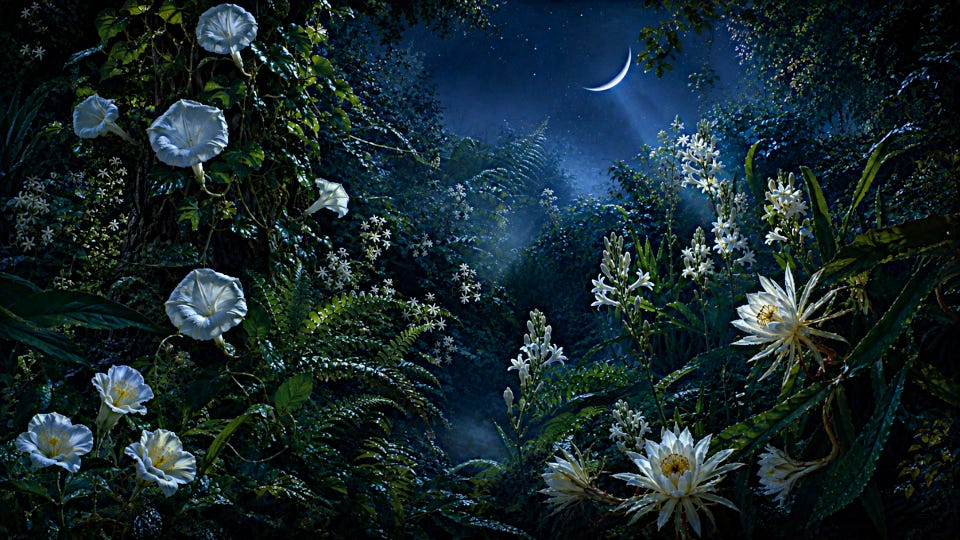
In this stillness, the solar warmth of daytime awareness begins to yield to another order. The pineal gland begins its nocturnal release of melatonin into the bloodstream, carrying the ancient message of biological night — body temperature lowers, the metabolic pulse quiets, and the waking mind drifts toward the restorative waters of sleep. In the older language of the yogic imagination, we might hear an echo of Soma here: the cool, lunar principle of nourishment and restoration that follows the heat and activity of day.
And all the while, the pupil has widened. What appears to us as a small black circle is not a dark object at all, but an aperture — an opening into the interior of the eye. As the outer world grows dimmer, the pupil opens further to receive what little light remains. There is a curious correspondence here: as one field of perception recedes, another begins to emerge. The world we have been watching grows indistinct, while the interior world of image, memory and dream comes gradually to the fore.
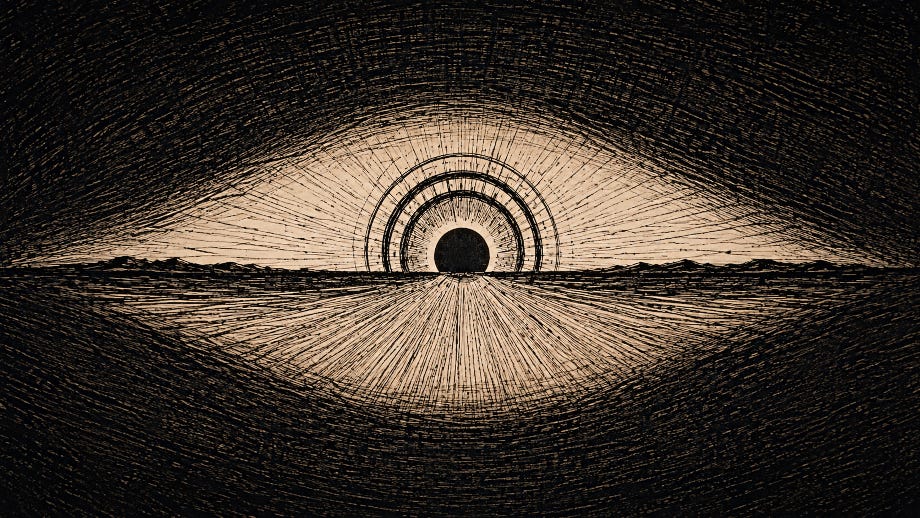
Soon another dark circle will offer itself to us on a vastly different scale: the New Moon moving across the luminous face of the Sun for a total solar eclipse. The resemblance is compelling, though not exact. The pupil opens to receive light; the Moon passes before it and obscures it. Yet the darkness of the New Moon may suggest more than obstruction. It may suggest depth — the void, as it has sometimes been imagined: not an emptiness, but a threshold where the familiar light of consciousness no longer commands the entire field.
Consider the correspondence: the dark face of the New Moon, the dark aperture of the pupil opening into the interior of the eye, and the darkness into which we surrender each night in sleep. Each alters our ordinary relationship to illumination, inviting us toward the mystery of what becomes perceptible when the familiar light by which we orient ourselves is interrupted. Once across that threshold, the orderly dominion of the waking “I” begins to loosen. In the realms of dream, another language arises — image, memory, emotion, desire and symbol moving beyond the usual governance of reason. What remained beneath the bright occupations of the day may now find its expression in the strange theater of the night.
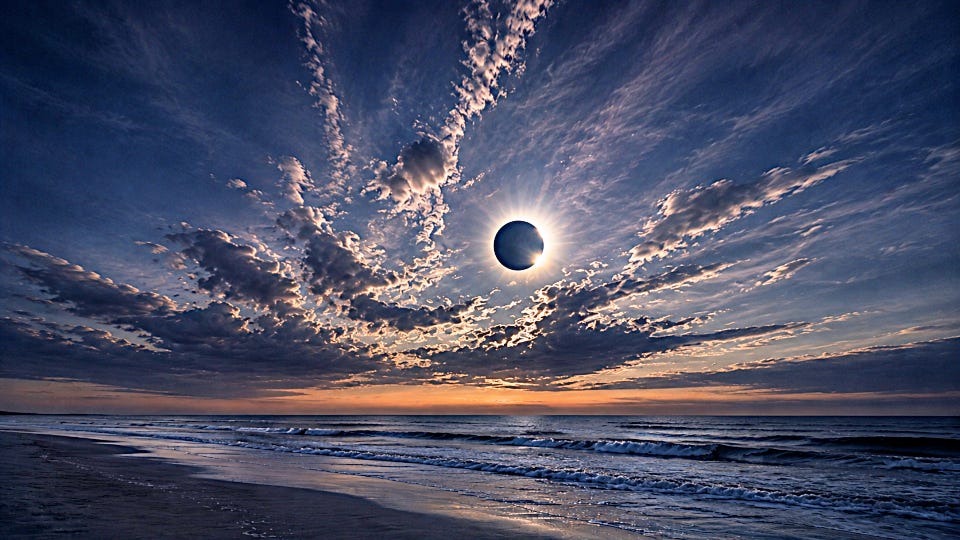
Yogic and astrological traditions have long associated the Moon with this interior, instinctive, subconscious realm of mind, while the Sun signifies the illuminating principle of consciousness and the radiant sense of “I.”
Seen through this symbolic lens, the solar eclipse stages an arresting image: the dark New Moon passes directly before the solar face. What ordinarily remains behind the brilliance of conscious identity is, for an interval, brought into the foreground.
The eclipse becomes a symbolic invitation to recognize the expressions of the subconscious within waking consciousness. Sleep gives this hidden material the theater of dreams. The eclipse invites a different question: what happens when the unseen enters the theater of waking life?
The mysteries of light and shadow in this eclipse season fall into the domain of Leo. Here we meet the sovereign within us: radiance, courage, creative expression, magnanimity, protectiveness, and the desire to participate visibly in life. Yet every luminosity casts a shadow.

And here we look again into the dark aperture: the void of the New Moon, the pupil opening into night. And perhaps, for a time, we become the pupil.
For here there is instruction. Even excess may become a teacher of proportion. What enters awareness also enters the possibility of integration.
Who among us has not passed through the adversity of our own Leonine shadows? And with each dethroning, might we become more conscious of where the true throne resides?
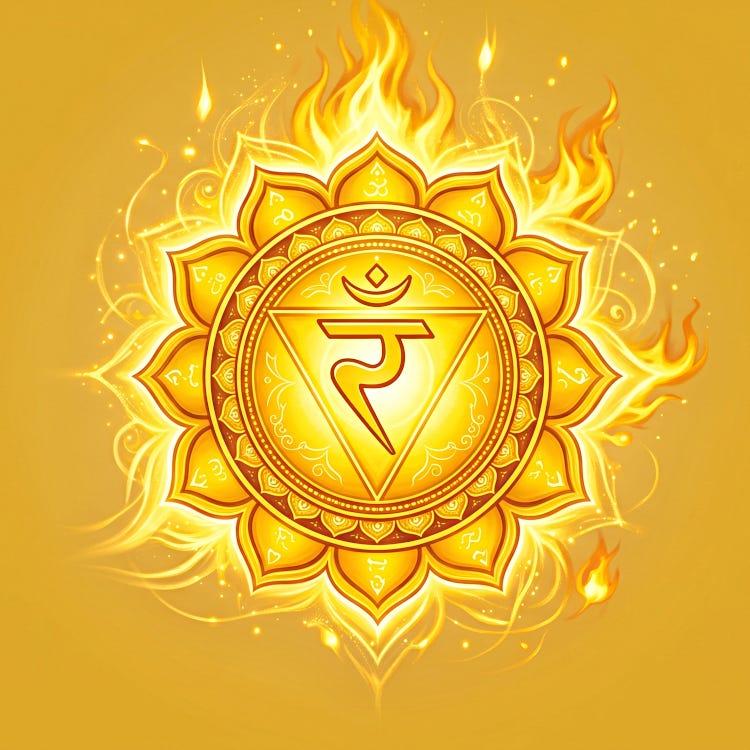
In the subtle geography of the yogic body, we first encounter the throne of personal power at Manipura, the solar plexus — the domain of our personal sun. Associated with the element of fire, Manipura governs transformation, will and the developing authority of the individual “I.” This is no false throne. We require its fire to act, to choose, to establish identity and to make our way in the world.
The lessons of fire are not always gentle. Unrecognized, its excess may consume before consciousness understands what has been set aflame. Yet consequence may itself become instruction, calling us again toward the hearth, where fire is neither denied nor extinguished, but given boundary and purpose.
Through the stages and initiations of human experience, personal power may gradually discover that sovereignty is neither dominion nor an identity sustained by the gaze of others. Recognition remains one of our human needs, but when does recognition become enough? At what point do we discover that the gaze of others cannot be the measure of our own light? Recognition may nourish us; it cannot be the source of our radiance.
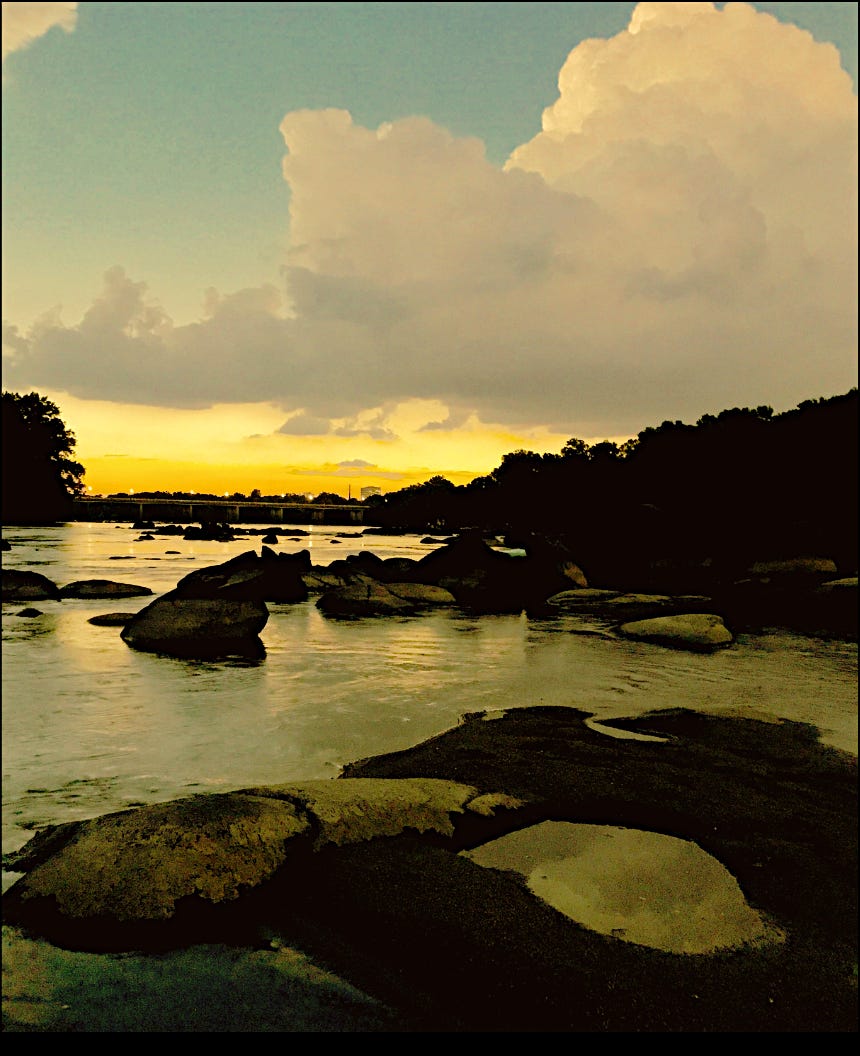
The yogic traditions have long regarded the thresholds of day — dawn and twilight — as invitations to prayer, breath and meditation. There is wisdom in meeting the shadows before we meet them as adversaries. At dawn, as consciousness turns again toward the world, practice offers a moment to gather oneself — to establish peace and alignment before entering the encounters and demands of the day. As daylight recedes, the creatures of the night begin to stir, and so do our own habitual appetites, impulses and unfinished reckonings.
Practice offers another way: to sit willingly at the threshold, to become the pupil before experience is forced to become the teacher. Breath, prayer and meditation do not spare us the rough road of being human, nor every dethroning along the way. But perhaps there is a kinder way for a pupil: learning to enter the darkness consciously, rather than waiting for darkness to overtake us.
And perhaps this is where the throne begins its ascent. In the subtle geography of yoga, the ascent from Manipura leads us toward Anahata, the heart center. The personal sun is not extinguished here; its nature is refined. Heat becomes warmth. The authority that once sought confirmation through the gaze of others becomes less dependent upon reflection and more capable of radiance. Sovereignty ripens into presence, magnanimity and the capacity not only to be seen, but to see.
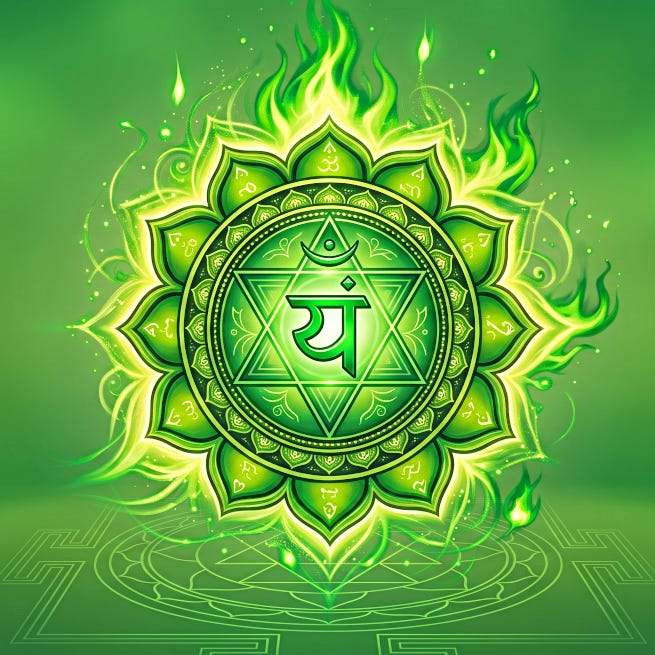
The heart, then, may be the higher throne of the Leonine sun — not because the “I” has disappeared, but because it has learned a more generous way to shine.
An eclipse does not extinguish the Sun. The shadow passes, the aperture changes, and light returns. So perhaps the question of this eclipse is not whether we can escape our shadows, but what we may learn while the familiar light is interrupted — and what kind of light we carry when it returns.
Thanks For Reading! This post is public so feel free to share it.
Comments
Nothing yet. Say the first thing.
Sign in to join the conversation.