
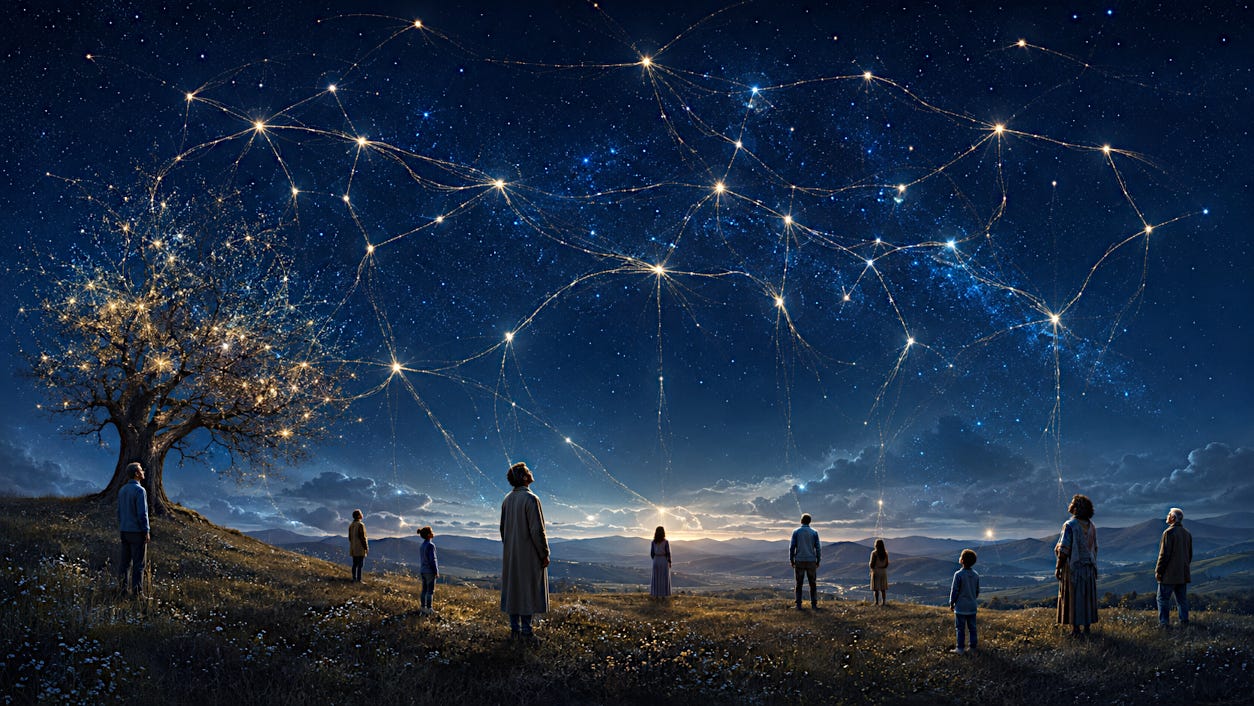
The world is full of stories about fractured relationships, but each one begins in a deeply personal place. During the astrological season of Cancer — a time associated with family, memory, and belonging — I find myself reflecting on the inherited wounds we carry, both as individuals and as a collective.
My own story is not unusual. It is the story of a child and a parent growing emotionally disconnected. As a child, it simply felt like the way life was. Only years later did I begin to understand how profoundly experiences from childhood had shaped me, surfacing as unspoken anger, difficult relationships, and a lingering sense of loss. At first, I blamed my parents. But after my father’s untimely passing and many years of self-reflection, another understanding emerged.
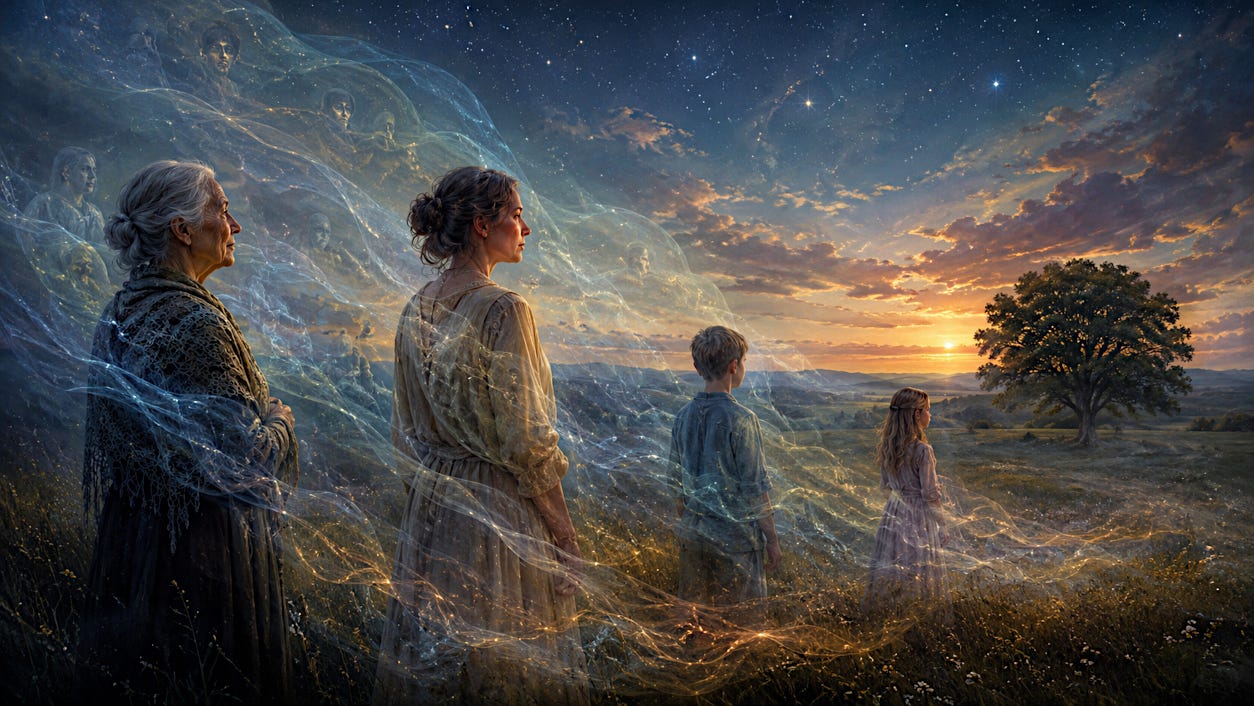
I began to wonder whether my story was really mine alone. The anger I carried, the emotional distance, even the silence between my father and me seemed to belong to something older than either of us. Families pass down far more than genetics. They pass down emotional climates, unspoken loyalties, fears, expectations, and ways of surviving. I have come to think of this inheritance as “generational wash” — an emotional atmosphere so pervasive that we mistake it for the air itself. My parents were carrying that wash long before they passed it to me. They lacked not only the tools but also the psychological language to recognize the pain they had inherited.
When this became clear to me I realized I could cultivate compassion and also be clear about my own accountability for many of my life choices. I could meet the ancestral story with empathy while also drawing a clear boundary: “The repetition ends with me. I will feel the grief of the wound, but I will not wear it as an identity.”
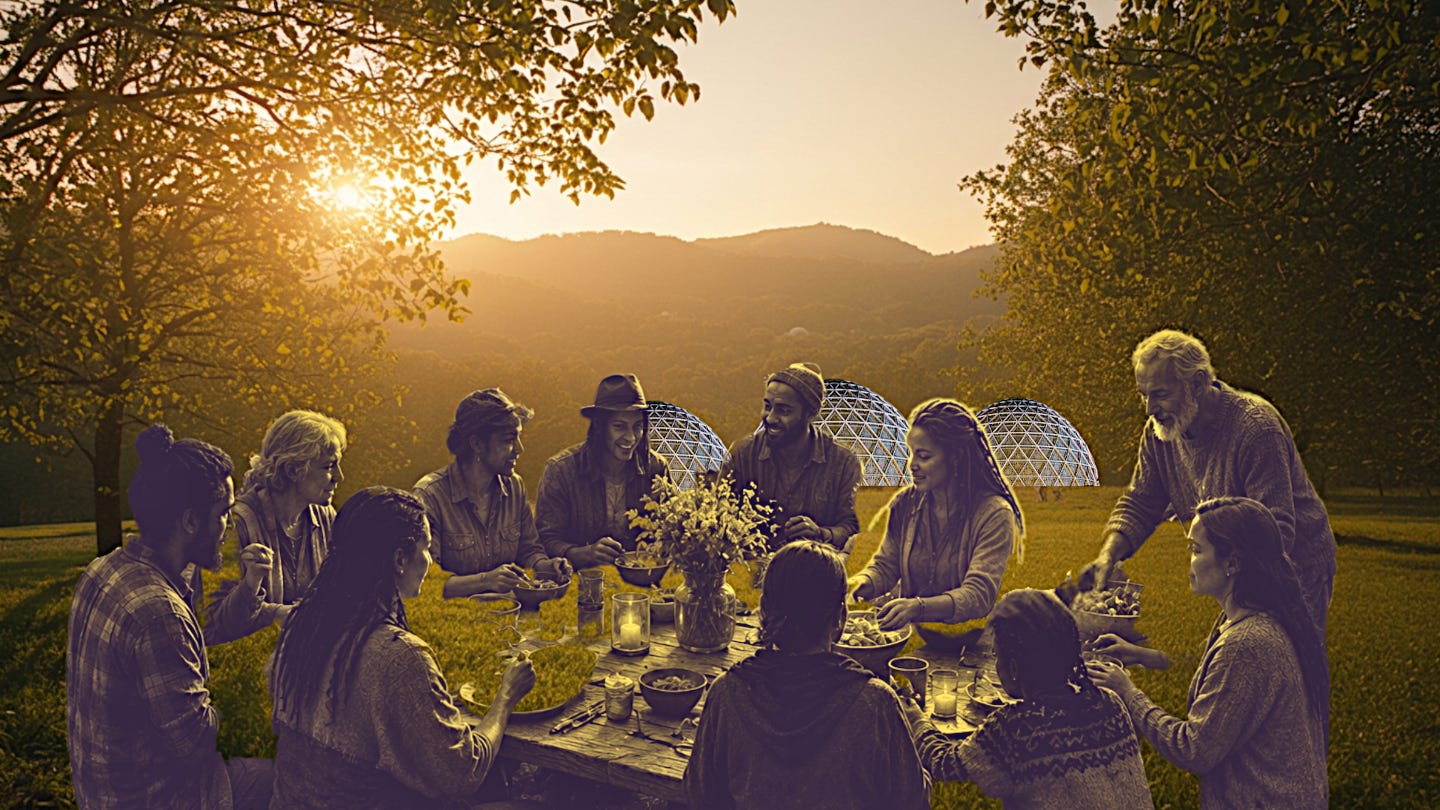
This resolve also shaped the way I lived through the ending of two marriages. Both endings might have driven into what was more common about divorce and the endings of marriages: things like bitterness, subliminal emotional warfare that included vengefulness and ruinous projection involving the custodial control of children. “It’s an inside job” came to mind, a commitment to self but also to the mental and emotional well being of all concerned. Many thought it very odd, our tribal family unit. One day I recall the lot of us at the river for an outing grandkids, kids, my X and his wife, the other X ...we had the best day… the tribe has endured through many changes ...kids and grandkids are grown.. And my daughter started to call us “the good vibe tribe”.
For much of the twentieth century, the ideal of the nuclear family was held up as the foundation of a healthy society. It promised stability, security, and belonging. Yet families were also economic units. Farms, businesses, property, social standing, and financial survival often depended upon preserving the family structure. For many women especially, leaving an unhappy or abusive marriage was not simply emotionally difficult — it was economically impossible. Beneath the carefully constructed image of domestic harmony, many families were quietly carrying unresolved grief, rigid roles, and inherited emotional wounds that had never been acknowledged, much less healed. The appearance of order often came at the expense of authenticity.
As psychology gradually entered the cultural conversation, we began to understand that children are shaped not only by what parents do, but by what parents cannot see within themselves. Every generation inherits not only love and wisdom but also the unfinished emotional lives of those who came before. As our understanding deepened, we also began questioning the belief that preserving a family structure at any cost was itself a virtue. The goal slowly shifted from protecting the institution of the family to nurturing the well-being of the people within it. Patterns once dismissed as “just the way things are” could finally be observed, understood, and, perhaps for the first time, consciously interrupted.
There is a subtle but important shift taking place in how we approach inherited pain. For generations the question was often, Why did this happen to me? While understandable, that question alone can keep us tethered to the past. Increasingly we are asking something different: What is the nature of this wound? Rather than remaining immersed in the emotional waters of family history, we begin to observe the pattern itself. We notice the inherited fears, the recurring reactions, the familiar roles we unconsciously assume. What once appeared to be our identity gradually reveals itself as an inheritance. And what is inherited, however deeply, can also be transformed.
As our understanding of family continues to evolve, something profound is beginning to shift. Increasingly, belonging is no longer defined solely by bloodline or obligation, but by resonance. We are discovering that while our biological families give us our beginnings, they do not necessarily determine where we find understanding, encouragement, or purpose. Family is becoming less a matter of shared genetics than of shared values and shared care.
This does not diminish the importance of family or our ancestry. Rather, it invites us to see differently. We can honor the family that gave us life without believing it must be the sole container of our emotional or spiritual belonging. Many people are discovering families of choice — communities, friendships, mentors, and creative circles that nourish parts of themselves their biological families could not. These relationships do not replace our roots; they become the branches through which new life grows.
Symbolically, Cancer and Aquarius offer two complementary perspectives. Cancer invites us to feel the depth of our emotional inheritance — our memories, attachments, and longing to belong. Aquarius offers the gift of perspective. It lifts us above the immediate intensity of the family story so that we can see its larger design. From that higher vantage, the emotional currents that once seemed inescapable become visible. We are no longer drowning within the inherited waters; we are learning to recognize the river itself. Once we recognize its current we are no longer condemned to its course.
Astrologically, Pluto’s current long passage through the sign of Aquarius warrants a profound reimagining of belonging. In many ways, this is the deeper work of our time: not abandoning the family, but expanding our understanding of what family can become.
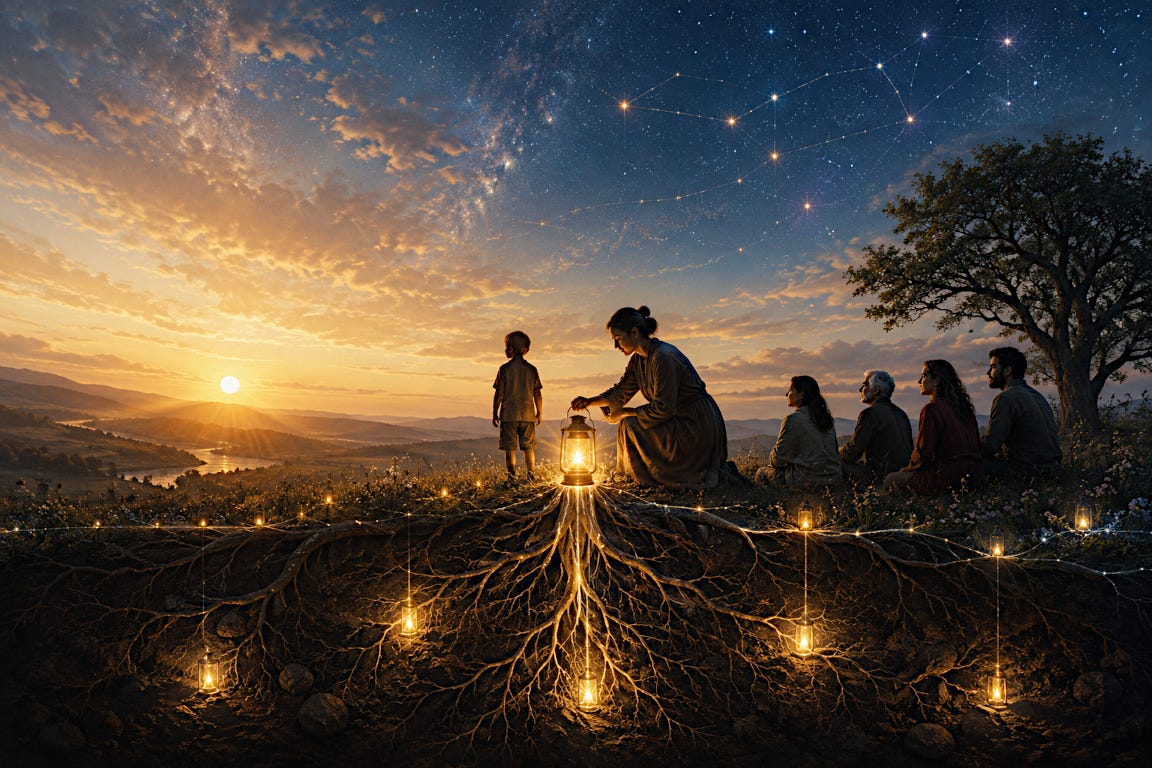
Aquarius has long been associated with networks, community, and the recognition that our lives are interwoven within something larger than ourselves. As Pluto slowly reshapes this landscape over the next two decades, it invites us to reconsider what belonging truly means — not merely through bloodline or obligation, but through shared values, mutual responsibility, and mutual support.
At the same time, this transformation extends beyond our personal lives. Families become rehearsals for the larger world. Every family develops its own emotional ecosystem. There are roles we unconsciously assume: the caretaker, the peacemaker, the rebel, the invisible child, the one who carries everyone else’s pain. Perhaps it should not surprise us, then, that societies often behave like families writ large.
The family has always been a microcosm of the larger world, and today the world itself has become a kind of family drama. We are beginning to realize that we all inhabit the same house — Earth — yet remain entangled in patterns of domination, rebellion, exclusion, and silence that echo the dynamics found around countless kitchen tables. The authoritarian parent, the rebellious sibling, the invisible child — these archetypal roles are no longer confined to individual households. They are playing out across nations, cultures, and institutions, inviting us to recognize that the work of healing is no longer merely personal. It is profoundly collective.
Perhaps this is the higher invitation of Cancer. Not simply to remember where we came from, but to become wiser caretakers of what we carry forward. We cannot change the emotional climate into which we were born, but we can decide what atmosphere we leave for those who come after us. It is a profound realization to sit with: the moment the generational wash ceases to be an invisible current pulling us beneath the surface and becomes something we can finally see, name, and choose not to pass on.

Thanks For Reading! This post is public so feel free to share it.
Comments
Nothing yet. Say the first thing.
Sign in to join the conversation.