
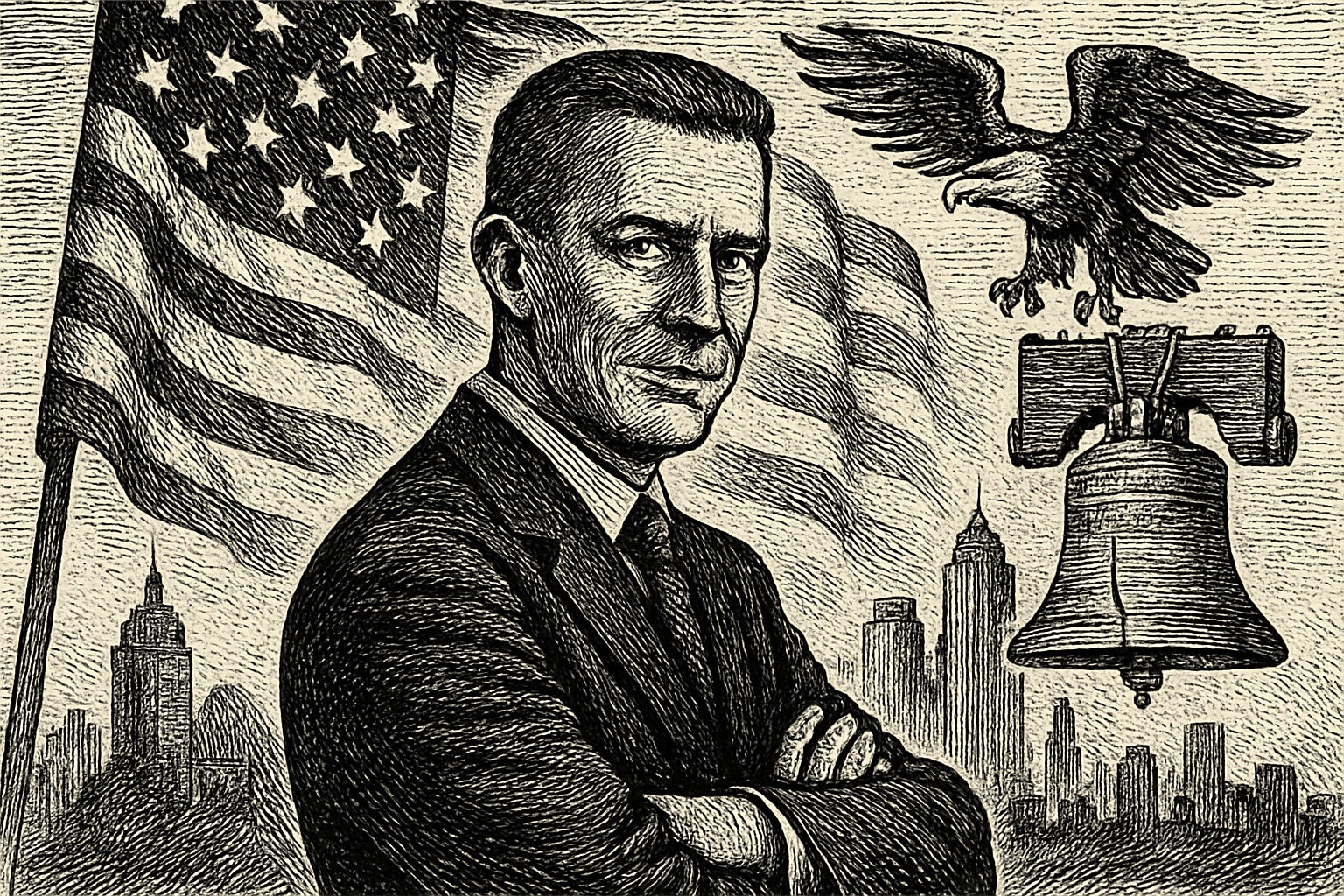
I used to ask students to read “Shooting an Elephant” by George Orwell. The narrative attempts to depict the wrongness of British colonialism from the perspective of a young “lower-upper-middle class,” well-educated junior British officer assigned to a lesser British colony: Burma (today, Myanmar). Orwell’s ornate language made the story opaque for many students, and others are from cultures where shooting an elephant was either unimaginable, or no big deal at all.
“Shooting an Elephant” tells the story of how Orwell, in his 20s, was assigned to be a regional superintendent — a cop — in a rural area of Burma. One day, an elephant in musth (mating season) gets loose, drags a man and crushes him to death, and must either be returned to its owner or shot. Orwell sets out with his rifle and is followed by hundreds of villagers, who soon grow to a massive crowd that he thinks numbers in the thousands.
Coming upon the now-calm elephant, Orwell is reluctant to shoot, but the murmurs of the crowd and thousands of eyes upon him convince him he must shoot the animal.
An elephant — as many have learned — is not an easy animal to kill.
After a brutal series of shots that finally brings the elephant down, Orwell is horrified to see the villagers rushing forward and hacking up the beast for meat while it’s still breathing its last.
Orwell describes the role of the British “sahib” in Burma in the 1920s: “He wears a mask and his face grows to fit it.”
“What do you think he means by this?” I’d ask students.
Most of them understood that the large crowd pressured him to shoot the elephant; few understood that the culture he was raised in forced him to be a man he didn’t want to be.
I was the first female editor and publisher of the five-college newspaper of the Claremont Colleges, the Collage. A relic of the 60s and 70s, by the 80s, the newspaper had become a thick broadsheet that rivaled the town’s newspaper for ads — especially pizza coupons. The paper had its own building and employed about 25 students. We had timesheets, an independent pub board, a bank account, and payroll. One of my jobs was to take the newspaper late at night to the printing facility about 30 miles away, and to return with the copies when they were done at about 3:00 a.m.
I was sitting in the front lobby when a tall, thin red-headed boy came in and announced in a gravelly Western accent, “I want to be the political columnist.”
“Okay,” I said, and I interviewed and hired him.
The next day I came to work and there were two dozen red roses on my desk with a note that said, “For the most beautiful woman I’ve ever seen.”
The deep-voiced, rail-thin young man was John Robert Starr and he became my second fiance.
John was a year behind me in school and not quite a year younger. He was a Poly Sci major at Claremont McKenna College and I was one of the top students at nearby Scripps College.
We’d been dating over a month before I found out he was one of the wealthiest students at our college consortium. John’s mother was a Phillips. As in “Conoco-Phillips.”
I’d never been close to someone that rich before, although I had college classmates from other wealthy backgrounds.
“If you care about him,” I told myself, “You owe it to him to treat him like all your other friends.”
John didn’t frequently complain about the way most others treated him, but he wanted to hear the truth and have real friends and relationships. Even as a young man, he was already caught up in the endless cycle of sycophancy and betrayal that is the curse of the very wealthy. Things have gone so far, so wrong, now, that I think these behaviors are a curse in most people’s lives now. But back in the early 80s, it was different.
John had friends, and we hung with the fast crowd at CMC, the absolute top of the partying empire of the summer-camp-for-upper-middle-class-and-above kids masquerading as private liberal arts colleges.
He worshipped Springsteen.
While I liked the Boss fine, my music was a little more Orwellian— Pink Floyd, the Who, and of course, Van Halen.
At a club one night without John, the red-headed singer made a play for me (ma, why do the gingers always like me?) he’s pretty famous and very rich now (Danny Elfman). Pete Townshend really did goose my rear at the supposed “Last Who Concert” at the LA Coliseum in 1982. John wasn’t at that concert either: I had two press passes and I gave the second to our ad salesman Andy, a lunatic tweaker bringing in $15,000 to $30,000 in ads per issue and $1,500 to $3,000 for himself. Not only had Andy earned the concert, he was also a massive Who fan.
In addition to all of this college fun, John was, at age 20, a hopeless alcoholic.

I could never really see myself as a princess but I knew John was a prince. All my life, I thought of him as the “Prince of Kansas City.” I still do.
After I broke things off with him, we still stayed in touch.
One day when I was living in the big house on San Pablo in Redlands, the phone rang late one evening.
“Hello,” I answered, and heard his familiar gravelly voice. “Sterling,” he said, “I’m going to desegregate Kansas City.”
He named his children Jack, Bobby, and Elizabeth.
He loved them with all of his heart.
I have at least a tiny measure of justice for my rape because John and his friends put the fear of God into Brian Stonehill, at least for a short time.
That asshole called me up about a week after the crime and wanted to know if the young men had put a cut-up snake on his lawn. “No,” I said, “I think it was just your gardener.”
If I’d been with John and the guys the night after my 21st birthday when, instead, I’d gone with Stonehill and the Pomona College kids, none of it would have happened. I might have gone on to a Rhodes Scholarship and Watson Fellowship, or to the Iowa Writers Workshop.
No matter how things had gone, I don’t think I would have stayed with John because I had begun to realize that he would never stop drinking.
Alcoholism is portrayed as a moral failing in our society, even to this day, even with all of the education and research.
Even when it’s understood that it’s self-medication for wounds that have never even been dressed, much less healed.
It was before I was raped that, weeping, John told me that he’d been molested as a scout and that it had gone on for a long time. And even worse, there was a professor at his school doing the same thing to him as another professor, at my school, was doing to me. The man who was “grooming” John and asking him to go on Washington, D.C. trips with him and strip to his underwear was a well-known Poly Sci professor who I believe is still currently teaching today. I hope not, but from what I know now, the odds that any people like this will ever be stopped are very low, and numbers of their victims, very high.
One of John’s friends went instantly into the State Department after graduation, another to the CIA, and the third, a guy I actually thought was pretty decent, became one of the top lobbyists in the state of California. Just imagine the wonderful things all three of them have done in the intervening years.
These are things that happened. They can’t describe the man John was. A whimsical, imaginative, deeply moral, innocent man-boy.
Would John have shot the elephant?
I think he was cleverer in those regards than Orwell seems to have been. He would have had the villagers herding the elephant back to its owner, or have worked a way to sell the elephant for profit in the market.
And then of course, gone for a drink.
John Robert Starr escorted me to the 2002 Nebula Awards in Kansas City, Missouri.
His chauffeur Zubin (“Z”) took me everywhere around the city throughout that week.
Z is himself, a prince, a Zoroastrian from Northern India. Neither Hindu nor Muslim, Z has a heart and a care for the poor children in India and he returns there periodically to feed them, give them medicine, and help to build schools.
What a fucking pair they were. At the end of John’s life, only Zubin was there for him.
He died of liver cancer in 2011.
No — he wasn’t on the transplant list.
Scouting was a central part of John Starr’s life, and very important to his father and his family.
And he was completely betrayed by the Boy Scouts of America even as he had devoted his life, and his family their lives, and uncounted amounts of their money, property, and time.
He loved the United States. He was egalitarian, anything but a snob. He was serious about desegregating the massively-segregated and deeply racist city he had been born and raised in.
I was right not to marry him for a variety of reasons. First, he would never have stopped drinking and I would have had to watch my husband slowly kill himself. Second, he didn’t fit in with Kansas City society (as if I would have) and tried to awkwardly meet the expectations of the country club set all of his life.
Regardless of how he felt inside or how strange his secretive personal behavior became, he was seamlessly elegant in public as an adult man. One of the high points of my life was what he did for me in 2002 when I was nominated for a Nebula Award.
I flew to Kansas City from Los Angeles, and the plane had most of the west coast people going to the event, from Kevin J. Anderson to Charles N. Brown, the publisher of Locus Magazine, the “newspaper” of the field.
This was before I understood the meaningless of awards, and I was excited to attend.
Because Charles N. Brown, one of the most unpleasant individuals I’ve ever had the displeasure of being exposed to, didn’t think I was “anybody,” I got to hear 2.5 hours of nonstop poison spewed by him to his seatmate about anyone and everyone in the field, from LAX to Denver, and then another 2.5 hours on to Kansas City.
And I experienced one of the most rewarding moments of my life thanks to John, when Zubin picked me up at the airport in his limousine, and a photographer from the Kansas City Star took my picture. All three of my names neatly printed on a cardboard, with a smiling Zubin standing there in full uniform.
I looked over my shoulder at the fat, evil slug that was Charles N. Brown dragging his overstuffed suitcase and —
they call it schadenfreude … the expression on his face, realizing that he’d overlooked and inadvertently alienated someone who was “somebody”.
And the next morning my picture was on the cover on the Kansas City paper.
“Oh, you’re staying at Don Hall’s place,” John said. The Hallmark Center.
No, I didn’t win. Big fucking deal.
I spent the week with Zubin and that night with John at the awards.
He socialized with my friends in this group of sci-fi writers and we had a little fun riding down in the elevator before the event with a big time editor who took John to be the nominee and not me. John seamlessly answered all of the man’s questions as if he knew what he was talking about, and I pretended to be his date.
The only sci-fi John ever read was mine.
“Sterling,” he growled, “I want to read your stories for an audio book.” It was just an idea in his head, but he would have been a spectacular actor.
For work, John sold insurance, like his father.
I don’t even think his children visited him in the hospital before he died. Zubin told me not to come — he was too sick.
He never wanted the mask his family had made for him. His brother had wanted it and did much better with it.
He was good. He did believe in the things the Boy Scouts taught. He wanted to desegregate his city.
He knew racism was wrong. He knew greed was wrong. He knew taking advantage of others was wrong. He never felt he was any better than any others in any way.
He knew how to play games and play roles perfectly but that was not who he was.
Who he was, was the boy who laughed with me, who ran down the beach with me, who grabbed me and kissed me and said he never wanted to let me go.
After I broke things off with him, he came every night for two weeks with a guitar he could barely play and serenaded me at my window.
He was a prince, a romantic, an idealist.
Nearly every man among us has been given a mask and whether his face grows to fit it or not, it’s an ugly, intolerable false front against all of our human natures.
This country and this culture of falsehoods and lies killed him as surely as if it put a gun to his head and pulled the trigger.
Comments
Nothing yet. Say the first thing.
Sign in to join the conversation.