
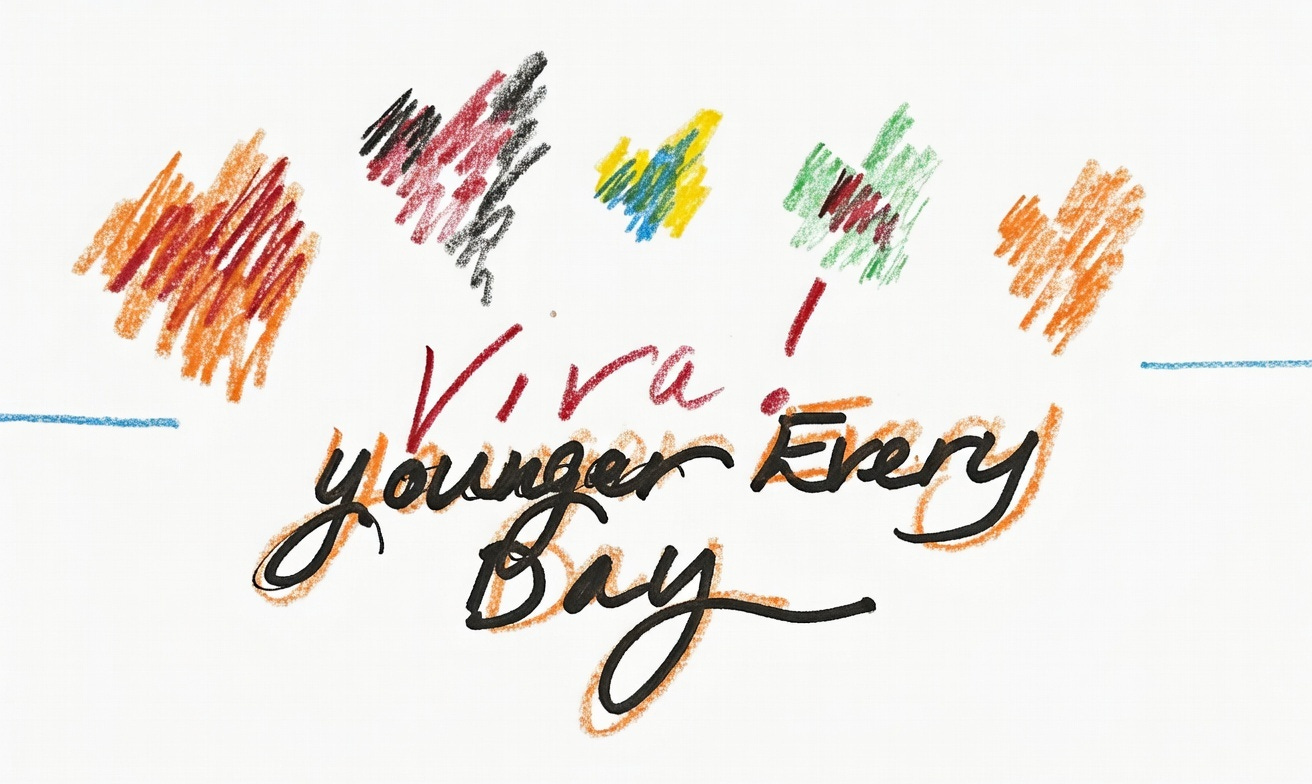
Those are the first colored pencil marks I’ve made in a long time.
According to Kurt Vonnegut,
Practicing an art, no matter how well or badly, is a way to make your soul grow, for heaven’s sake. Sing in the shower. Dance to the radio. Tell stories. Write a poem to a friend, even a lousy poem. Do it as well as you possibly can. You will get an enormous reward. You will have created something.
I went through four years of a traditional art education at Scripps College in Claremont, California (I’ll include the school’s name this time though I have officially disowned the school and do not advise any parent to send their child there). I had several great art instructors, but none greater than Paul Darrow, who had gone to art school with my mother and who remembered her.
Paul would come charging into the studio and yell “Art! Art!”
Toward the end of my time, Paul gave me two art books and told me to study them. The first was a retrospective of Frank Frazetta’s work, and about Frank, Paul said, “He understands the human body like no other.”
Imagine my bemusement when I saw that Frank’s daughters had set up a museum for him on Gasparilla Island near where Bruce and I now live in Southwest Florida. Imagine what I thought when I met Frank Frazetta through the Writers of the Future events — a polite, thoughtful, eminently kind man who spoke with me about art, and who commented offhand in a clinical way, “You’ve got the body …”
Yes I do.

The other book Paul gave me was Drawing on the Right Side of the Brain by Betty Edwards. I used this book and did the exercises, and I returned to our drawing studio and Paul’s office a few days later and threw it at him.
“Why didn’t you teach us this way?” I demanded to know.
I’m sure I ranted and raved; I was the before-Amy. Thoughtless, reckless.
Paul smiled. He was a craggy-faced angel of wisdom and patience.
Paul Darrow loved me, and I loved him. Tears come to my eyes remembering what a great man and teacher he was.
Four years of rock-hard, brutal, try-and-fail traditional art education. A couple of days with Betty Edwards. Same results.
The drawing exercises in Drawing on the Right Side of the Brain work because they ask you to do things that help to access the wordless, visual, creative side of our brains. There are many traditional methods involved in learning to draw well, paint well, or sculpt well.
I left my “head” behind a couple of residences below, but I kept a bust I’d made in sculpture class my third year of college. It was supposed to look like our model, who had a broader face than mine. It ended up looking like me, and I’m told that’s a common subconscious change when we’re beginning to study sculpture. Taking sculpture did change my drawing and particularly my painting. You can see the “quality” of my work in the cover of my first short fiction and poetry collection.
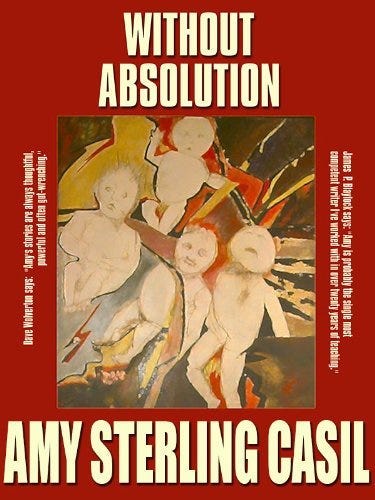
I might not have been any good, but I lacked fear. The red in that painting got re-used for another, worse painting, and splashed up to the highest studio windows where it remained for decades — the studio was eventually converted to the school’s coffee shop.
I made the canvas that “Babies on Fire” was painted on. I did this in the class of another great instructor, our painting teacher Allan Blizzard. I became close friends with Dovey Dee, who moved to Australia to be with her life-partner. Dovey was from Louisiana and a little bit older. Her quiet personality was the counterpoint to the appalling mad, bad, dangerous to know creature that I was; I’m sure Dovey could describe how I’d go to the studio and paint in spike heels and one of the 50’s dresses my grandmother had given me … I don’t think to wear while splashing a bucket of blood red Novacolor acrylic paint on a 6-foot canvas, cackling and smoking Black Russian cigarettes.
“You look like Susan Hayward in I Want to Live,” Dovey said one day when I arrived at the studio in this getup.
Little did I know I’d nearly grow up to be Susan Hayward in I Want to Live.
I bought the whole “live fast, die young, leave a good-looking corpse” mythos of the tortured artist and 27-club hook, line, and sinker.
I had the time then, even as a double-major, even as working up to 40 hours a week, to do art. It just came out of me, like water from a spring.
I have only written a little about it, but something happened to me during that early Spring of my senior year, maybe a bit before my 21st birthday. I woke one morning and my mother was coming to visit. She parked back of our studios, right near Paul’s little white convertible. We spent the day together.
She left to go back home to Hollywood, and I went to take a nap. When I woke, everything was back the way it had been.
My mother Sterling Sturtevant died when I was three months old of pancreatic cancer. She always wanted to attend Scripps College but did not have the money. She received good scholarships to attend the University of Redlands in our hometown, where she graduated in 1944.
I just learned the other day that Kurt Vonnegut was really in a slaughterhouse during the WW2 firebombing of Dresden as a prisoner of war. Slaughterhouse Five is no fantasy, it has elements of a documentary.
Great art doesn’t come from great pain. It isn’t a perk or feature of being a member of the 27 Club.
Great art comes out of … just doing it.
And like Kurt said: Practicing an art, no matter how well or badly, is a way to make your soul grow, for heaven’s sake.
Review how debased all “art” has become. Review the omnipresent drumbeat of “AI is gonna take our jobs” and “AI is gonna take the jobs of human writers, it will write all our books, it will make all our art.”
Just pick up a pencil and draw.
Pick up a guitar and play …
And that’s another of our visionaries. “We won’t get fooled again …”
What a privileged life I’ve led. And you as well and you as well and you as well.
Comments
Nothing yet. Say the first thing.
Sign in to join the conversation.