
I’m going slightly off topic here today and taking you back to the Anglo-Saxon period and the kingdom of Mercia. Recently I visited the village of Repton which lies well off the beaten track, near the southern edge of Derbyshire. At first glance this small village with its gentle village green does not seem at all remarkable but this tiny village was both an Anglo Saxon royal centre and the resting place for over 200 members of the Viking Great Heathen Army.
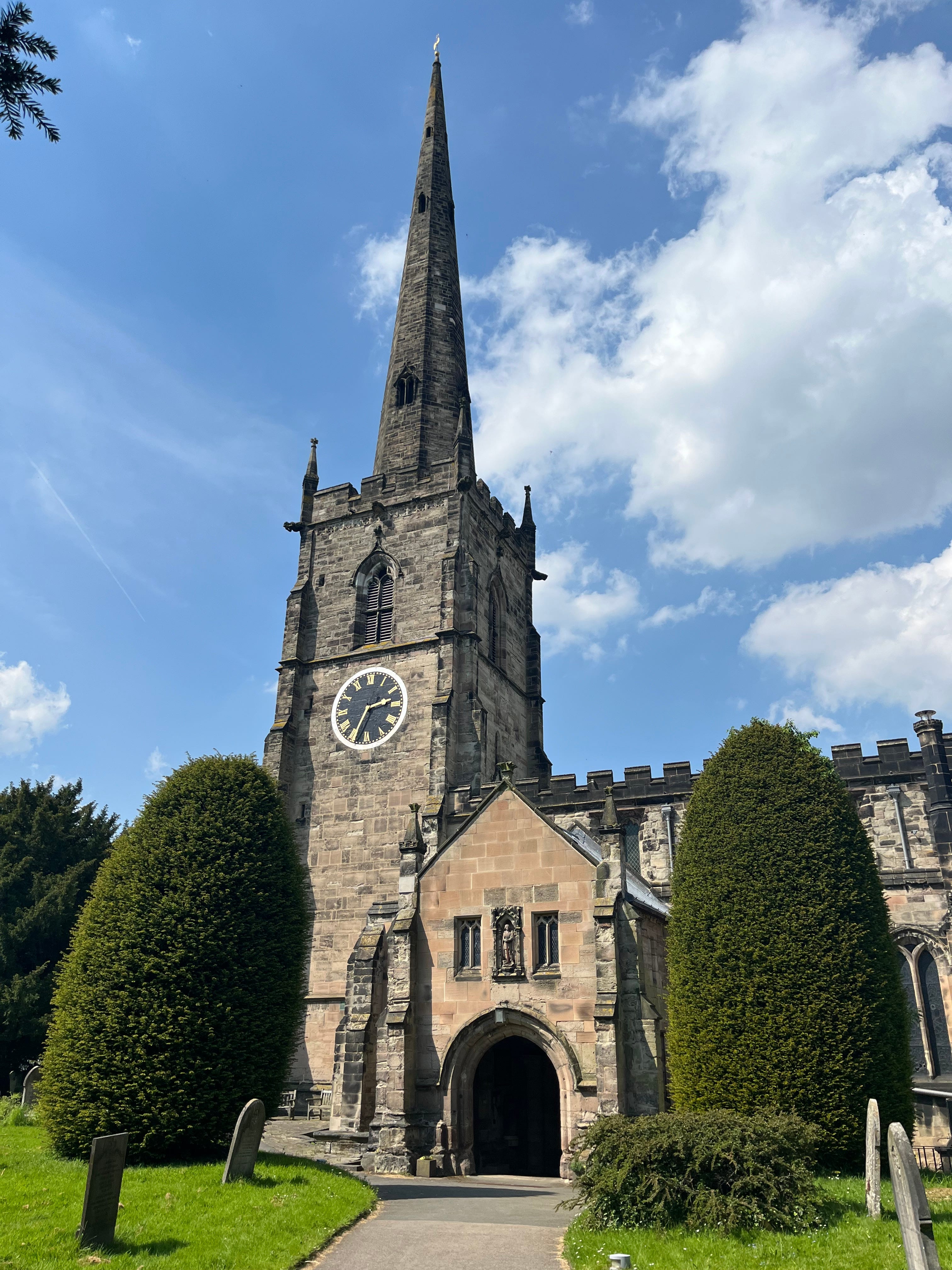
The written history of Repton dates to 653 CE when the venerable Bede tells us that Peada, King of Mercia - the Anglo Saxon kingdom of which Repton was part - was baptised in order to secure a marriage alliance with the kingdom of Northumbria. In an attempt to convert the whole of Mercia to Christianity 4 missionaries had been sent there, Diuma, Adda, Betti and Cedd. Peada however met a bloody end, having been, according to Bede, somewhat ironically betrayed by his wife. However the Christian mission was fairly successful and under Peada’s successor an Abbey was founded in around 600 CE at Repton.
It was at this monastery that St Guthlac lived and commissioned works such as his famous Guthlac Roll. It is said Guthlac was a Merican warrior who took up arms having been inspired by “the valiant deeds of heroes of old” according to his biographer Felix. He won many battles until one night after contemplating his life he underwent religious conversion and received a monk’s tonsure at Repton. He spent two years as a monk in the abbey after which he lived the life of a hermit in the Fens and was later made a saint. It was at around this time that the church crypt was constructed. The crypt itself is a remarkable Anglo Saxon Mercian survival and entering its frigid air it is very much like stepping back into another age.
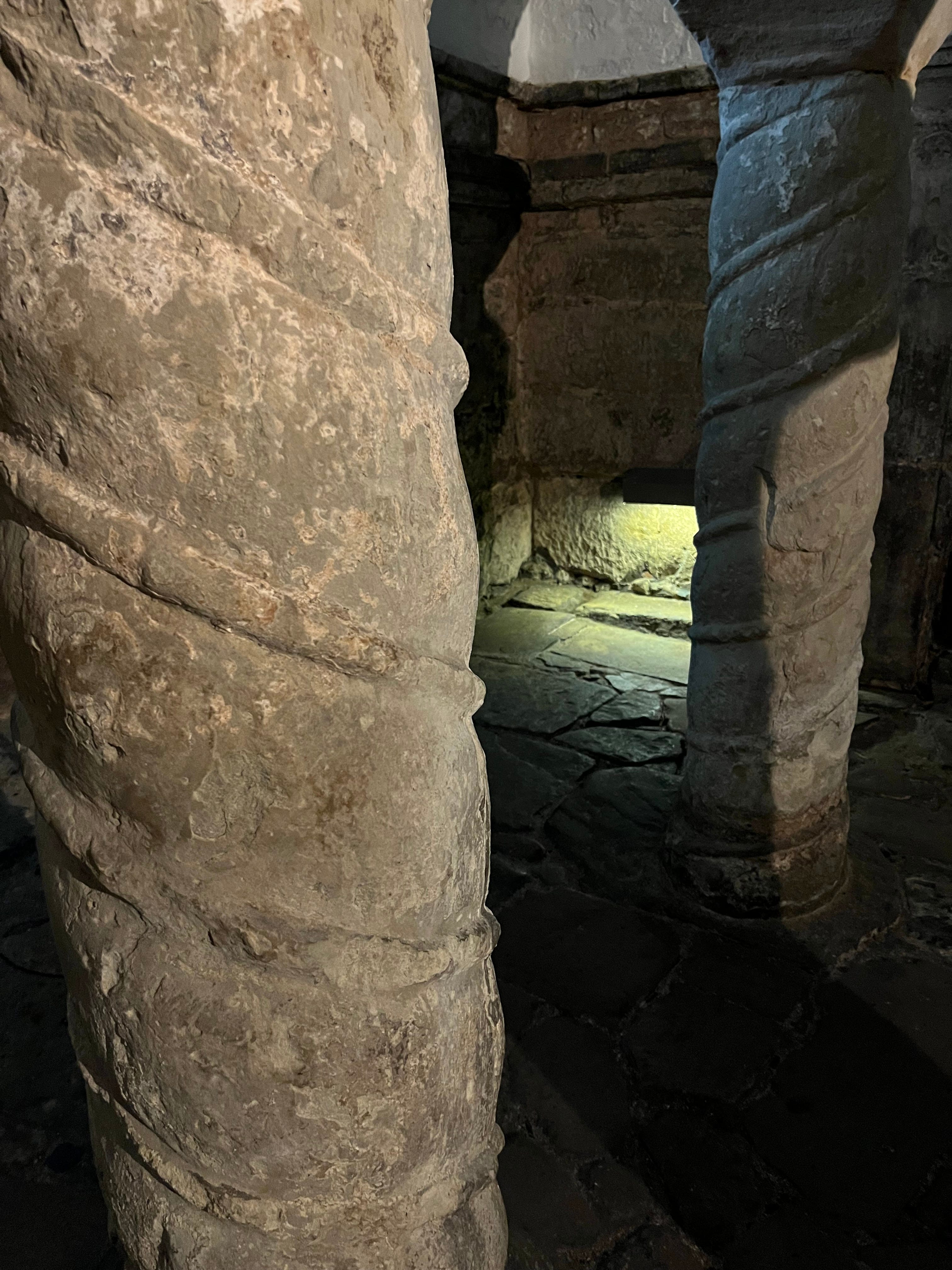
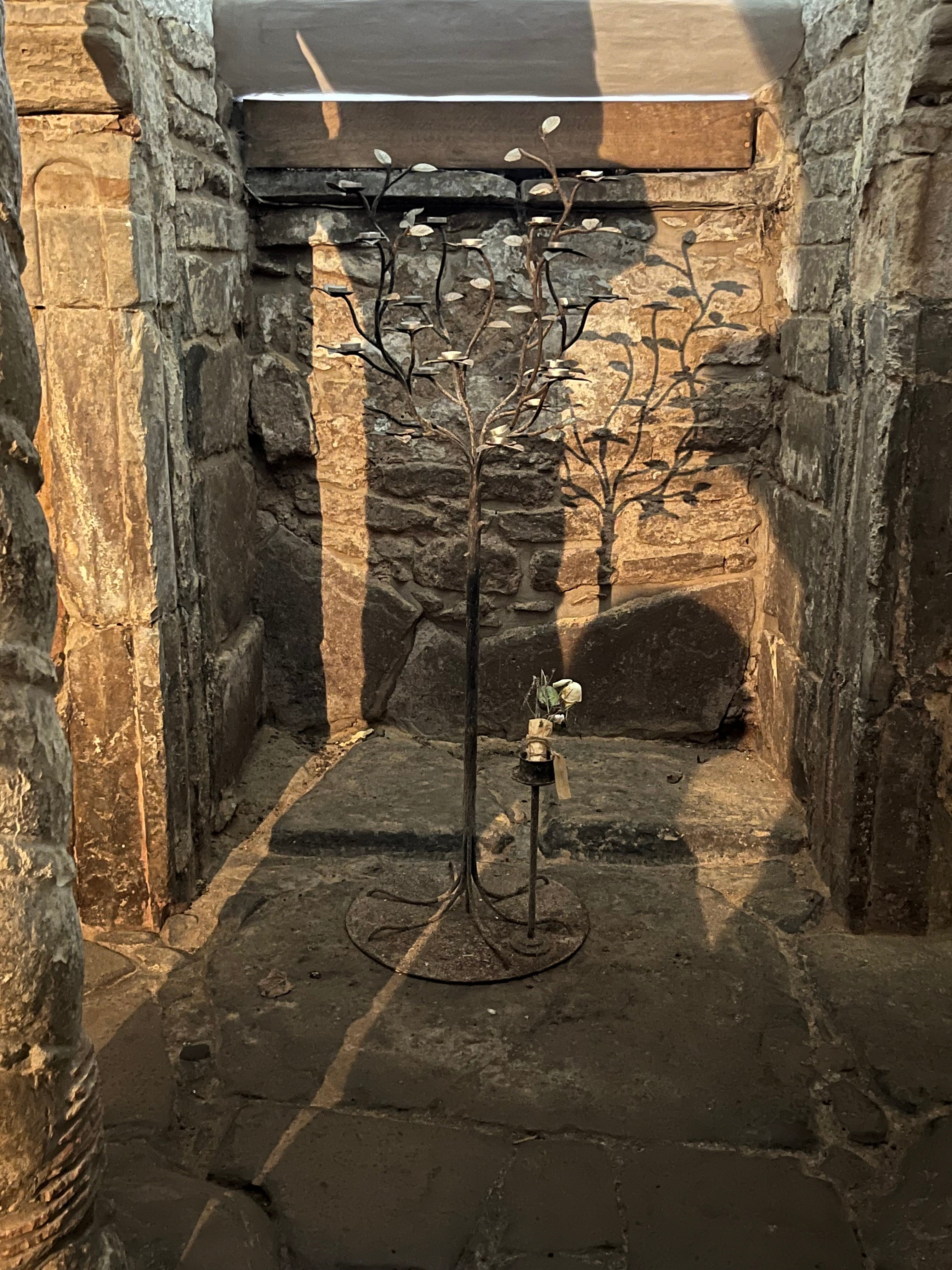
This crypt once housed the body of King AEthelbald of Mercia who was a friend of Guthlacs and patron of his saintly cult. After his burial Repton became the very heart of Mercian spiritual power, and the church was used as the royal mausoleum.
One hundred years later the son of the King of Merica Wystan was killed in 849 by his kinsman Beorhtfrith and this murdered prince was quickly canonised and his relics were kept at Repton church. The Chronicles that record these events are amongst the treasures of Anglo Saxon England but during this period they begin to feature something more than tales of Anglo Saxon kings: The fact that Viking ships were now appearing on the horizon and targeting the wealth of the monasteries. Soon afterwards, in 865 CE, England saw a serious escalation in Viking attacks and the Anglo Saxon Chronicle tells us that it was in that year that the micel here, or Great Heathen Viking Army first came to Britain and overwintered in East Anglia before it began its campaign across the country.
This army was, according to legend, led by three of the five sons of the semi-legendary Viking Ragnar Lothbrok: Halfdan Ragnatsson, Ivar the Boneless and Ubba. Unlike previous Viking hosts which had accepted payment in the form of Danegeld to go away, this army had no intention of being bribed to leave. The English Chronicles describe this host as a force of several Viking warlords who had banded together but in the Norse sagas this expedition takes on legendary qualities and was said to have been undertaken in revenge for Ragnar’s death at the hands of King AElla, king of Northumbria.
After landing in Thanet and wintering in East Anglia the army rode northwards intent on reaching Northumbria where they defeated King Osberht and AElla, and with Ivar the Boneless now apparently in full command they captured York in 867 CE where they supposedly captured AElla and subjected him to a death by Blood Eagle - taking their revenge.
Ivar’s Great Heathen Army then headed south back towards East Anglia where they met with the forces of Edmund the Martyr, who according to tradition was tied to a tree and shot to death with arrows after he failed to renounce his Christian faith. The army ransacked the local churches and monasteries, burning as they went before turning their attention to Wessex. Wessex was ruled by king AEthelred at the time, who was an elder brother of Alfred the Great. Wessex was by the arguably the most powerful of all the Anglo-Saxon kingdoms and AEthelred put up serious resistance. Both armies were evenly matched and they continued to skirmish throughout 871-2 CE. We know from the Anglo Saxon records that the Vikings overwintered during this period near to London.
Soon after however the Northumbrians rebelled against their Viking conquerors and the Great Heathen Army moved north again to deal with the insurrection. They then began to think about conquering Mercia and set up a base near to Torksey, in Lincolnshire, which was at the time part of the sub-kingdom of Lindsay. The Great Heathen Army and Mercia seem to have come to an arrangement whereby the Mercians paid danegeld to them in exchange for peace. This was only possible however after the Vikings had decisively beaten them in battle and a puppet king Ceowulf had been installed.
It is at this point, at the end of 873 CE, that Repton enters the story of the Great Heathen Army.
The chronicles tell us that they chose to overwinter in the vicinity of Repton, no doubt to reinforce that fact that they now controlled both Mercia and her kings, but until the 1970’s there was almost no physical evidence for the activities of the Great Heathen Army.
All this however changed, in 1974 when, spurred on by the Anglo-Saxon Chronicles reports that the Great Heathen Army winter camp was located at Repton, archaeologists Harold Taylor, Professor Martin Biddle and Birthe Kjolbye-Biddle began to excavate there.
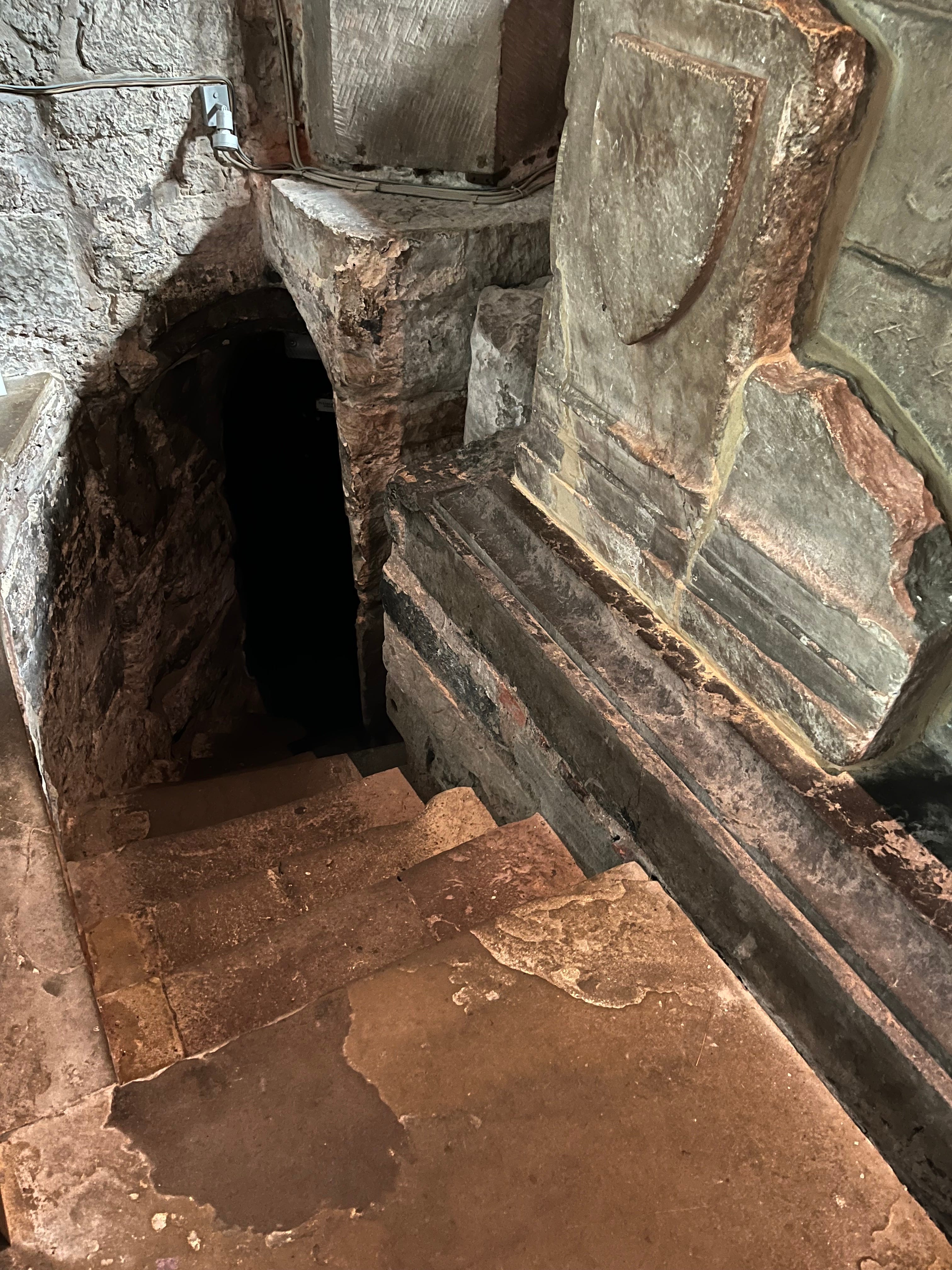
The aim of their excavation was to “study the architecture of the Anglo-Saxon church of St Wystan” and better understand the area’s history during that time period. They also knew that in the nineteenth century both a Scandinavian type hogsback tombstone and a partial viking sword had been recovered near to the church, followed in 1923 by a Viking axe. This led them to hope that there might be some trace of the Viking occupation surviving beneath the ground.
What they were to find exceeded their wildest expectations…
Part 2 will be posted soon. All images are my own, please ask permission if you wish to reproduce them.
Comments
Nothing yet. Say the first thing.
Sign in to join the conversation.