
Hello Readers,
I want to show you a map of a tangent.
My tangents are many. Most are baking related. This one began at the home of Diane and Robb, postal history experts and ephemera collectors. I was sitting under part of the toaster collection. (They always have 100 toasters in the house.) I leaned in to study a display of models I hadn’t noticed before, and I thought of the models of farming tools Felix studied fora 6th grade project — at least a dozen years ago — and how things like toy cast iron stoves were sometimes model cast iron stoves, used to sell the actual large object.
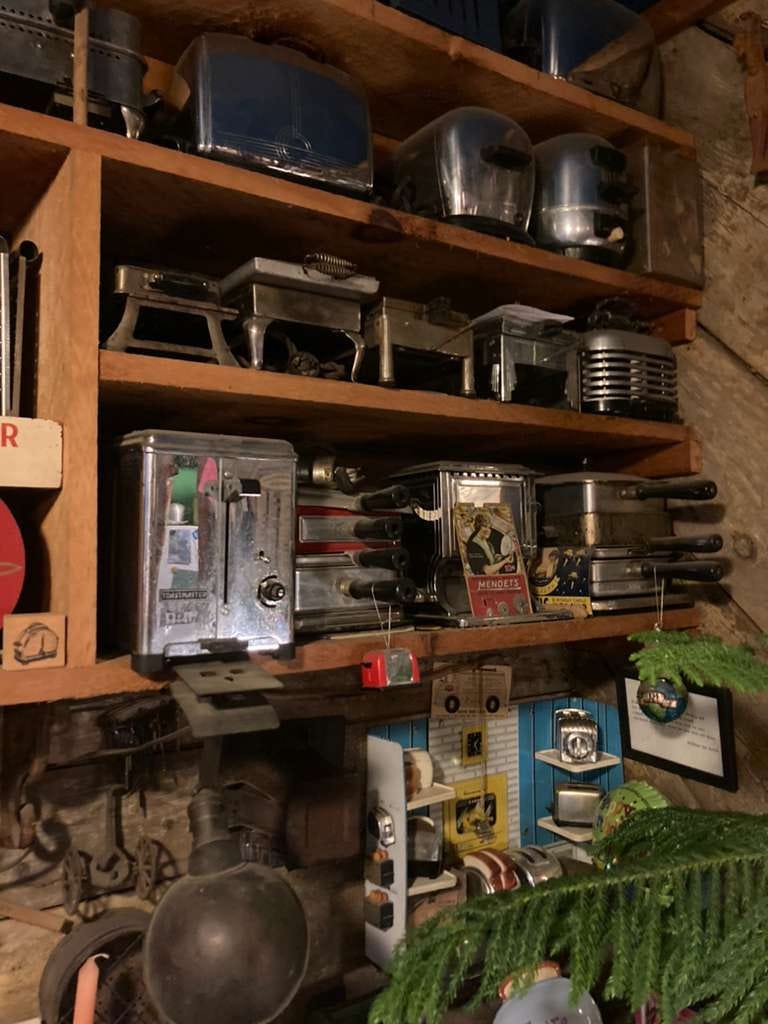
I was at this treasure of a house with people who have been gathering weekly for ping pong playing and potlucks for decades. I don’t play ping pong, but I like the company, and I admire this social structure that tethers together a group of friends. What connection!
Diane came by and asked me about my writing. I told her I was thinking of incorporating images about the early days of factory bread, and she got out a box of bread pamphlets. Here is one of them:
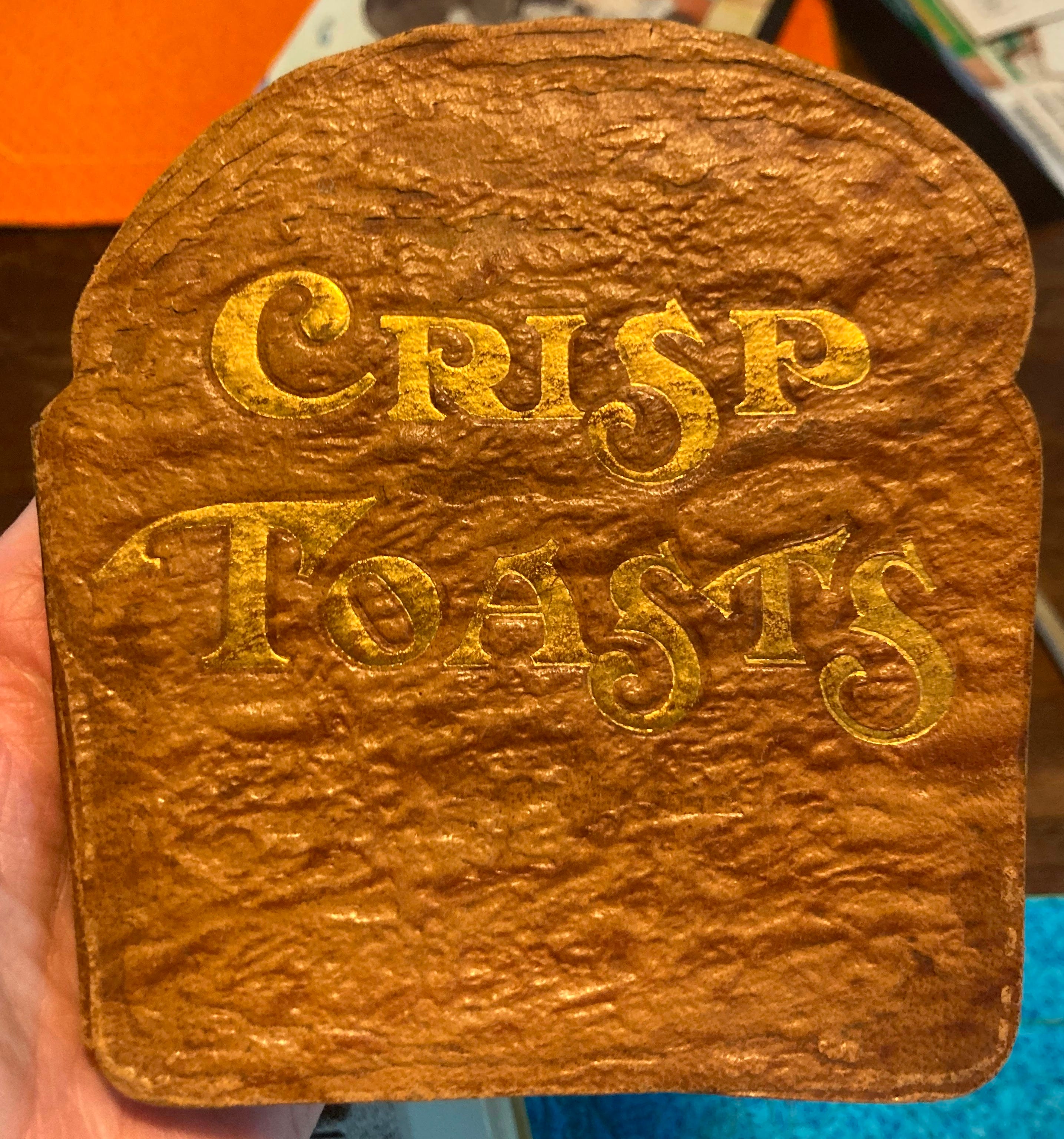
This remarkable thing was made in 1907. The cover is puckered, and the inside is filled with toasts people could raise to each other.
I’m intrigued by the shape of the book. It is a slice of bread, 21 years before automatically sliced bread hit the market. This matters to me because it reinforces the notion that pan loaves were popular and common, not boules, even in the earliest days of mass produced bread.
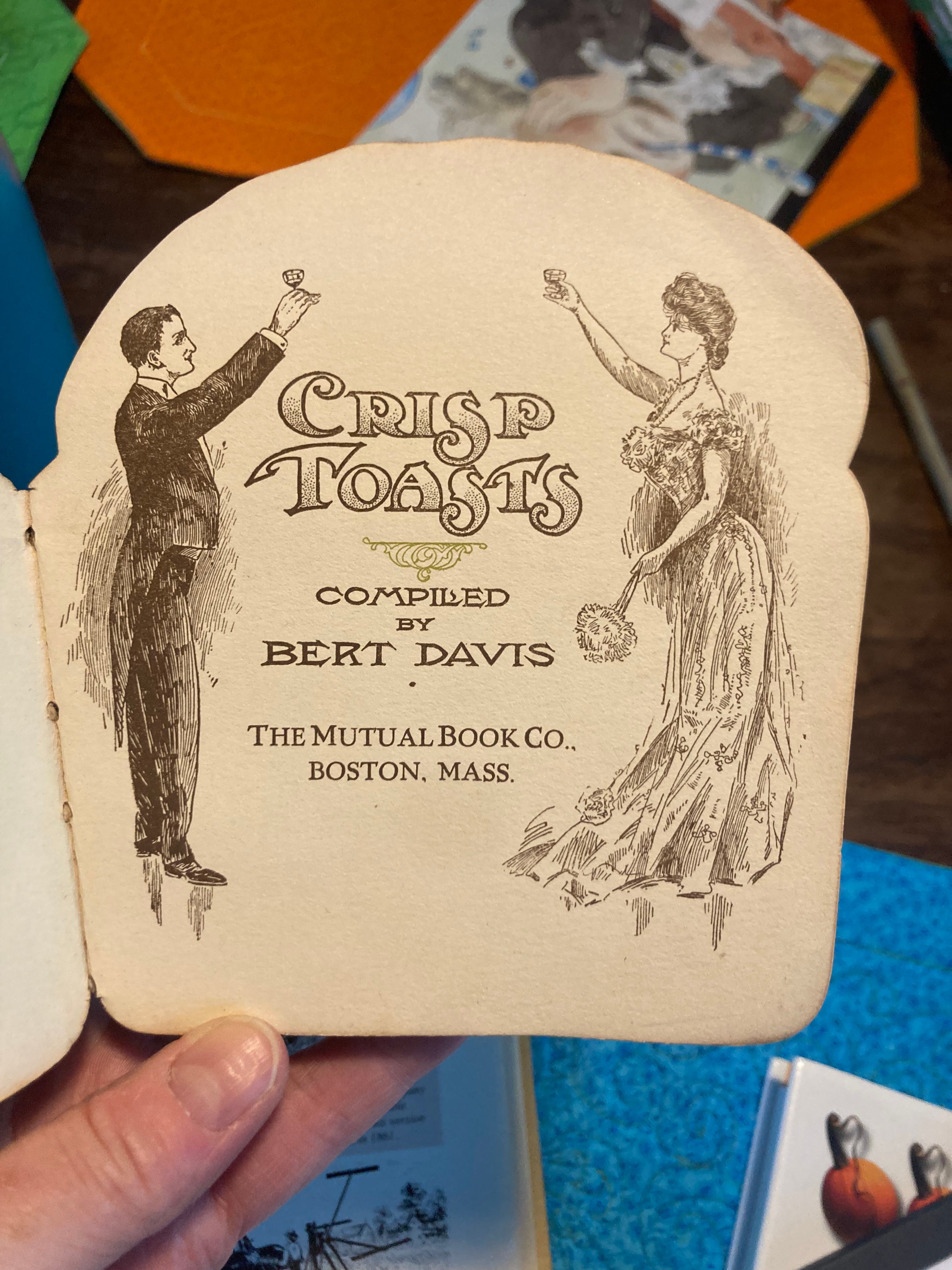
Look at the gentleman, wearing tails! The woman’s pronounced bust and miniature waist. Her gown is longer than her legs, and the flowers in her hand look like the fabric flowering around her bosom. A cap sleeve hides her shoulder and frames her elegant neck and pearls. See how much I have to say about her garb, and how little I have to say about his?
The compiler, Bert Davis, found or penned quite a few toasts with a carpe diem theme, like this one:
A past there was, there’ll surely be a future, but it’s not for me to waste the all important now in solving just exactly how I ought to act tonight. I’ll take a sip or 2 of wine. Thanks. Clink your pretty glass with mine. I’ve come to-night to enjoy the fun. I have but one motto, here’s that one: I say “What is, is right.”
The all important now!
What an odd little book. I looked up the publisher, and found they also published some Horatio Alger titles, and My Book Record and Guide in 1900. The Harvard University copy that was digitized and is available through Hathi Trust led me to a bready tangent.
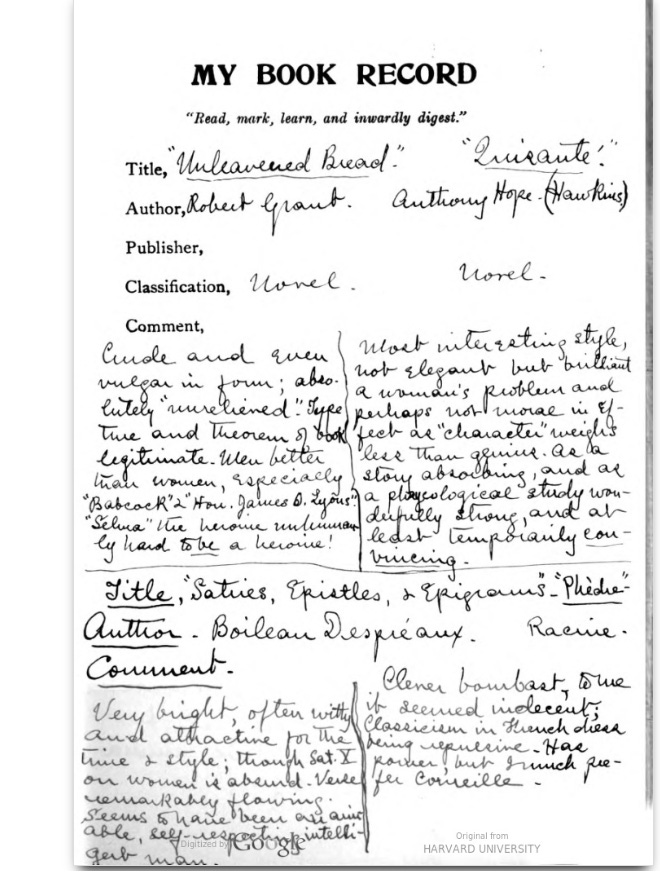
The novel “Unleavened Bread” by Robert Grant was the third bestseller in 1900, a time when fiction and nonfiction were published together. The unnamed owner of this book only read — or recorded, anyway, four books that she or he read. I bought a copy of Grant’s book to see if I agree with the assessment that it is, “Crude and even vulgar in form.” I am intrigued by the Grant’s representation of women in that era, and why he chose the title. I will report back.
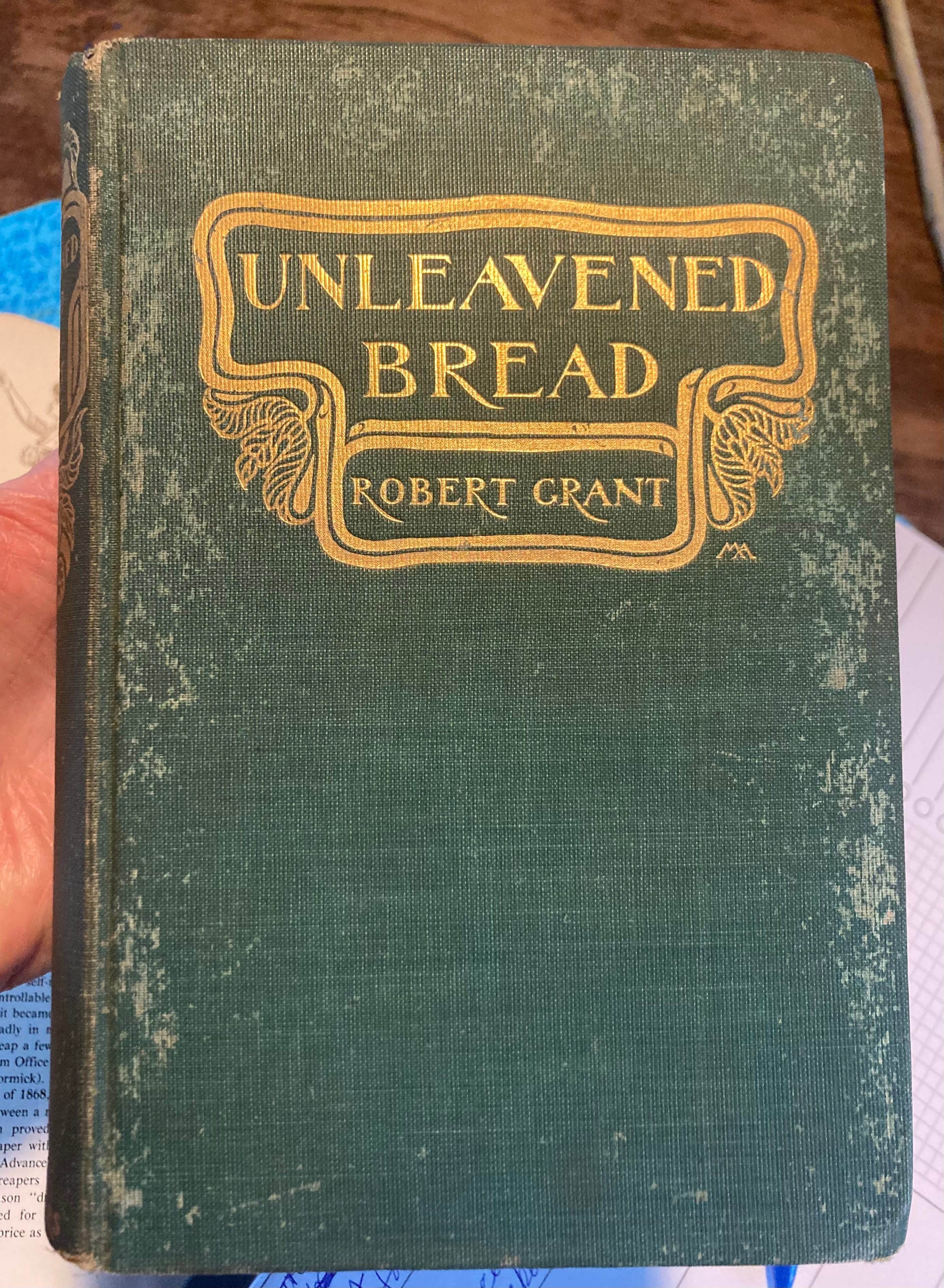
So there you have it, a skeleton of how I follow my interests and begin to flesh out my perpetual questions.
I do have some finished pieces to share with you, dear readers. I write for AGC, a Midwest grain group, and if you read this newsletter, I think you’d be interested in that one, too. The April edition was very fun to write — I hope you’ll take a look and see more about the conference in Vermont, and a very interesting farm in Ohio.
I’m thrilled to share a couple of other pieces that are now on the digital highways, one fiction and one nonfiction. Clam Court came from a dream I had about my family, and Vegetable Kingdom came from the everyday life of my family about 15 years ago. I’m grateful to Gargoyle and The Baltimore Review for publishing them.
Yours,
Amy
No posts
Comments
Nothing yet. Say the first thing.
Sign in to join the conversation.