
Some may joke that they risk life and limb in London or Sydney’s Christmas and Boxing Day sales. But the experience likely pales in comparison to visiting Owino, Uganda’s largest outdoor retail area and one of east Africa’s biggest markets.
“Shopping on Oxford Street in mid-December gets pretty busy,” said Anne-Marie Weeden, who lived in London, before swapping her advertising job for one in tourism in Uganda’s capital, Kampala, in 2008 for about a decade. “But imagine if every sales assistant grabbed your hand as you walked past and department stores let hawkers roam their aisles, thrusting sticks of roast meat or live chickens or cheap plastic tat in your face.
“Combine that with the tinny sounds of Congolese pop or gospel music from cheap Chinese portable radios and the warm muggy smells of a hundred charcoal braziers cooking plantain or beans, and you get pretty close to a typical African market shopping experience.”
Despite the bargains to be had, Weeden was so overwhelmed after her first Owino experience, she didn’t return for three years. She later ended up visiting it regularly as co-host of Fashion Corps (the name is a tongue-in-cheek nod to Peace Corps). The event rooted out the best deals and sold them on to expats, giving a third of its profits to local charities. For the migrants, it was always a highlight of the Kampala social calendar, one that would come with cocktails.
For three hours once a month, in the blazing sunshine and the wet season when the markets became like swamps, Anne-Marie and Celesta Duivenvoorde, a Dutch expat, went hunting for fashion.
Treasures they discovered included items from high-street labels Zara, Primark, Topshop, River Island, Next, New Look, Oasis and Whistles, and designers Vera Wang, Stella McCartney, Marc Jacobs and Calvin Klein, to name a few. These gems and more found their way to the global South from charity donations in the West.
The Fashion Corps hosts dusted them off, ironed and mended them before selling them at a slightly higher price to the fashionistas who flocked to its monthly pop-up sales. The money went to Product Of Prison, a Dutch NGO helping rehabilitate prisoners in developing countries, which Duivenvoorde worked for. Anything not sold was donated to female prisoners. (Unfortunately POP shut in 2017. As for Fashion Corps, it looks like COVID may have killed it).
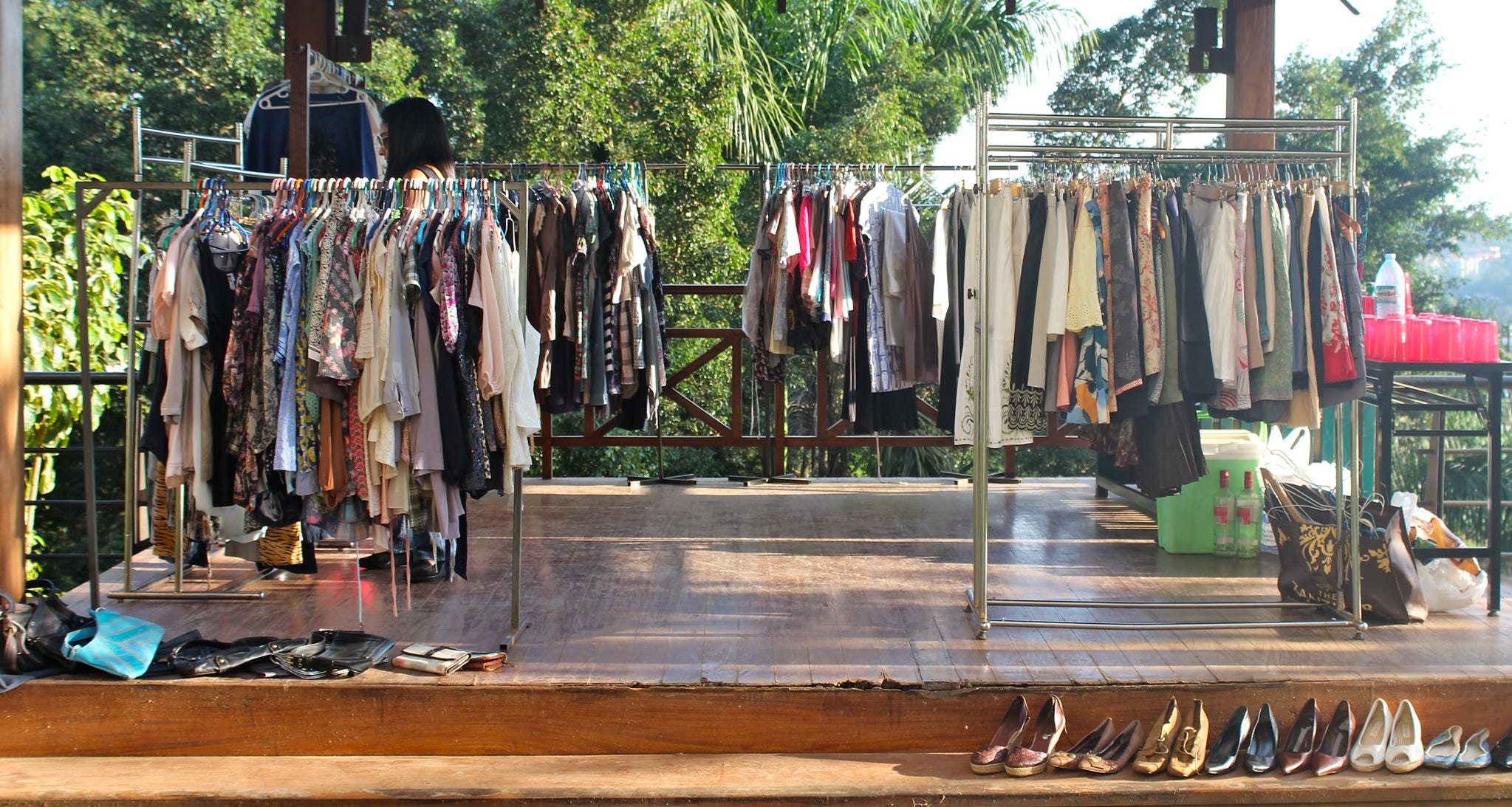
Uganda has a booming second-hand clothes trade, with items from Britain, Australia and elsewhere shipped to the Kenyan port of Mombasa before being trucked into the country. According to UK NGO WasteAid, Uganda imports more than 90,000 tones of used garments, known locally as “mivumba” and “’matumba” – the equivalent of about 40,000 cars - every year.
The country has “banned” second hand clothes to largely symbolically be seen as standing up to the imperialist West, a move which in reality is not practical, so many times it’s easy to lose count. In 2023 leader President Yoweri Museveni, who rules Uganda with an iron first, said: “They are for dead people. When a White person dies, they gather their clothes and send them to Africa.”
Museveni may be a dictator but he has a point. We may flock excitedly to the “thrift” and “op” shops, as we call them, in London and Sydney largely as a novelty, but most of us do this out of choice. I can’t help but wonder how we would feel if the only option we had was to wear hand me downs from developing countries?
Banning the secondhand market in Uganda would mean a greater market for Stella Atal. In the past she has sold dresses for upwards of £41 ($80 AUD), which could get you half a dozen Owino items. Atal is just one of the many talented designers who lives in Kampala, where I attended Kampala Fashion Week and other fashion events.
There would also be an environmental advantage. About 83 million tonnes of textile waste are produced globally each year, 65% of which is synthetic fibre, said Greenpeace.
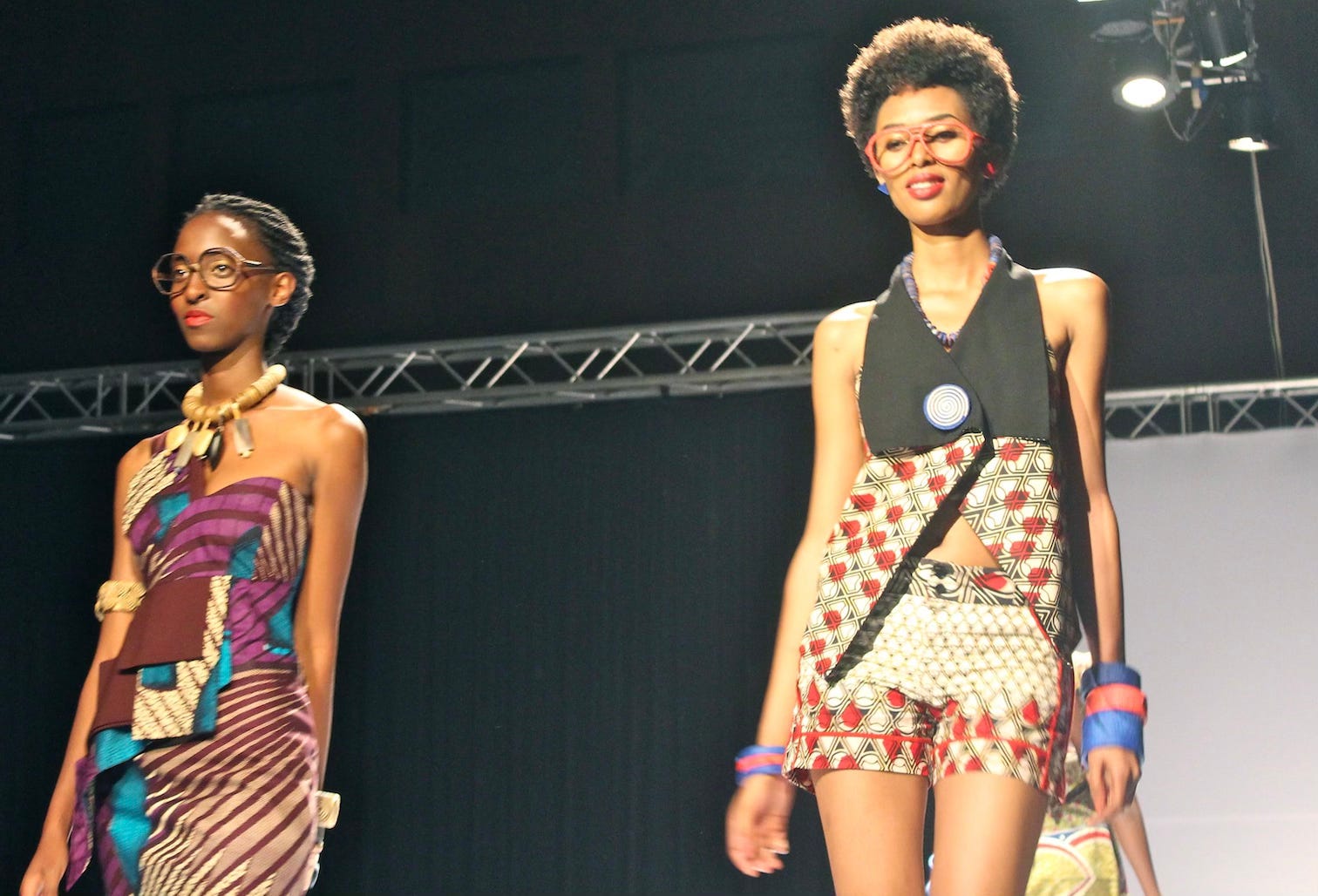
But the issue of course is the cost factor. Atal admitted to me the second-hand clothes markets allowed Ugandans to dress affordably, provided jobs and gave her inspiration for her own designs.
When the East African Community (EAC) regional bloc did ban the imports in 2016, only Rwanda, led by darling of the West and the donor community, Paul Kagame, enforced it. And even then the US retaliated, suspending its rights to export clothing duty-free to the country two years later.
Some of the best items I saw at Fashion Corps included a delicate white silk top embroidered with skulls from The Kooples for 45,000 Ugandan shillings (£10 or $17 AUD), which could have cost its original owner £135 ($257 AUD), and a demure tea-dress from Agnès B for 70,000 shillings (£16 or $30 AUD), which probably set someone back at least £90 ($171 AUD).
There’s a chance, however slim, that you could end up buying clothes in Uganda you’d purchased in a previous life thousands of miles away on the other side of the world. Almost unbelievably, Jacqueline Novogratz spotted a distinctive blue wool sweater she’d donated to a Goodwill store in the US a decade later while working in Rwanda, her name still even on the inside tag. The tale is told in her book The Blue Sweater.
During my seven or so years in Uganda, what I found more amusing than discovering designer brands were the quirky items that turned up. I once saw a Barclays uniform hanging on an outdoor rack, for example. Across the road were a pair of Michael Kors heels going for 15,000 shillings, which is about £3 (or $6 AUD).
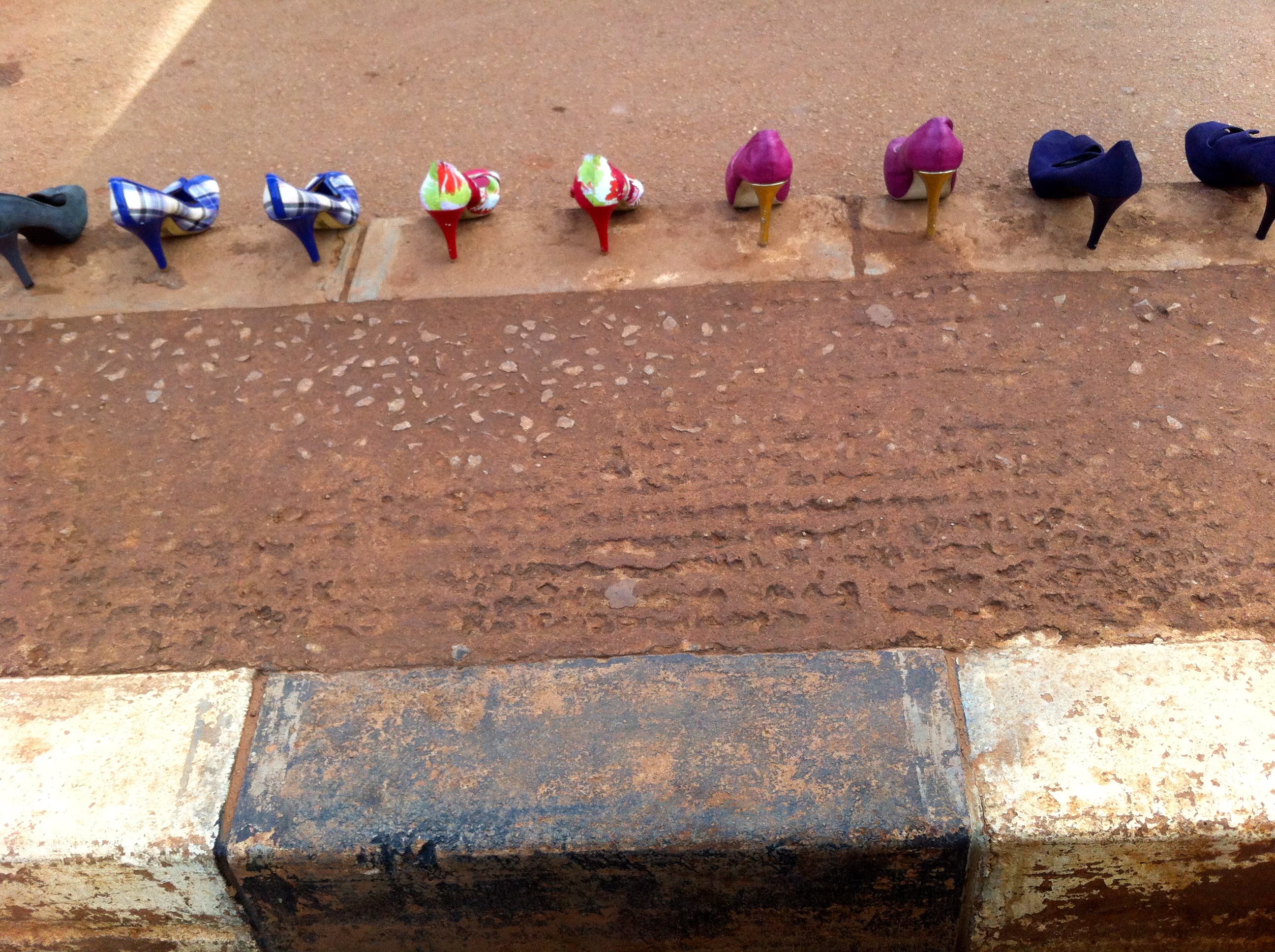
My boda boda [motorbike taxi] would regularly take me for trips to see what I could uncover, and driving around for work I would find even more. Hooning (as we’d say in Australia) across the city, we would always spot treasures, causing the drivers to often hit the breaks suddenly, narrowly avoiding an accident. I could never keep my eyes straight ahead on the road. They would always be on a line of bright colored stilettos placed strategically on a muddy footpath, to appeal to the customer, or the like.
East Africans, particularly Ugandans, have such an eye for style and every one in Kampala could be described as a fashion plate, whether it was deliberate or not. Every one looked like they could be in a Westfield brochure or be ready to go onto a catwalk. But when someone (especially a “mzungu” or foreigner) was dressed up, people would say “you’re smart”. Many of the roadside boutiques would have names evoking the global North such as “London Eye” and you would always find the clothes laid out in such a creative way. The city was a constant visual feast.
It’s also a country that’s far more body positive compared to the West and it wouldn’t be uncommon to see women of all shapes and sizes wear body con dresses or out exercising in athleisure. Bigger was better and - much to the displeasure of so many foreign women - you’d certainly be told this if you put on weight. “Wow, you are growing nice and fat,” I was informed several times. The accompanying explanation was that this was because weight gain was linked to coming into money. As much as it may upset you, Ugandans are the kindest, friendliest, most unassuming people in the world, so you’d always end up laughing and taking it like a good sport.
Once you found a potential frock, skirt or top, you'd be pushed into a makeshift change room that could collapse on top of you or because it was too small, left you exposed to the city's notorious traffic driving past as you were semi-naked. And it never mattered what you actually looked like, you’d always be told it was lovely. (I was about to joke here that I tried on things that I probably would have been arrested in but then at one stage the country did ban miniskirts in a crackdown on pornography, so I’ll leave the details of this to another time).
My drivers themselves regularly showed up decked out in fast fashion and sporting vintage attire. One morning I bumped into one wearing a uniform from Pizza Hut. Another owned a floral Dolce & Gabbana blouse not because of the label - that meant nothing to him - but just because he liked its style. I once saw a guy decked out in a Toronto Fire Department uniform, and another dressed in the shirt belonging to the SES (the New South Wales State Emergency Service).
Sporting memorabilia from all over the world could be hunted down at the huge Owino market. If you named your team, it was there. There was so much Wallabies merchandise on offer, I could have bought Dad’s Christmas presents easily. There was the free backpack that you got when you signed up for a membership with gym chain Fitness First. And were you looking for the vest from the 2008 Beijing Summer Olympics marathon? It was all there - and more. I also regularly saw items with the Oxfam charity shop and British Red Cross tag still on them. At one point I loved it so much that I started a Pinterest board devoted especially to things I’d found.
Bargain hunting in Kampala for most could be one part exhausting, another part fun - but always, always unpredictable. “Once, I got trapped in Owino during a massive thunderstorm,” recalled Duivenvoorde to me. “I had to climb up onto one of the stalls to avoid the storm water at my feet. I looked down and saw I was standing on top of a gorgeous Gucci handbag. What a lucky find.”
Thanks for reading and I hope you found this insightful. When we need more news coverage - and not just opinion - more than ever and more coverage of the global South, especially on this platform, for the next while I’m looking back at some of the stories I’ve reported on all around the world. Stay tuned!
Comments
Nothing yet. Say the first thing.
Sign in to join the conversation.