
“The cure for the world is to return to the wisdom of the ancient people.” Maria Sabina
As a bonus piece in our Returning to Your Wild Wisdom series, I wanted to open the door to a conversation that more and more people seem to be bringing into the light.
🍄 Psychedelics. More specifically, the growing curiosity about their potential role in personal transformation and healing the divide in humanity.
Over the past few years, I’ve noticed this topic coming up more and more in everyday conversations. People are asking thoughtful questions, sharing what they’ve heard, wondering what the research says, and trying to separate fact from fiction. What was once considered a fringe topic is gradually becoming part of a broader conversation about mental health and human potential.
I believe it’s important that we can explore these conversations with curiosity, openness, and evidence, rather than fear or stigma.
This isn’t meant to be a comprehensive deep dive into psychedelics. That conversation deserves its own space, and we’ll save it for another day. Instead, I hope this serves as a thoughtful introduction and creates space for open, informed conversation.
I’d like to begin with microdosing psilocybin mushrooms.
As a nurse, my role is to educate, reduce harm, and encourage informed decision-making. This newsletter is not intended to promote the use of illegal substances. Laws surrounding psilocybin mushrooms and other psychedelics vary widely and continue to evolve, so it’s important to understand the legal considerations where you live.
If you choose to explore this topic, I encourage you to do so thoughtfully, intentionally, and with appropriate education and professional guidance.
That said, I also believe we do ourselves a disservice by pretending this conversation isn’t already happening.
People are curious. They’re asking questions. They’re reading the research. They’re wondering whether there may be another path for healing when conventional approaches haven’t provided the relief they hoped for.
As healthcare professionals, I believe we have an opportunity to offer compassionate, evidence-informed education while remaining open to what we’re continuing to learn.
One of the reasons I wanted to include this bonus lesson in our Returning to Your Wild Wisdom series is because I keep hearing the same theme from people who have explored these experiences.
They talk about reconnecting:
✨To themselves.
✨To nature.
✨To other people.
✨To a sense of meaning and purpose.
Almost as if they’ve remembered something they didn’t realize they had lost.
Whether that feeling comes through microdosing, meditation, ceremony, cacao, prayer, spending time in nature, or another healing practice, I believe what so many of us are truly seeking is deeper connection.
After all, health isn’t simply the absence of disease. It’s also reflected in our relationships, our sense of belonging, our ability to experience joy, and the meaning we create in our lives.
What Is Microdosing Psilocybin?
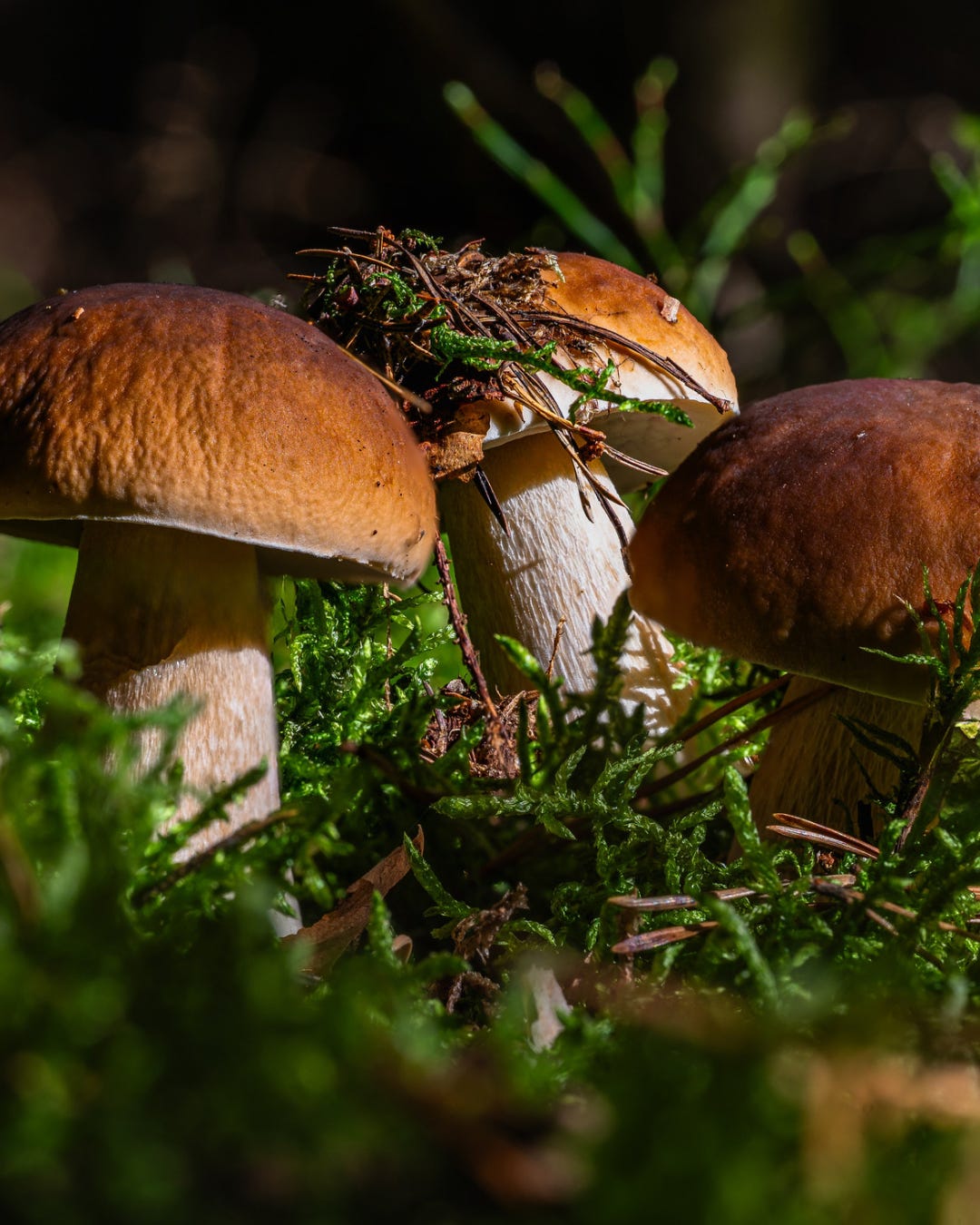
Psilocybin is the naturally occurring psychedelic compound found in certain species of mushrooms. Once consumed, the body converts it into psilocin, which interacts with serotonin receptors in the brain. Researchers believe this may contribute to improvements in mood, emotional processing, perception, and cognition, making psilocybin an area of growing scientific and clinical interest.
Microdosing psilocybin refers to taking a very small amount of psilocybin mushrooms, typically below the level that produces noticeable changes in perception or consciousness. Also referred to as ‘sub-perceptual’.
Many people who experiment with microdosing describe feeling more present, emotionally open, creative, connected, or generally more at ease. At the same time, the science is still evolving. Researchers continue to study who may benefit, which effects are most important, and how to better understand these experiences.
Beyond microdosing, scientists are also exploring psilocybin-assisted therapy and other psychedelic-assisted therapies for conditions such as depression, PTSD, anxiety, addiction, and end-of-life distress.
Most of this research involves carefully designed clinical settings with preparation, therapeutic support, and integration afterward rather than microdosing alone. That distinction is important.
Neuroplasticity and Neurogenesis
You may also hear the terms neuroplasticity and neurogenesis.
Neuroplasticity is the brain’s remarkable ability to reorganize itself by forming new neural connections throughout life.
Neurogenesis refers to the creation of new neurons.
These are exciting areas of research, but they’re also complex. Scientists are exploring whether psilocybin and other psychedelic compounds may influence the brain’s ability to adapt, process emotions, and move beyond patterns that no longer serve us. While there is still much to learn, the questions being asked are opening fascinating conversations about healing and the brain’s lifelong capacity for change.
If someone chooses to explore psilocybin where it is legally available, education and intentionality are essential.
These are powerful substances that deserve respect. They are not shortcuts, and they are not without risks. And they are not meant for everyone.
There is tremendous wisdom in learning from the Indigenous traditions that have worked with these medicines respectfully for generations. Modern science is beginning to investigate experiences that many Indigenous cultures have understood for centuries, while reminding us that healing has never been about the substance alone.
🍄The relationship matters.
🍄The intention matters.
🍄The environment matters.
🍄Preparation matters.
🍄Integration matters.
Whenever appropriate, working with an experienced, ethical, and appropriately qualified guide or healthcare professional can be an important part of the process.
If you’ve been following this series, you already know my heart is always drawn toward practices that help us reconnect with ourselves and the natural world.
One beautiful legal option that supports this is ceremonial cacao.
While ceremonial cacao is not psychedelic and shouldn’t be viewed as a replacement, it offers many people a gentle way to cultivate presence, emotional openness, mindfulness, and connection through intentional ritual and community.
Perhaps that’s the real invitation.
Not necessarily to chase extraordinary experiences, but to remember that healing often begins by slowing down, becoming fully present, and reconnecting with the wisdom that has always lived within us.
My hope is never to tell you what choices to make.
My hope is to provide thoughtful education, encourage open conversations, and create space for curiosity without judgment.
The research continues to evolve.
The legal landscape continues to change.
And this conversation is becoming increasingly important.
As we learn more, I hope we can approach this topic with both openness and discernment, honoring ancient wisdom while remaining committed to ethical research, responsible education, and safe, informed choices.
Because returning to your wild wisdom begins with curiosity.
Sometimes, curiosity is simply the courage to ask a question we were once taught not to ask.
I’d love to continue this conversation in the comments. What questions do you have about microdosing, psilocybin mushrooms, or psychedelics that you’d like me to explore in a future newsletter?
Sending So Much Love,
Amy
Comments
Nothing yet. Say the first thing.
Sign in to join the conversation.