
You’ve been working on requirements for a new opportunity for weeks. You keep hearing about product managers generating requirements in a day with AI assistance.
The untold story of requirements in a day is the product thinking leading up to the requirements. Fast requirements are usually the visible result of weeks of context-building work.
In this article, product context means the shared understanding of:
the opportunity
the evidence
the solution options
the decisions
the requirements
Product teams build context that leads to effective requirements.
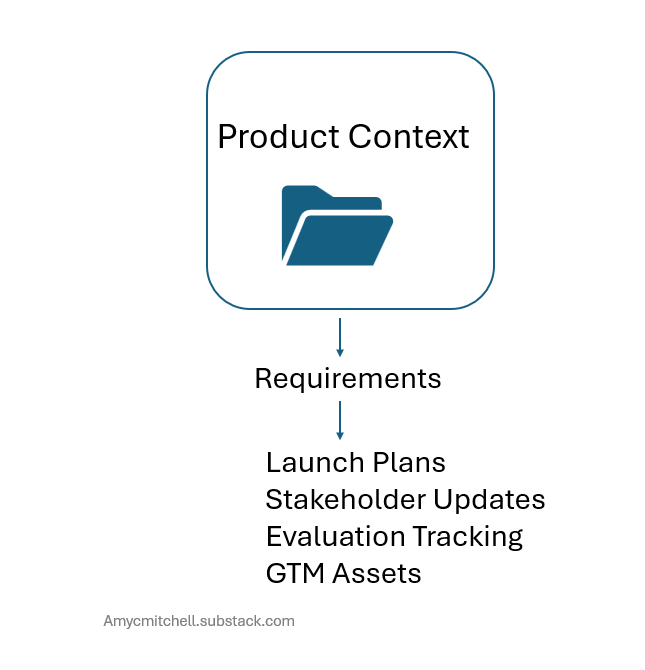
That same context often feeds launch plans, stakeholder updates, evaluation tracking, and go-to-market activities, but those are outside the scope of this discussion.
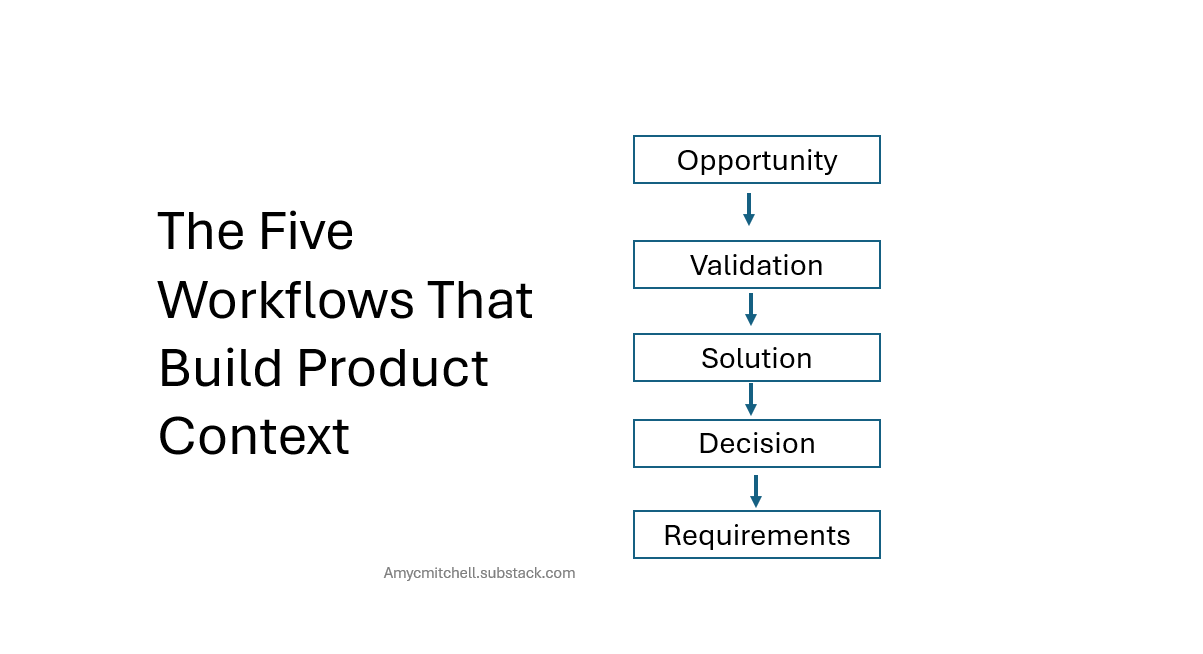
Traditional requirements follow three phases:
Opportunity ➡️ Write requirements ➡️ Build
These living requirements would evolve as the product team worked through architecture and design decisions.
Product building picked up as the requirements got firmer. Some requirements were deferred as feasibility was understood.
The requirements writing was actually compressing several overlapping activities into one shared context.
AI can handle part of the requirements, while other parts still need collaboration. AI can quickly generate stories, acceptance criteria, specifications, and in some environments, code.
The tangible outcomes of requirements work can be done quickly by AI. But there are product thinking jobs in the workflow.
These product thinking items go beyond discovery activities. Important context also comes from decision-making and delivery planning.
Like many other workflows, the requirements workflow can be broken down to get the value of AI and the human product team.
This article is about creating context as teams work through opportunity discovery to requirements. The context is created from the workflows and updated through iterations.
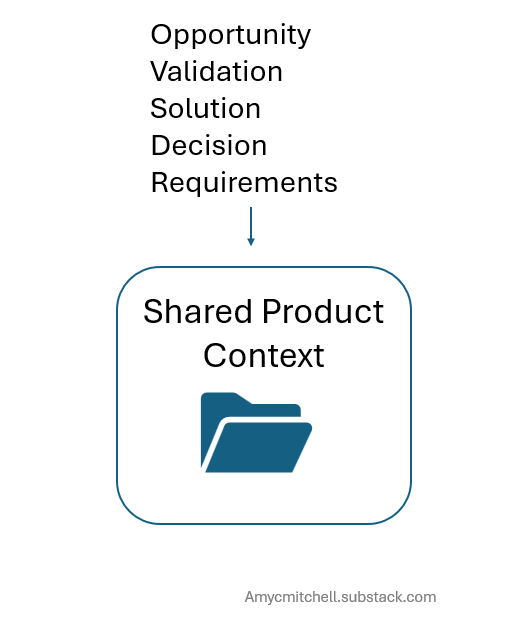
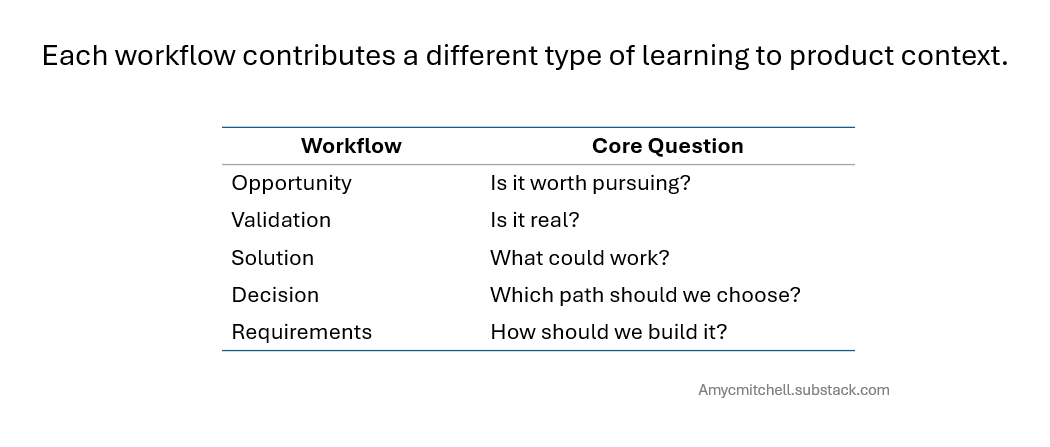
Product teams learn five different kinds of information as they move from opportunity to delivery:
Is the opportunity worth pursuing?
Is the opportunity real?
What solutions could work?
Which solution should be chosen?
How should it be delivered?
These workflows run continuously and often in parallel. The distinction is not timing. The distinction is the type of learning being added to the product context.
An outcome that is worth pursuing.
Why to spend resources on the potential opportunity at this time.
Explanation of the outcome and how it handles the opportunity.
Understand who is affected by the outcome.
AI helps:
Building context for the next stages on the specific opportunity and why.
Creates context about:
Continuously refined opportunity definition
Who is being served by the outcome
Vision of the outcome
The evidence that it is worth pursuing.
Customer evidence
Market signals
Business impact
AI helps:
Adding organization and analysis to the context
Creates context about:
Running list of the evidence showing the need for the outcome
Market assessment aligned to the timeline
Potential business opportunity
Proposing and refining solutions to the problem.
Gaps to close
Tradeoffs
Risks
Constraints
AI helps:
Pattern matching on similar solutions is added after validation. Agreed solutions are continually updated in the context.
Creates context about:
Architecture and other agreements of the solution to be built
Innovations that are needed for the requirements
Strategies to support constraints in resources, quality and timeline
Selecting among viable alternatives and documenting the tradeoffs.
The options that are the basis of the solution
Reasons for discarded alternatives
What is acceptable when the solution is done
AI helps:
Checking logic and dependencies across the solution. Continuous updates to the context as options and acceptance are defined.
Creates context about:
Chosen and rejected paths
Reasons for the chosen approach
Success criteria
How to build it and address the opportunity.
Who is doing each requirement
Dependencies
Triggers for adjustments
AI helps:
Requirements, evals and acceptance criteria based on the context
Creates context about:
Implementation expectations
Dependencies
Acceptance criteria
Delivery risks
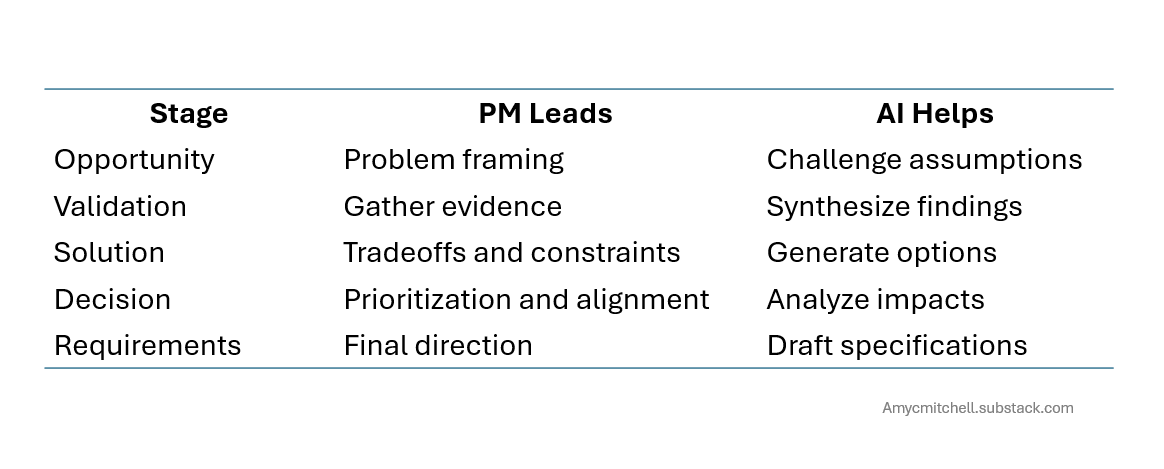
When you break apart the requirements workflow this way, product teams build context while AI helps organize, analyze, and apply it. By centering the product thinking in context that AI and the product team use, you get more than requirements in the end.
The benefits of product context developed with requirements are:
Stakeholders can participate from the early concept through requirements and delivery
AI has accurate and curated context to generate requirements and more
You develop context for GTM and sales material as you go
Context is what unifies the efforts:
Opportunity narrows
Through validation and
Solution tradeoffs
Supporting decisions for
Requirements
AI can help organize, analyze, and apply context while the product team continuously refines it
Product teams don’t build successful products from requirements alone.
They build shared understanding through opportunity, validation, solution exploration, decision formation, and requirements development.
Together, these workflows create the shared understanding that makes effective requirements possible.
Requirements become easier when the context already exists.
Discovery contributes to product context, but it is only one workflow.
Product context also grows through solution exploration, decision-making, and requirements development. The framework describes the full path from opportunity to delivery rather than discovery alone.
Sometimes.
In some organizations, the five workflows are captured in a single document. In others, they are distributed across discovery notes, design artifacts, evaluation plans, decision records, and specifications.
The artifact matters less than the workflow. Product context is created regardless of where the information is stored.
Yes, but not every project needs to create the same amount of context.
For a new initiative, the product team may spend significant time refining opportunities, gathering evidence, exploring solutions, and making decisions.
For an enhancement, much of that context already exists. The team can reuse prior understanding of customers, decisions, architecture, and constraints rather than starting from scratch.
The workflows remain the same. The amount of new context being created changes.
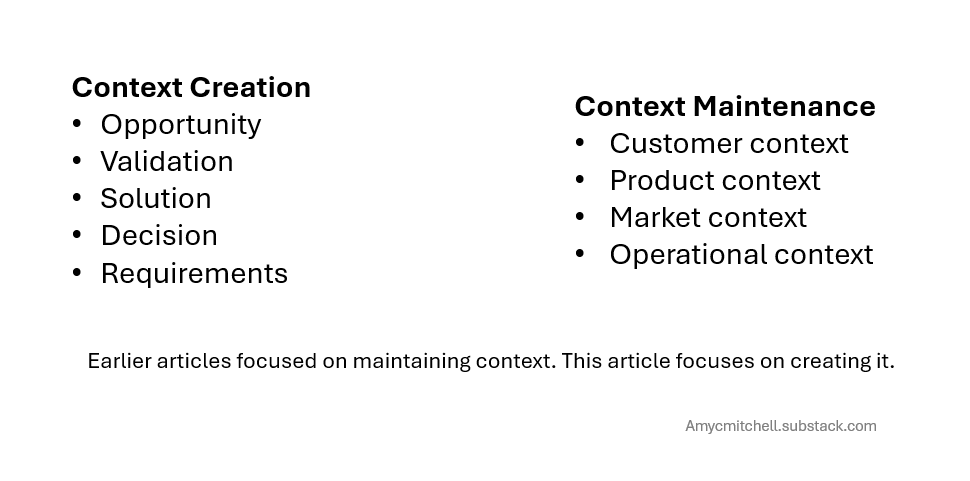
Earlier articles on context that product managers maintain:
Looking for more practical tips to develop your product management skills?
Product Manager Resources from Product Management IRL
Product Management FAQ Answers to frequently asked product management questions
Premium Product Manager Resources (paid only) Templates that I use to explain ambiguous product situations like business opportunities, customer journey and operating principles. New items monthly!
drpp The Drip featured Product Management IRL articles. This newsletter has handpicked product management articles every day, summarized to give you the big picture of product management and tech.
TLDR Product featured Product Management IRL articles recently! This biweekly email provides a consolidated list of recent product management articles.
Connect with Amy on LinkedIn, Threads, Instagram, and Bluesky for product management insights daily.
Comments
Nothing yet. Say the first thing.
Sign in to join the conversation.