
One of the most infamous terrorists of the 1970s through the mid-1980s was Illich Ramírez Sánchez, more commonly known as Carlos the Jackal (Carlos el Chacal). Sánchez was born in October 12, 1949, in Michelena, Venezuela, to a prominent family. His father, José Altagracia Ramírez Navas, was a lawyer and a passionate Communist who kept a large portrait of Stalin in the house. Despite the pleas of his mother, Elba María Sánchez, to give their children Christian first names, his father named each of his three sons after Vladimir Ilyich Ulyanov, better known as Lenin. Sánchez’ two younger siblings were named Lenin (born in 1951) and Vladimir (born in 1958).
Sánchez attended high school in Caracas and joined the youth movement of the Venezuelan Communist Party in 1959. After attending the Third Tricontinental Conference in January 1966 with his father, Sánchez reportedly spent the summer at Camp Matanzas, a guerrilla warfare school run by the Cuban state intelligence agency near Havana. Later that year, his parents divorced.
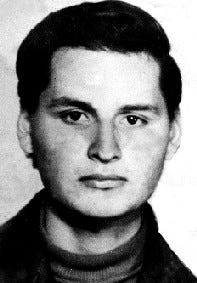
His mother took the children to London, where she studied at Stafford House College in Kensington and the London School of Economics. In 1968, his father tried to enroll Sánchez and his brother, Lenin, at the Sorbonne in Paris but eventually opted for the Patrice Lumumba University in Moscow. Here, Sánchez met Palestinians for the first time and slowly became radicalized. Sánchez was expelled from the university in 1970 for poor grades and behavior, including socializing, partying, womanizing, and breaking the strict university rules.
Sánchez then travelled to Beirut, Lebanon, where he volunteered with the Popular Front for the Liberation of Palestine (PFLP) in July 1970. He was sent to a training camp for foreign volunteers of the PFLP on the outskirts of Amman, Jordan. After graduating, he studied at a finishing school, code-named H4 and staffed by Iraqi military, near the Syria-Iraq border.
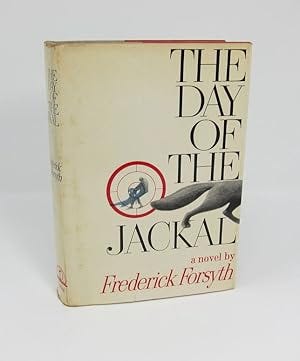
When Sánchez joined the PFLP, recruiting officer Bassam Abu Sharif gave him the code name “Carlos” because of his South American roots. Sánchez was later dubbed “The Jackal” by The Guardian after one of its correspondents reportedly spotted Frederick Forsyth’s 1971 novel The Day of the Jackal on the bookshelf of a friend’s apartment in which Sánchez had stashed some weapons. The book belonged to a resident in the apartment, not Sánchez, who probably never read it. In an interview, however, Sánchez was proud of the nickname and seemed to enjoy the attention it brought him.
After completing training in Jordan, Sánchez played an active role in the PFLP in northern Jordan during the Black September conflict of 1970, gaining a reputation as a fighter. After PFLP was pushed out of Jordan, he returned to Beirut. He was then sent to be trained by Wadie Haddad.
Haddad, Sánchez’s mentor, recognized that he was a potential star. Sánchez was an expert marksman, and spoke French, Russian, and English in addition to Spanish. He was light skinned and resembled a man of the world—he could fit in where most Middle Eastern terrorists could not.
He eventually left the Middle East to attend courses at the Polytechnic of Central London (now known as the University of Westminster) where he reportedly took chemistry courses and apparently continued to work for the PFLP.
On December 30, 1973, Sánchez conducted his first solo mission, which was a failed PFLP assassination attempt on Joseph Sieff, a Jewish businessman and vice president of the British Zionist Federation, which raised money for Israeli charities. Having gained access to Sieff’s London home he ordered the maid to take him to Sieff, who was in his bath. Sánchez shot Sieff with a Tokarev 7.62mm pistol but failed to kill him. Sánchez’s gun jammed after the first shot and he fled unharmed. The attack was announced as retaliation for Mossad’s assassination in Paris of Mohamed Boudia, a PFLP leader.
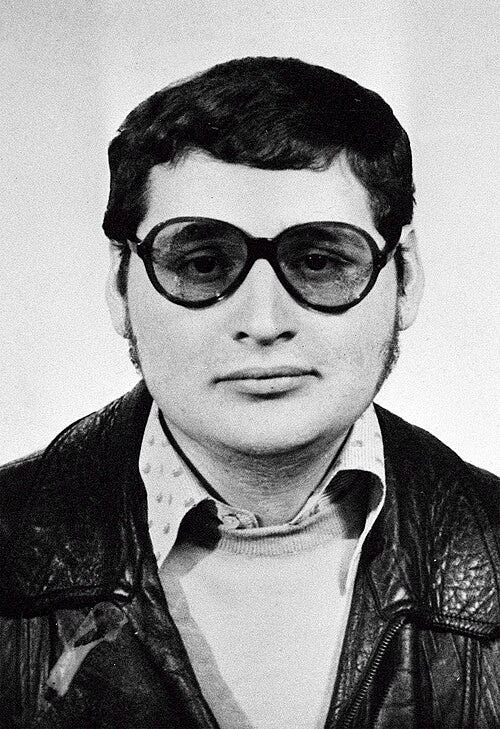
Sánchez accepted responsibility for a failed bomb attack on the Bank Hapoalim in London and car bomb attacks on three French newspapers accused of pro-Israeli leanings. He claimed to be the grenade thrower at a Parisian restaurant in an attack that killed 2 and injured 30 as part of the 1974 French Embassy attack in The Hague. He later participated in 2 failed rocket-propelled grenade attacks on El Al airplanes at Orly Airport near Paris on January 13 and 17, 1975.
The second attack resulted in gunfighting with police at the airport and a 17-hour hostage situation involving hundreds of riot police and the French Interior Minister Michel Poniatowski. Sánchez fled during the gunfight while the 3 other PFLP terrorists were allowed passage to Baghdad, Iraq.
On June 27, 1975, Sánchez’ PFLP contact, Lebanon-born Michel Moukharbal, was captured and interrogated by the French domestic intelligence agency, the DST. When two unarmed agents of the DST interrogated Sánchez at a Parisian house party, Moukharbal revealed Sánchez’ identity. Sánchez then shot and killed the two agents and Moukharbal, fled the scene, and managed to escape via Brussels to Beirut, where the PFLP welcomed him as a conquering hero. In June 1992, Sánchez was tried in absentia for these murders and was convicted.
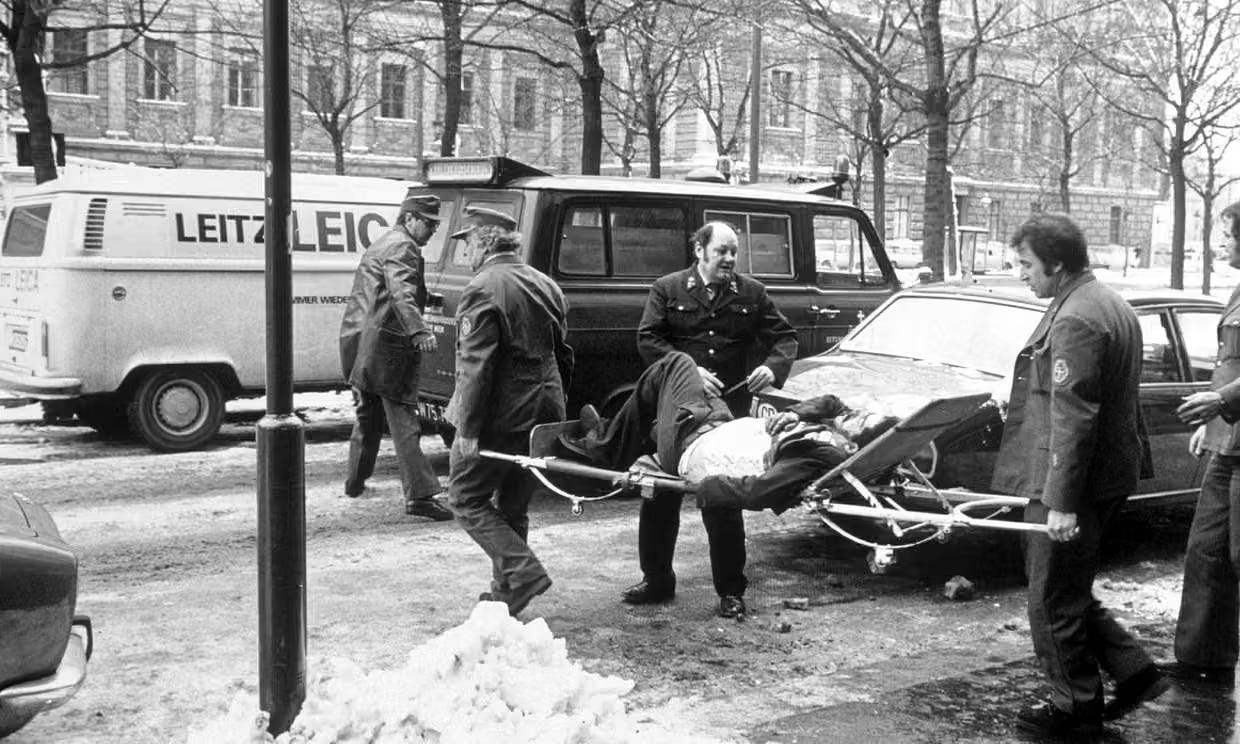
From Beirut, Sánchez participated in the planning for an attack on the headquarters of Organization of the Petroleum Exporting Countries (OPEC) in Vienna. On December 21,1975, he led a 6-person team that attacked the meeting of OPEC leaders. The team took 60 to 70 hostages (including 11 oil ministers) and killed 3: an Austrian policeman, an Iraqi OPEC employee, and a member of the Libyan delegation. Sánchez demanded that they be provided a bus to take all the terrorists and hostages to the nearest airport, where an aircraft would be on standby to fly the group wherever they demanded. They also demanded that Austrian authorities read a communiqué about the Palestinian cause on Austrian radio and television networks every 2 hours. To avoid the threatened execution of a hostage every 15 minutes, the Austrian government agreed and the communiqué was broadcast as demanded.
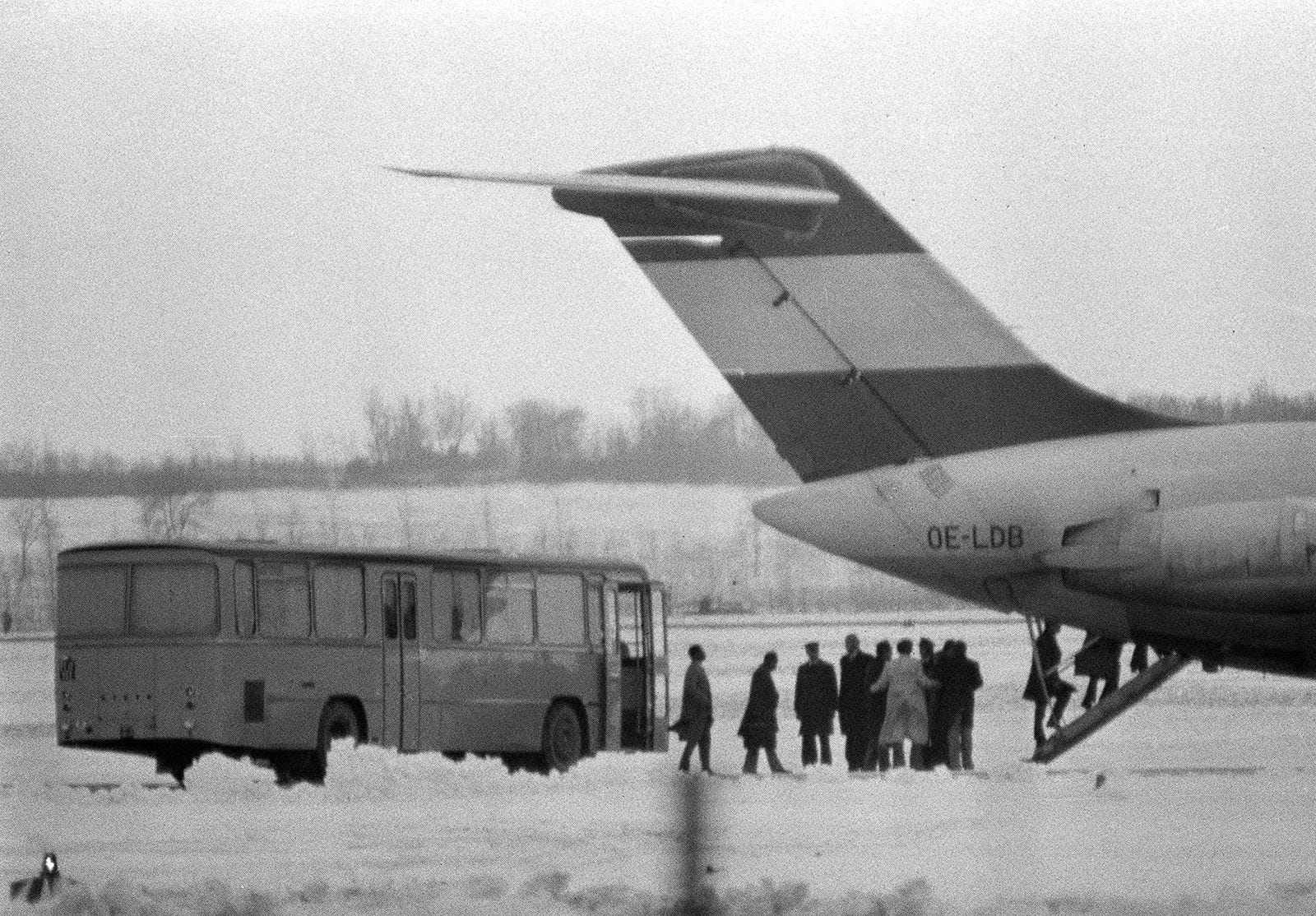
On December 22, the government provided the PFLP with an Austrian DC-9 and flew them to Algiers. Ex-Royal Navy pilot Neville Atkinson, at that time the personal pilot for Libya’s leader Muammar al-Gaddafi, flew the DC-9 to Algiers, where Sánchez agreed to free 30 non-Arab hostages in exchange for a refueling of the jet, which then flew on to Tripoli.
The reception in Tripoli was hostile, and the Libyans refused to provide Sánchez with a larger plane with a greater range capacity. Eventually, in exchange for the release of the Libyan hostages and five other delegates, the plane was again refueled and returned to Algiers, where Sánchez agreed to release the rest of the hostages in exchange for political asylum and a large undisclosed sum of money that is rumored to be between $25 and $50 million, which was provided either by the Saudis or the Iranians. The terrorists made it to safety with the ransom.
The leader of the PFLP regarded the OPEC operation as a failure, however, because Sánchez had released, rather than killed, two senior OPEC hostages—the finance minister of Iran, Jamshid Amuzgar, and the oil minister of Saudi Arabia, Ahmed Zaki Yamani—the primary targets in the raid. His trainer and PFLP-EO leader Haddad expelled Sánchez for not shooting hostages when PFLP demands were not met, thus failing his mission. It was discovered that he had also appropriated some of the ransom funds for his own use, although this was not publicized by the PFLP at the time.
In the years following the OPEC raid, Bassam Abu Sharif and Hans-Joachim Klein, a West German left-wing militant tied to the Revolutionary Cells who’d participated in the raid on OPEC headquarters, publicly claimed that Sánchez had received a large sum of money for the safe release of the Arab hostages and had kept it for his personal use. Sánchez later told his lawyers that the money was paid by the Saudis on behalf of the Iranians and was “diverted en route and lost by the Revolution”.
Sánchez settled in Aden, South Yemen, courtesy of Gaddafi, who was rumored to have funded the OPEC attack, where he trained terrorists in guerrilla warfare techniques for several years.
The Red Purse of Justice is written by Amy Benavides, the daughter of a Cold War spy who writes articles related to her life, terrorism, espionage, history, and culture that she discovers as she writes her memoir.
Subscribe to make sure you receive her articles on Tuesdays (free subscribers) and Thursdays (paid subscribers). On Fridays I post a column for paid subscribers about topics that would help recruiters build a rapport with their targets.
Comments
Nothing yet. Say the first thing.
Sign in to join the conversation.