
More Than a Gothic Fairy Tale
The Hunchback of Notre Dame is often remembered as a story about physical deformity and social cruelty…but that reputation understates its ambition and vision.
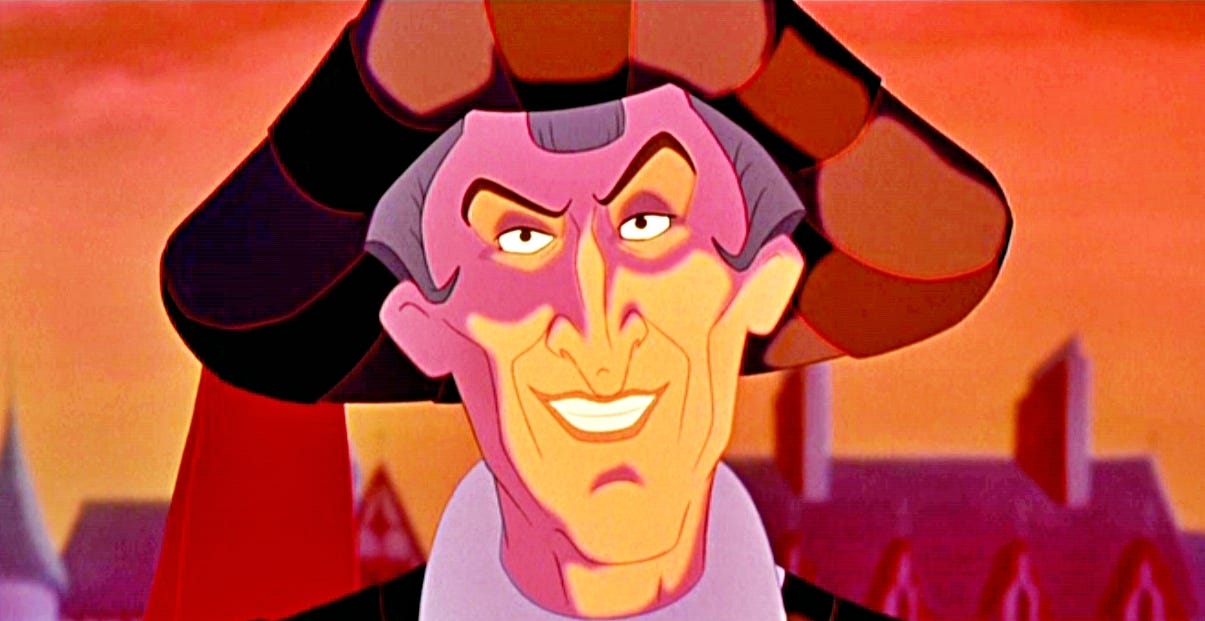
Beneath its gothic imagery lies one of Disney’s most unsettling examinations of power, righteousness, and the ease with which moral authority can disguise violence.
Through Frollo, the story draws a bold line between those feared for their appearance and those never questioned because they seem moral, revealing how harm takes root when outward virtue goes unexamined.
The Moral Camouflage of Frollo
The Hunchback of Notre-Dame, first published by Victor Hugo in 1831, is often remembered for its imagery: the twisted bell ringer silhouetted against cathedral stone, the roaring crowd below, the firelight and shadow that seem to breathe through Paris itself. Yet beneath its gothic spectacle lies a far more unsettling concern. The novel, and later its most famous animated adaptation, is less interested in physical monstrosity than in how societies decide who deserves that label.
At the centre of this question stands Frollo.
Unlike Quasimodo, whose body marks him as other in the eyes of the city, Frollo appears immaculate by comparison. He is learned, disciplined, and outwardly pious, a man entrusted with moral and institutional authority. The danger he represents does not arise from chaos or savagery, but from order. Frollo believes himself righteous, and it is this belief that allows him to commit acts of cruelty without ever recognising them as such.
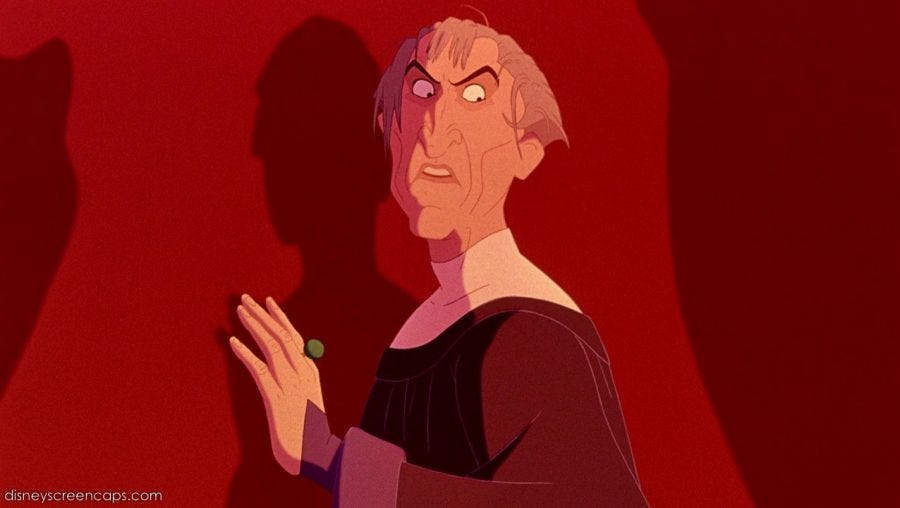
In Hugo’s novel, Frollo is a scholar-priest whose fear of disorder gradually curdles into obsession. In Disney’s adaptation, that fear is reframed through the lens of state power, transforming him into a judge whose authority is enforced by law rather than scripture alone.
The shift is significant, but the core remains the same. Frollo does not experience his actions as moral failings - he experiences them as necessary corrections to a sinful world.
The Justification of Desire
What separates Frollo from more conventional Disney villains, is that he does not revel in evil, nor does he ever name it as such.
Instead, the film consistently frames his actions as acts of displacement. His desire is treated as an external corruption rather than something that originates within him, and his obsession with Esmeralda is recast as a moral trial, one in which she, rather than he, must be punished.
At every turn, the film shows him avoiding the one act that might interrupt this cycle: looking inward and accepting responsibility for what he wants.
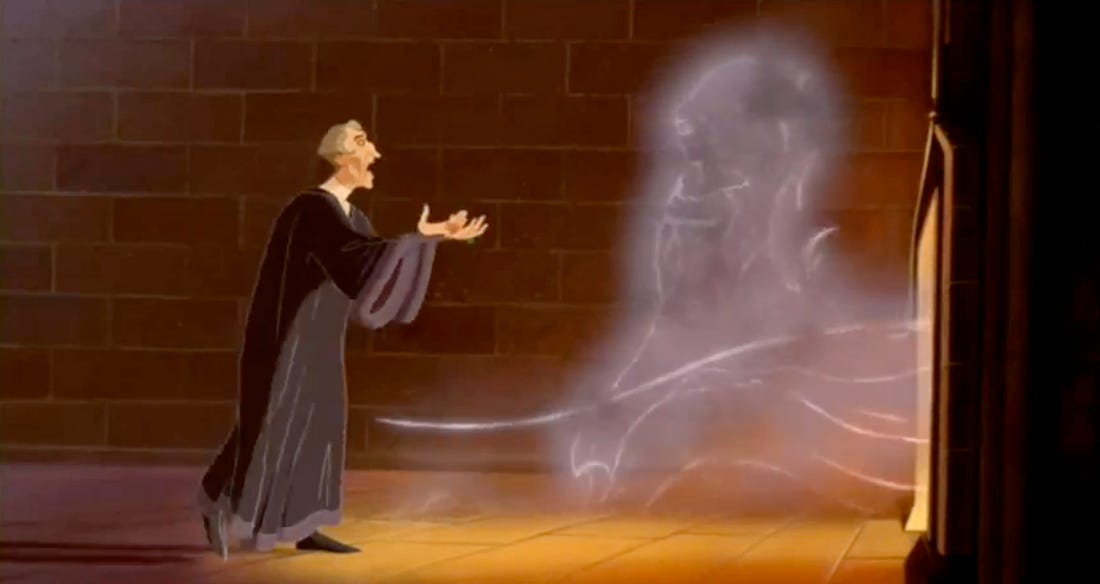
The Hellfire sequence in Disney’s adaptation makes this internal logic explicit. Frollo does not deny his desire; he denies responsibility for it. He casts himself as a passive participant in his own corruption, pleading for purification while demanding punishment for the object of his fixation.
What’s most disturbing about this is not the desire itself, which the film correctly treats as fundamentally human, but the refusal to accept it as such.
Frollo would rather see the world burn than admit that the darkness he fears resides within him.
Quasimodo and the Inversion of Monstrosity
This stands in stark contrast to Quasimodo.
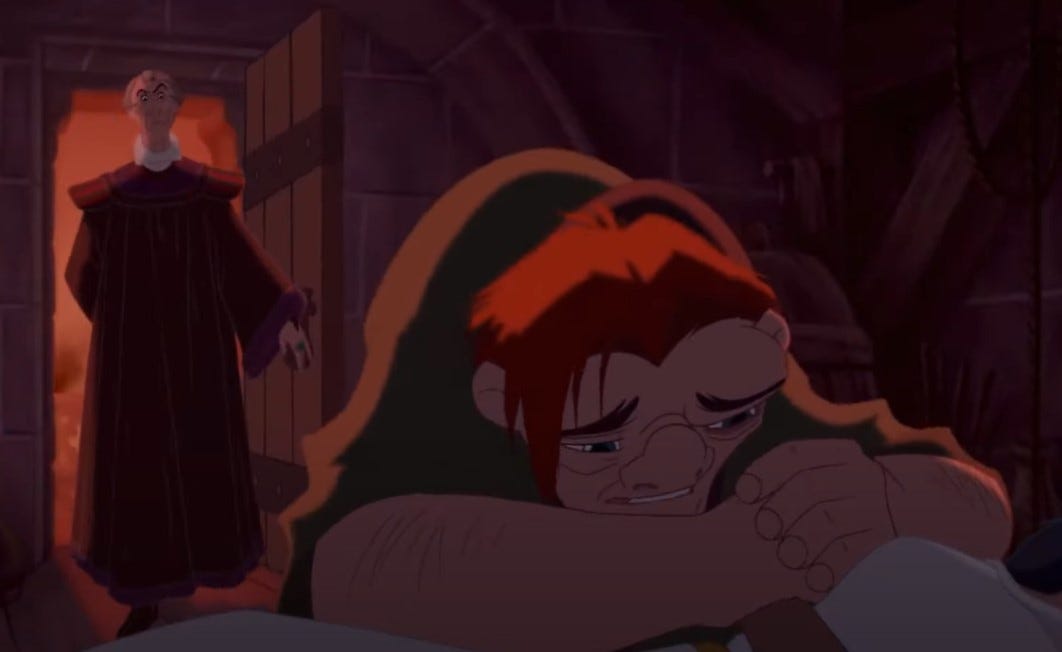
Where Frollo’s identity is constructed through repression and projection, Quasimodo’s is shaped by vulnerability. He has been taught to see himself as a monster, and initially accepts that judgment without question. Yet his actions consistently undermine it. He shows compassion where it is not required, restraint where violence would be justified, and, crucially, the capacity to let go.
The relationship between the two is therefore not simply one of master and servant, but of inverted moral trajectories. Quasimodo’s arc is one of painful humanisation. Frollo’s is one of gradual self-dehumanisation.
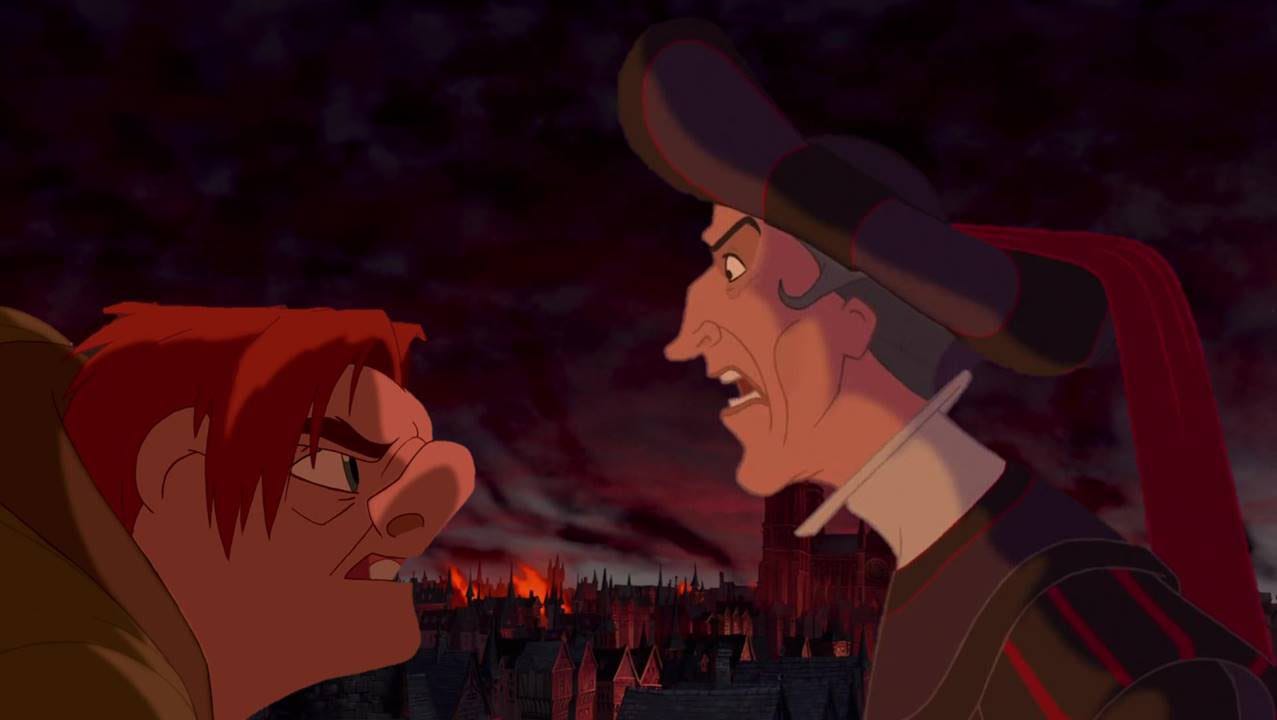
Quasimodo learns to love without expectation; Frollo convinces himself that loving someone grants him authority over them. This distinction becomes clearest in their respective responses to Esmeralda.
Quasimodo’s affection is defined by protecting her - he risks his life for her safety, even when it means relinquishing the possibility of being loved in return. Frollo, by contrast, treats rejection as an injustice. When his desire is denied, annihilation becomes acceptable. His fixation escalates not because he loves too deeply, but because he cannot conceive of love without control.
Here the story draws its most decisive line between man and monster. Humanity, in The Hunchback of Notre Dame, is not measured by purity or righteousness, but by the ability to accept limits. To recognise another person as autonomous. To endure desire without allowing it to metastasise into entitlement.
Where Quasimodo’s succeeds, Frollo fails on every count.
The Collapse of a Lie
What makes Frollo endure as a villain is how recognisable this failure is.
He is not an outsider to the system; he is its enforcer. His monstrosity is not a deviation from social order, but an expression of its darkest potential. He demonstrates how easily morality becomes cruelty when it is stripped of humility, and how power that lacks accountability, begins to mistake itself for divine will.
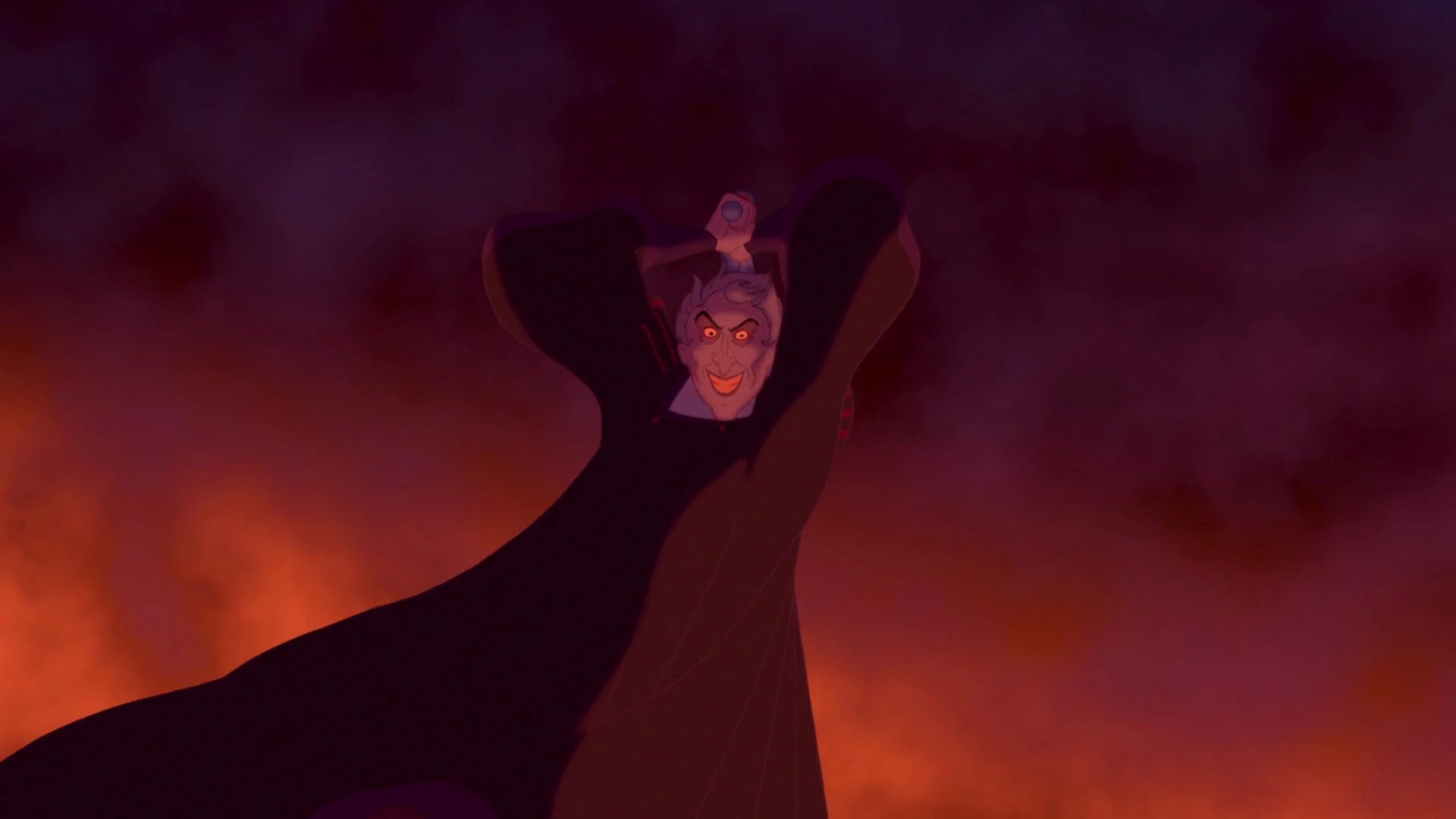
When Frollo falls, the film allows his actions to speak for themselves. There is no final speech, no moral reckoning offered by the world around him. His authority fails him, and his certainty does not save him. He is undone by the same violence he has spent the film justifying.
The bells of Notre Dame ring on. Quasimodo remains, battered but human, while the man who believed himself pure disappears into the fire below.
Hugo’s Frollo vs Disney Frollo
Hugo’s Frollo is, in many ways, more tragic and more insidious. His descent unfolds slowly, rooted in intellectual arrogance and fear of disorder. He believes knowledge itself should impose control over the world, and when it fails to do so, he responds with obsession and violence. His monstrosity feels inevitable, the result of years spent mistaking repression for virtue.
Disney’s Frollo is sharper, colder, and more immediate. By removing the priesthood and elevating him to a judge, the film positions his authority as explicitly political. His actions are sanctioned not just by personal belief, but by the machinery of the state.
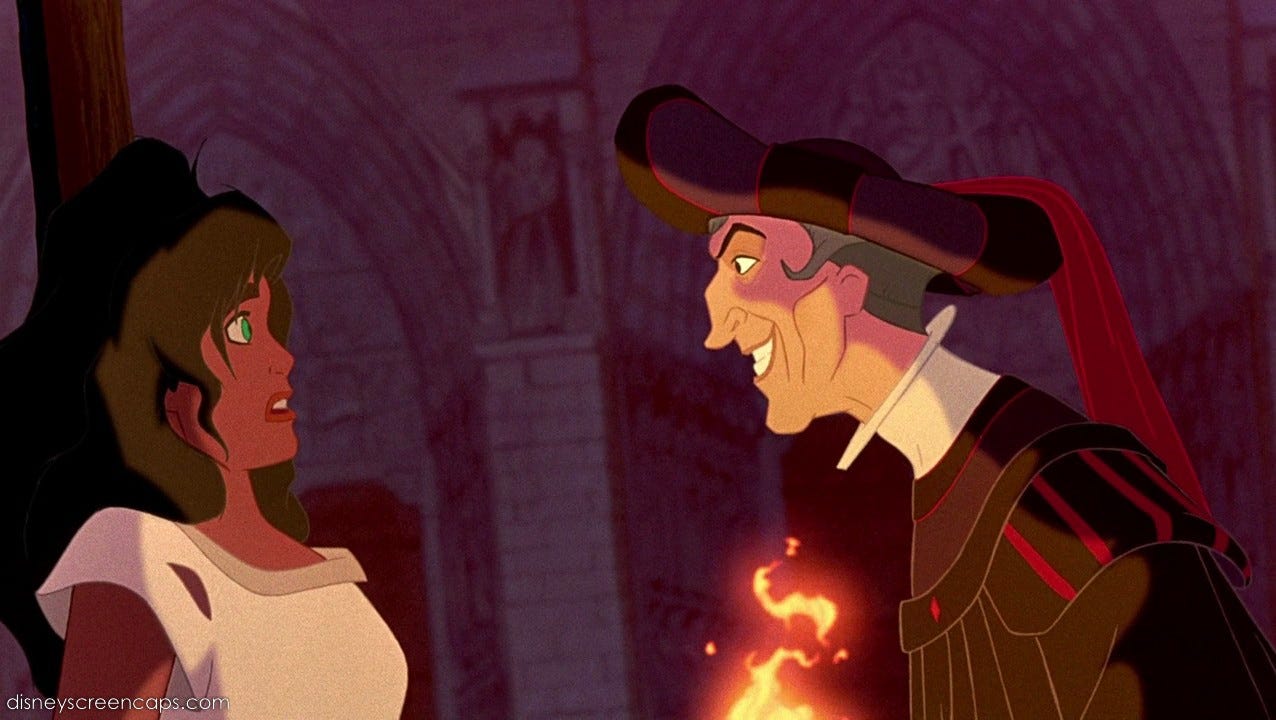
This makes him less inwardly conflicted, but more frightening in scale. Where Hugo’s Frollo corrodes himself from the inside, Disney’s version weaponises ideology and law to impose his corruption outwardly.
Both, however, share the same moral failure. Neither can accept that their desires are human, and neither can survive the idea that righteousness might require restraint.
Man and Monster in Aglow
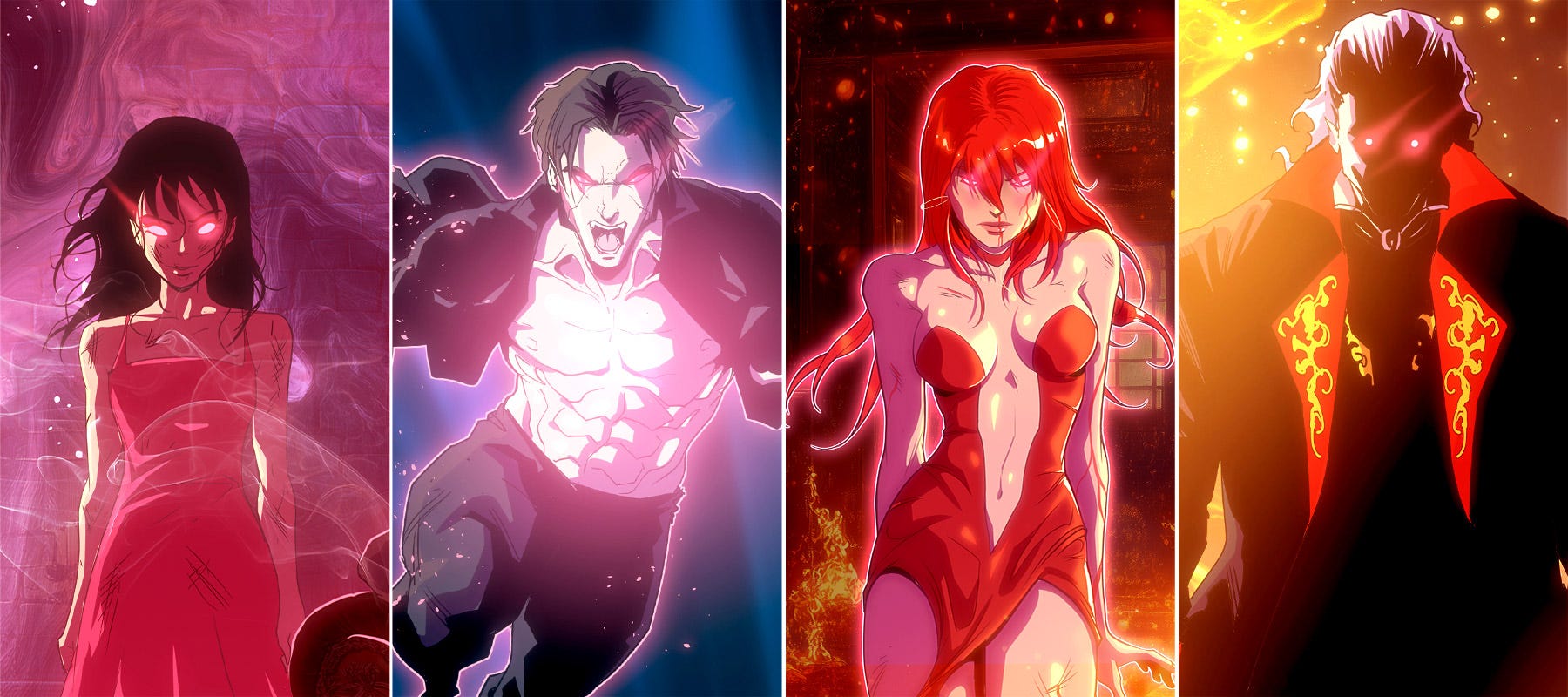
This distinction between outward monstrosity and inward corruption runs directly through my latest graphic novel series, AGLOW.
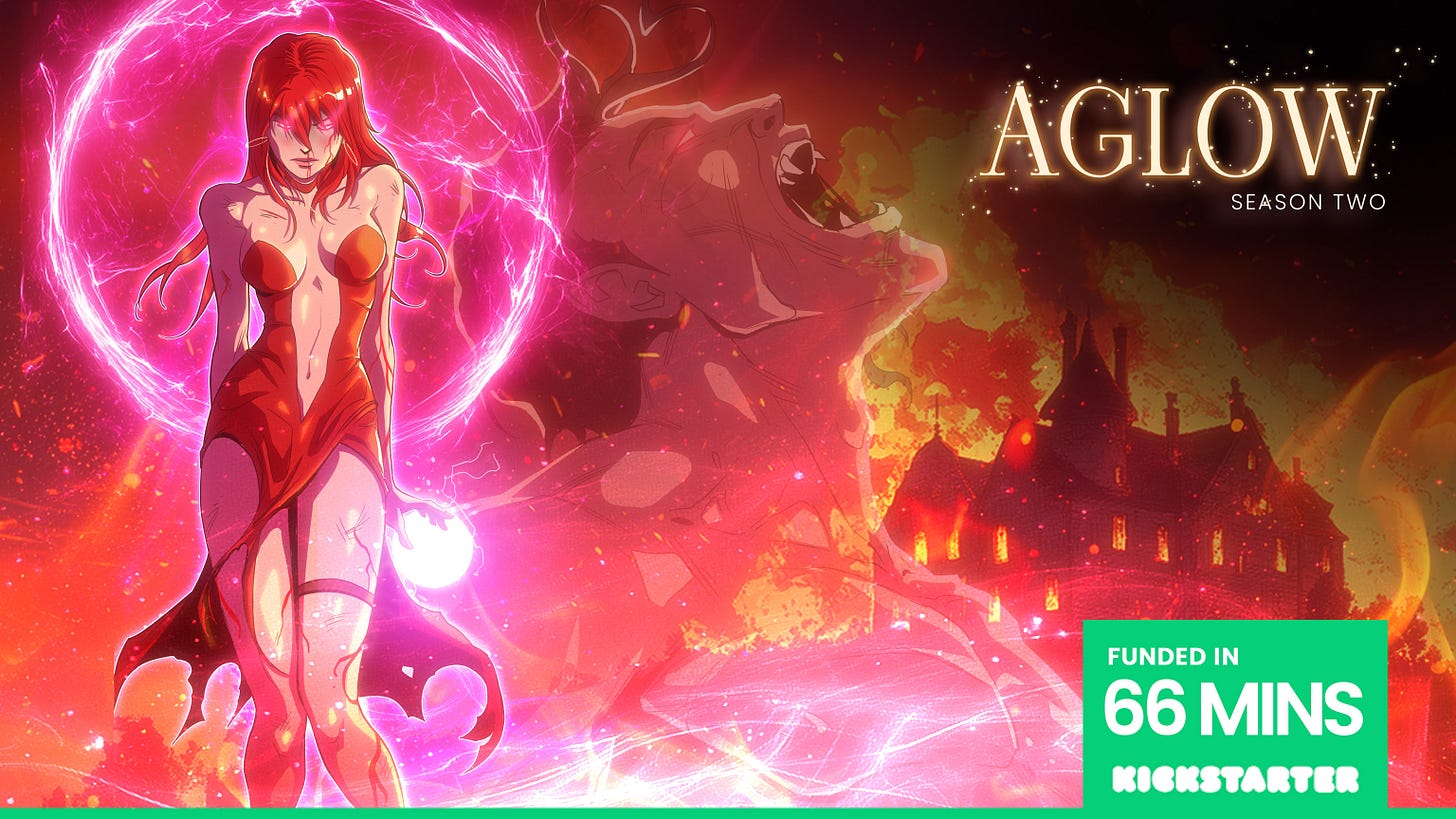
Check Aglow Season 1 & 2 out on Kickstarter now.
Much like The Hunchback of Notre Dame, Aglow is not ultimately concerned with whether its characters flirt with darkness, but with how they relate to it. The series consistently asks whether power, grief, and desire are confronted honestly, or whether they are justified through narratives of necessity and protection.
What separates characters like Lila from figures such as Frollo is not innocence, but awareness. Where Frollo refuses to look inward, Aglow insists on that confrontation. It treats the abyss not as something external to be destroyed, but as something internal that must be acknowledged and integrated, at great personal cost.
In this sense, Aglow extends Hugo’s question rather than answers it. It suggests that monstrosity is not a state one falls into, but a series of choices made while convincing oneself they are unavoidable. To be human, then, is not to be free of darkness, but to recognise it without letting it justify harm.
If Frollo represents the comfort of believing righteousness absolves responsibility, Aglow is concerned with the cost of refusing that comfort, and attempting to remain human anyway.
Check Aglow Season 1 & 2 out on Kickstarter now.
Comments
Nothing yet. Say the first thing.
Sign in to join the conversation.