
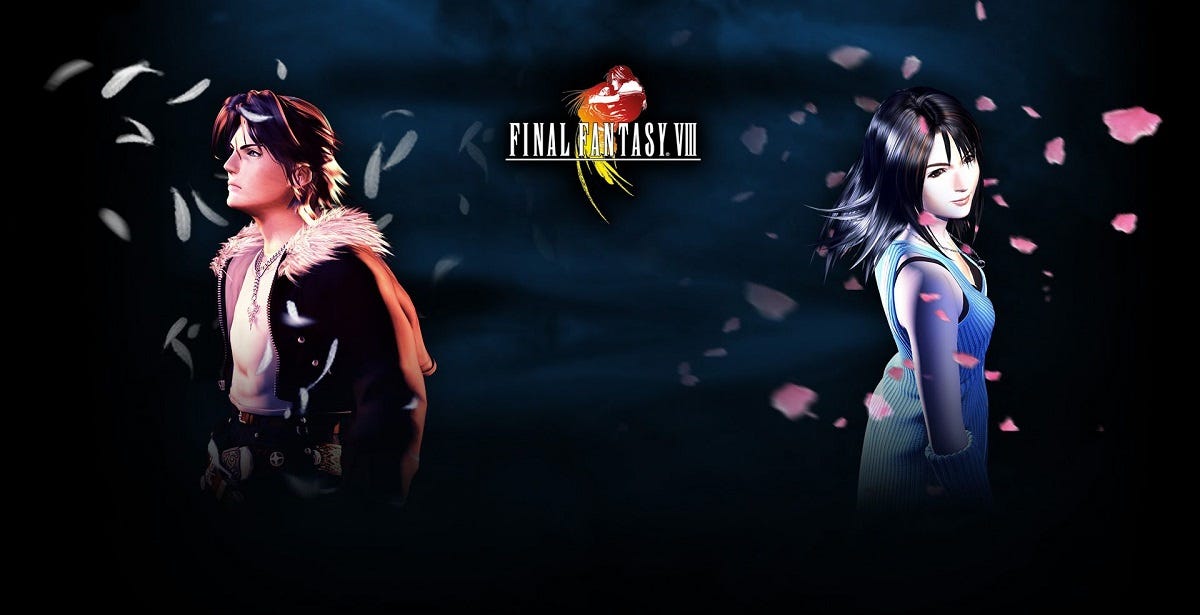
(This game is closing in on 30 years old, but on the off-chance it’s still on your ‘to play list’, this article contains many spoilers).
Final Fantasy VIII unfolds as though its conclusion already exists, shaping events long before the characters themselves become aware of it.
From the opening moments, the player is presented not with prophecy or destiny explicitly stated, but with an emotional aftermath we’re not yet aware of.
Squall begins the story withdrawn, isolated, and resistant to connection. He is competent, disciplined, and capable - yet fundamentally disengaged, framed as his very state of being.
As the narrative develops, these traits reveal themselves as consequences rather than personality quirks. Squall’s detachment stems from childhood abandonment, compounded by memory erosion linked to Guardian Forces. His emotional distance is not a defence he consciously chose, but rather a condition formed before he had the capacity to choose otherwise. His present behaviour is already the result of a past he cannot fully remember.
This pattern - consequence preceding awareness - recurs throughout the game.
Meaning in Final Fantasy VIII is revealed retroactively rather than prospectively. The orphanage revelation does not redirect the story forward; it reframes everything that has already occurred. Scenes once understood as spontaneous or coincidental are revealed to have been necessary steps within a closed causal loop. The characters do not gain new freedom from this knowledge. They gain belated understanding.
From early on, Final Fantasy VIII positions us - the player - as someone uncovering a path that has already been walked.
This framing gives rise to the game’s central philosophical question:
If destiny cannot be changed, does choice still matter?
In Final Fantasy VIII, fate is not personified by a god, prophecy, or singular antagonist. It does not announce itself with spectacle or moral absolutism. Instead, it is embedded persistently in the systems that govern the world.
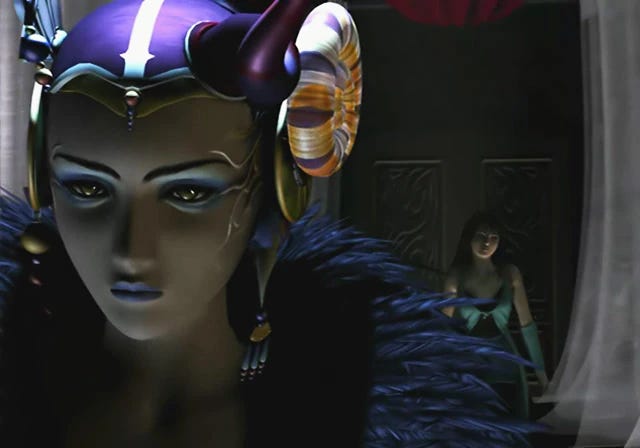
Sorceress power is inherited rather than chosen. Edea becomes a sorceress without consent, and Rinoa later inherits that same power through circumstance rather than intention. Neither actively seeks the role, and neither is given the option to refuse it. The position persists across generations, indifferent to individual desire, binding each successor into a historical chain they did not initiate.
Guardian Forces operate under a similar logic. They grant extraordinary power, but exact a cost that is neither immediate nor dramatic: memory. The more the characters rely on these forces, the less access they retain to their own pasts. Identity becomes fragmented, shaped by necessity rather than continuity. Characters quite literally sacrifice self-knowledge in order to function within the world.
The orphanage revelation crystallises this worldview. The characters discover that their lives are bound by a temporal loop: future actions influenced past events, which in turn shaped the present. There is no clear point of origin. No moment where the loop could have been broken cleanly.
Fate, in Final Fantasy VIII, is not something imposed from outside.
It is the framework within which existence unfolds.
If this article - or Final Fantasy VIII - stayed with you, you may enjoy my next original graphic novel series, The Sorceress at the End of Time. Follow project.

Although the player exercises significant agency at the mechanical level - junction systems, combat strategies, character optimisation - narrative choice is tightly constrained.
Squall does not choose his emotional detachment; it is the product of early loss and suppressed memory. Rinoa does not seek sorceress power; it is thrust upon her through proximity and circumstance. Even SeeD itself is structured to recruit children into military roles they barely understand, reinforcing cycles of duty rather than self-determination.
The assassination mission against Edea illustrates this constraint with particular clarity. Squall believes he is acting decisively, participating in a plan designed to stop a looming threat. Only later does he learn that Edea herself - influenced by future events - enabled the very mission meant to oppose her.
What appeared to be choice is revealed to be maintenance of the timeline.
The Outcome is fixed. Unchangeable.
Choice exists, but only within boundaries that do not permit deviation from fate’s structure. The game repeatedly presents decisions that feel meaningful in the moment, only to later reveal that their significance lay not in altering events, but in sustaining the world as it already is.
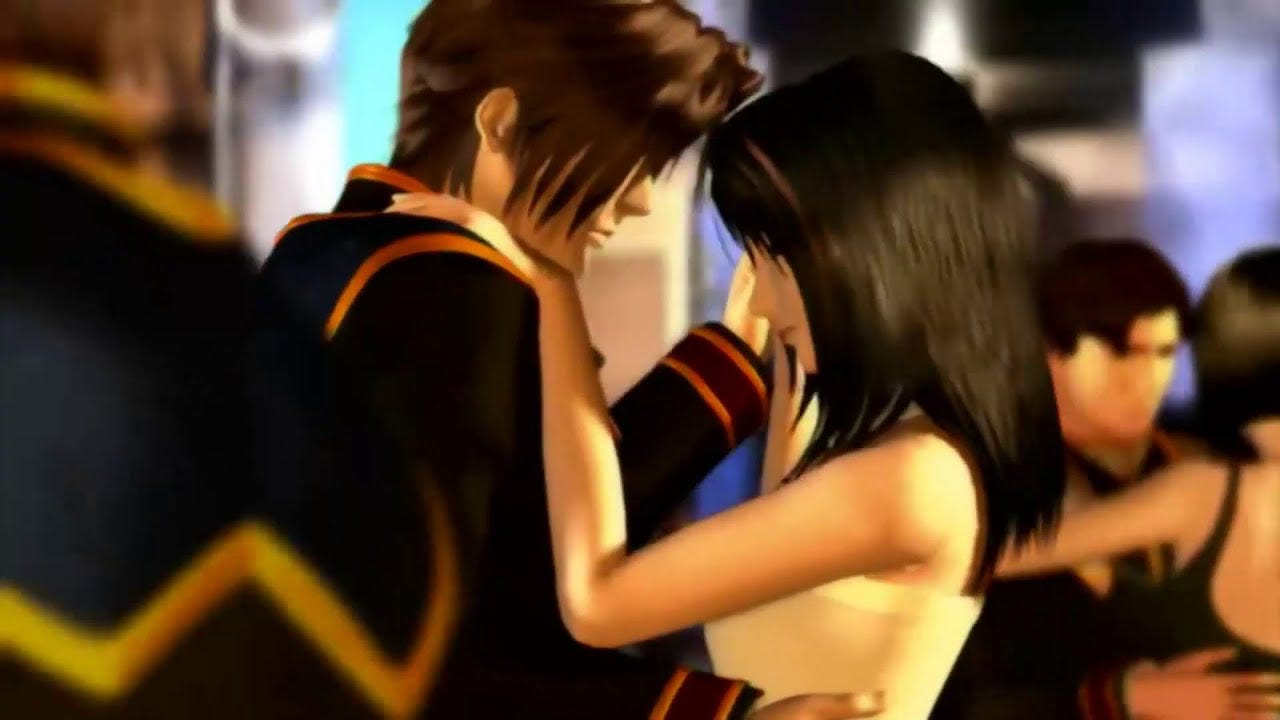
Where Final Fantasy VIII most clearly preserves the relevance of choice is not in altering events, but choices driven by emotion.
The game repeatedly places characters in situations where outcomes are already constrained, yet foregrounds the decision of how they respond internally. These choices do not change fate, but they determine whether characters participate fully in their lives or retreat from them.
Early in the narrative, Squall treats emotional distance as a survival strategy. He follows orders efficiently, fulfils his role as SeeD, and later accepts the position of commander with minimal resistance - but also with minimal investment. Leadership is treated as obligation rather than connection, another role imposed upon him rather than something he actively embraces.
This detachment is not framed as strength or stoicism. Instead, it isolates Squall from meaning. He functions effectively, but without orientation toward anything beyond duty.
A significant shift occurs when Rinoa falls into a coma after being possessed by Ultimecia. Squall cannot fix her condition, undo her involvement, or halt the larger forces at work. He is confronted with the limits of action in stark terms.
What he can choose is whether to disengage emotionally or remain present.
His decision to stay with Rinoa - to watch over her, speak to her, and refuse emotional withdrawal despite her unresponsiveness - represents a choice made in the absence of agency over outcome. Nothing about the plot changes. Rinoa remains unconscious. Time continues forward.
What changes is Squall’s relationship to inevitability.
This shift is reinforced during the space rescue sequence. Rinoa is drifting away, oxygen is limited, and the physical constraints of space impose strict boundaries. Squall’s pursuit is a huge turning point for his character - an absolute refusal to remain detached from it any longer. The attempt itself carries meaning regardless of success.
In both cases, Final Fantasy VIII emphasises that emotional choice operates independently of narrative causality. Squall does not change what is happening - he changes how he participates in what is happening.
Within a deterministic world, emotional commitment becomes the primary form of agency available.
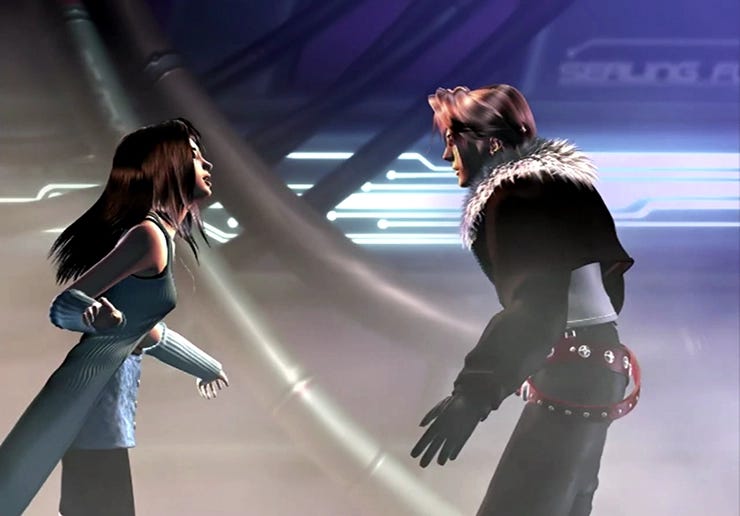
Within the rigid structure of fate, love emerges as the only element not governed by inheritance or time.
Love does not exist in Final Fantasy VIII as a force that alters history. Time compression still occurs. Memory still fades. Separation remains unavoidable. The game is explicit about this - no romantic connection prevents catastrophe or guarantees permanence.
What love changes is experience.
Rinoa consistently chooses emotional presence. She encourages connection, refuses withdrawal, and remains engaged even when she herself becomes a source of danger due to her sorceress powers. Her willingness to remain open does not resolve the larger conflict, but it resists emotional erasure.
Squall, in turn, chooses involvement over isolation, despite knowing that attachment does not protect against loss. These choices do not alter destiny, but they reshape the internal landscape through which destiny is encountered.
Love introduces variability into the meaning of the situation, but not the outcome.
Two characters may face the same destiny, but they do not experience it in the same way.
If this article - or Final Fantasy VIII - stayed with you, you may enjoy my next original graphic novel series, The Sorceress at the End of Time. Follow project.
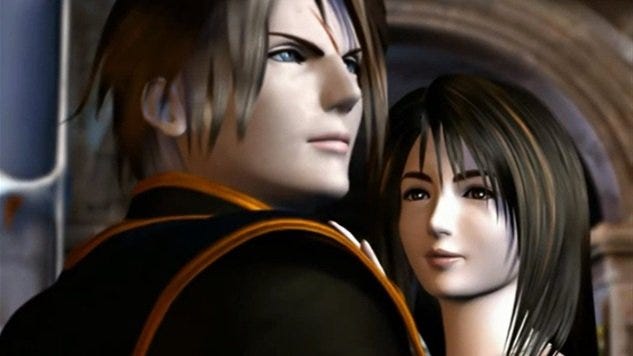
Within this framework, Final Fantasy VIII offers a restrained answer.
Love is not salvation.
Love does not break fate.
Love does not guarantee permanence.
Instead, love provides significance.
It gives texture to moments that would otherwise collapse into inevitability. It allows recognition across memory loss, distance, and time - even when continuity cannot be assured.
Love functions as the medium through which choice retains meaning in a world where outcomes are fixed.
If destiny cannot be changed, love explains why emotional engagement still matters.
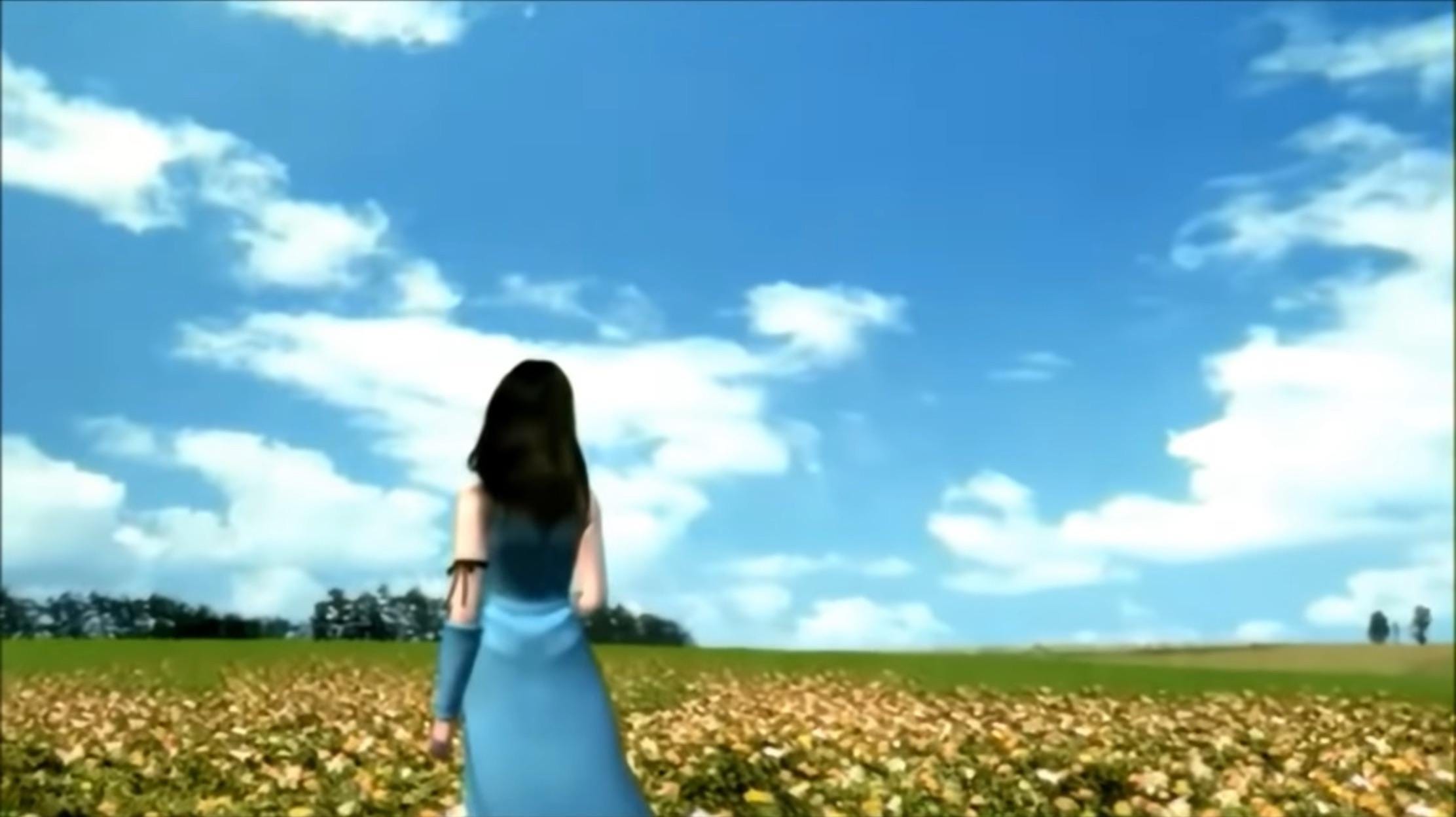
Final Fantasy VIII offers a careful, unsentimental conclusion.
Choice does not matter because it can change destiny - it matters because it determines how destiny is lived.
Characters cannot choose their endings, but they can choose whether to remain emotionally present as they approach them.
In a universe where the future already exists, freedom is found in choosing to participate in a meaningful way.
The journey is more important than the destination.
Final Fantasy VIII ultimately suggests that if destiny cannot be changed, choice still matters - not because it saves the world, but because it ensures the path toward the inevitable…is not a lonely one.
If this article - or Final Fantasy VIII - stayed with you, you may enjoy my next original graphic novel series, The Sorceress at the End of Time. Follow project.
Comments
Nothing yet. Say the first thing.
Sign in to join the conversation.