
Dear friends,
I don’t think a non-fiction book about activism has ever made me cry, but the introduction to Rob Hopkins’ How to Fall in Love with the Future had this effect.
At a time when the light of possibility for what the world could be, for a wiser future, so often feels lost or extinguished, Rob’s book shook me awake to the dangers of losing that vision and giving over the sacred space of our imaginations exclusively to images and narratives of dystopia and extinction - something so easy to do, especially if you work in the sphere of environmental or social change.
After 20 years of leadership in the climate activism movement, and seeing things only get worse during this time, Rob has had a quietly growing feeling for a different kind of change-making, one that centres not on what we are running away from, but on cultivating a powerful sense of longing for the future we want to inhabit, recognising that, “real, lasting change in the world is often preceded by longing: a collective ache for a shared vision.”
It’s important for us not only to witness and grieve the loss and devastation taking place in our present time, but also to consciously nourish our souls and psyches with generative ‘memories of the future’ — through practices that harness the power of the imagination, and also by recognising that many signs and seeds of a different world already exist here and now. In Rob’s words, we can engage in ‘evidence-based dreaming’.
What hit me hard, though, (and something I want to write about in more depth), is the realisation that if we collectively lose the capacity to imagine a future we want to live in, then we also lose the possibility of that reality ever being able to be realised. Obviously, we can’t control how things unfold in the coming decades, but it seems to me that inwardly keeping alive a space of possibility for the future is perhaps one of the most vital contributions we can make.
Rob’s book is brimming with creative and experiential practices, and diverse examples of the incredibly inspiring ‘imagiation activism’ or ‘positive futurism’ movement that is building momentum around the world today. I’m so grateful to him for writing this book, and I'm looking forward to discussing reflections together with others at our Spiritual Ecology Book Club meeting taking place this week. Full details at the end of the newsletter.
INTRODUCING THE MUSTARD SEED PODCAST
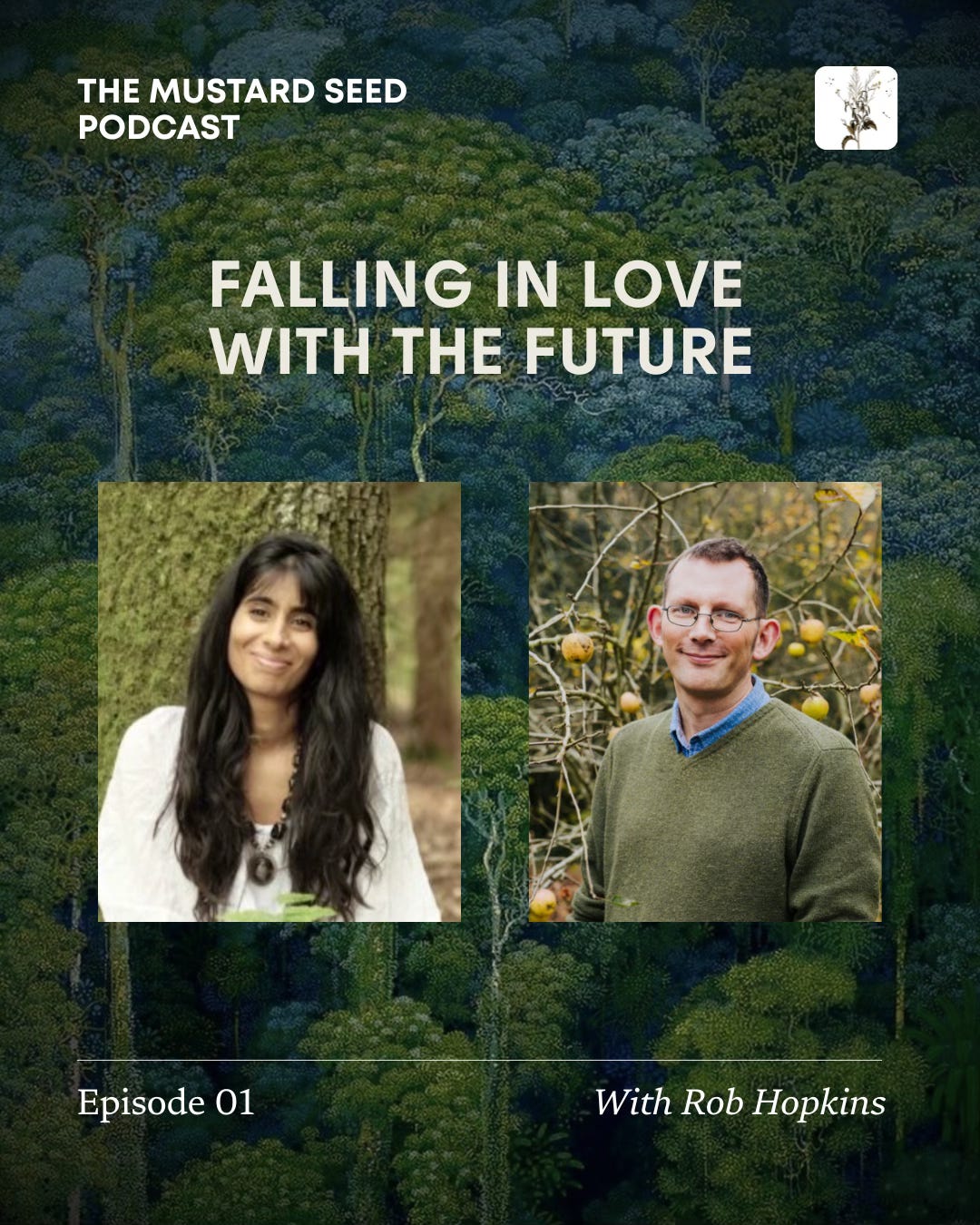
I’m delighted to announce my new podcast, and for the inaugural episode, it was a joy to sit down with the man himself, Rob Hopkins, and dive into some of these ideas together.
It’s a bit rough and ready as I initiate into the art of podcasting, but I hope you find it a valuable listen, with both our passions for the topic coming through!
You can listen/watch the interview here.
SPIRITUAL ECOLOGY BOOK CLUB
Finally, I look forward to seeing some new faces at our Book Club meeting later this week! I want to reiterate that even if you haven’t finished the book, you’re still very welcome to join and participate as much as you like, and if you can’t afford the session fee, this also doesn’t preclude you from coming along.
Session Info
Date & Time: Thursday 29th January, 6:30 pm — 8:00 pm GMT
Payment: £8, PayPal Amrita Bhohi, amritakaur@bhohi.co.uk // Wise (best for international transfers), @amritakaurb2
Call link: Zoom
*If you haven’t done so already, please send me a message or comment below to confirm attendance, as it is helpful to know numbers in advance.
Session Format
Sessions are facilitated and informal, and usually begin with an invitation to share favourite/memorable quotes or passages from the book. I offer discussion prompts to help guide our exploration of the themes, including how we might practically integrate the learnings into our lives.
February Read
Ways of Being: Animals, Plants, Machines: The Search for Planetary Intelligence By James Bridle
Full details will be sent out in the next few days.
All my best,
Amrita
No posts
Comments
Nothing yet. Say the first thing.
Sign in to join the conversation.