
There is a little conversation in Is a River Alive? about whether a forest has a mind.
In it, Macfarlane describes how the indigenous Sarayaku people of the Ecuadorian Amazon grew up knowing, as a given, that the forest and the river were alive, and that the different ecological elements - including humans - together, formed a ‘living, thinking being’.
It wasn’t something that they had to think about or understand, rather a simple inner, instinctive knowledge that was natural to them.
Then comes an acknowledgement:
To categorise this knowledge as a ‘belief’ or to class it as ‘animism’ would be inaccurate, because, “to designate the forests aliveness in this way would be to locate it inside historical formations (religious, faith, indigeneity, anthropology) with which it is incompatible.”
The Sarayaku people do not want to fit the forest, and their relationship to it, into existing categories or classifications, or within legal frameworks. They do not want to reduce their multidimensional, intrinsic, spiritual awareness into the limited, extrinsic conceptualisations of the Western mind. They don’t want their living, experiential, relational understandings to be shrunk to just a ‘belief’.
And I feel the same.
When I read about the rights for nature movement, part of me rejoices, while another part of me grieves. Is it a visionary thing? To bring an ecological consciousness into the legal system? To give a river ‘personhood’, and by extension the protection, rights and respect that other cultures have offered for thousands of years, not by enforcement, but as a result of an inner knowing that was just a given? Is it revolutionary to have to create a law as the only way to physically restrain (state backed) corporations from killing a river while the same system legally requires shareholders to maximise profits above all else in an economic system that rewards it?
“To designate a forest’s aliveness within a formation with which it is fundamentally incompatible.”
I understand the importance of this work, the way that the law can help to shift attitudes and consciousness over the long term, even if at the beginning it needs to be something that is enforced while the collective catches up. I understand the logic and importance of slowing if not halting the harm by working inside the system. But I grieve because of how far we are from what the Sarayuku people have: inner knowing.
When I was twenty four, I spent a summer working for the late environmental lawyer Polly Higgins. She was a pioneering voice in the UK earth rights movement, leading a campaign for an international law of ‘Ecocide’ to sit alongside the other existing crimes against humanity in the Rome Statute. She dedicated her life to this mission and to working through law to effect change. And she truly believed in its importance and potential, as did I. But I’ll never forget the time when she told me that her real vision was that some day there wouldn’t need to be a law of ecocide. ‘One day’, she told me, ‘I see a world where each of us feel a natural duty of care towards the earth, and an intrinsic sense of responsibility to take care of it.’
That, I think, is visionary.
Recently, I received the following comment on one of my Substack posts:
“The word spiritual gives me the ick. I prefer the term Deep Ecology to describe the wonder.”
I had two thoughts: first, the word ‘spiritual’ also gives me the ‘ick’. Second, this comment illustrates perfectly why it’s imperative that I use the term.
As with the Sarayuku people, I too feel resistance to trying to designate the earth’s aliveness into existing categorisations. The term spiritual is obviously laden with unhelpful connotations and associations, lacks weight and authority, and as this comment illustrated so well, is often reduced in the western mind to personal experience, rather than divine reality. I’ve great respect for Arnae Ness, and his philosophy, but what I’m talking about is more than the human-centred experience of wonder, or the intrinsic value of nature.
Just as the Sarayuku people know the forest is alive and inspirited with its its own form of consciousness made up of all the interconnections that give rise to it; so the earth as a whole, is a macrocosm of this microcosm, a living, intelligent, interconnected whole, of which we are a part. Conjoining the words ‘spiritual’ and ‘ecology’ is about uniting the seen and unseen dimensions of the earth, and our relationship with it. I also don’t like calling it a ‘belief’. For me it’s more a statement. A statement that gives voice to the root of possibly all the crises we are dealing with today: a lack of sacred relationship.
In the words of Terry Tempest Williams:
“It’s time to heal the earth and each other, by what? By calling them sacred.”
There was another pearl of wisdom Polly shared with me. She said how she felt her work was less about achieving the ambitious amendment of the Rome Statute, that she knew she would not be successful in her lifetime at achieving an international law of Ecocide. She saw the real work as seeding the idea into the consciousness of the people.
She spent most of her time giving talks on every kind of platform and in every place she could. By coining the term Ecocide and seeding it in the collective imagination, she believed, something new was already being made possible.
Perhaps the lesson here is not about fitting into existing categorisations or formations, but the importance of creating new ones, and maybe Spiritual Ecology is one of these.
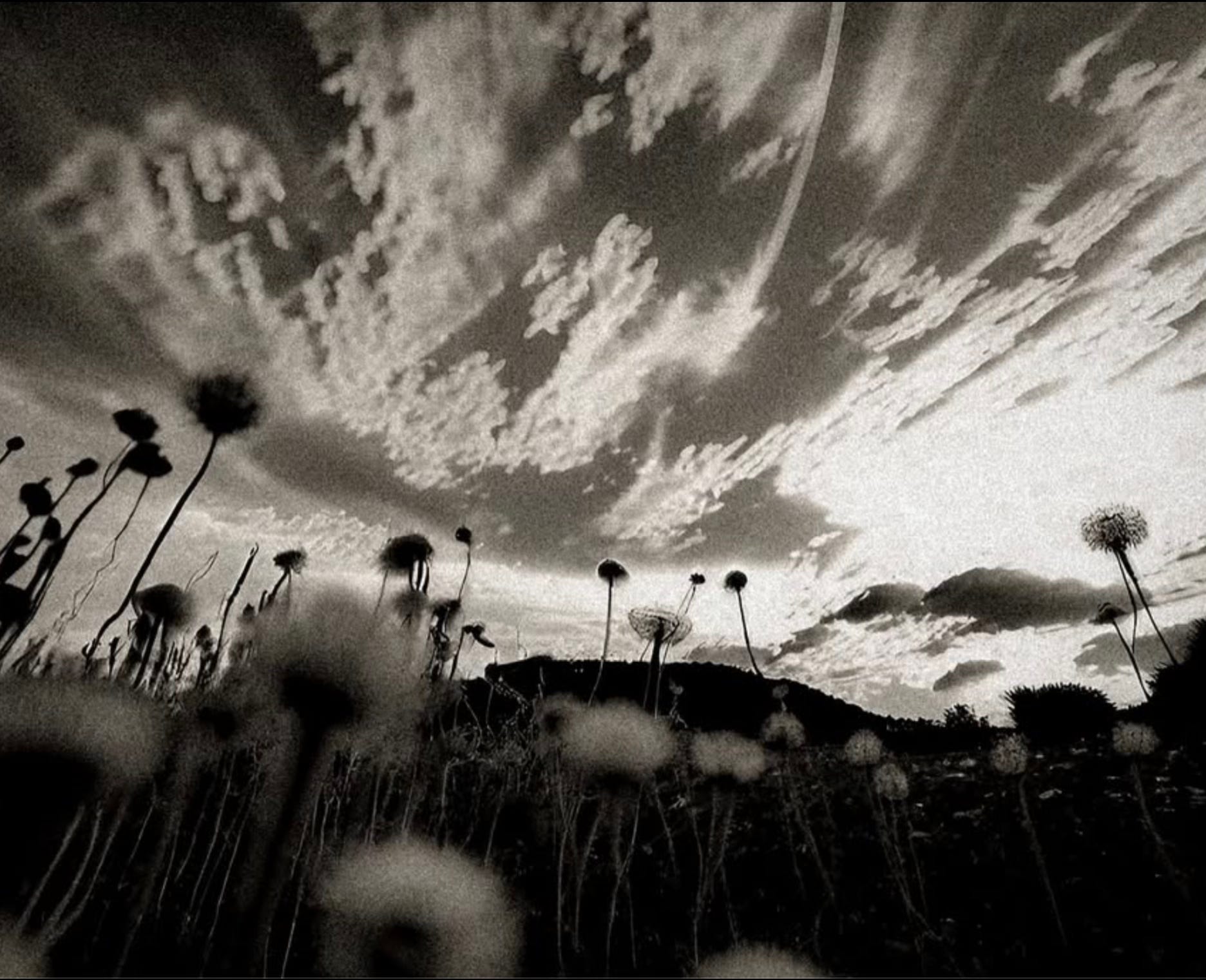
I think the best description of Spiritual Ecology is a seed. One that can take root in fertile hearts and imaginations, that can be watered, grown, shared as we find new ways of being with the Earth. So that one day, all our children will grow up without ever hearing the term but knowing exactly what it means.
Comments
Nothing yet. Say the first thing.
Sign in to join the conversation.