
Thanks for reading This Is Not Your Mother's Eating Disorder ! This post is public so feel free to share it.
HAIL! RAIN! SUN! MIST!
When springtime in the Pacific Northwest peeks out from the grey cave it’s been hibernating in, you can practically feel the glossy ferns unfurl, taste the juicy pink cherry blossoms pop, and the petrichor scent that’s taken root in your nose all winter begins to recede. The Japanese maple trees sprout their red leaves. A burst of purple crocuses grows alongside patches of bright yellow daffodils. The weather seesaws between our typical winter wetness and warm, sunny days, forever tricking us into believing summertime is just days away. It’s mostly wishful thinking, but PNWers carry endless hope for sunshine, no matter what time of year, even as we know deep down summer won’t really arrive until late June.
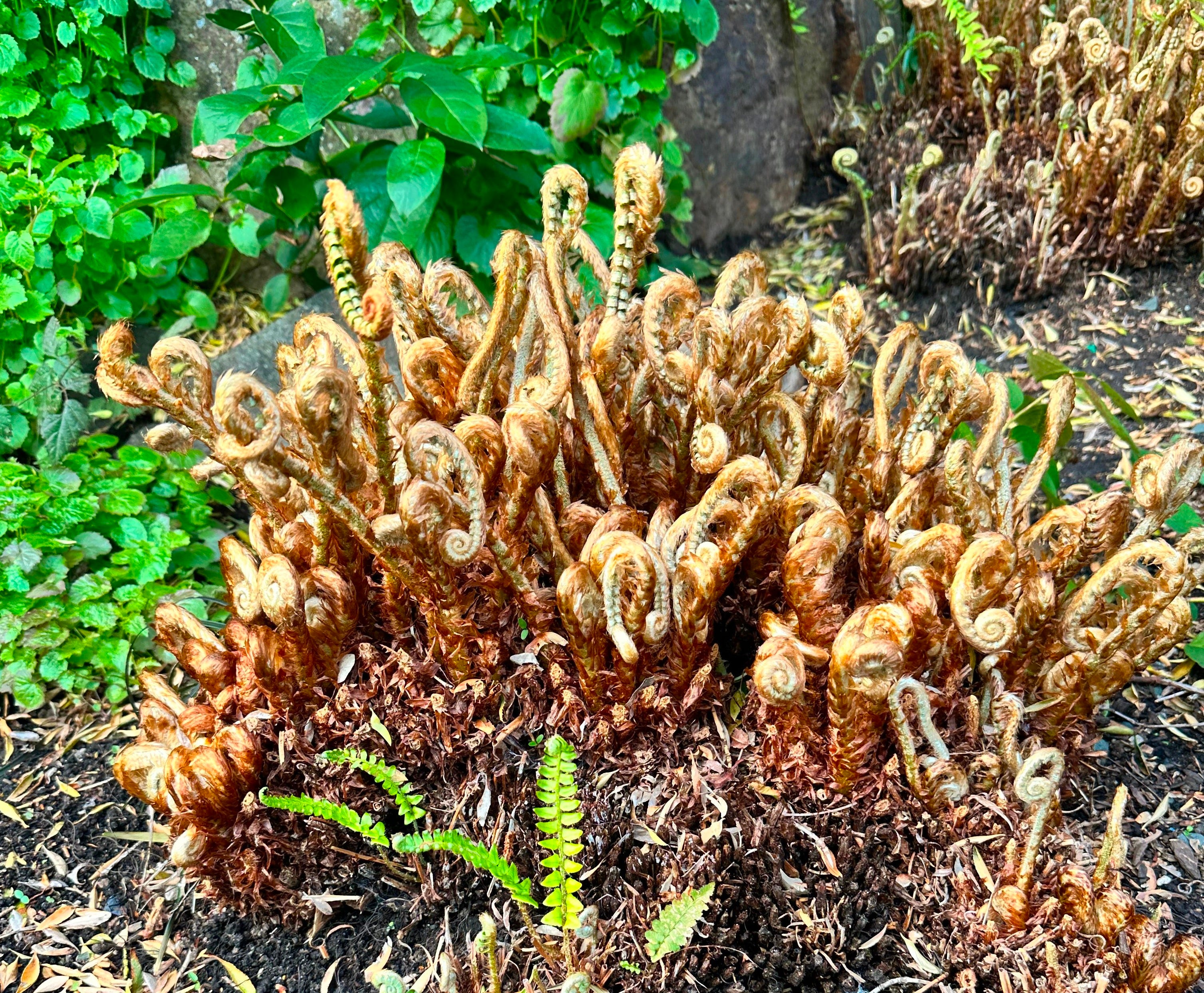
It kind of feels like a PNW spring in my brain these days. One of the most unexpected, overwhelming, and exciting consequences of being in recovery from my eating disorder is the explosion of firing neurons, like lightning bugs in a bottle or a fireworks show ALL THE TIME. Is it the infusion of nourishment after years of starving my body of nutrients and therefore energy and therefore creativity and therefore presence? I am so alive, so present, so flooded with all there is in this body, which is being fed, cared for, and loved so deeply.
I am two and a half years into my recovery from anorexia and bulimia, and practicing (endlessly practicing) the art of presence, the craft of ruthlessly culling and pruning thoughts that sprout like weeds planted long ago by confused and broken adults, in favor of listening to the loving voice in my head I know is my own. I’m practicing existing in my body in its wholeness, ditching the compulsion to see myself as an object of the gaze, walking around as a body/face/hair, ready to be picked apart, affirmed, desired, or ignored at any moment. At all moments.
Instead, I come back to myself again and again as a woman who exists as we all deserve to exist: not for anyone else to consume, but to live and connect and breathe and to be. That’s all there is.
Sometimes I’m successful, and other times, it’s hard to hear over the sound of the nagging (“It’s time to write!” “Have you eaten too much today?” “Go for a run and then you can relax.” “Oh, wait. You can’t relax. You need to send more query letters for the book! “I haven’t practiced guitar today…I’m lazy…”).
My adult kids and I are living in a more honest and real relationship with each other. They know me so well and have been on this journey with me for years now. I have written a bit about their role in my eating disorder story, so I won’t rehash specifics. I interviewed them a few months ago, for a short documentary I am working on related to the anthology I am editing about eating disorders in midlife women, and learned so much from that conversation. We talked about their experiences watching me struggle with anorexia and bulimia, how afraid they were when I was at my sickest, how angry they felt and have sometimes continued to feel when I pretend everything is fine, and what they need and want from and for me moving forward. They are stunningly committed not simply to staying in a relationship with me, but to continually improving our relationship. It’s the gift of my lifetime.
The anthology (the reason I started this Substack) is now being sent to publishers, agents, and readers—and getting some positive responses so far. I am submitting query letters, talking to my writer friends, and wishing upon the publishing stars that someone will see how necessary and powerful this anthology is.
I shared the first 50 pages of the book with an author and expert on eating disorders in midlife women, and she wrote back,
“What I have read just now is wonderful- really amazing- and so helpful to women of all ages. The writing is magnificent, and the stories are so real and so engaging. This is an exciting and unique project- truly a gift to women. Thanks for sharing this inspiration.”
Gratefully, the contributors to the anthology are absolute stars and have had nothing but support and love to share, as I continue to update everyone on what feels like a slow walk to the moon but is just the process of trying to get a book published.
I started writing about my eating disorder to pull on the strings of shame, to be as honest as possible with myself and those around me about what eating disorders do to a person’s psyche, to our bodies and lives. When I started writing about it, I understood I was writing about my entire life. It was a seductive and terrifying foray into the underworld of my younger years, forcing me to confront the darkness of what I carried that held me captive in so many ways. If there is a way to heal from trauma that doesn’t involve needing to look your fears square in the eye (the “I”), allowing your body to feel what it needs to feel with love and care, I don’t know what it is.
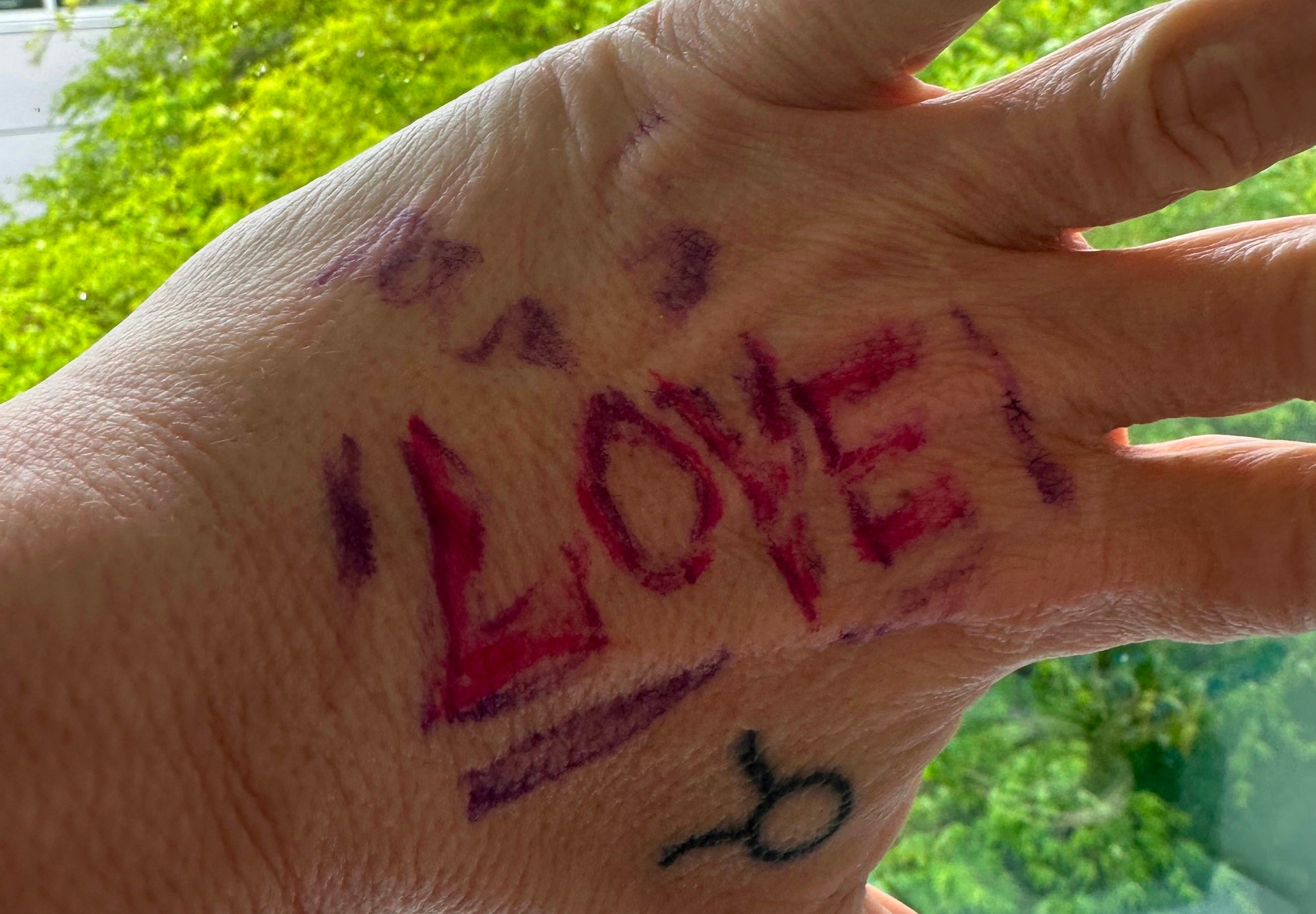
For me, writing about my childhood, my family’s relationship to bodies and weight and specifically the ways the men in my family (with the women’s help) oppressed the girls and women through body shaming and body policing, became a sort of literary strip poker: each sentence revealed a little bit more about what was underneath the closet of clothing I had been walking around in for decades. I undressed and felt lighter and freer, sharing more of myself with my family, friends, and the world. I was buried under someone else’s clothing. These were definitely not my pants, my sweaters, my socks, my parkas. Disrobing with my words allowed me to find myself again.
It also allowed me to find others who are doing the same thing: those of us writing and speaking about eating disorders, their impact on older women, and the role patriarchy plays in continuing to encourage disconnection from the wisdom we hold in our bodies. The patriarchal fear of women’s bodies, especially older women’s bodies, is toxic. And it’s just as significant as any other in the web of factors that contribute to eating disorders, including genetics and mental health.
I believe in this anthology project with every fiber of my being. Not just because the contributions are so powerful (they are). And not just because the issue is so meaningful (it is). But because I see this anthology as a testament to what is possible when we unleash ourselves from shame, turn our pain into art, and collectively resist the cultural forces that want to keep us silent and disconnected.
So, I keep writing, and speaking and connecting with other women who have struggled or continue to struggle with an eating disorder or disordered eating because we all have stories we need to share. We all have experiences we have kept silent for too long, perhaps thinking we were alone in our pain. Believing we are doing something wrong instead of understanding how society has wronged us. If you are lucky enough to be able to access treatment, and confront the demons inside, it’s just as important to confront the ways in which our capitalist, patriarchal system continues to fuel eating disorders by desperately trying to control what we look like, where our energy goes, and where our worth lies, as women.
This is my life’s work: using my writing and my voice to resist these cultural forces in favor of learning to love myself with the same vibrancy with which I love others, and finding strength in those who do the same. I have and continue to dedicate myself to dismantling this system that keeps all of us—no matter our gender—in a state of exhaustive never-enoughness.
In the mornings, I turn my body toward the window behind my bed and gift myself a few minutes of staring at the trees. It helps remind me that nature is cyclical, yes. Spring brings renewal, birth, and regeneration. But it also roots me in the moment. I watch the clouds wispily float by. Birds chirp and caw and settle on the telephone wire. I breathe and stare. I feel my way back to myself, but I am also changed.
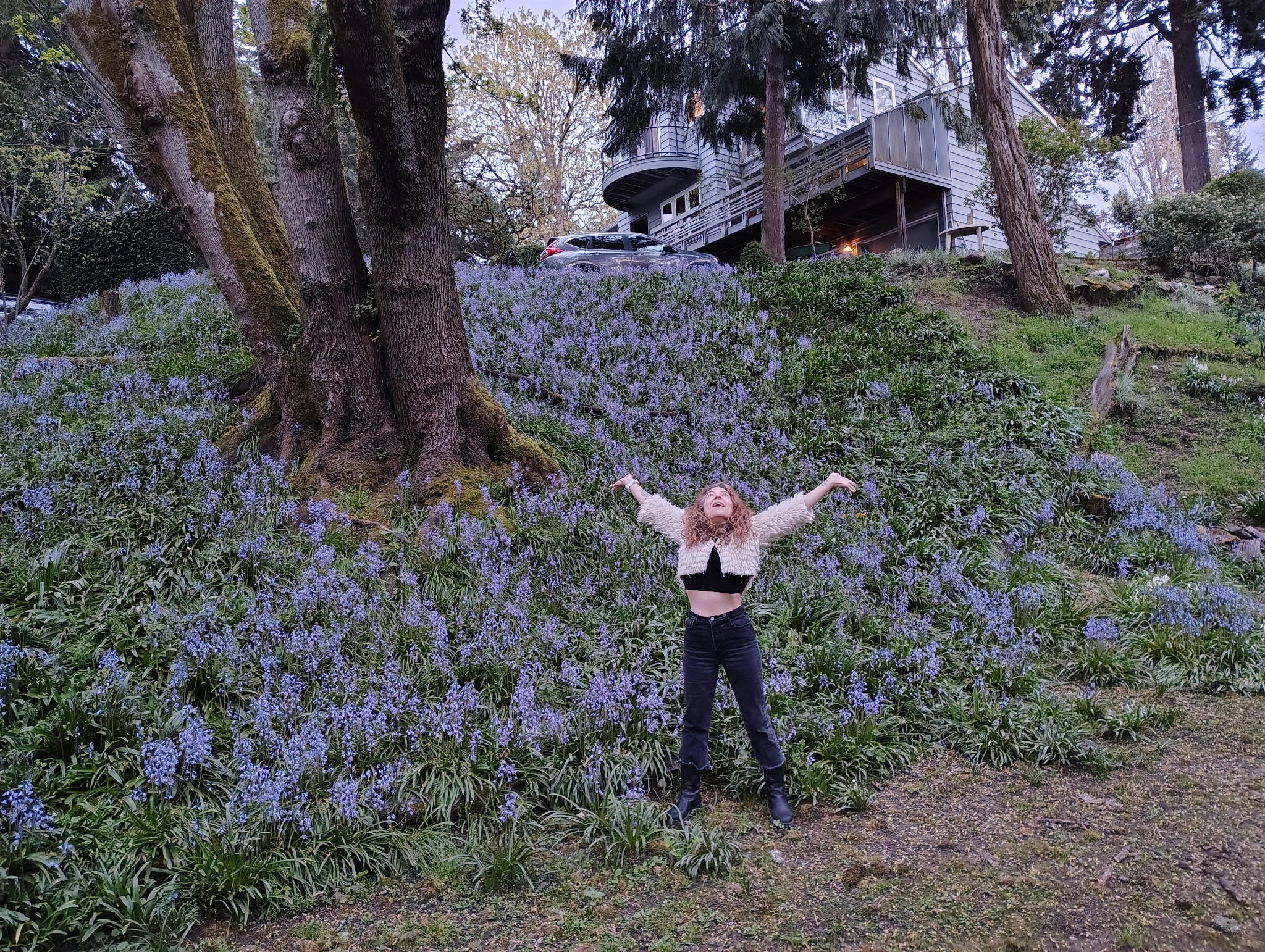
I am welcoming a new season through my window and in my body. It’s not easy. In some ways, it feels like being pregnant again. I ache. I ache with love, with desire, with excitement, with sadness, with anger. I feel uncomfortable—like my skin is stretching and my organs are being rearranged. I know I am slowly saying goodbye to pieces of me that have felt like body parts, that I thought I needed to stay alive: the ongoing current of anxiety, the thrum of criticism in my head. I remind myself that the ache is powerful. It’s what transformation feels like. We can’t grow without saying goodbye to what we no longer need, to create space and room to nurture new worlds within us. It’s a hell of a process, this shedding, sparking, birthing, and blooming. But I’m doing it. Hopefully, my book baby will be born in 2027 with 20+ writers, artists, and poets as my co-parents.
No posts
Comments
Nothing yet. Say the first thing.
Sign in to join the conversation.