
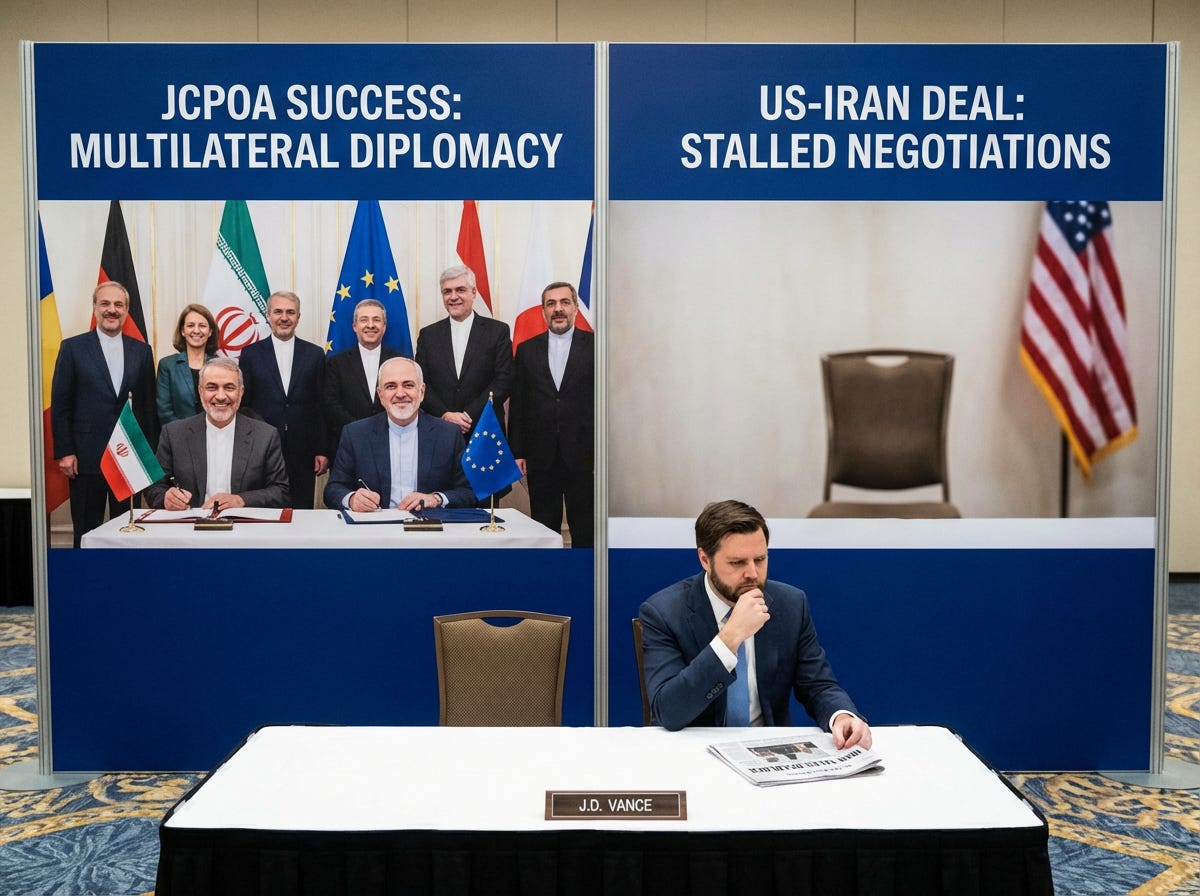
Any agreement resulting from the upcoming talks between J.D. Vance, Jared Kushner, Steve Witkoff, and the Iranian team will be compared to the previous deal negotiated over ten years ago by John Kerry and his massive team of subject-area experts, diplomats and a coalition of nations. Had Trump not pulled out of the JCPOA in his first term, would the U.S. be in a state of war with Iran with the world held hostage by their blockade of the Strait of Hormuz? A brief look at history provides the time-honored lesson of, “If it ain’t broke, don’t fix it”.
Obama’s Iran Nuclear Deal 2015
The Joint Comprehensive Plan of Action (JCPOA), agreed in 2015 between Iran and major world powers, had five core hallmarks designed to limit Iran’s nuclear program in exchange for sanctions relief:
Thanks for reading America Reformed! Subscribe for free to receive new posts and support my work.
1. Limits on Uranium Enrichment
Iran could only enrich uranium up to 3.67% purity (well below weapons-grade).
Its stockpile was capped at 300 kg of low-enriched uranium.
2. Reduction of Centrifuges
Iran had to reduce the number of installed centrifuges from 19,000 to about 6,100, with only 5,060 operating at the Natanz Nuclear Facility.
Advanced centrifuges were restricted and monitored.
3. Reconfiguration of Nuclear Facilities
The Fordow Fuel Enrichment Plant was converted into a research centre with no enrichment allowed.
The Arak Heavy Water Reactor was redesigned to prevent the production of weapons-grade plutonium.
4. Intrusive Inspections and Monitoring
The International Atomic Energy Agency (IAEA) gained extensive access to nuclear sites.
Continuous monitoring of uranium mines, mills, and centrifuge production.
5. Sanctions Relief
In return, Iran received relief from U.S., EU, and UN economic sanctions.
This included access to frozen assets and the ability to re-enter global oil and financial markets.
1st Trump Term 2017- 2021
After Trump ripped up the deal and reinstated sanctions, Iran had no choice but to go back to their original plan of enriching Uranium to near weapons-grade. All that the Obama team had built over 18 months of negotiations was suddenly in the dustbin.
Trump ripped up the deal in 2018
The U.S. reimposed strict economic sanctions on Iran (“maximum pressure” campaign).
This included targeting oil exports, banking, and international trade.
Iran’s Response
Starting in 2019, Iran began gradually violating key limits:
Enriched uranium far beyond 3.67% (reportedly up to ~60% in some cases).
Stockpile grew well beyond 300 kg.
Installed and used more advanced centrifuges.
Resumed activity at sites like Fordow Fuel Enrichment Plant.
Biden Term 2021-2025
Joe Biden’s team tried to rebuild something resembling the JCPOA, but Iran had no reason to trust the US, especially as it looked like Trump would be president again.
Trump 2nd Term 2025-Present
Midnight Hammer
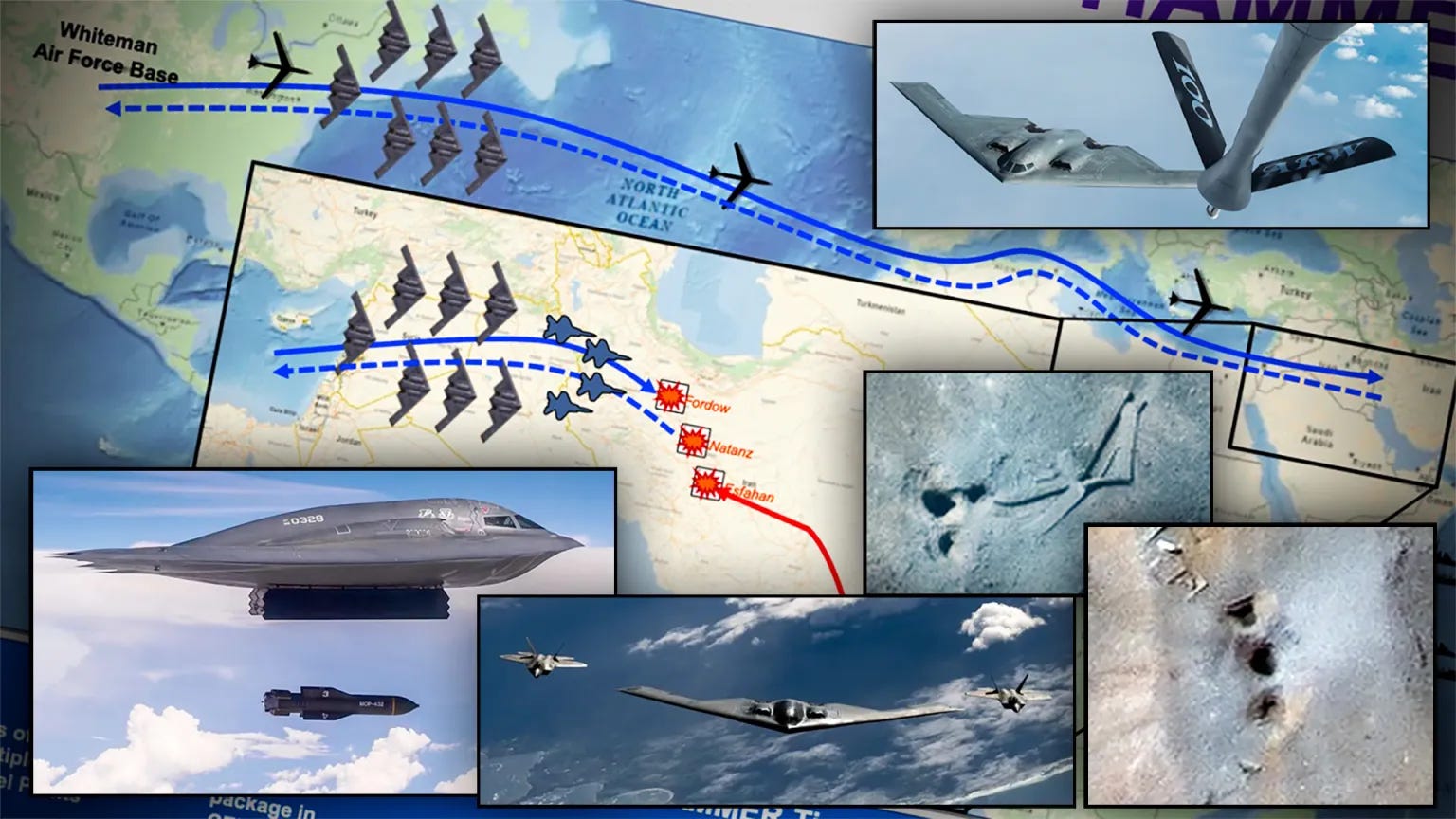
In June of 2025, U.S. Air Force B-2 Spirit stealth bombers dropped 14 30,000-pound GBU-57/B Massive Ordnance Penetrator (MOP) bunker buster bombs on Iran’s Fordow and Natanz nuclear facilities, Hegseth and Caine confirmed. The attack marked the first operational use of the MOP. A total of 125 aircraft, including the B-2s, supported the aerial component of the operation.
Trump went on to claim that Iran’s nuclear program was obliterated, setting them back by years.
U.S. Intelligence reported that the damage to Iran’s nuclear program might not have resulted in “Obliteration”. Tulsi Gabbard’s team did not fully back Trump’s claim, causing a strain between the President and the intel community. The claim of an imminent threat from Iran has been widely disputed by those in and out of the government.
In early February 2026, President Trump, pushed by Benjamin Netanyahu and others, joined Israel in a massive attack on Iran’s leadership, killing most of the hierarchy, but leaving the Ayatollah’s son alive and in charge. They also targeted Iran’s Air Force, Navy, missile launchers, factories and storage sites, but Iran, realizing that they were no match for US firepower, resorted to asymmetric warfare with cheap drones attacking US allies in the Middle East as well as US facilities in the region.
Iran closed the Strait of Hormuz, stopping the flow of oil to Europe and many other US allies, but allowing friendly ships to pass. The US could do little but watch, so President Trump gave Iran an ultimatum. Open the Strait, or we will destroy the entire country and civilization.
Pakistan intervened, offering negotiations. Trump backed off from the threat and sent J.D. Vance to negotiate in Islamabad, Pakistan, but after 21 hours, there was no deal. Iran argued that a ceasefire between Israel and Hezbollah was part of the deal. Trump decided to blockade Iran’s ports, keeping Iranian-bound ships from either docking or leaving, but left the door open for more negotiations.
In any future negotiations, what will J.D. Vance, Jared Kushner and Steve Witkoff be able to negotiate without any experts attending the meetings? The original team was comprised of well over 100 people working for nearly two years, including Russia, China, the UK, France, Germany and the EU.
After the war ends and negotiations are completed, what manner of deal will result? Will it be superior to the JCPOA, inferior, or the same as the Obama team originally worked for years to sign?
The JCPOA vs the upcoming Trump/Iran Deal
Once a deal is complete and signed, it will be compared to the JCPOA point by point. Will it be a stronger deal, one that is weaker, or will we end up with a very similar deal after 11 years of indecision, war and world chaos caused by Trump’s war of choice?
Trump Deal - TBD, but early leaks of the negotiations appear to have the U.S. paying Iran $20 billion for their enriched Uranium. Additionally, Iran forced the Trump administration to stop Israel’s bombardment of Lebanon as part of any negotiations if the Strait of Hormuz is to remain open.
Thanks for reading America Reformed! Subscribe for free to receive new posts and support my work.
Comments
Nothing yet. Say the first thing.
Sign in to join the conversation.