
“The immanent common good of political society must, accordingly, contain in a perfect manner all these classes of goods: exterior goods (wealth, abundance, and sufficiency of useful goods), interior goods of the body (health, robustness: sufficiency and abundance of means for the perfect development and preservation of the race, with its accompanying bodily well-being — sufficiency of delightful goods), and interior goods of the soul (sufficiency and abundance of resources for the perfect development of the faculties and habits of the soul: arts, sciences, culture, virtue — sufficiency of honorable goods).— Fr. Santiago Ramírez
Over the course of the past couple of weeks, the on-going civil war in the Republican Party has come into sharper focus with a fierce debate centered on the “common good” and its importance for American politics. The two schools of thought on the question can be broadly distinguished as follows. On one side stands the Republican establishment and Conservative ideologues1 who identify the end of civil society in the protection of individual rights, with the common good to the extent it is even acknowledged, as subordinate to that end.
On the other side stands an ascendant coalition, led mostly by Catholic intellectuals and notably Adrian Vermeule, Chad Pecknold and Patrick Deneen who — following the natural, classical and Catholic conception of politics — see the common good as the end of civil society, with the particular goods of individual men subordinate to it. This latter truth is the common sense principle of totality, expressed simply by St. Thomas and Pope Pius XII, respectively:
The good of the whole takes precedence of the good of the part. It belongs then to a prudent ruler to neglect some defect of goodness in the part for the increase of goodness in the whole.2
We mean the principle of totality. This principle asserts that the part exists for the whole and that, consequently, the good of the part remains subordinated to the good of the whole, that the whole is a determining factor for the part and can dispose of it in its own interest.3
Even more heartening is to see this movement, spurned on by the keen diagnoses of the aforementioned “Post-Liberals”, increasingly attaching the common good to Revealed Religion, of which is it inextricably linked. That is, the common good ought to be ordered with an eye to man’s supernatural end: the beatific vision and eternal union with God who is Jesus Christ. Naturally, in order for this to occur, the indirect subordination of the State to the Catholic Church must be effected, nothing other than what Jesuit master Father Matteo Liberatore highlighted in 1877:
God is one, one is the order of the universe, one is the ultimate end of creation. This end, in relation to the One who orders things, must be the most sublime and the most advantageous for the things that are ordered, which can only be the glorification of God and the eternal beatitude of rational beings. Now, this is precisely the end toward which the Church leads. The Church is therefore not simply a perfect society (how could a society that leads to the most perfect good not be perfect?), but it is also a supreme society above all others, its end being supreme. And every other lower end must be subordinated to this end, if it is true that secondary goods, in relation to the supreme good, have the nature of means, and that means are subordinate to the end. It follows from this with irresistible clarity that every society must submit to the Church and to receive from her both rule and direction. So, however much one may exalt the State and exaggerate its perfection, there is one thing that cannot be denied: its subordination to the Church, unless, of course, one wishes to transform the State itself into the Church and the prince into a Pontiff.
Prior to the American Revolution and constitutional order which it ushered in, tragically admitting the false liberties of worship and conscience, this was the normal ordering for all civil societies, Catholic or otherwise. In fact, the celebrated “Father of the Constitution” James Madison admitted as much in his 1822 letter to Samuel Livingston:
[T]he establishment of Religion by law, was right & necessary; that the true religion ought to be established in exclusion of every other; And that the only question to be decided was which was the true religion.4
With this in mind, the American Catholic State we are striving to inspire at The Journal of American Reform must recognize true religion and worship,5 the corollary of which Father Emannuel Barbier summarized thusly:
If it is true that politics is and can only be the application of morality to the government of the country, in Christian states, and if morality is essentially linked to religion, it clearly follows that the Church, the Pope, guardian of morality and religion, has, as such, a right to intervene in politics.
Returning to the two schools and the original question, that of the common good, this debate has enormous implications for the future of the Republican Party after President Trump leaves office. Will the pre-Trump status quo prevail, focused on individual rights, religious “pluralism” and laissez faire economics, or perhaps will the restoration finally begin? A restoration by which our governments — federal, state and local — will finally acknowledge the Social Kingship of Jesus Christ and derive their civil authority, not from the people and their consent, but in the sublime, eternal Authority of God.
The root of all our political problems can be traced to the common good, where citizens and most importantly leaders have forgotten their duties towards our common community motivated first by love of God and then our fellow man (Matt. XXII, 37-39). The latter has the right to honor, respect and, depending on the office, obedience. The former has the right to safety, care and to be led toward the objective good.
Time will tell for this restoration — it will only occur if God wills it. Until then, following the quote oft attributed to the founder of the Society of Jesus, Saint Ignatius of Loyola, we must “Pray as if everything depended on God; work as if everything depended on us.”
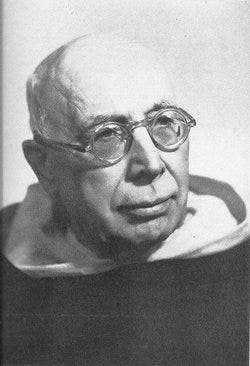
Father Santiago Ramírez, O.P.,6 was one of the foremost scholastic philosophers and commentators of the twentieth century. Born in 1891 to a family of farmers in Spain, Ramírez would later enter the Dominican order in 1911 after receiving a solid, Catholic education in his youth.
In 1914, he graduated from the Pontifical University of Saint Thomas Aquinas, known as the Angelicum. Ramírez was ordained two years later in 1916, celebrating his first Mass in the chapel of Saint Dominic’s convent of Santa Sabina in Rome. For the next several decades he would spend his time teaching philosophy and theology. In 1949, he travelled to the United States where he gave several lectures in Cincinnati, OH. Father Ramírez played a role as a peritus, theological expert, at the Second Vatican Council for the Theological Commission headed by Cardinal Alfredo Ottaviani.
In 1967, Father Ramírez died in his cell at San Esteban’s convent of Salamanca and went to his eternal reward
Most of our posts are free, however if you are able to support us, please consider upgrading to a paid subscription — it helps enormously.
With a paid subscription, you will get:
Subscriber-only posts and full archive
Post comments and join discussion
Support for the mission of American Reform
Discounts for books and merchandise
Now, without further ado, The Journal of American Reform is pleased to present this treatment of the “common good” from Father Santiago Ramírez, based on the thought of Saint Thomas.
But what is the natural common good of the perfect society of the natural order, that is, of political society? For it is precisely this that we treat in these lessons.
To answer this question we must bear in mind this rule of St. Thomas: when the formal and direct term of a question has diverse meanings, the first thing necessary is to distinguish them, and then answer successively according to each one.
This is what happens with equivocal and analogical terms, with the difference that the meanings or significations of the equivocal term are arbitrary, incoherent, disordered; whereas in the analogical term they are rational, coherent, ordered: only in the univocal term is its own signification unique and uniform.
The word pez, for example, signifies an aquatic animal (the fish), a resinous substance (pitch), a constellation (Pisces), a Spanish, Italian, or German surname (Pesch), a quality or state of the individual (it is a fish, this fish). Diverse meanings that give rise to jokes and plays on words.
In contrast, the word saint, which can signify a holy man, holy customs, a holy word, a rite, a holy ceremony, a holy habit, a holy place, is an analogical term, because these diverse meanings depend on or are related to a primary one, that is, to the holiness of a person.
The same is true of the word royal. Royal refers to the person of the king, the royal family, the royal escort, the royal decree, the royal order, the royal palace, the royal site, the royal street, the royal carriage, the Royal Academy, the royal armory. But it is equivocal when we speak of royal rights or royal taxes (royal, from res, thing; or royal from rex, king).
In times of royal phobias, at the beginning of the Republic, there were ridiculous and ignorant dupes who saw in royal taxes or rights remnants of the overthrown monarchy, and tried to abolish them.
Man, on the contrary, is a univocal term, because it always means the same thing, that is, rational animal, which is the essence of man, and applies equally to all men as such. It is the name of the human species.
Now then: the term common good does not signify a species or a genus, as man or animal do, but rather an analogate with two diverse and gradated meanings, which are the immanent common good and the transcendent common good. The immanent common good is within the political society itself and is dependent on it; the transcendent common good is outside political society and is independent of it.
A. Transcendent common good.
The transcendent common good of society is the ultimate end of society itself and of the human persons who constitute it, that is, God himself, the first cause and ultimate objective end of all things, essentially distinct from creatures and independent of them all.7
It is good because it is the end. Good is predicated of means and of ends, but properly and primarily of ends; means have no character of good except by relation to their ends.
It is common good because it is the ultimate end, that is, the universal end of all beings, particularly of rational beings, whether constituted in society or not. God alone is the cause of the angel and of the human soul, because they cannot be produced except by creation, and God alone can create. The ultimate perfection of a caused being cannot be anywhere but there, where its first principle is (cf. I, q. 12, a. 1).
The ultimate end has, with respect to all the other proximate and intermediate ends and to all means, the same proportion that the first cause has with respect to all the other secondary and intermediate causes and to all effects: it is the common or universal cause of everything, since it is the cause not only of the pure effects, which are not causes, but also of the secondary causes, which are not pure causes, being themselves causes that are in turn caused; and likewise the ultimate end is the common and universal end of everything, because it is the end not only of the pure means, which are not ends, but also of the proximate and intermediate ends, which are themselves ends that are in turn made to serve a further end.
Good or common and universal end in its function as ultimate final cause, in finalizing; but at the same time one and unique and personal in its innermost character of being, infinitely perfect, in being. God is a being, one and unique and personal, essentially distinct from the world and from each of its parts; but He is at the same time the most universal cause of everything and the most universal and most common end of everything. Common good by essence, by being subsistent Goodness itself; and universal end by essence, not made to serve any other end nor capable of being made to serve one. He is the first and supreme analogate of the concept of common good, to whom both the concept of good as the concept of common or universal apply primordially and in their fullest plenitude and perfection.
B. Immanent common good: its nature as human good.
But the principal difficulty lies in determining the nature of the immanent common good of political society. It is evident that this good must be a human good. Since it is a human society, composed of men, the immanent common or social good must necessarily be a human good, a good perfective of man, a good in conformity with the very nature of man.
a) The human good comprises:
α) Integral parts (external goods, goods of the body, goods of the soul). — But what is the human good? What does this good comprise? It comprises, as integral parts, three classes of goods: external or exterior goods, movable and immovable, such as wealth and possessions; goods of the body, such as health, the integrity, and the robustness of its members; and goods of the soul, such as knowledge and virtue. Every human good reduces to exterior goods, to interior goods of the body, and to interior goods of the soul. The sum of all of these together gives the complete human good.
β) Analogous or perfective parts (honorable, delightful, and useful goods). — But as analogous or perfective parts, the human good comprises just as many other classes of goods: honorable goods, such as virtue; delightful or pleasing goods, such as joy and contentment; useful goods, such as strength, skill, and wealth. Useful goods are predicated of means; delightful and honorable goods, of ends — with the difference that honorable goods are predicated of ends in themselves, while delightful goods are predicated of ends insofar as their satisfying effects on the subject who attains and possesses them. The first and supreme analogate is the honorable good; then comes the delightful good; and last, the merely useful good (cf. I, q. 5, a. 6).
b) The immanent common good of political society must contain all these goods in a perfect manner, and it will be the more perfect the greater the sufficiency with which it possesses them.
The immanent common good of political society must, accordingly, contain in a perfect manner all these classes of goods: exterior goods (wealth, abundance, and sufficiency of useful goods), interior goods of the body (health, robustness: sufficiency and abundance of means for the perfect development and preservation of the race, with its accompanying bodily well-being — sufficiency of delightful goods), and interior goods of the soul (sufficiency and abundance of resources for the perfect development of the faculties and habits of the soul: arts, sciences, culture, virtue — sufficiency of honorable goods).
For the life of the body, for health, for the development of human activities, for the custody and defense of the social order, material riches are needed in abundance, along with arms and power — all of this contained under the character of useful good, since these things have no character of end in themselves, but of means to higher goods.
That same prosperity and material security of society is a necessary condition, not only for the culture of the arts and sciences, but also for virtue itself: the higher goods of the soul in their superlative degree as honorable goods. It is a well-known fact that the common run of men is, as such, incapable of leading a heroic life full of renunciations and poverty, in the style of a St. Francis of Assisi or a St. John of the Cross: nothing, nothing, nothing, nothing. It ordinarily needs abundant material goods (sufficient, not superfluous) in order to develop its higher activities and not be forever preoccupied with our daily bread, devoting all its energies to procuring it. He who has not resolved the problem of bodily life will scarcely be able to live a higher and spiritual life: first live, then philosophize, as the Greeks already said and as St. Thomas records.
And political society will be the more perfect the greater the sufficiency with which it “possesses” all these goods, and the “better ordered” it keeps them, in such a way that useful and exterior goods are ordered toward contentment and social well-being — delightful goods rightly ordered — and all of these, in turn, toward the honorable good, that is, toward the fully moral and virtuous life of the associated men; and the more it fosters, favors, and procures these human goods of intellectual and moral culture, whether in their qualitative aspect of intensive perfection, or in their quantitative aspect of extensive perfection reaching the greatest possible number of its members. “Since man needs to live in society in order to provide for his needs, it is evident that a society will be the more perfect the more capable it is of meeting those needs” (De Regno, l. 1, c. 2, n. 7, ed. cit., p. 225).
c) The perfection of the common good: order, tranquility, peace. Texts of St. Thomas, Pius XI, and Pius XII.
Now then, a people, a political society that is rich, prosperous, secure, powerful, cultured, and virtuous, by the mere fact of being virtuous does not abuse its riches or its power, but rather is content and satisfied (delightful good) according to the norms of right reason and of morality — this contentment and satisfaction is an effect of its virtues and its prosperity, and a condition for further progress in both orders; for man, by his very nature, is essentially progressive in the arts, in science, in culture, in virtue. It is a condition of intellectual and moral habits that they be susceptible of indefinite growth and perfection: the more they grow and are perfected, the more they enable the powers of the soul to produce better and more sublime works.
The abundance of bodily goods, and the power to preserve and defend them, removes the motives for quarrels and discontent and prepares the ground so that, together with moral and cultural virtues, the men who make up political society will respect one another, unite more intimately, esteem and love one another with genuine affection; from which there naturally follows concord, order, peace, and social tranquility, each man being content in his own place and office, cooperating according to his strength for the good of all and sharing proportionally in the common well-being (cf. 2-2, q. 47, a. 10 c and ad 2).
St. Thomas calls this good order, tranquility, peace, unity, friendship, well-being, public health8 — aspects, properties, or conditions of the common good. Characteristic of his doctrine on this point is the following text: three things are required for the common good of political society. First, the union of all the members of society in true and sincere friendship, whose proper fruit is social peace, public peace. Second, the union of the forces of all and of each of these members in order to cooperate toward the common good; because just as a particular man cannot work at full capacity unless he unites all his energies, dispersing none of them, and still less letting them impede one another, as happens in a sick man, an idler, or a vicious man — so too political society does not achieve the common good unless all its members are united and in concord, without hindering or contradicting one another, but rather concentrating all their energies to attain it. It is a well-known fact that union makes strength: vis unita, fortior. Third, the sufficiency and fullness of human goods, corporal and spiritual, exterior and interior, physical, intellectual, and moral, which follow naturally from the first two conditions (De regno, l. 1, c. 15, n. 49, p. 262). This common good must be sought after, not in just any manner, but with the greatest possible energy and in the best possible way (Contra impugnantes Dei cultum et religionem, c. 1, n. 26, ed. cit., p. 11).
This doctrine of St. Thomas has been adopted and consecrated by the supreme authority of Leo XIII, of Pius XI, and of Pius XII, gloriously reigning. Allow me to cite a few brief words from the last two Pontiffs. Pius XI, in the encyclical Divini Illius Magistri, says: “The common good of political society consists in the peace and security by which families and individuals can fully enjoy the exercise of their rights, and, at the same time, in the greatest possible well-being, material and spiritual, of the present life, through the union and determined cooperation of all. Peace and full security in the free exercise of family and individual rights: the greatest possible abundance of goods of soul and body, thanks to the union and cooperation of all. Commune bonum temporalis ordinis in pace ac securitate consistit, quibus familiae singulique cives in suis exercendis iuribus fruantur, simulque in maxima quae in mortali hac vita esse potest spiritualium fluxarumque rerum copia, omnium quidem opera atque consensione assequenda” (AAS 22 [1929], p. 62).
And Pius XII, in his Christmas message of 1942, broadcast to the entire world, spoke these words: “The common good of political society is social coexistence in peace, tranquil coexistence in order; coexistence in order and in tranquility. In the juridical order, and in the operative tranquility needed to bring it about. The common good implies the gathering together of all those exterior conditions necessary for the body of citizens to develop their qualities, offices, and duties, that is, their material, intellectual, and religious life” (AAS 35 [1943], pp. 10 and 13), of their complete personality.
All this is what emerges from the analysis we have just made of the human common good.
On the other hand, upon a little reflection, it becomes apparent that this common good has intimate relations with the transcendent natural common good, with the natural proper good of each individual, with the immanent common good of imperfect natural societies, and with the immanent common good of the perfect supernatural society, which is the Church of Christ — and yet it is essentially distinct from all of them.
At first glance one sees that this common good is like a means between the proper and personal good and the transcendent common good of the natural order.
A. Looking toward the individuals who compose society.
a) It is distinct from and superior to the proper, personal, and particularized good.
The immanent common good is a common good, not a proper one; universal, not particular; social, not personal; public, not private.
It is superior to the proper and personal good.
b) It is distinct from and superior to the collective common good.
But it is not a merely collective good, that is, a mere sum of proper, particular, and personal goods, as the capital of an industrial or commercial company is a collective good — that is, the sum of the contributions of its shareholders. Perfect political society is not a sum of individuals, is not an amorphous, inorganic mass of men, as we saw earlier (II, 1). Consequently, neither can the immanent common good of such a society be a mere sum of particular goods.
The collective good is equal to the sum of the particular goods that make it up, just as the quantity of the total sum is equal to that of its addends taken collectively, neither more nor less: it is an integral whole that stands above what is merely well-distributed and particularized.
c) It is distinct from and superior to the univocal universal good.
c) It is a universal good, but universal or common with an analogical community, or a proportional community, not with univocal community or absolute equality.9
The analogical common good surpasses the merely universal or univocal good. A universal or univocal whole is superior to the sum of its particular goods, as the species is superior to the sum of all its individuals — past, present, and future — since it also embraces the possible ones, not with mere physical possibility, but with logical and metaphysical possibility. But the analogical common good which, as we have said, is the immanent common good of perfect political society, comprises not only all the actual particular goods of all the members who in fact compose it at a given time, but also all those of its history (past ones) and all those of its future, and even all the possible ones within human contingencies: it embraces all the particular goods of all times and of all possibilities, but still surpasses them, because it contains them in an eminent manner.
d) It is a total good, with a virtual or potential totality.
It is a virtual or potential whole, essentially distinct from its potential parts and incomparably superior to them: as the intellective soul is essentially distinct from, and incomparably superior to, the sensitive soul and the vegetative soul; as the power of the king or of the pope differs essentially from the other subordinate and particular powers of the State or of the Church, and is incomparably superior to them; as the presbyterate differs essentially from the diaconate and the subdiaconate, and surpasses them beyond comparison. The potential whole comprises within itself, in an eminent manner, each and every one of the perfections of each and every one of its potential parts, as their source and principle; it is a whole of order, essentially superior to all and each of its parts. That is why the immanent common good of political society is a good of order, essentially superior to all and each of the particular goods of its members.
As St. Thomas says, “the common good of perfect society and the particular good of a person are not distinguished merely quantitatively, as much and little, but formally and essentially, because the formal and essential character of good is different in the one and in the other” (2-2, q. 58, a. 7, together with q. 50, a. 2 ad 3).
e) It belongs to all and to each one, but not with absolute equality.
It belongs to all and to each one, but not totally, nor equally, with absolute equality. It is like the soul, which is wholly present in the whole body and in each of its parts with totality of essence, but not with totality of power — rather, in each organ it is present according to that organ’s capacity and functional aptitude; and in the whole human organism taken together it is present with totality of power, as soul, though not as spirit, since as spirit it transcends the capacity of the body and turns its face toward incorporeal things and goods. These are the two well-known faces of the human soul: one lower, as soul that animates the body and looks toward it; and one higher, as spirit that transcends the body and looks toward God (cf. in Psalm. 10, ed. Piana, fol. 12 ra of vol. 13).
In a similar way, the immanent common good of political society belongs to all and to each of its members according to the totality of its essence, but not according to the totality of its power and its worth, which are measured according to the capacity and functional aptitude of a social kind proper to each of them.
f) It is essentially communicable and communicative.
A good essentially communicable and communicative to all and to each of its component members, by the mere fact of being common and being immanent. It is not, nor can it be, outside man, outside the human person, but within him.
It is an analogate essentially embedded and enveloped in its participant members, and not perfectly abstractable or separable from them, to whom it communicates itself in act and not merely in potency, though in a graduated manner, in proportion to the condition of each one within the social body. It is something implicit, not merely potential, but rather in the manner of a confused and undistinguished global whole, which is explicated and distinguished according to the modes of actual participation in its members or parts.
It is like being in common, essentially bound up in the diverse particular modes of being of substance and of accident, of act and of potency. It descends and communicates itself to them of itself, without the mediation of extrinsic differences, just as a genus communicates itself to its species. The common good spreads and communicates itself to all and to each of the members of society, just as being does to its particular modes, as health and well-being do to all the members of an organism, as the vivifying virtue of the soul does to all the parts of the body.
g) It is the Supreme Law of Political Society, after God.
It is the supreme law of political society, after God, say Leo XIII and Benedict XV (encyclical Au milieu, of February 16, 1892; Acta Leonis XIII, ed. cit., vol. 3, p. 118; epistle Celeberrima, of December 18, 1919: AAS 12 [1920], p. 33).
B. Looking toward the Transcendent Common Good, toward God.
But besides that lower face which looks toward the individuals who compose society in this earthly life, it has a higher face, which looks toward God, transcendent common good and objective happiness of men in their life beyond this world.
It is a superior analogate with respect to individual and particular goods, but at the same time it is an inferior analogate with respect to the transcendent common good: just as created substance is a superior analogate with respect to accidents, but is an inferior analogate with respect to God. The immanent common good is not a good enclosed and self-contained within itself, but is essentially open toward the transcendent common good, and essentially diffused and participated in among the members of society.
The transcendent common good is a good by essence, uncreated, unparticipated, infinite, indestructible. The immanent common good is a created good, participated, finite, corruptible. This latter is made and produced by the associated men through their acts; the former is merely merited by their actions, not produced by them. The first is common or universal in causando, that is, in a causal and dynamic sense, as First Cause and Ultimate End of all the goods of man and of society; the second is universal or common in essendo, that is, in a formal, logical, or metaphysical sense.
C. Looking toward other societies.
a) It is like an analogate or likeness of the immanent common good of imperfect natural societies.
But it is, besides, an analogate of other lower and higher immanent common goods: inferior, such as those of imperfect natural societies; and higher, such as that of ecclesiastical society, which is a perfect supernatural society.
In domestic or family society, which supposes and includes conjugal society and parental society, the common good comprises the family patrimony and the household arts and trades needed to exploit and defend it, as a useful good necessary for family well-being; and particularly the virtues and the discipline proper to the home — exemplarity on the part of the parents, learning on the part of the children — and all of this within a spirit of respect, of trust, of sincere mutual love, with its natural sequels of harmony, of concord, of peace, of order, of tranquility, and of contentment. All of us, more or less, have seen or have lived within such happy families, which are an anticipated heaven, an imitation of the family of Nazareth; and all of us have also seen the reverse in other unhappy families — true images and foretastes of hell, with their quarrels and discord, with their mortal hatreds, with their bodily and spiritual miseries, in which each one does whatever he pleases, yet suffers and endures what he never would have imagined.
Now this human common good of domestic society is preserved, in its own way, in political society — that is, in a more perfect, more vast, more effective manner, complementing the family common good and making of the various families, villages, municipalities, cities, provinces, and regions so many members of perfect society, fraternally united in that higher community. The sufficiency of material goods corresponding to family needs, which must be amply satisfied, together with the other human goods of body and soul, in the ordered peace and tranquility of all, in intimate union of love and mutual respect, are preserved more amply — but in a proportional way, in political society, which must be like an amplified family, in which the Head of State plays the role of father, and the subjects conduct themselves with the respect and love of free children — with the freedom that virtue gives.
Proportion, analogy — not absorption nor suppression of the family common good and of the personal good of each individual. All, individuals and families alike, must cooperate toward the common good of political society and, at the same time, share in it; society must respect these goods and increase them as far as possible, causing this common good to intensify and to spread as widely as possible among its members (2-2, q. 47, a. 10).
b) And of the immanent common good of perfect supernatural society, which is the Church of Christ.
However, far more illustrative is the analogy with the immanent common good of perfect supernatural society, which is the Church. In her there are superabundant supernatural riches — the divine graces of every kind — available to all and to each, without ever being exhausted or diminished; an intimate union of the members among themselves and with their visible head, who is the Pope, founded on one same faith, one same hope, one same charity, one same sanctifying grace, one same divine filiation, one same redemption, one same unity of destiny: order, hierarchy, respect, harmony, continuity, uninterrupted progress, and astonishing fruitfulness in every kind of good. Communication and diffusion, in torrents, of the infinite treasures of divine grace to all and to each of her members; and openness, longing, yearning, rapture toward the transcendent supernatural common good, which is God Himself as He is in Himself.
Charity, queen of all human and Christian virtues and the distinguishing mark of the disciples of Christ, is the bond of perfection of all of them in society perfect, the sap, the health, the soul of the mystical body of Christ; a virtue eminently social and communicative of all the divine treasures to all men, without exclusion of anyone and without acceptance of persons or classes, and sovereignly active and yearning toward God under the supreme character of transcendent good, of goodness by essence.
A magnificent example, to be imitated in its own sphere by perfect political society.
END.
Thanks for reading The Journal of American Reform! This post is public so feel free to share it.
CONSIDER SUPPORTING THE JOURNAL OF AMERICAN REFORM!
As I intend to devote more and more time to this political project, I want to continue to provide free, educational material, whether visual (graphics) or written (essays, translations and a forthcoming book) content. If you have benefited from my work in any way, kindly consider supporting The Journal financially. On a personal note, I am married and duty-bound to provide for my family, so any help, big or small, is appreciated. Subscribe or make a one-time donation.
Regardless, the production of free material will continue, hopefully with ever-increasing quality, and I will keep all my subscribers notified of my plans.
In addition to Substack, the home of The Journal, my work, graphics and commentary can be found on the following platforms:
X: @AmericanReform_
Telegram: @American_Reform
In question here is “Conservative” understood as an ideology (i.e. the American system of philosophy which is a more moderate expression of European or continental liberalism) which is distinct from the legitimate disposition found in a “conservative” man.
The following brief biography is sourced from the “Find a Grave” page for Fr. Ramírez.
There is no difficulty whatsoever in calling God the transcendent and subsistent common good, just as there is none in calling Him the ultimate objective end, since the sense of both formulas coincides exactly. Common, universal, general — in the terminology of the School which St. Thomas adopts — has two senses: one primary and direct, which is causal or dynamic, and expresses the perfection of an extrinsic cause — efficient, final, or exemplary — that produces many and quite varied effects, in contrast to the particular cause, which produces no more than one (cf. In II Physic., lect. 6, n. 3); the other derived and reflected, which is formal, and which — whether metaphysical or logical — indicates the aptitude of a form or of an essence to exist in many and to be predicated of all of them, in contrast to the singular or individual essence, which can only be given in one and predicated of that one alone.
See how the Angelic Doctor explains this distinction: “A thing can be said to be general in two ways: one by essence or predication, as the name animal is general with respect to all animals; the other by causality, as when we say that the Sun is the general cause of all that is produced on earth” (I-II, q. 46, a. 1). Legal or social justice and charity are common, universal, and general virtues in the second sense, not in the first (2-2, q. 58, aa. 5-6); likewise, St. Thomas is called the Common or Universal Doctor of the Church inasmuch as his teaching authority extends to all the philosophical and theological disciplines and influences all the members of the Church. And it is in this same sense that God is called the most Universal Cause of all created beings, not only with respect to their form or accidents, but with respect to their entire being.
Rather bolder still was the formula Natura naturans, in contrast to natura naturata, which, however, St. Thomas does not reject, though he purifies it of all pantheistic flavor (1-2, q. 85, a. 6). In the same way one can call God the Common Being, Being by essence, the subsistent Being; and this is even His own proper name, according to the very word of God Himself: “I AM WHO AM.” Thus you shall say to the sons of Israel: “HE WHO IS has sent me to you” (Ex. 3:14). For “the less determinate and the more ample names are, the more properly they are said of God” (I, q. 13, a. 11).
But above all, the formula common good has the advantage of expressing primarily and directly the character of cause, since the word good is the proper name of the final cause, in the sense of St. Thomas (cf. In librum Dionysii de Divinis Nominibus, c. 3, lect. unic., nn. 225-228; Summa Theol., q. 13, a. 11 ad 2, one with q. 5, a. 4). This is why he expressly says: “The Supreme Good, which is God, is the common Good, because upon Him depends the good of all things” (Summa contra Gentiles, l. 3, c. 17).
De regno, l. 1, c. 3, n. 8, ed. cit., p. 226; c. 11, n. 33, pp. 248-249; c. 15, n. 43, p. 258; c. 16, n. 49, p. 262; Summa contra Gentiles, l. 4, c. 76; Summa Theol., I, q. 103, a. 3.
“Human acts are certainly personal and individual in themselves, but they can and must be ordered to the common good, which is not called common with univocal community after the manner of a genus or of a species, but with analogical community, ordered to a universal end” (I-II, q. 90, a. 2 ad 2).
Comments
Nothing yet. Say the first thing.
Sign in to join the conversation.