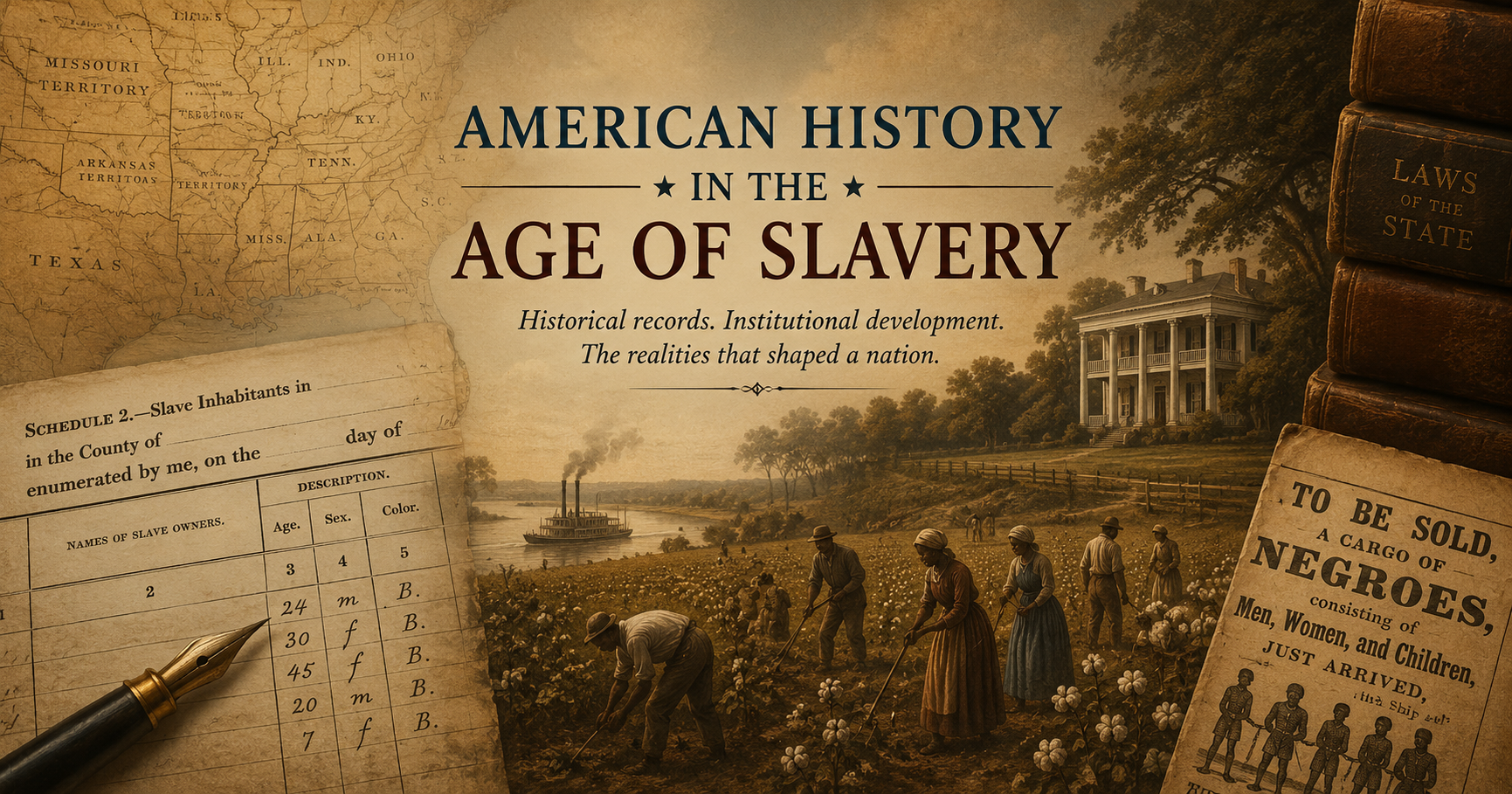
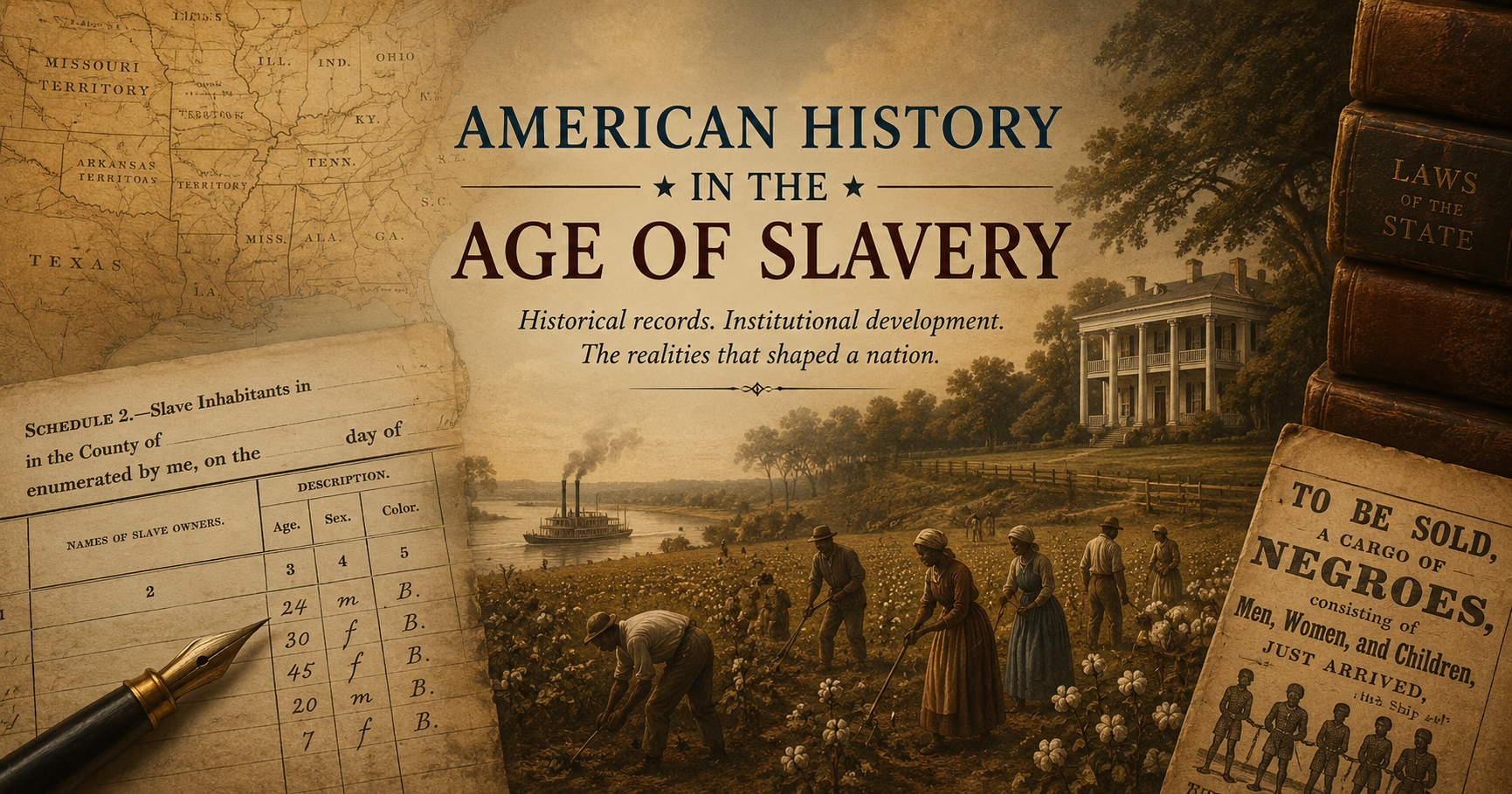
Three days a week historical narrative about the institutional development of American politics from 1776 through the ratification of the 13th Amendment in 1865.
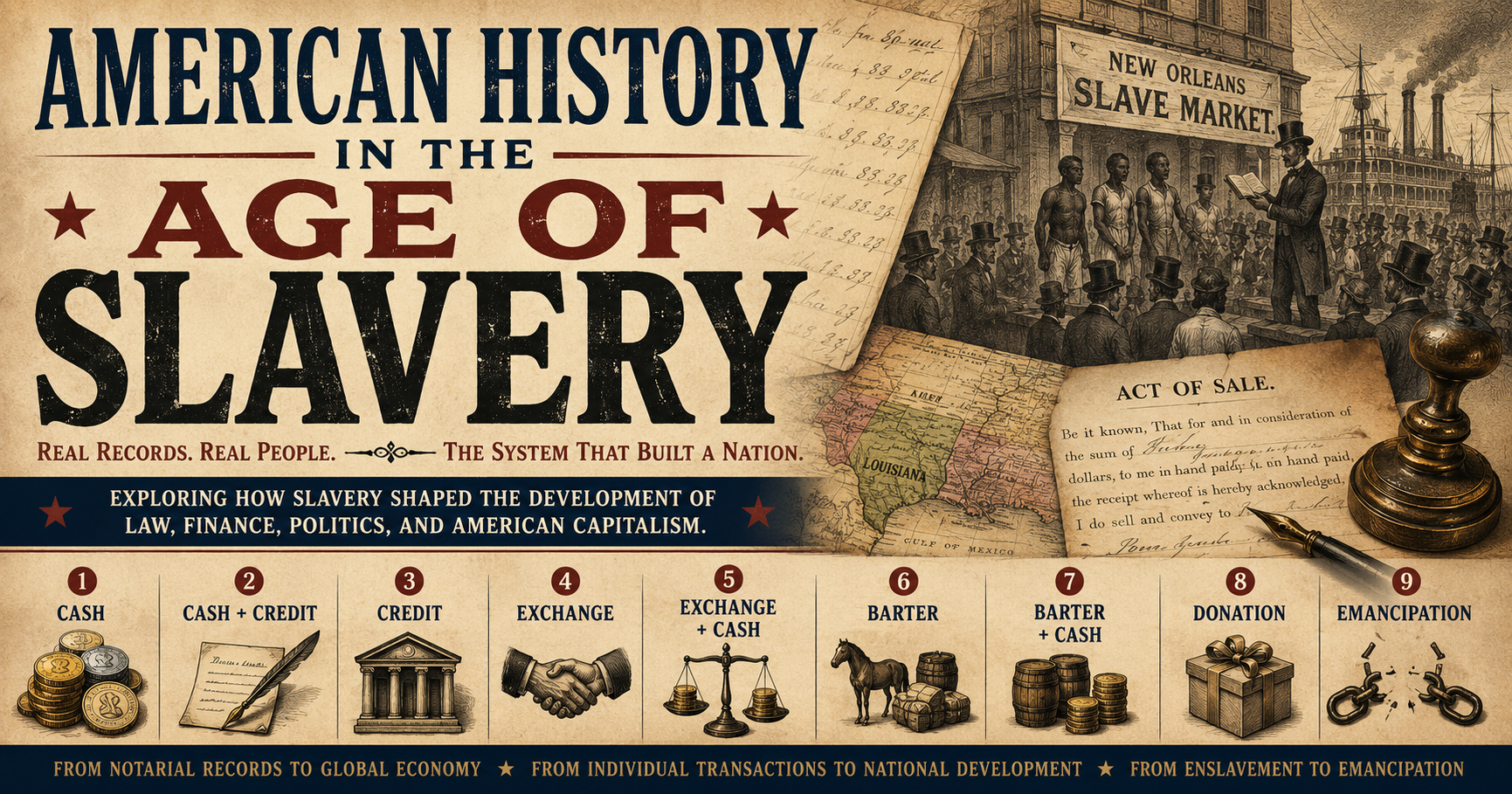
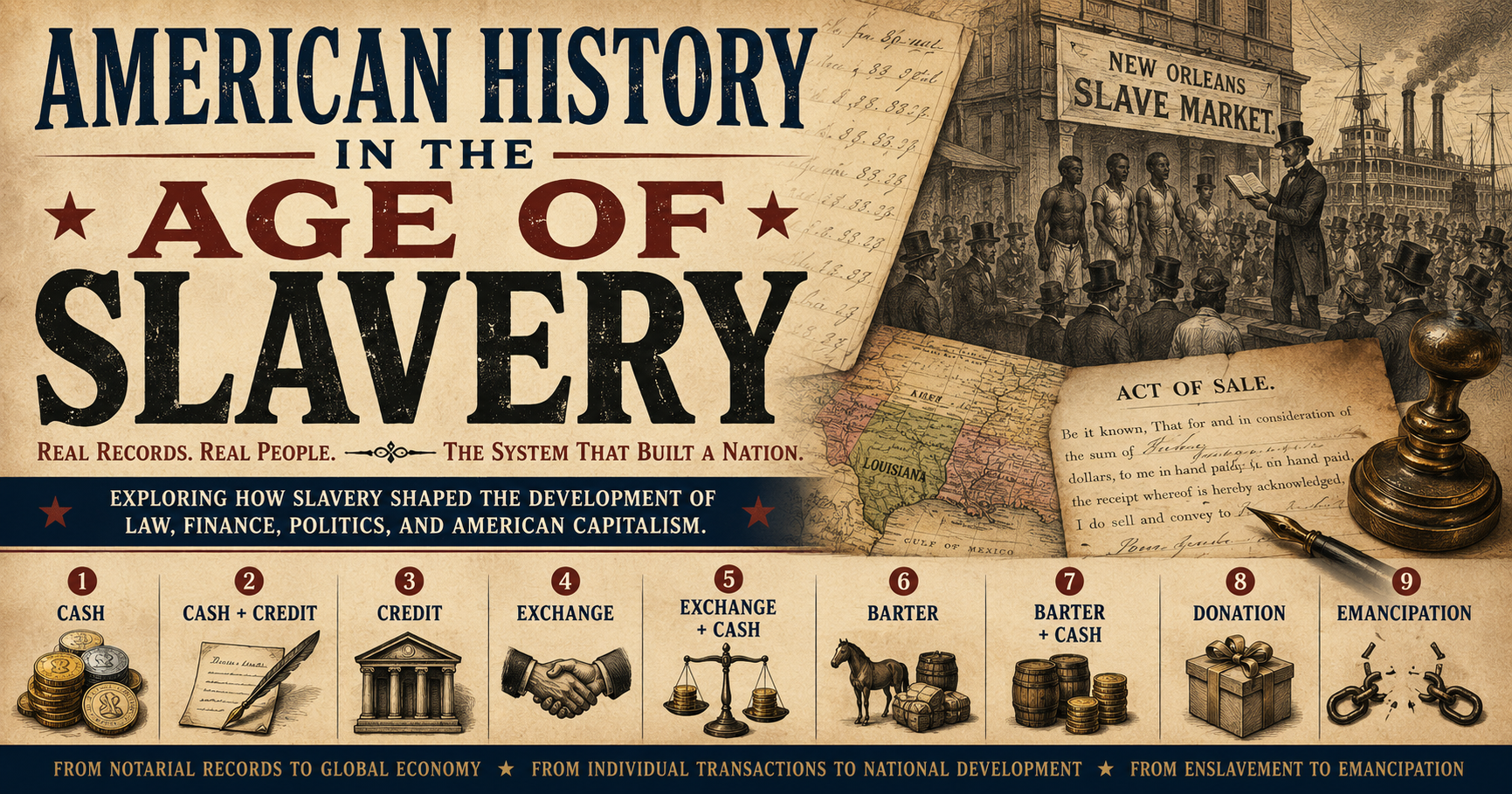
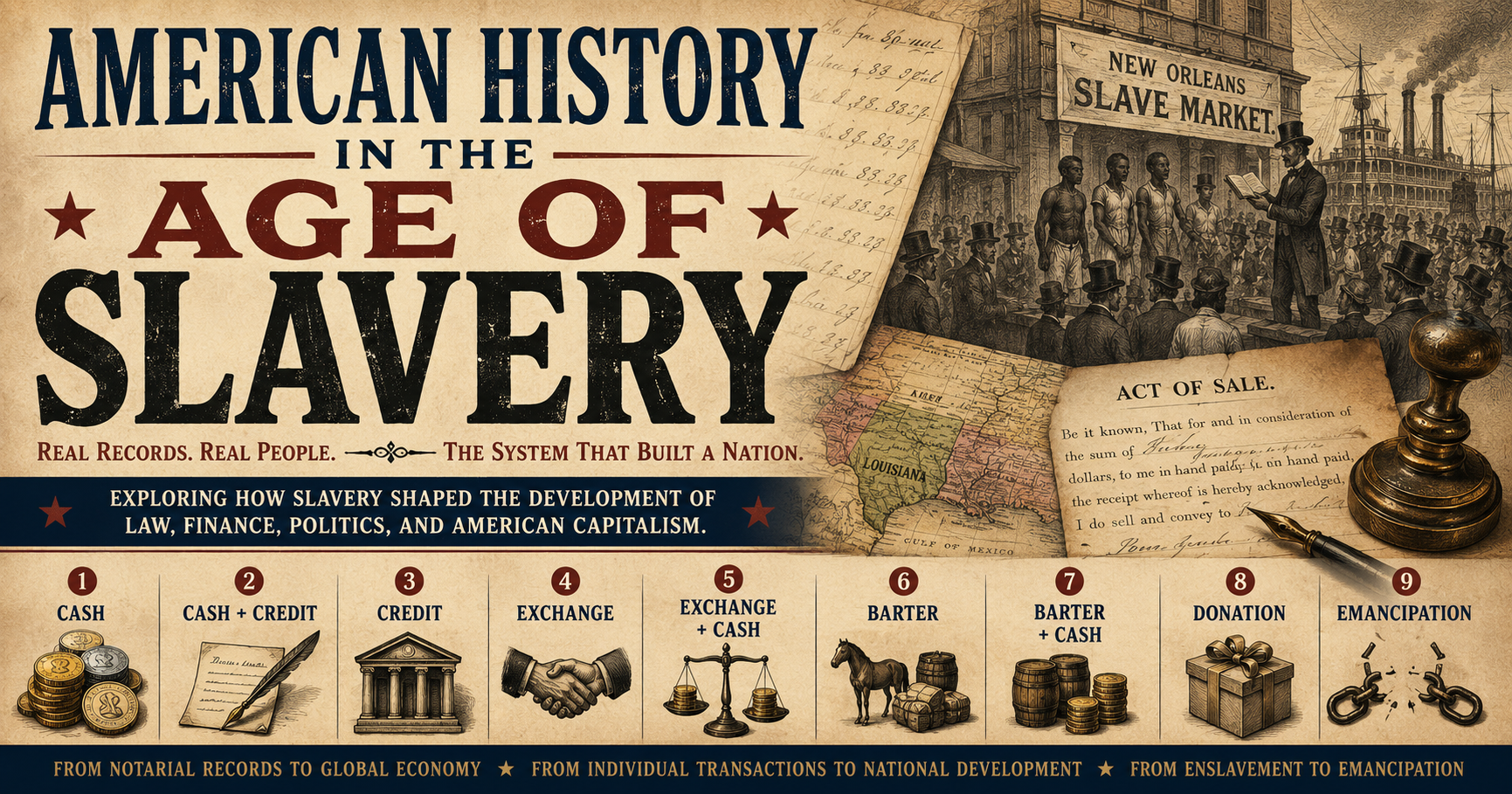
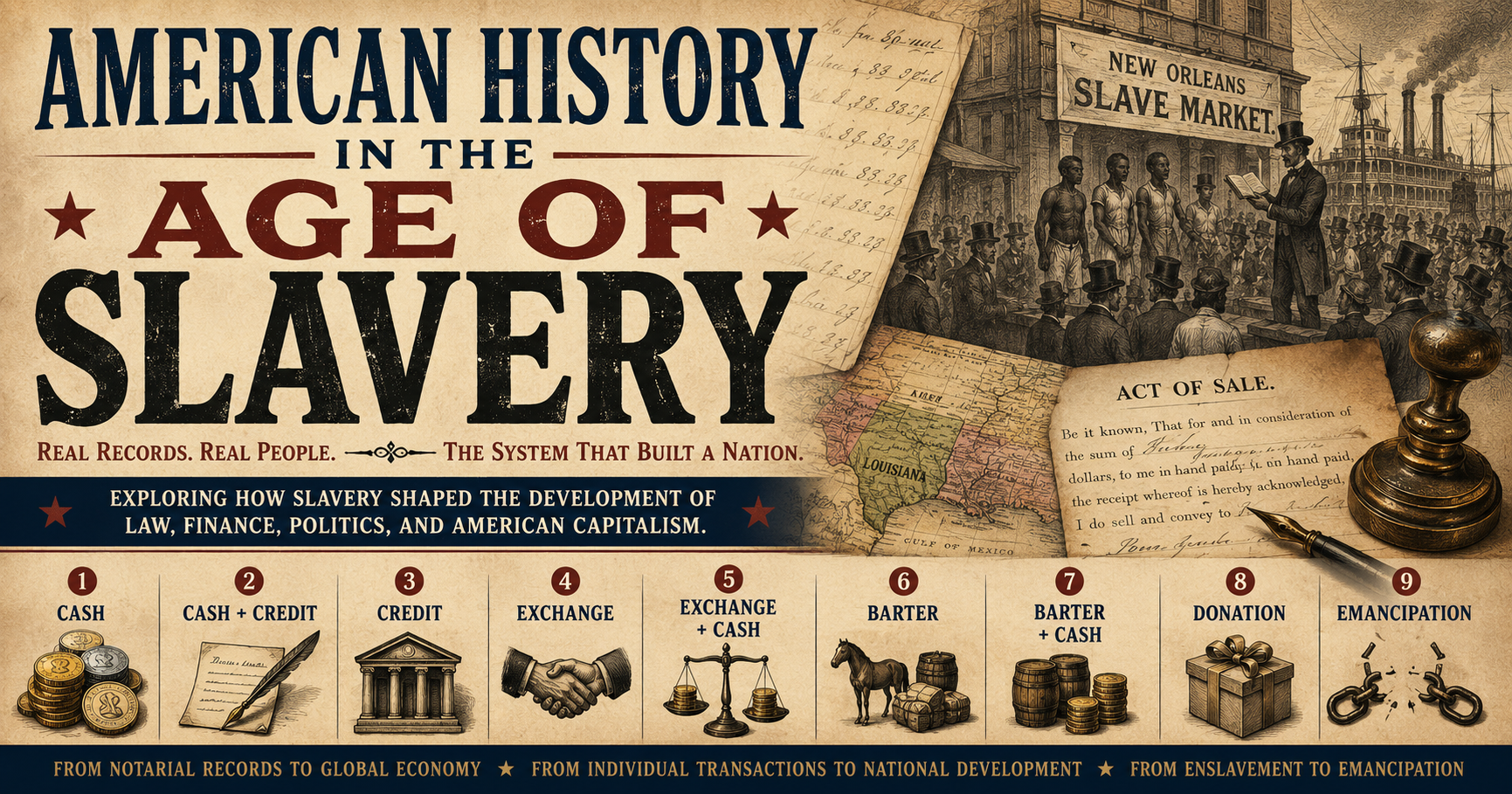
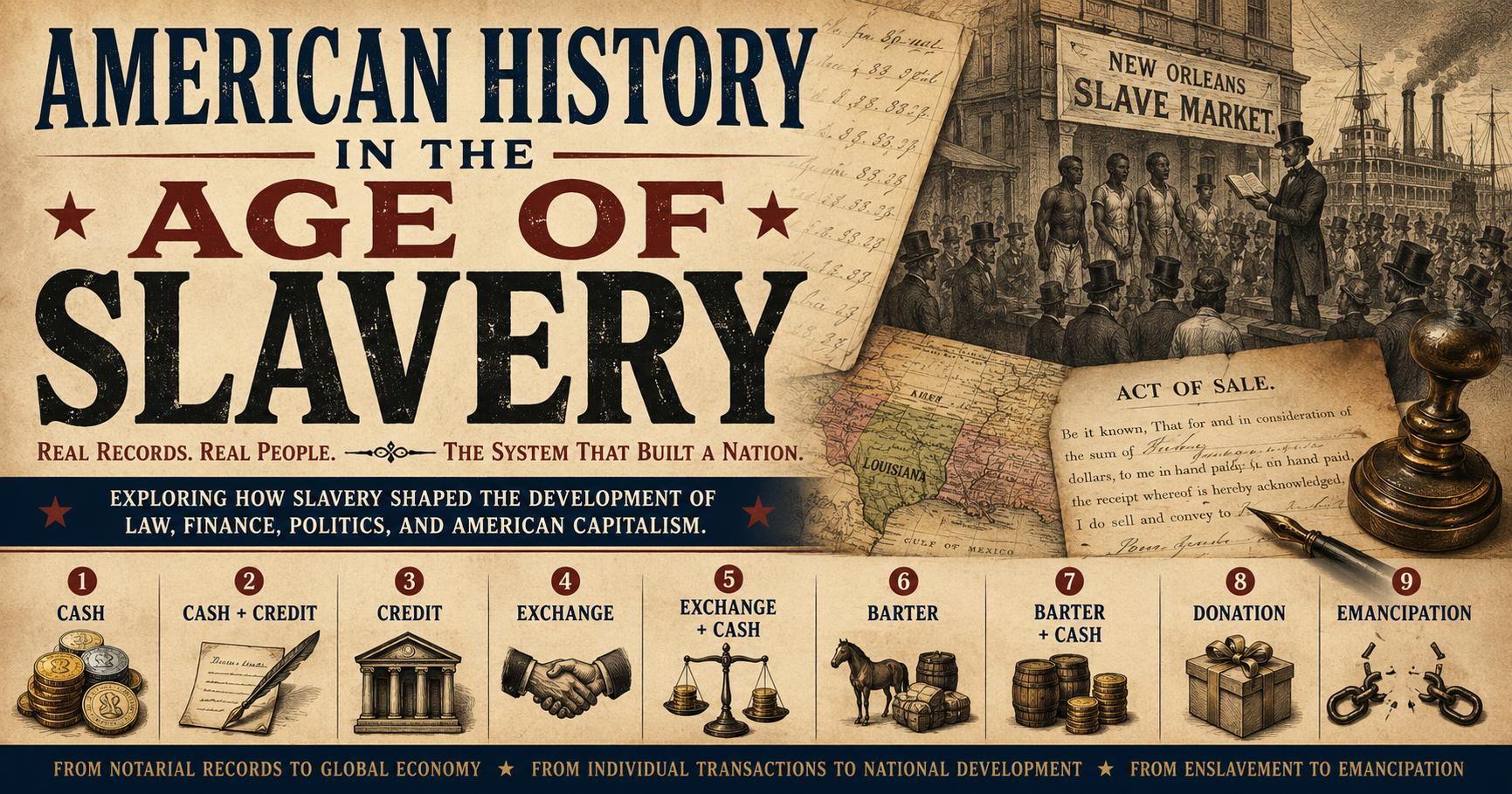
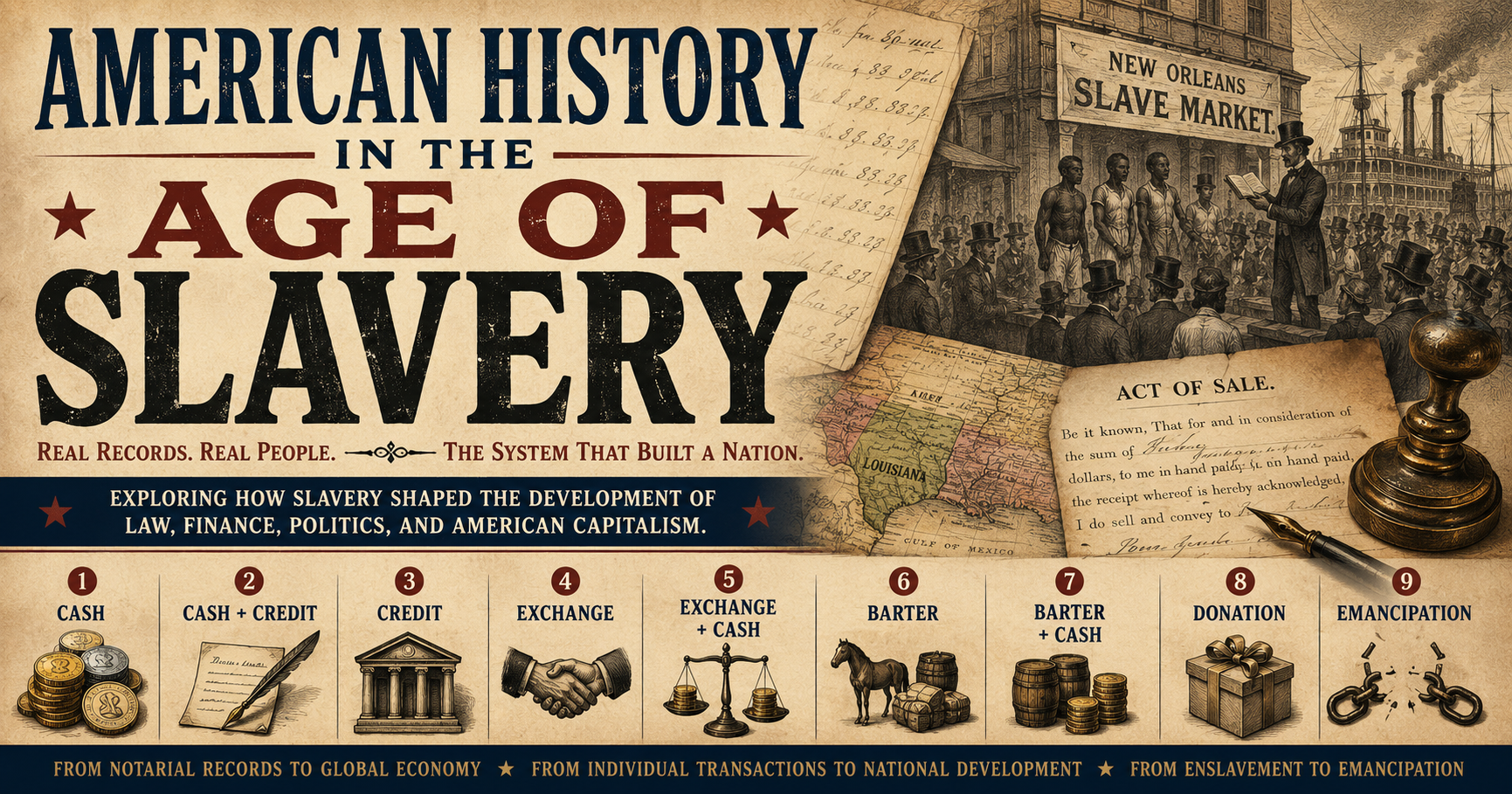
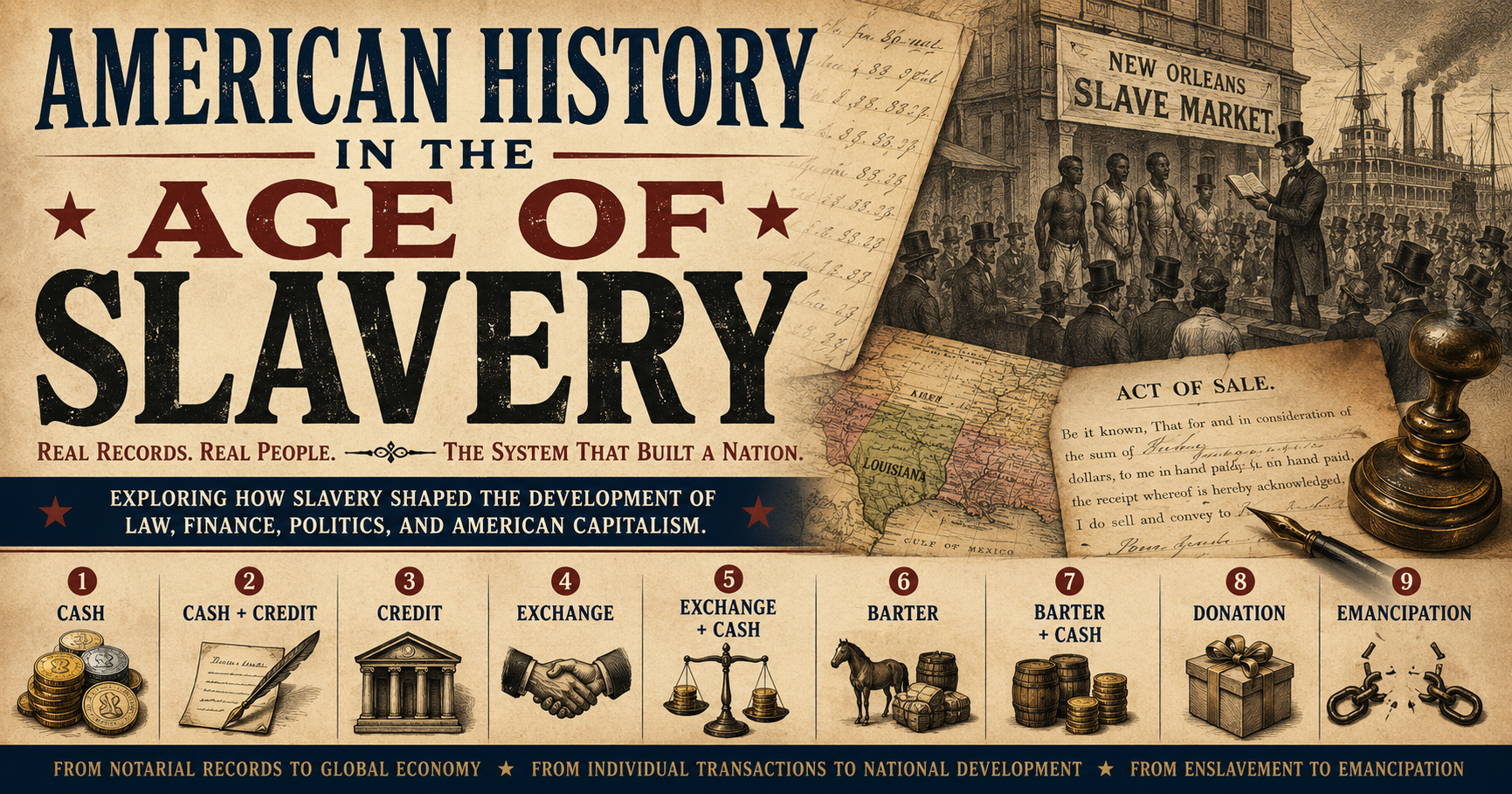
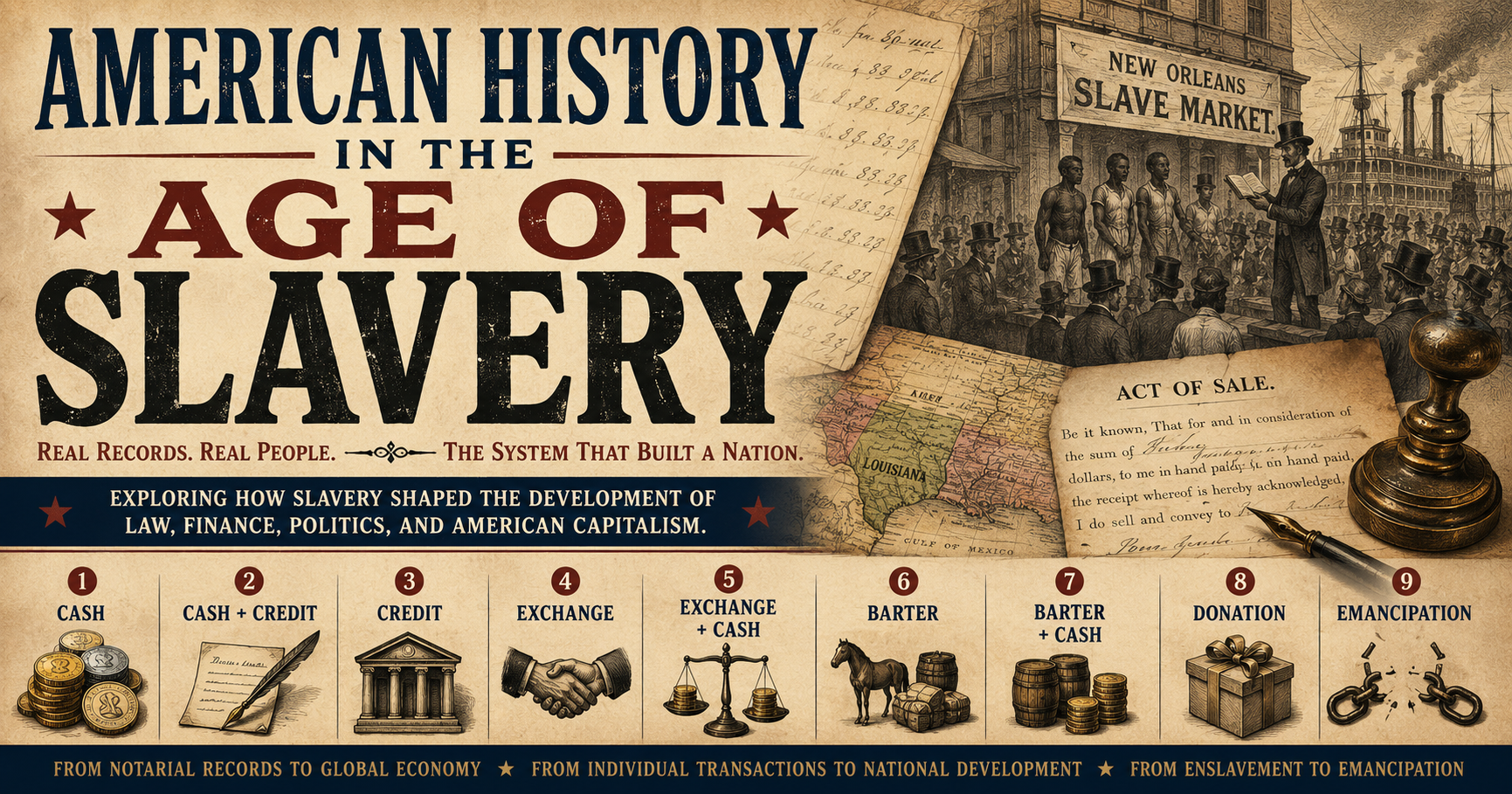
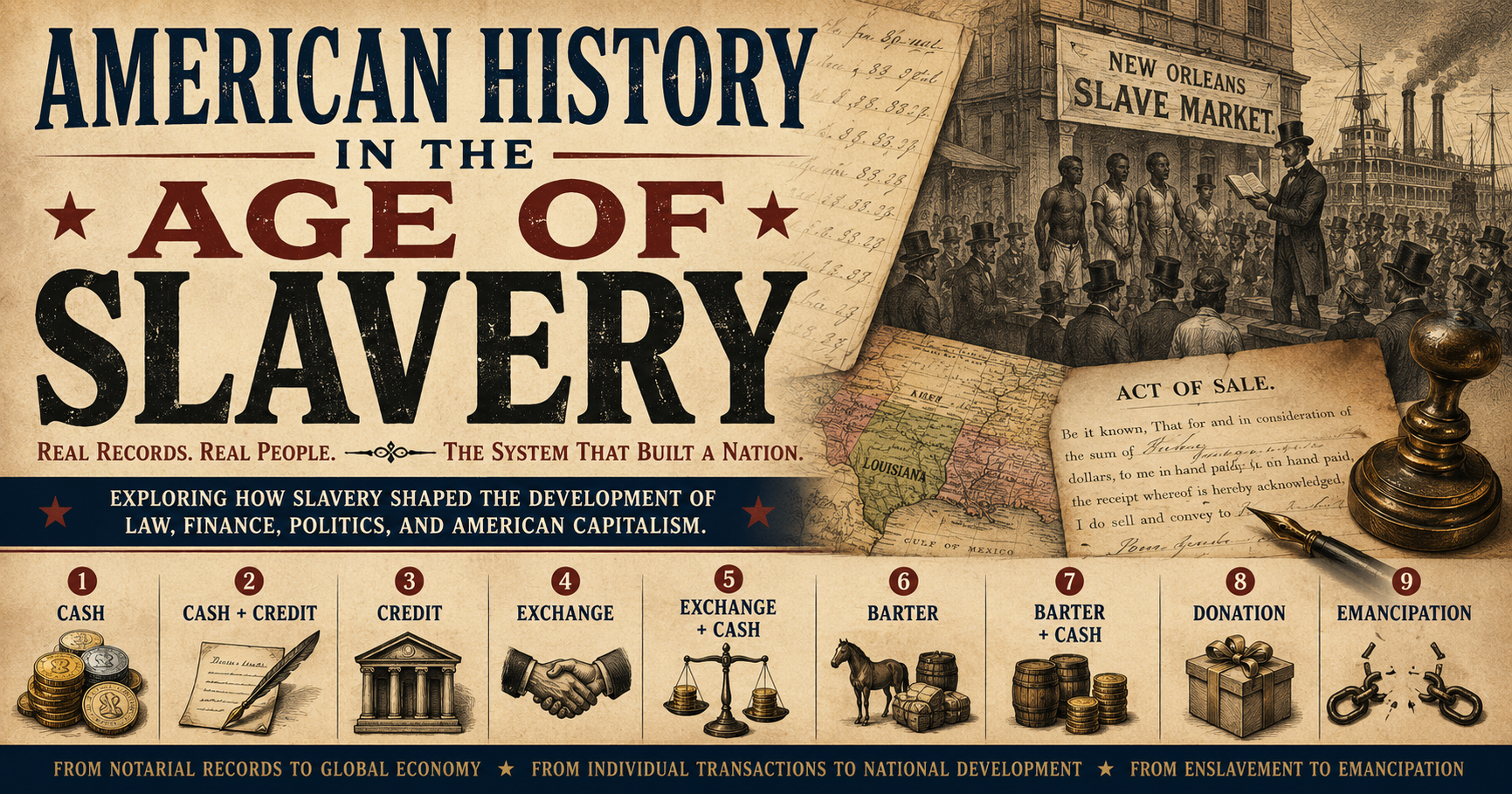
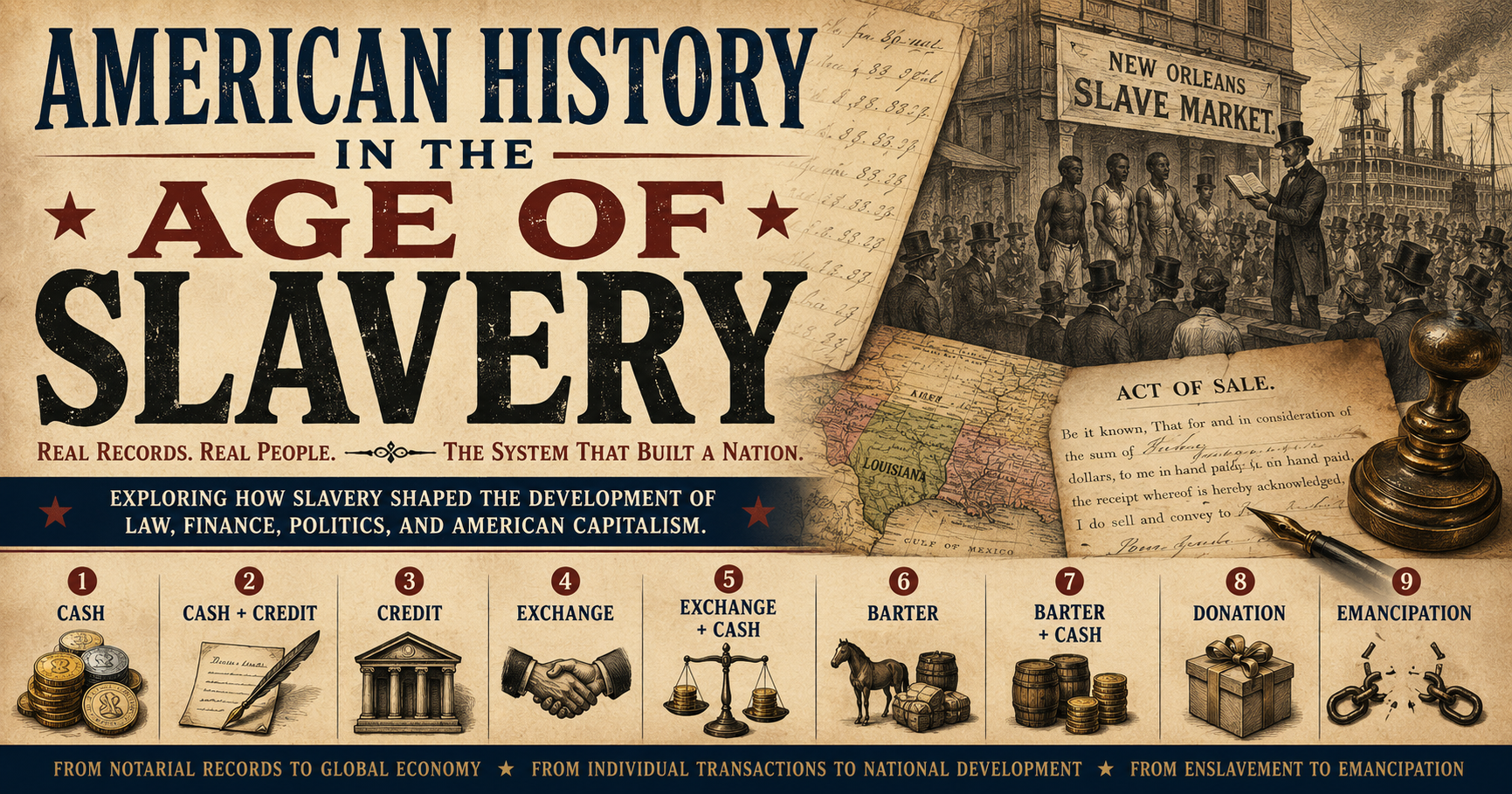
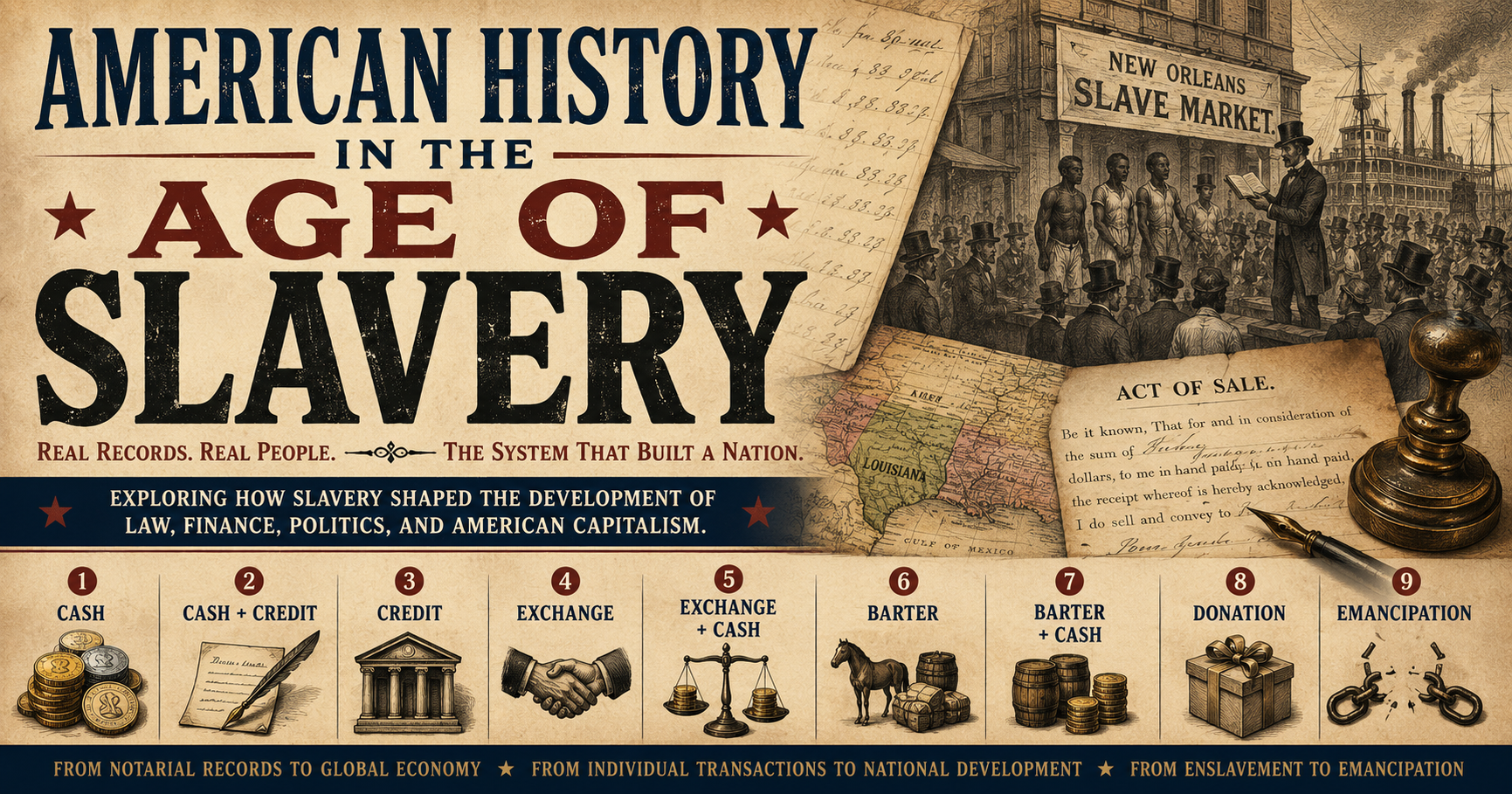
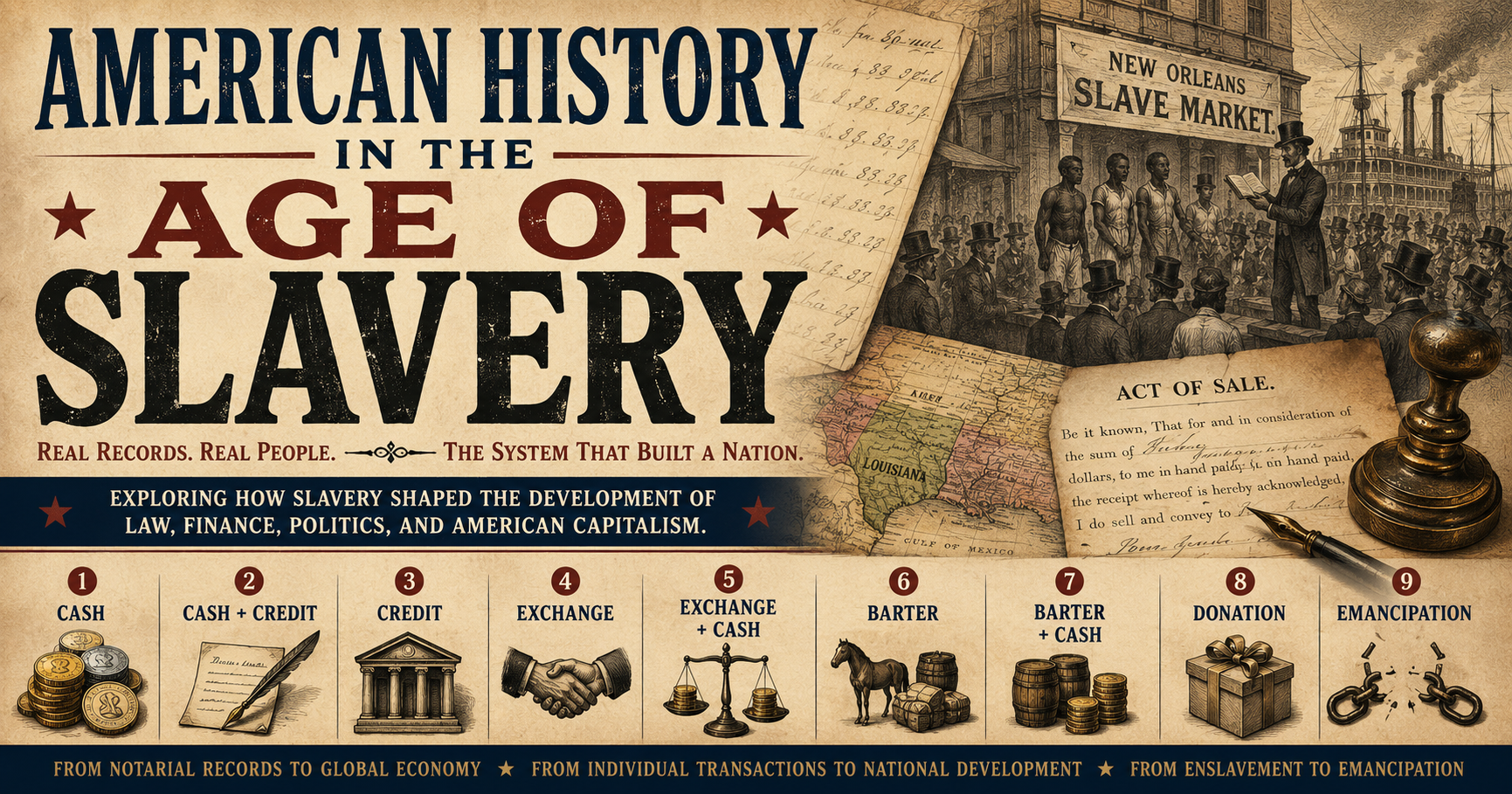
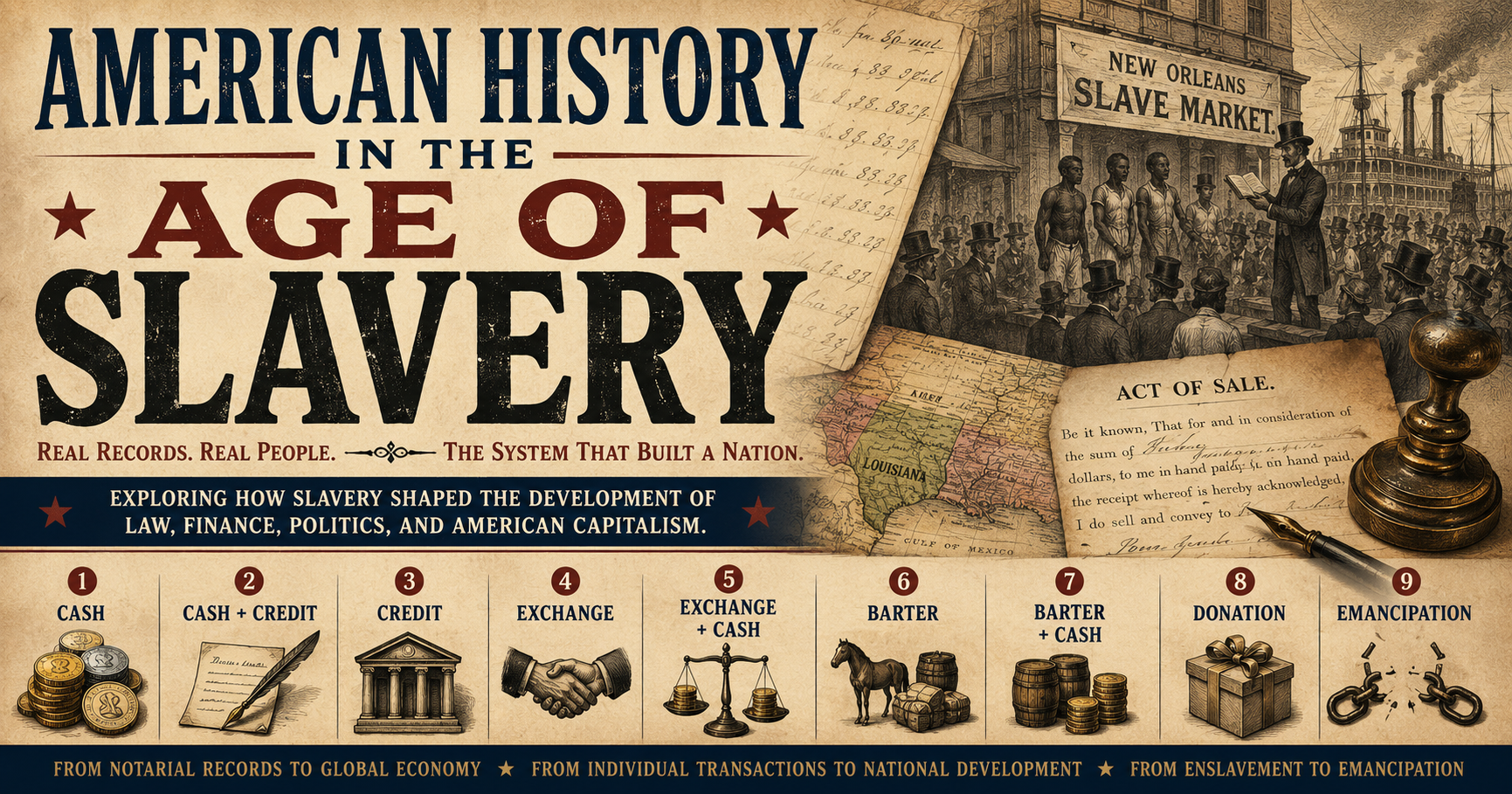
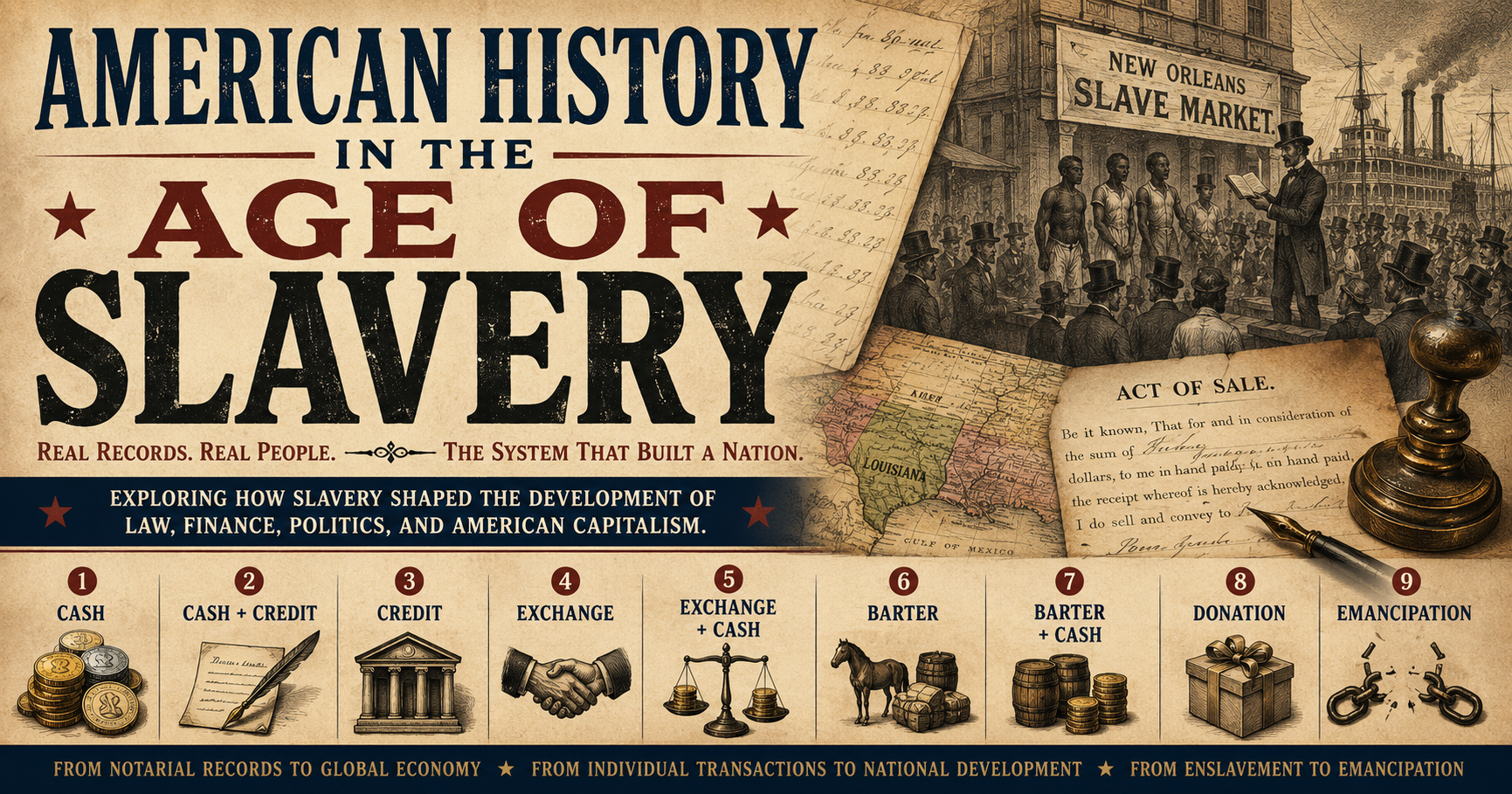
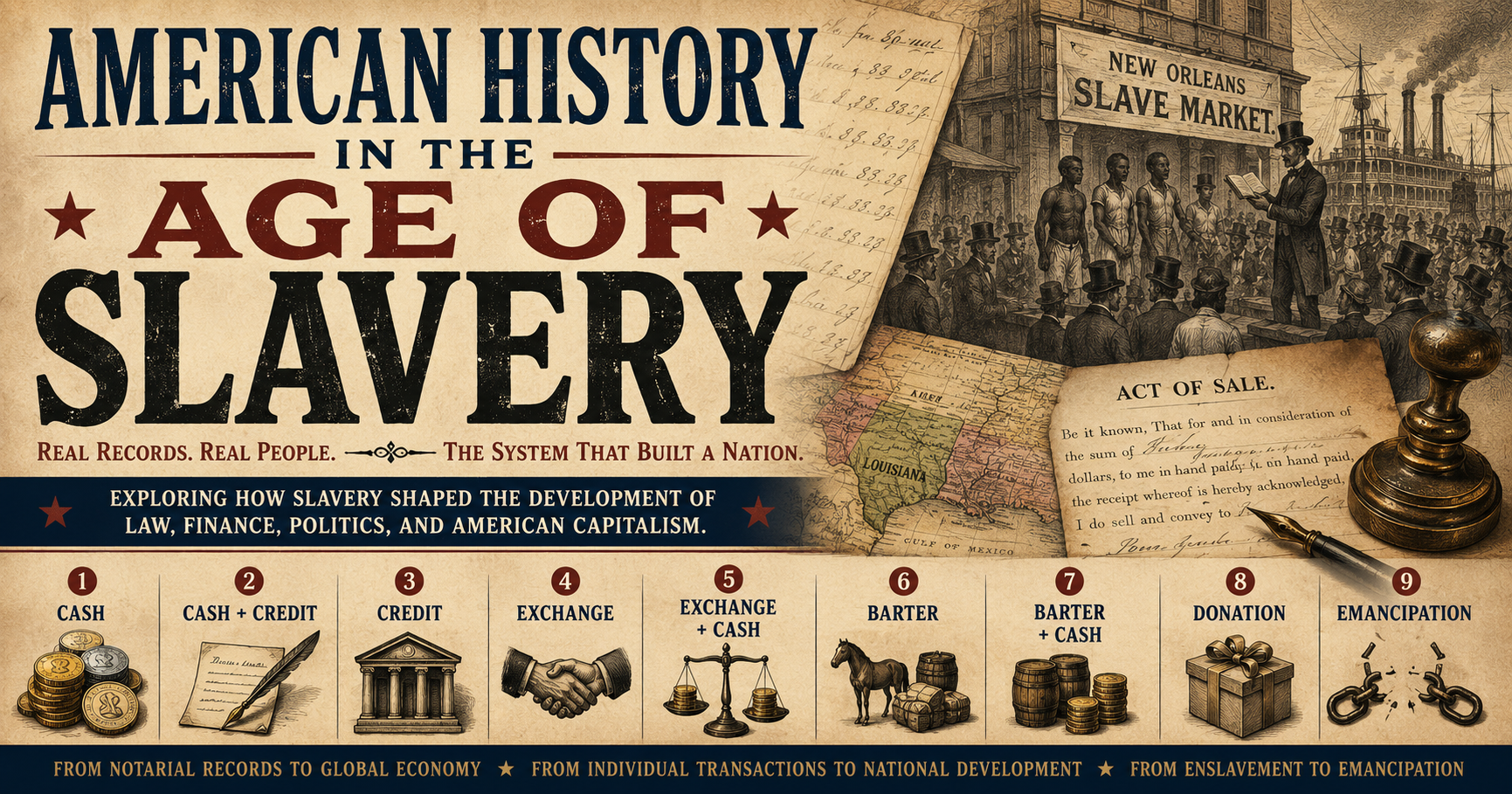
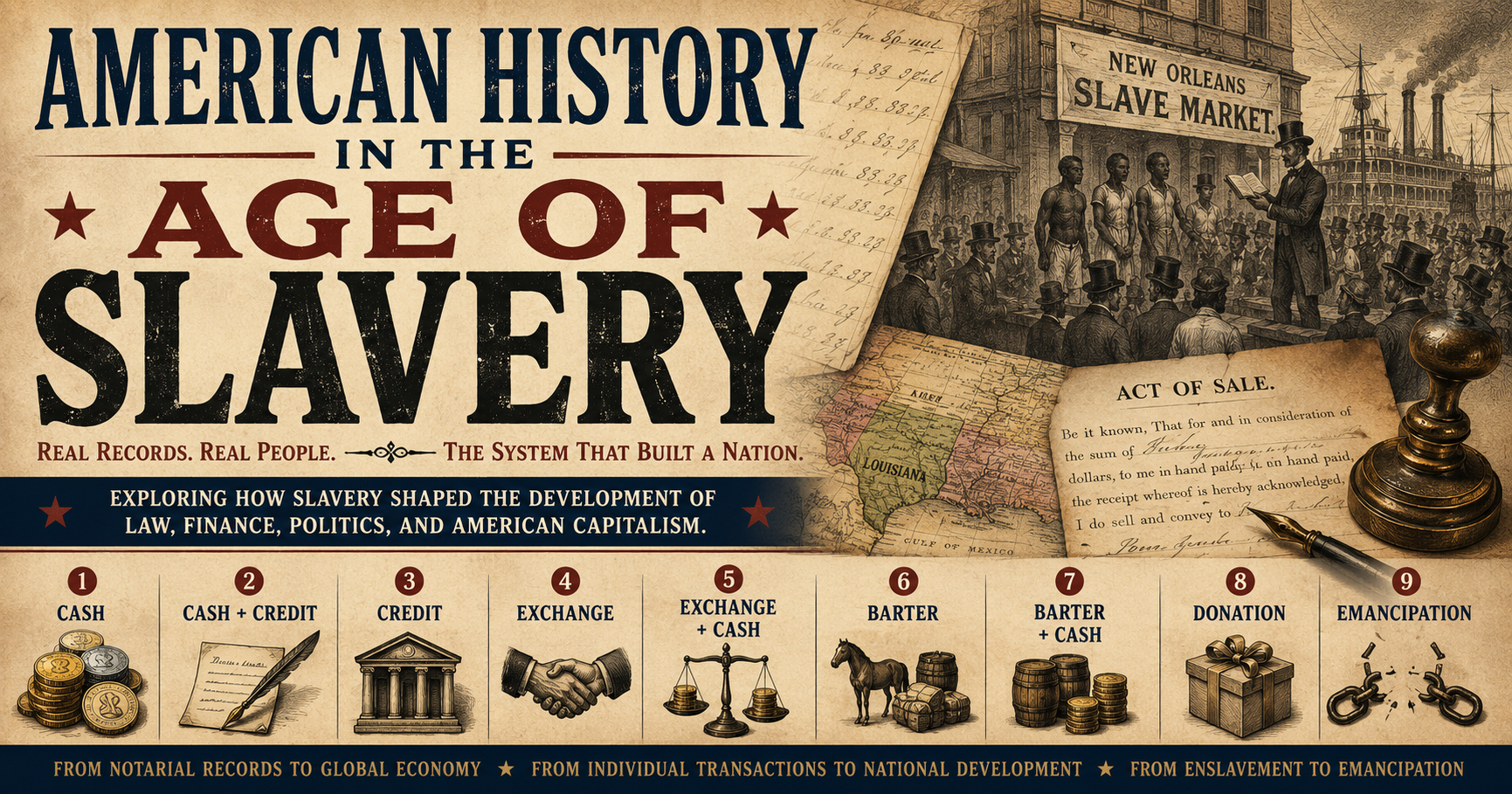
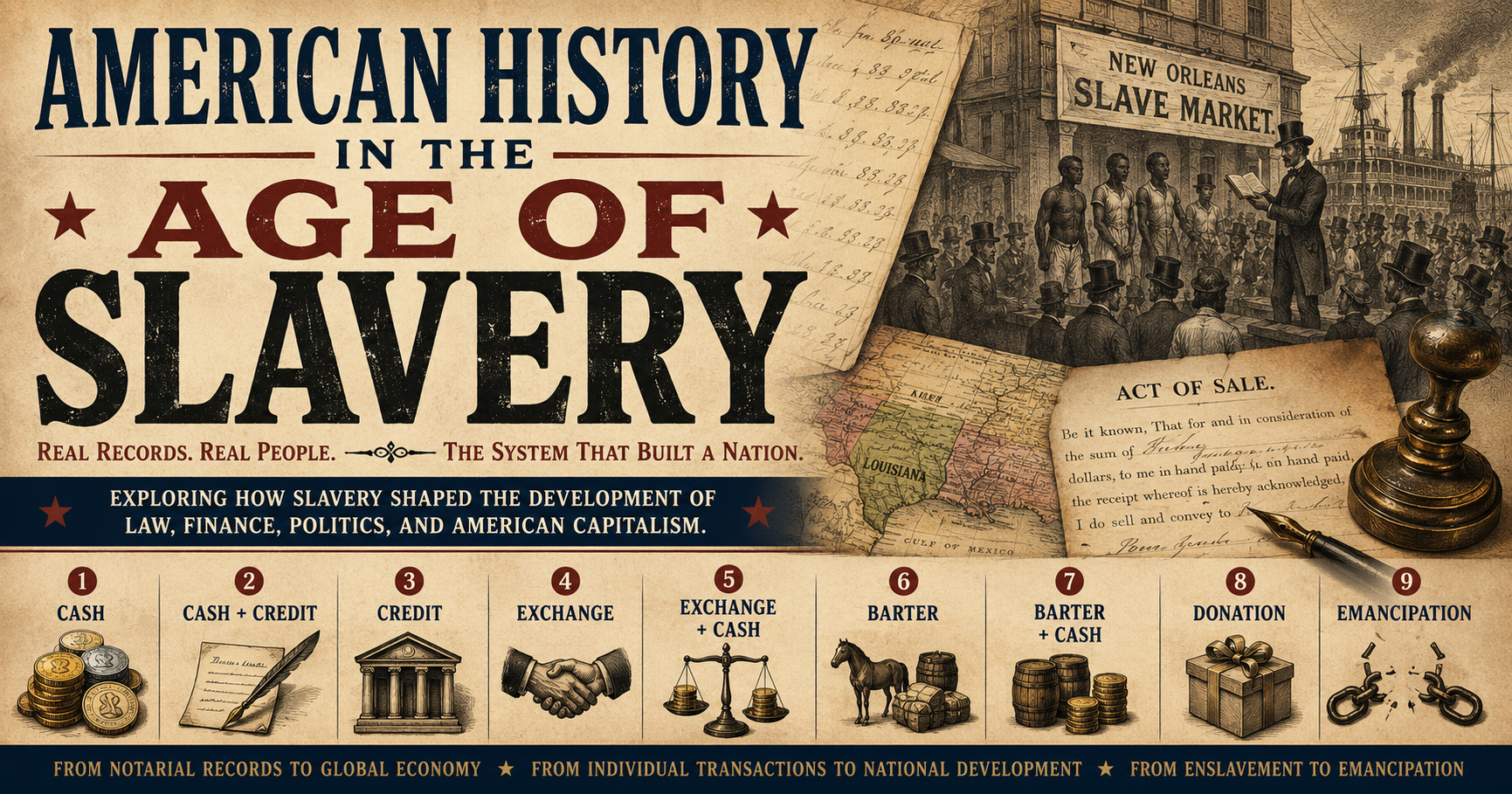
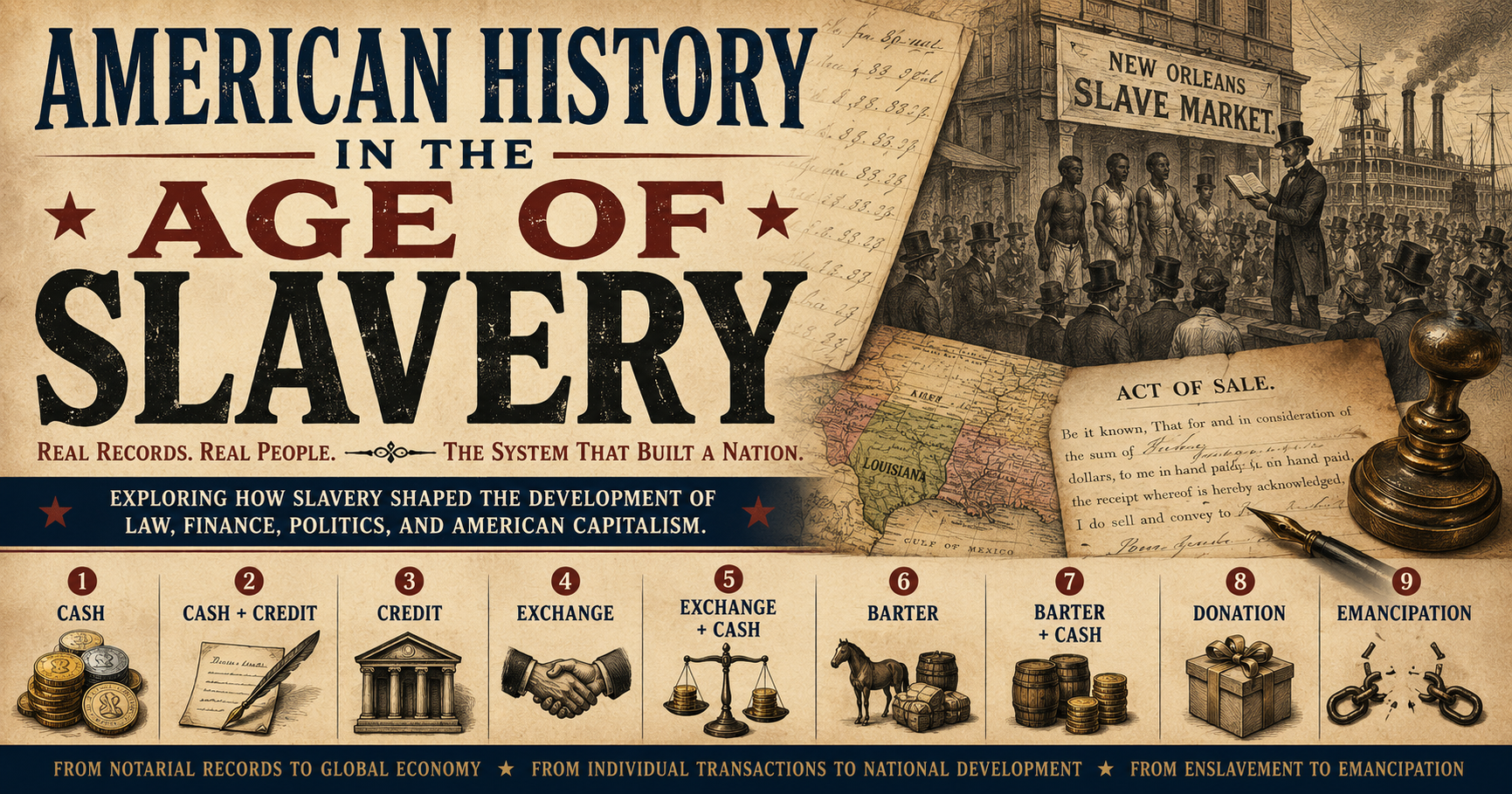
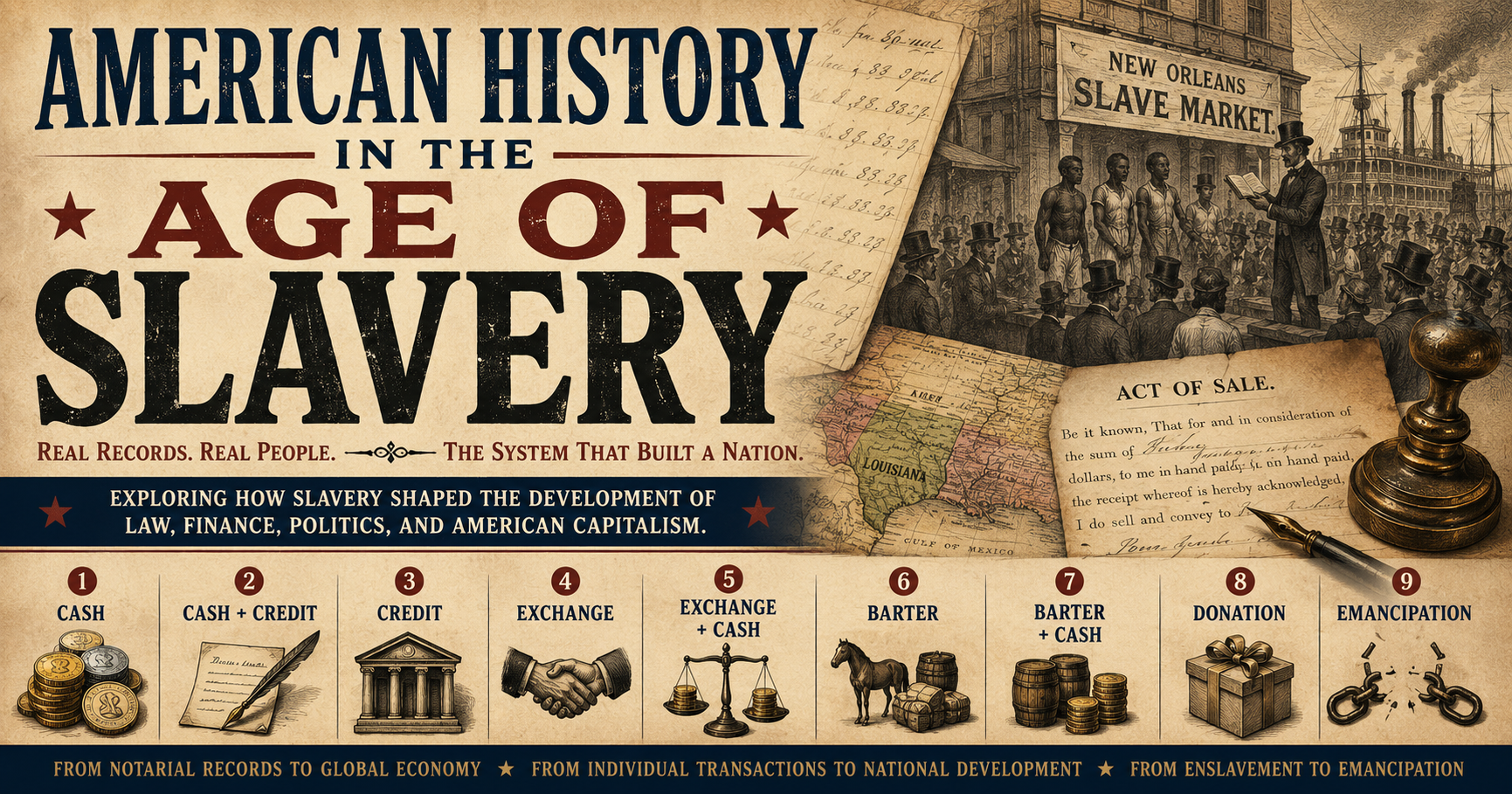
More than 1,300 transactions in the New Orleans slave market combined cash/credit, revealing that buyers often purchased enslaved people with both immediate capital and legally enforceable promises.
Nearly half of all recorded transactions in the New Orleans slave market were completed entirely in cash, revealing the importance of liquidity in one of America's largest commercial markets.
The Eighth Census used almost the same descriptive language introduced in 1850, but it applied that language to a larger, more geographically extensive, and increasingly complex system of slavery.
The Eighth Census recorded nearly four million enslaved people as individual statistical observations. Yet, like the Seventh Census before it, it generally omitted the one characteristic most closely
The Eighth Census was more than the final federal enumeration before the Civil War. It preserved the last comprehensive statistical portrait of slavery before emancipation transformed both.......
The Eighth Census measured a nation whose geography had changed dramatically during the previous decade. Although the federal government's categories remained stable, the distribution of slavery......
By 1860, the United States had changed dramatically. Yet the federal government's distinction between race and legal status remained remarkably consistent, revealing the stability of its......
Between 1850 and 1860 the United States experienced one of the most politically turbulent decades in its history. Yet the federal government's statistical description of slavery remained remarkably...
The Eighth Census did more than update the statistics collected in 1850. It measured an American republic that had become larger, wealthier, more sectional, and increasingly divided over the future...
The 1850 census is more than a historical source. It is an institutional artifact that reveals how governments create knowledge by deciding what becomes measurable.
The Seventh Census did not simply count enslaved people. It created a standardized language through which the federal government described slavery as a measurable population.
The Seventh Census transformed enslaved people into individual statistical observations while withholding the one characteristic most closely associated with legal personhood: a name.
The Seventh Census emerged at a moment when territorial expansion, sectional politics, and competing national coalitions demanded a more detailed understanding of the United States than earlier....
The Seventh Census did more than distinguish between slavery and freedom. It transformed race and legal status into separate statistical categories through which the federal government understood...
The Census Act of 1850 transformed the census from a constitutional headcount into an executive administrative system capable of producing detailed national knowledge.
The domestic slave trade transformed Virginia and Maryland from plantation economies into the principal suppliers of enslaved labor for the expanding cotton frontier.