
Last year was the first time I was in Athens for the whole Easter weekend (Greek Easter, obviously, which is on a different day from what they call here Catholic Easter, sorry to the Protestants). It was an intriguing experience, to say the least.
I’d celebrated Easter, the Catholic kind specifically, growing in a very Catholic family in the US and then when I lived in Croatia, a very Catholic country. So my version of Easter was mostly the American suburban kind, plastic baskets filled with plastic grass and all the tooth-achingly sweet American candy we could want, plus my very practical mother would also put a new toothbrush in there.
It was a day about wearing a little outfit to church, preferably with a hat, and I had some very serious Easter fits over the years. Then we’d all run outside into the cold New England sunshine and scramble over someone’s enormous lawn to find plastic eggs filled with even more candy and stuff ourselves silly. Yes, there was some very serious church-going in my family on that day, but as I have been an atheist for 20+ years now that part didn’t stick (keep that in mind for the rest of the post! I am a heathen and its a bit blasphemous).
Mostly it was about candy and various forms of shiny disposable plastic and those outfits, and then we’d all sit down and eat a Honeybaked Ham. It was pretty cheerful for a holiday based on a guy being betrayed by his friend and then dying, on the whole, which is terrifically American.


When I lived in Croatia, the holiday was a national one so all the shops would close for days. Advance planning was needed so you wouldn’t starve or, in the lockdown days, run out of wine. I lived in a little top-floor apartment in the ancient Roman palace in the center of Split with a view of a tiny centuries-old convent. I’d see the nuns walking the ramparts of the old palace just outside my window, and hear them singing on Easter morning. Then the bells would chime endlessly, echoing all over the old town (which was very unfortunate if you had a hangover (Croatia in 2020/2021 was one unceasing party)). Once I passed a passel of neatly ironed and very proper priests as I returned home at 9 am on Easter Sunday and felt that eternal sense of Catholic guilt that doesn’t leave you even if you leave the church.
But Greek Easter? This is on another level entirely.
I had heard, of course, about the famous lamb on the spit and the feasting. But I didn’t know about the days and days that it lasts, about the mass exodus from Athens to the villages and islands until the city streets are blissfully silent and empty, about the focus on death and light and the country-wide fireworks display at midnight on Easter as Jesus rises from the dead.
Also, for the record, if you rise from the dead after 3 days, imo you 100% deserve an enormous pyrotechnic display so the Greeks are very correct on this.
The focus on death is very interesting compared to Easter in America with all its shiny plastic in pretty pastels and the odd but adorable bunnies that represent the holiday. On Big Friday in Greece, the main event is the procession of Jesus’ coffin, known as the Epitaphios. It’s decorated with flowers and displayed in the church for hours before so everyone can see it, then as night falls it’s processed around the church by the priests and everyone follows with little taper candles. At some point you also all go under it and come out the other side. It’s something to see — it’s not a parade but something somber, and the chants and songs of the priests echo through the stone churches.
This is last year’s Epitaphios!
My parents and I ducked into one tiny church nestled under a big luxury hotel in the center of Athens to see the Epitaphios, surrounded by people of all ages lighting candles and listening to chants that originate in the Byzantine era in the middle of this modern city. This is what I love about Athens, the continuity of the ancient within a big vibrant city.
Then on Saturday night, the churches start to fill up for the midnight Anastasi (resurrection) and the arrival of the holy light which comes from Jerusalem every year. (It has its own plane!) At midnight, the whole city erupts in fireworks (in the Neos Kosmos neighborhood they add in a bunch of molotov cocktails) and the light spreads from the priests down through the congregants and into the streets as everyone walks home through the now less dark streets to break the Lenten fast, if they fast, or just enjoy some magiritsa soup.
Last year, I climbed up Lykavettus Hill with my Greek friends to the very top to watch the fireworks, our lambadas (special candles (ok mine was from IKEA because I didn’t know)) ready to be lit with a fire that didn’t come due to the risk of a forest fire. But on the drive back home we saw a couple in the street with their candles lit and asked them for a light, a little holy one, and succeeded in our mission. It was very beautiful to feel a part of something so community-wide.
Sunday is, of course, the day for the feast. The kokoretsi (lamb intestine stuffed with lamb liver) is put on the grill, the whole lamb, head and all, goes on the spit, and the eating and drinking and enjoying lasts all day. (Another Greek friend recently asked me what we eat in the US on Easter, and I had to explain Peeps to them, and they were about as horrified as my mother seeing several lambs’ heads for sale at the butcher, eyeballs and all. I do low-key like Peeps tho.) We crack the blood-red eggs against each other, pair by pair, until they’re all broken and then eat them and then go back for more lamb and another slice of tsoureki.
And I find the religious component incredibly interesting, as an atheist and an American. I would never dream of saying Happy Easter on the day to anyone I didn’t know celebrated it (yes I am an East Coast liberal, it’s how we do). It’s just quite a specific, and specifically religious, holiday, and so I’d keep my wishes contained to those who would be fully pleased and not at all confused to receive them.
But here? The supermarket checkout lady wishes me a Good Lent when it starts. My neighbor directly across from me, who is very reserved, wishes me a Good Resurrection on Big Friday (that’s one literal translation, it’s really Great Friday but I prefer the less accurate but more amusing version). I pass a pair of ambulance drivers who have parked the ambulance in a park (on the pedestrian path of course) to smoke cigarettes and they fervently wish me a Good Easter. (In Greece we don’t wish people happy [insert thing here] but good, instead). I come into my coworking space after the holiday and my friends there greet me with a “Christ is Risen,” and I respond with the correct “Truly he is risen” to their delight.
It’s hard to explain to Americans how this is not, in the sense we would find it, religious, even though it’s all about Jesus. But there’s a big cultural component to it too, in a proud and more homogenous society than the very pluralistic US. Mostly to me it’s just interesting, and also a little bit stressful still as I try to remember what to say when (though a snappy “xronia polla” (may you live many years, basically) is of course appropriate at literally any Greek holiday).
But even though it’s very different from the Easters I had growing up, I love it. I find the strictness of the fasting fascinating, as someone who just couldn’t eat meat on Fridays in Lent and thought that was harsh. The focus on death is appropriate — it’s the reason for the season, baby — and welcome to a macabre little soul like me.
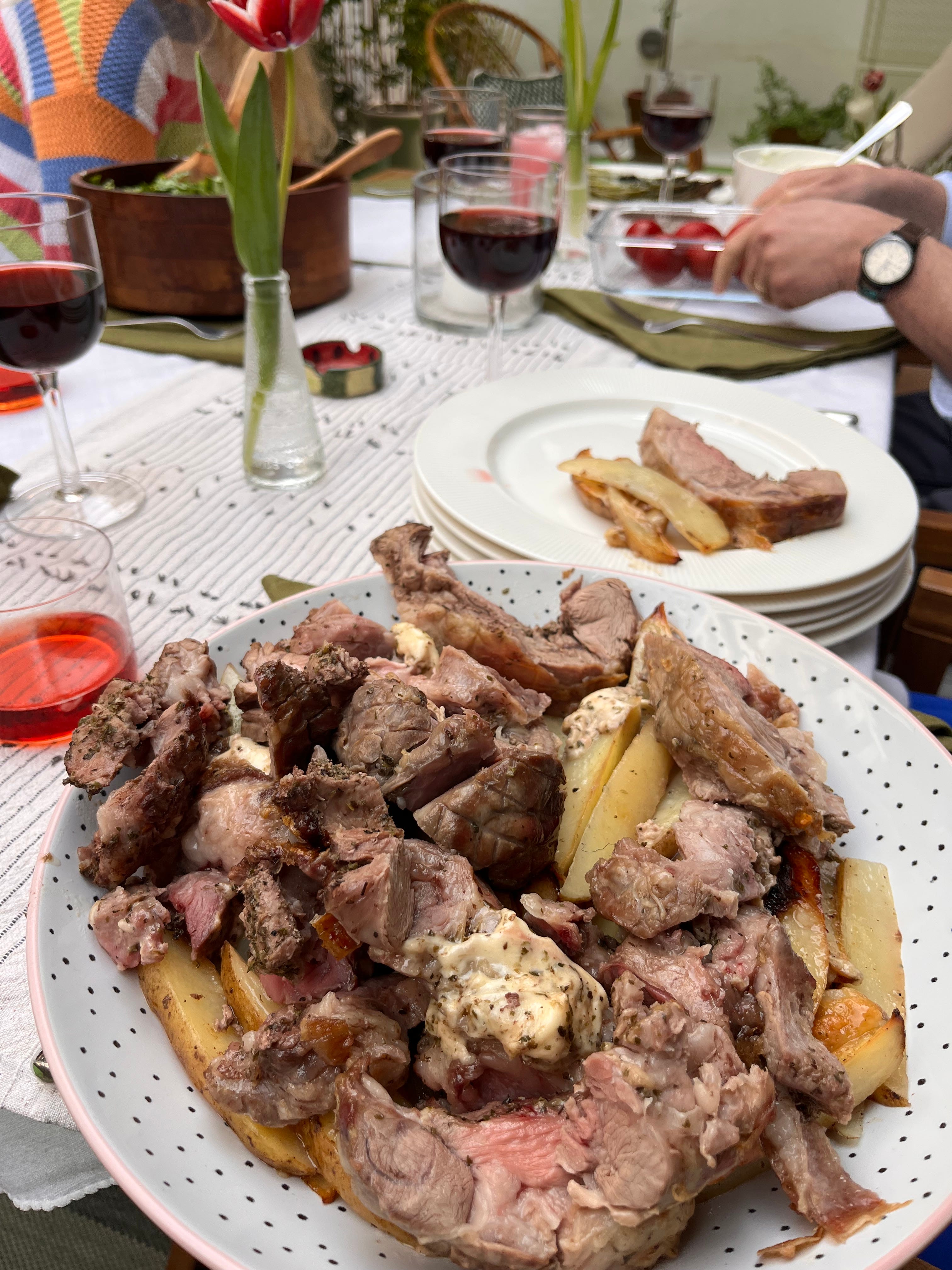
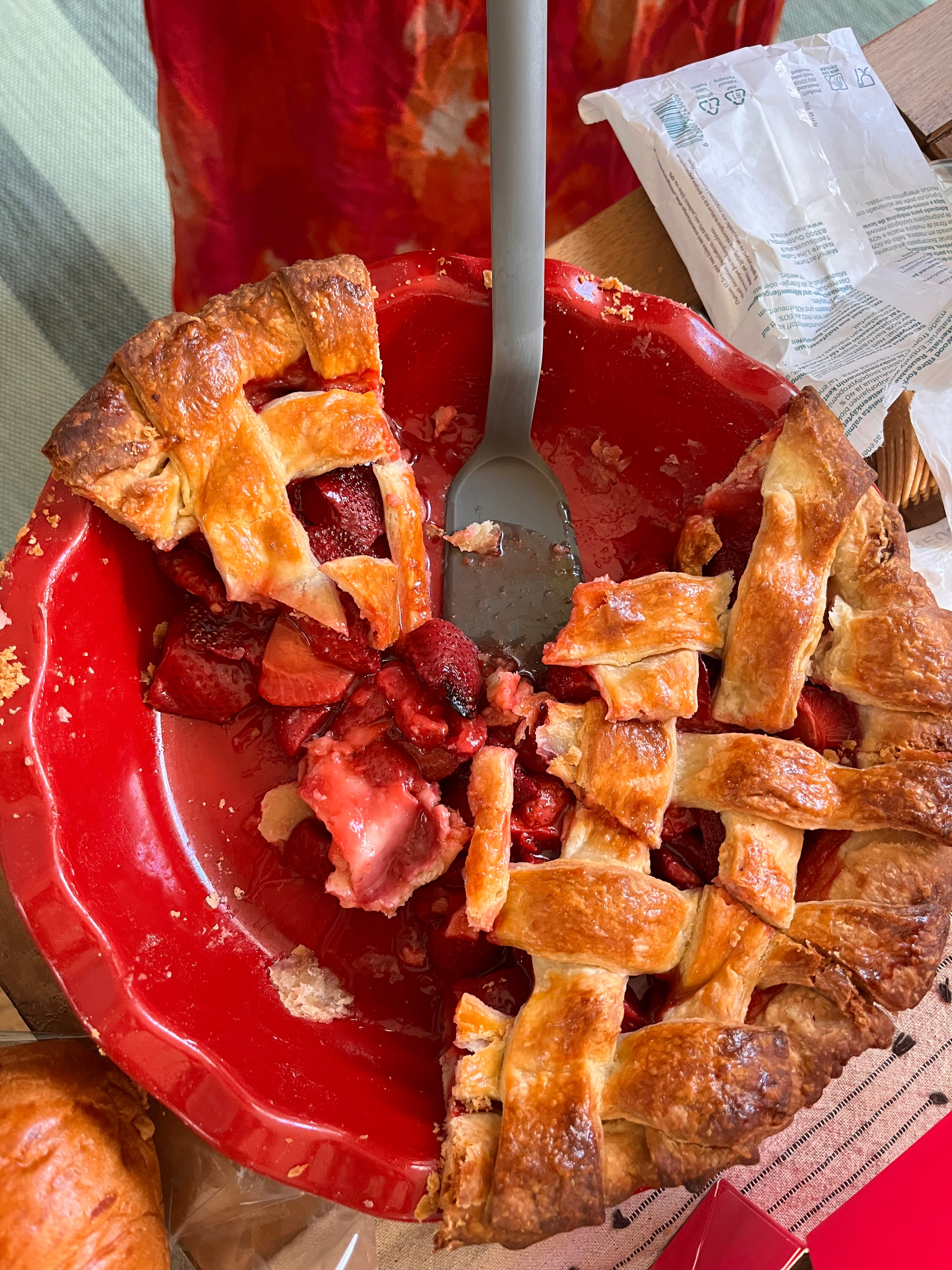
And then all the light! After the darkness of winter, the visuals of the lights spreading from person to person is a delight. The communal nature of it all too is appealing in our very isolated times. While I’ll probably never like magiritsa (lamb intestine and liver soup), or kokoretsi, or eat a lamb’s eyeball, the lamb roll I’ve cooked the last two years is delicious alongside a very American strawberry pie. And the traditional Easter bread, tsoureki… I have eaten my body weight in it this week and I am very, very happy about that, if also very sleepy.
Do have a leftover Peep or two for me if you’re reading this from the US, though. Καλό Πάσχα, παιδια!
Thanks for reading An American Girl in Greece! Subscribe for free to receive new posts and support my work.
Comments
Nothing yet. Say the first thing.
Sign in to join the conversation.