
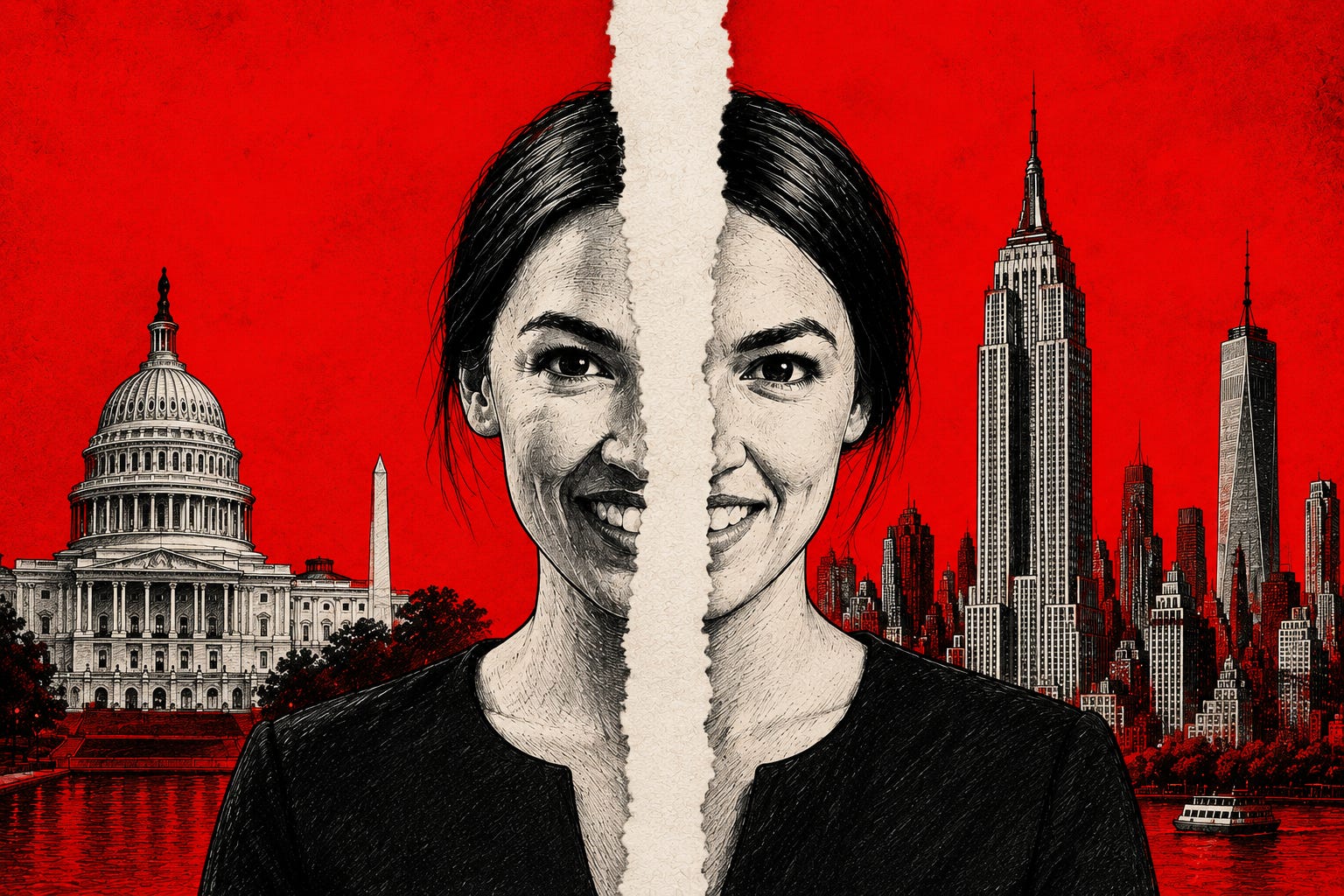
While the Democratic establishment has spent months insisting everything is under control, it appears that one of its own has struck a match and started a fire. In a recent interview with Stephen A. Smith (ugh, yes, that Stephen), Michigan Senator Elissa Slotkin was asked about the future of the Democratic Party.
Clearly Slotkin’s comments have opened the door to a much-needed conversation about the party’s future. But instead of also seizing on that opportunity, many on the left believe Alexandria Ocasio-Cortez missed the moment.
For leftist, that response fell flat. Rather than answering the question, it came across as a dodge that focused more on Slotkin’s politics than on Hakeem Jeffries’ leadership.
So while many are upset over this interview, it reflects a much bigger problem with AOC. Especially since It fits a pattern of behavior that has become increasingly difficult for many of her own supporters to ignore.
Writing articles that challenge the status quo takes time, energy, and yes, childcare.
The reality is that fewer than 0.5% of readers financially support this work.
But becoming a paid supporter changes that. Be one of the first 100 paid subscribers and lock in a rate of just $6 a month for your first year.
Thank you in advance for your continued support.
For those willing to look critically at AOC as a politician, the tension is obvious. She’s caught between two very different factions of her own coalition, and what each side wants is becoming increasingly incompatible.
Part of the problem is that few have taken an honest look at AOC’s rise and what made it so successful. For many Americans, their first introduction to her came through the breakout documentary Knock Down the House, which portrayed her as a working-class bartender determined to fight for ordinary people. It was a message that stood out in modern politics, resonated with voters, and quickly turned her into a national figure.
And that same national attention didn’t just help her unseat an incumbent. It also brought an unprecedented wave of money, media attention, and grassroots support from across the country, transforming a local congressional candidate into one of the most recognizable faces in American politics.
Which is why a growing split has emerged, both among the people who support her and in the message she now tries to deliver. The qualities that made AOC a compelling local candidate are not necessarily the same ones that sustain a national political brand. As her profile has grown, so too have the competing expectations placed on her, making it increasingly difficult to speak to one audience without disappointing the other.
On the one side is AOC’s national audience. These are people who have never voted for her but have supported her politically and financially all the same. They are Americans from across the country who saw her as more than just another member of Congress. After Bernie Sanders fell short in 2016 and again in 2020, many saw AOC as the natural successor to his movement and the person who could turn that energy into lasting political change.
For a time, AOC appeared willing to embrace that role. She publicly challenged Democratic leadership, criticized the party establishment, and even participated in protests that reinforced her image as an outsider willing to confront her own party.
But over time that image began to change. Whether it was the realities of governing, the influence of party leadership, or the political climate following the January 6 Capitol attack, many on the left believe AOC has steadily moderated both her rhetoric and her approach. Now, former supporters question whether she still represents the confrontational, working class politics that first made her a national figure.
But then there’s the other side. This is the side that the whole Hakeem Jeffries debate sits on.
For the people who actually voted AOC into office, she remains enormously popular. She has won reelection by overwhelming margins and has little reason to believe her seat is in danger.
That’s precisely the dilemma. From AOC's perspective, if she wants to continue delivering for the constituents who actually elect her (even if those victories are incremental) there’s little incentive to wage war against the Democratic leadership she has to work with. Publicly turning on Hakeem Jeffries may satisfy her national audience, but it also, at least from her perspective, puts this at risk.
That helps explain why, despite growing calls from many progressives for new leadership, AOC has repeatedly backed Jeffries when given the opportunity. The same dynamic has been visible with Zohran Mamdani, who has also expressed support for Jeffries’ despite pressure from the left to chart a different course.
Whether that’s political pragmatism or political compromise depends largely on which audience is being asked.
From a left wing perspective, this support for Jeffries is undeniably strange given what both Mamdani and AOC claim to stand for. Jeffries has repeatedly expressed opposition to Medicare for All, and it’s no secret that he has received significant support from AIPAC while maintaining an unapologetically pro Israel position. On both issues AOC and Mamdani seem fundamentally at odds with him.
But alas, both have sided with the status quo in order to keep the peace. At least AOC is honest enough to admit that Jeffries has promised to keep support for public housing in place. Although, if I’m being honest, I’m disturbed that this is what was bargained for in exchange for her support. For a politician who built her brand on demanding transformational change, settling for this feels like a remarkably low bar.
So, considering I’m not one of her constituents, it’s not hard for me to be frustrated with AOC or Mamdani on this one. Sure, I would’ve loved to have seen them, especially Mamdani, give Jeffries the same treatment he has given most Democrats to his left. Which is to: endorse him late, waver publicly, and make him earn their support.
Yet I also can’t ignore the other side of this. While so many people now want Jeffries gone, many of those same people failed to back the person who actually challenged him. If replacing the Democratic establishment was really the goal, that was the moment to act.
And yes, Jeffries did have a challenger. Although largely ignored by both mainstream and independent media, Vance Bostic mounted a primary challenge for New York’s 8th Congressional District. He struggled to raise money and ultimately failed to secure the backing of the DSA, AOC, or Mamdani.
What makes that notable is that Bostic’s politics were, by most accounts, much closer to AOC and Mamdani than Jeffries’. Yet neither chose to support his campaign.
Some will argue Bostic simply failed to build enough momentum to justify an endorsement. Others will argue that this was precisely the kind of fight AOC and Mamdani were unwilling to pick. Either way, it’s difficult to reconcile the growing calls for new Democratic leadership with the decision not to back the candidate who was actually trying to replace it.
Either way, it highlights the battle that continues to define AOC’s political career. The interests of her national supporters are no longer perfectly aligned with the interests of the constituents who keep sending her back to Congress.
However, one thing is crystal clear.
The AOC who once suggested she didn’t care if she was only a one term congresswoman is gone. Every political decision now points towards someone determined to keep her seat, even if that means making compromises that would have once seemed unthinkable.
Which leaves the left with an unavoidable question.
If staying in power requires compromising with the very establishment you promised to challenge, at what point do those compromises stop being strategic and start to become a problem?
Comments
Nothing yet. Say the first thing.
Sign in to join the conversation.