
The image of the noble hero is starting to collapse under the weight of reality. And as more contradictions emerge, people are being forced to question not only the individuals themselves, but the mythology built around them.
Few figures embody that tension more than Cesar Chavez.
Oh wait, one quick heads up.
This post will be free for the first 24 hours. After that, it’ll be reserved for paying members as a thank you for their support.
Right now, less than 0.5% of readers financially support this work. So if you value writing that’s raw, honest, and unfiltered, consider becoming a supporter.
Now, back to what I was saying…
For decades, farmworkers have carried out some of the most grueling labor in America while receiving little public attention or protection. Even as labor movements gained national recognition during the 60s and 70s, the workers harvesting the country’s food were largely excluded from the conversation around workers’ rights. Chavez is credited for changing that conversation.
Through strikes, marches, boycotts, and relentless organizing, he helped force the country to acknowledge those workers. The grape boycott he helped to organize was one of the most successful labor campaigns in American history. It’s been praised for turning farmworkers into something the public could no longer ignore. Chavez also understood symbolism and how to use the media to attract attention. So unlike many organizers who remained regional figures, he became nationally recognizable.
To many Mexican Americans, Cesar represented more than just labor rights. He was a symbol of visibility and dignity. Proof that poor brown workers could force one of the richest industries in America to respond. It’s no wonder schools, streets, and holidays were named after him, since he quickly became larger than the movement itself.
And maybe that transformation was not accidental.
America has always preferred movements with a face attached. Complex coalitions and contradictions tend to make people uncomfortable. So institutions simplify messy struggles into singular heroes who are easier to contain. The uncomfortable reality is that movements built around one personality are easier to follow but they’re also easier for power to neutralize.
That’s also where the trouble begins.
More than three decades after his death, allegations of child sexual abuse against Chavez are especially jarring because of the image he projected to so many people. Often framed in almost spiritual terms, he was seen as disciplined, self-sacrificing, and principled. Which means that people used to processing constant corruption are struggling more with what feels like moral betrayal.
In many ways, this was predictable. Once someone is turned into an untouchable moral figure, people stop viewing them as a person capable of doing wrong. Criticism then becomes seen as disloyalty. And once that happens, protecting power often becomes more important than confronting abuse.
Considering Chavez preached non violence, the contradiction is stark. But hero worship changes how people process evidence. And accountability becomes useless the moment a man turns into a god.
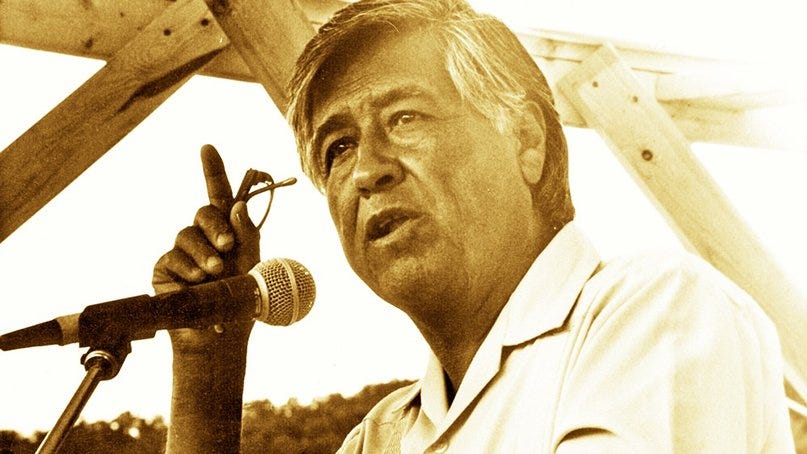
Chavez fought for exploited farmworkers, but his legacy becomes more complicated when looking at who was left out of that fight.
A major reason for that tension was the Bracero Program. The program was a labor agreement between the United States and Mexico that ran from 1942 to 1964. It allowed millions of Mexican laborers to temporarily work in American agriculture and on railroads. On paper, it promised fair wages and protections. In reality, many workers experienced exploitation, wage theft, racism, and abusive conditions. But none of that was addressed since growers benefited from a constant supply of cheap labor that could easily be replaced.
Chavez and the United Farm Workers strongly opposed the program because they believed it weakened the ability for them to organize. If workers went on strike demanding better wages or conditions, growers could simply replace them with “braceros” or undocumented laborers willing to work for less. Historians believe Chavez played a crucial role in ending it.
With these new allegations, his rhetoric and actions are prompting a more critical look into his work.
So even though Chavez fought for exploited Mexican American workers, undocumented Mexican migrants were dehumanized by the movement. Terms like “wetbacks” were used openly by him and other organizers. Also there are allegations of Chavez and UFW members informing immigration authorities about undocumented workers.
He was right that growers benefited from keeping workers divided, desperate, and replaceable. But instead of directing all of the anger upward at the industries exploiting everyone involved, some of it was redirected downward toward another vulnerable group.
And that tension reveals something larger about movements themselves.
It is easy to defend justice when the victims clearly fit inside your constituency. The harder question is whether those principles survive when another vulnerable group complicates your political goals.
So for those reevaluating his legacy, it’s becoming clear. He fought against the exploitation of some while participating in the dehumanization of others. Which for many, makes the current allegations of abuse towards girls and young women less impossible to believe.
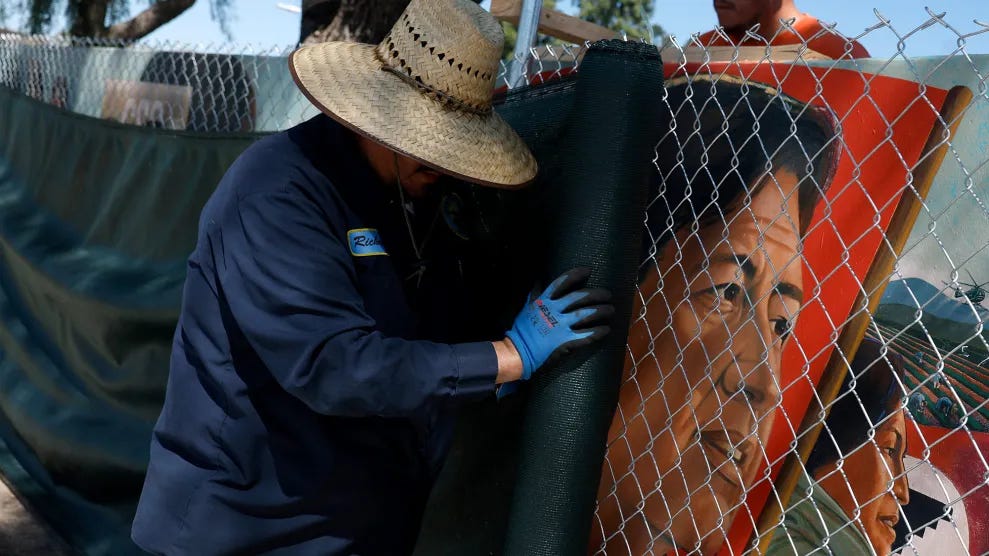
One lesson to be learned is that people should stop confusing an achievement with moral perfection.
There’s no doubt that Chavez played a role in accomplishing things that changed labor history in America. Workers gained some protections because of organizing connected to him. Farm labor became visible because of the United Farm Workers. And many people found their political identity and cultural pride through attempts to hold power accountable.
None of that disappears.
The good does not erase the harm. And the harm does not completely erase the good.
The fight for labor rights matters. But movements that truly threaten power are rarely embraced by it. Cesar was praised by figures like Barack Obama and Robert F. Kennedy, something far less likely if the movement had fundamentally threatened the system itself.
That’s the real takeaway from all of this.
A movement built around one protected figure can eventually be damaged, managed, and mythologized. But a movement built around shared power doesn’t collapse when one person falls.
Comments
Nothing yet. Say the first thing.
Sign in to join the conversation.