
There aren’t many things I miss about America as an expat living in Thailand. Distance has a way of stripping things down to what actually matters, and most of it, it turns out, doesn’t. But every now and then I find myself reaching for something small and familiar. For me, it’s old sitcoms. Shows like MASH, Taxi, All in the Family and Good Times. The kind of television that felt like it understood people before everything became content optimized for engagement.
You can still find them if you’re willing to jump through a few hoops, usually through apps like Pluto and Tubi, always with a VPN. But every time I watch, I’m reminded of something I’ve mostly escaped living in Bangkok, which is American commercials.
At first it’s exactly what you’d expect. Pharmaceuticals with impossible side effects, monster trucks selling masculinity, and all types of various insurance ads promising security. But over the last year, something else has started to dominate that space.
Gambling.
Of course, it’s never presented as something fringe or risky. Instead it’s shown as normal entertainment. Something you should be doing so you don’t miss out.
It’s that particular framing that matters, since most Americans still want to talk about gambling as a moral issue. Which means like many vices, if someone develops a problem the instinct is to blame the person, to see it as a weakness or a lack of control.
But that perspective ignores the larger question of what it means to expand an industry designed not just for entertainment but for exploitation.
Because this current form of gambling didn’t emerge organically, it was built with very perverse but clear incentives in mind.
Oh wait, one quick heads up.
This post will be free for the first 24 hours. After that, it’ll be reserved for paying members as a thank you for their support.
Right now, less than 0.5% of readers financially support this work. So if you value writing that’s raw, honest, and unfiltered, consider becoming a supporter.
Now, back to what I was saying.
Now, back to what I was saying. The scale alone should make that obvious. Hundreds of billions of dollars are being wagered every year, with sports books alone taking in around 150 billion in 2024 bets. Consequently, roughly 2.5 million Americans are considered to have a gambling addiction. This isn’t a marginal activity anymore. It’s embedded. College students gather on Sundays not just to watch football, but to gamble on it collectively, treating the game as a vehicle for bets rather than the main event itself.
Eight years ago, this was impossible, and that timeline is important because it makes clear that this isn’t just a shift in behavior. It’s the result of deliberate changes in policy and industry strategy.
Before 2018, gambling in the United States was largely contained. It was tied to specific places like Las Vegas or a handful of other cities, which meant for many Americans, especially those who didn’t live near those areas, gambling might never be an issue. The harms existed, but they were geographically limited, therefore making them easier to ignore and treat as isolated problems.
That changed when companies like DraftKings and FanDuel began lobbying, arguing that sports betting was not traditional gambling but a game of skill. Yes, it was a flimsy distinction, but it got the job done. It gave politicians a way to justify legalization while framing it as something more benign. All because the ownership class recognized that digital gambling could scale in a way that physical casinos never could. By removing the cost of a physical location, they could dramatically expand both participation and profit.
New Jersey became the focal point of that shift. Under Chris Christie, the state pushed to legalize sports betting, framing it as a way to generate tax revenue. A familiar argument that conveniently avoids more difficult options like taxing the rich. The issue eventually made its way to the Supreme Court. At the same time, professional sports leagues, which had long opposed gambling, began to reconsider their position. They suddenly recognized that gamblers tend to watch more games. Instead of just their favorite teams, they’ll watch entire slates of matchups. For the leagues, this translated directly into higher viewership and more lucrative television deals. As with many issues in America, financial incentives aligned and opposition quickly softened.
In May of 2018, the Supreme Court ruled in favor of New Jersey, striking down the federal ban on sports betting. This effectively opened the door for states across the country to legalize it.
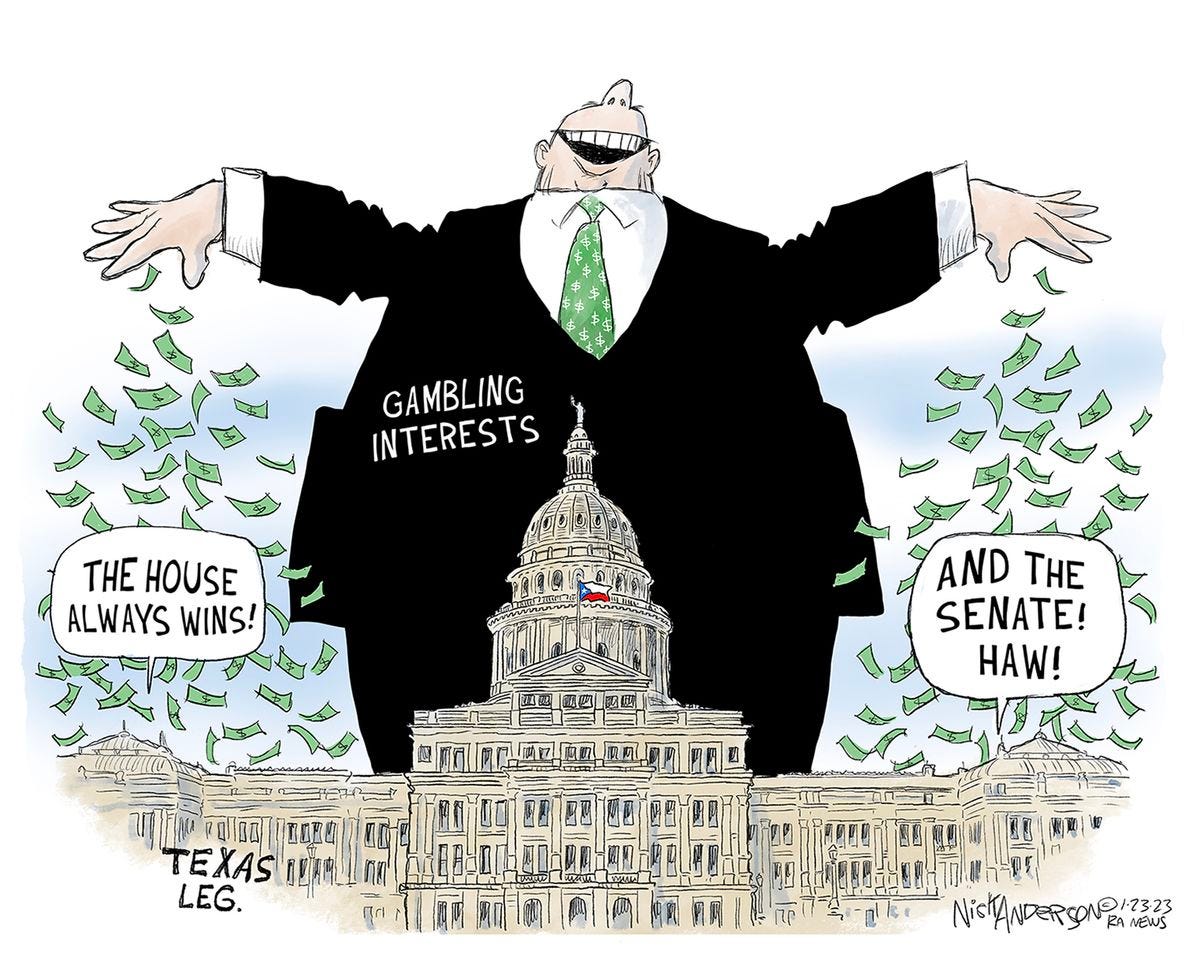
What followed was not just the expansion of gambling, but its very transformation. Forget making sports betting available, this was about making it constant, mobile and integrated into daily life.
The consequences of that shift are already visible. In states where gambling has been legalized, bankruptcies have risen by roughly a third. Research published in The Lancet has found that gamblers are more likely to miss mortgage payments and face increased risks of unemployment. The problem also extends beyond financial loss, contributing to higher rates of domestic violence, divorce, homelessness and suicides among those with gambling problems.
What makes this version of gambling particularly potent is its design. Modern platforms let users bet not just on the outcome of a game, but on every moment within it. Odds are often generated or adjusted by AI, which companies claim allows for real-time betting. Their behavioral experts are studying user activity to optimize for engagement and retention. And every interaction is tracked, from login timing to betting habits, with that data being fed back into both the product and its marketing.
This is also why the marketing is so predatory. Offers that appear generous, such as matched deposits or free bets, come with conditions that make it impossible to withdraw funds without continued play. Also, users are kept engaged through a constant stream of emails, notifications and targeted advertisements tailored to their specific habits. In some cases, these efforts extend beyond their digital platforms, with promotional events in vulnerable communities offering things like free groceries. All with the hope of simultaneously encouraging participation in gambling.
There are also structural issues. Some bets focus on specific moments within a game, like the next play or a single action. Critics have long known that these can be vulnerable to manipulation, with players sometimes influencing outcomes for financial gain. The industry points to safeguards, but they’ve clearly failed to stop it.
The cultural effects are also starting to show. Athletes, who have been used to heckling, are now facing a more intense and personal form of abuse. Driven by the financial stakes of fans, this hasn’t been limited to professional players, as college athletes, who are largely unprotected, face the same risk. People are engaged with sports differently, with the focus being on the wager rather than the game itself.
Deceptive by design, the business model ensures that most participants won’t succeed. It’s estimated that around 96 percent of users lose money. Which means the winners are promoted to sell the idea that anyone can win. Even those who do win consistently find their accounts later become restricted, with limits placed on how much they can bet.
Meanwhile, the industry knows exactly who it wants and markets accordingly, with young white men being its main target. It’s also working hard to make gambling feel normal, using celebrities like Kevin Hart, LeBron James and Drake who are backed up by smaller influencers chasing sign-ups.
And they’re just getting started. With sports betting, the industry is hungry to expand. Platforms like Stake offer a wide range of gambling options, including poker, blackjack and slot machines. They’re generating billions in revenue and in some cases surpassing traditional casino operators.
Also, predictive markets such as Polymarket and Kalshi are offering new forms of betting, ones tied to things like politics and economic events. But these platforms operate in regulatory gray areas, allowing them to function across all fifty states and, in some cases, set lower age limits.
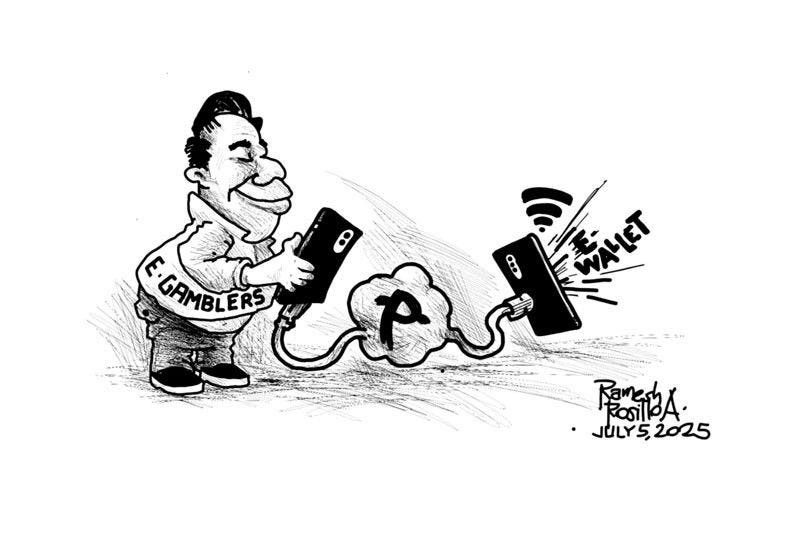
At the policy level, incentives for meaningful interventions against all of this are weak. Especially since state governments benefit from the tax revenue generated by gambling. Despite this, a few moderate proposals have been put forward, including restrictions on advertising, limits on daily betting amounts and banning the use of certain technologies. Other more gambler-centered approaches emphasize the need for public education as a deterrence, which are especially popular since these measures don’t disrupt the underlying structure of the industry.
Regardless, public perception remains a significant factor. Many Americans don’t view gambling as a serious issue, which further reduces the likelihood of political action. While some policymakers have expressed regret over earlier decisions, in America meaningful change often requires a clear and immediate crisis. One that experts see as inevitable. They predict that such a tipping point could take the form of a sharp increase in addiction and related harms, a high-profile act of violence linked to gambling, or a major scandal involving the integrity of sporting events.
Until then, the system continues to operate as designed.
And that’s the point. This is how it works in America. Build the system to extract, then blame the people it drains. It once targeted mostly the poor. But now it’s coming for the middle class, all while convincing them it was simply their choice.
I’m digging into how other countries deal with this, and it raises some uncomfortable comparisons. If you’re curious about how different this could look, watch out for the next piece.
Comments
Nothing yet. Say the first thing.
Sign in to join the conversation.