
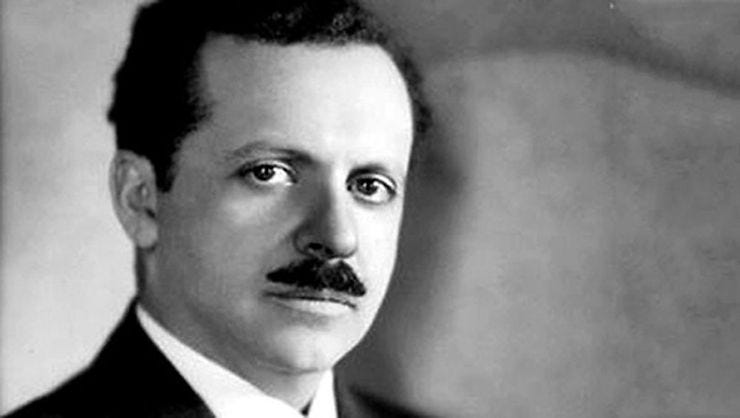
“The conscious and intelligent manipulation of the organized habits and opinions of the masses is an important element in democratic society. Those who manipulate this unseen mechanism of society constitute an invisible government which is the true ruling power of our country. We are governed, our minds are molded, our tastes formed, and our ideas suggested, largely by men we have never heard of. … It is they who pull the wires that control the public mind.”
That passage is from one of the most influential books of the twentieth century, and was written by one of those men most of us have never heard of. The book was called Propaganda, and it became the basis for almost all media communication we consume today. It’s author was Edward Bernays, a man who considered himself, rightly, to be one of the those ruling, invisible elites who was pulling the wires of the masses. This is his story.
President Woodrow Wilson had a problem. He had won re-election in 1916 largely on the premise that he had not sent American soldiers to fight in the bloody conflict that was currently raging overseas. “Peace without Victory” and “He kept us out of the war” were the slogans he used to convince a largely pacifist population that he was the man to keep them free from foreign military entanglements.
But now it was 1917, and Wilson was no longer talking peace, or promising to keep America First. Now he wanted to take the US into World War I. But how was he going to convince an apathetic nation to completely reverse their views and get behind a push to take up arms in the gas filled trenches of Europe?
His solution was to form the Committee on Public Information, an official propaganda agency of the Federal Government, and to head it up he appointed a political salesman named George Creel. The Creel Committee, as it became known, was successful beyond imagination. In just six short months, it had turned the country into a mass of blood-thirsty German hating zealots who couldn’t wait to go kill some, in the words of the propaganda, barbarian Huns.
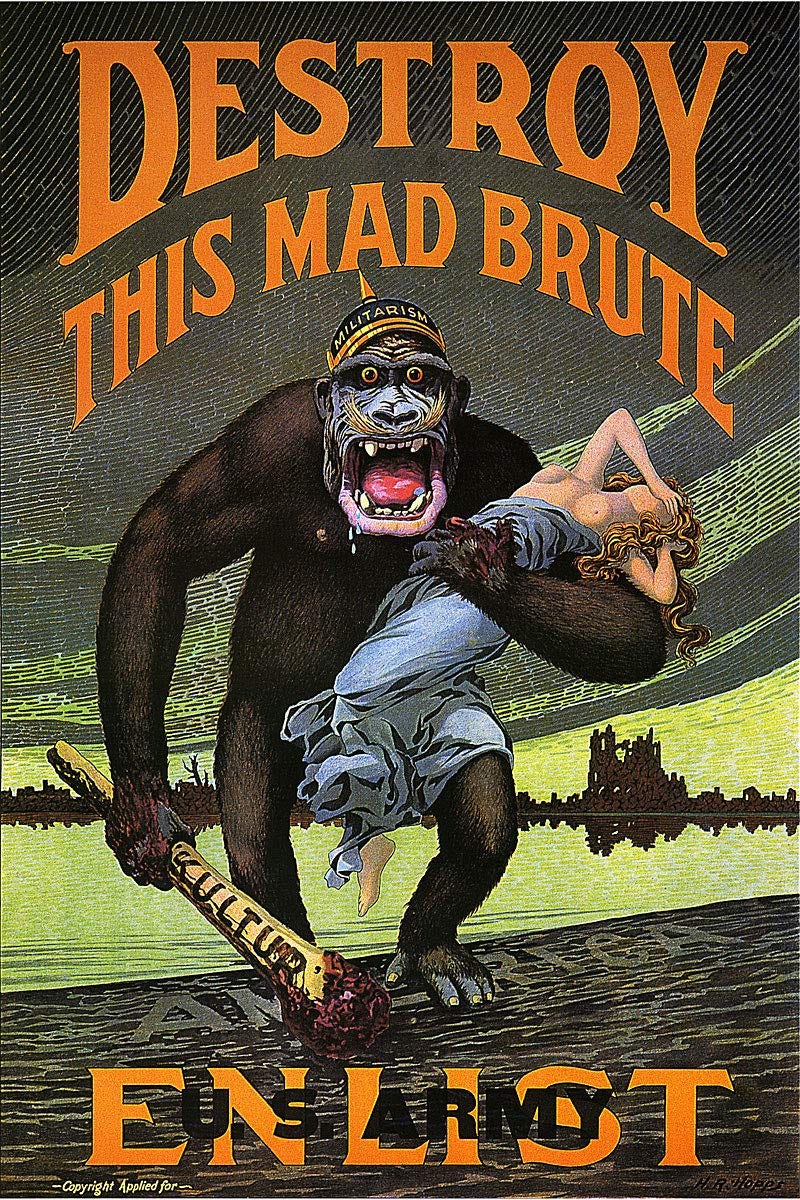
How did they do it? Basically, the government played the media like a violin. First, of course, it censored any stories the administration didn’t like. Postmaster General Albert S. Burlson had the power to bar any magazine or newspaper that he didn’t approve of from being delivered, and the government’s ability to revoke their discounted postage rates kept most from doing anything but toeing the official White House line. But it wasn’t so much the stories that weren’t published that caused the CPI’s campaign to be a success, it was the stories that were. You see, a major plank in Creel’s strategy was to actually provide the content that was printed. Rather than hope that editors and journalists would write stories he found agreeable, he wrote the stories for them. As Patricia O’Toole explains, “During the 20 months of the U.S. involvement in the war, the CPI sent out 6,000 press releases written in the straightforward, understated tone of newspaper articles.” It also designed and circulated more than 1,500 patriotic advertisements. In addition, Creel distributed uncounted articles by famous authors who had agreed to write for the government. At one point, newspapers were receiving six pounds of CPI material a day. Editors eager to avoid trouble with the Post Office and the Justice Department published reams of CPI material verbatim and often ran the patriotic ads for free. In other words, the newspapers became the propaganda arm of the state, printing every bit of fake news that the Committee on Public Information fed them, from ads showing brute German gorilla-like creatures carrying away bare breasted damsels in distress to stories of barbaric German soldiers ripping arms off babies as they pillaged their enemies. Rather than simply reporting the war, the papers were used by the government to provoke an emotional response in the population towards the war.
It worked. Soon,
even the most casual expression of doubt about the war could trigger a beating by a mob, and the humiliation of being made to kiss the flag in public. Americans who declined to buy Liberty Bonds (issued by the Treasury to finance the war) sometimes awoke to find their homes streaked with yellow paint. Several churches of pacifist sects were set ablaze. Scores of men suspected of disloyalty were tarred and feathered, and a handful were lynched. Most of the violence was carried out in the dark by vigilantes who marched their victims to a spot outside the city limits, where the local police had no jurisdiction. Perpetrators who were apprehended were rarely tried, and those tried were almost never found guilty. Jurors hesitated to convict, afraid that they too would be accused of disloyalty and roughed up.1
And the overt propaganda was aided by other, more subtle techniques. As Nicholas Crull explains,
Creel understood the susceptibility of Americans to celebrity, and recruited some of the best known people of the era to speak for his cause. But he also knew that Americans placed great credibility in their neighbors. To that end, he established a network of 75,000 “four minute men” lecturers — citizens primed to deliver talking points provided by the CPI in neighborhood movie theaters across the country. The network of venues eventually included churches, lodges, colleges, and even schools, which had their own junior team of lecturers.2
And speaking of movie theaters, the government was quick to use the burgeoning film industry to promote the war effort. Hollywood produced several movies for the CPI, including Pershing’s Crusaders and America’s Answer.
The strategy worked, and the tide turned in support of the war. Soon men were lining up to go, to use the propaganda catch phrase that Creel’s team made famous, “make the world safe for democracy.”
One of these volunteers was a young public relations man Edward Bernays. Bernays was the nephew of Sigmund Freud, and he had been using some of his uncle’s theories to sell tickets to Broadway plays and touring ballet productions. Freud believed that people were driven by unconscious drives, and that they generally act not on the basis of reason or rationality, but on emotion, and instinct. In applying that to sales, Bernays was convinced that if he could tap into those base drives, he could get people to do what he wanted them to do, which is buy tickets to the productions for which he was working.
And prior to the war, he had already seen some pretty good success. For example, he had picked up a job promoting Jean Webster’s Daddy Long Legs, a precursor to Little Orphan Annie, about a twelve year old girl whose irrepressible spirit helps her endure a grim orphanage. One of problems with getting people to go the theater, he believed, is that many people saw it as frivolous, a selfish indulgence that they could probably do without. To overcome that, Bernays "joined forces with New York’s State Charities Aid Association to organize a network of Daddy Long-Legs funds. Groups formed on college campuses and in high schools would raise money that private families could use to take in orphans.”3 He also got a dollmaker to manufacture ten thousand “Daddy Long Leg” dolls and send the proceeds to the charity. And through all of it, he got these efforts covered by the media, who eagerly gave him coverage, no matter what the underlying facts actually were. In one case, he met with students at Vassar College to make a difference for orphans and raised only 15 cents, but Bernays packaged the story for the press in such a way as it hit the front page in the Poughkeepsie Evening Enterprise, and got coverage in the New York Times, World, Sun, Tribune, and Post. And sold a lot of tickets.
Later, he applied similar principles to selling a touring Russian ballet company. Ballet was not exactly at the top of America’s favorites pastimes in the 19 teens, but by the time Bernays was through, they were eagerly buying tickets. One way he accomplished this was through concocted events and stunts that the media ate up. For example, he took lead ballerina Flores Revalles to the Bronx Zoo in a tight fitting dress, then draped a long harmless snake around her for photographers.
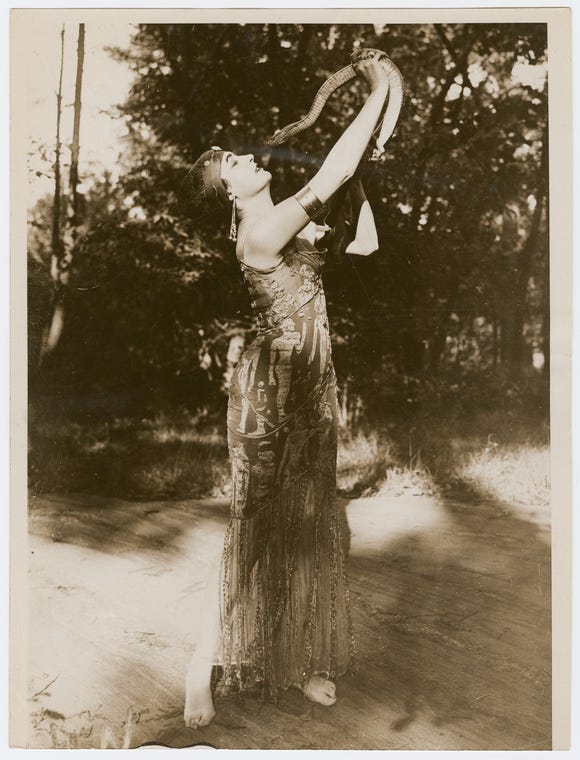
The seductive shot was distributed across the country, with a caption saying the subject had selected a cobra, but through her charm and beauty had rendered it harmless, and that she could be seen almost every day in Bronx Park musing over the reptile’s sinuous movements. Newspapers ran that story on page one, which Bernays thought was splendid. He later recalled, “I urged Revalles to make a pet snake her trademark and never to travel without one. She hesitated, but agreed—show people intuitively adjust themselves to getting publicity for themselves, whatever the method.” He also noted, “When I saw how easily Revalles became a national celebrity, I recognized how necessary it was to look behind a person’s fame to ascertain whether the basis was real or fictitious. Public visibility had little to do with real value.” He was fascinated by what he called “The public’s ability to create its own heroes from wisps of impressions and its own imagination and to build them almost into flesh-and-blood gods.”4 Public opinion and belief, Bernays knew, had little to do with rational discourse or facts. It could be molded using propaganda, and he was getting good at it.
Comments
Nothing yet. Say the first thing.
Sign in to join the conversation.