

Sometimes the path God has for us seems to be leading to catastrophe. The roadblocks look insurmountable, the enemy too strong. We could continue, but it sure feels like disaster awaits.
These are critical moments in life as they force us to decide, “Are we going to live in faith and do what we know God wants us to do, even in the face of much apparent trouble and danger – or not?”
And it is at these moments that Satan tries to get us to doubt God’s character or his power. The deceiver whispers in our ear one of his most powerful lies: “God is not trustworthy. Don’t do it. He will let you fall. He will let the water crash in around you. He will let you be defeated by your enemies. He doesn’t have your best interests at heart, and even if he does, he doesn’t have the ability to make his desires happen. Following him will lead to failure and humiliation. Don’t obey. Don’t follow.”
It is important to realize that against these lies it will not help to follow the advice of the previous article and keep our eyes on the prize (although we should keep doing that to combat Satan’s other lies), because the reward will not entice us if we are not sure that God is willing and able to come through with it. In combating the devil’s attacks on God’s trustworthiness, meditating on God’s promises is of little use.
However, there is something we can do. We can focus on God’s faithfulness in the past. As we examine the existing evidence of God’s power and goodness, Satan’s attempt at sabotaging our journey will be seen for the ruse that it is.
If only more of the Israelites had followed this principle. Their experience at the very edge of the Promised Land provides another stellar example of what not to do.
The journey of the Israelites finally seemed to be near an end. They had reached the border of Canaan and camped at a place called Kadesh Barnea. At God’s request, Moses chose 12 men to spy out the land in preparation for conquest.
They gave Moses this account: “We went into the land to which you sent us, and it does flow with milk and honey! Here is its fruit. But the people who live there are powerful, and the cities are fortified and very large. We even saw descendants of Anak there. The Amalekites live in the Negev; the Hittites, Jebusites and Amorites live in the hill country; and the Canaanites live near the sea and along the Jordan.”
Then Caleb silenced the people before Moses and said, “We should go up and take possession of the land, for we can certainly do it.”
But the men who had gone up with him said, “We can’t attack those people; they are stronger than we are.” And they spread among the Israelites a bad report about the land they had explored. They said, “The land we explored devours those living in it. All the people we saw there are of great size. We saw the Nephilim there (the descendants of Anak come from the Nephilim). We seemed like grasshoppers in our own eyes, and we looked the same to them.”
That night all the people of the community raised their voices and wept aloud. All the Israelites grumbled against Moses and Aaron, and the whole assembly said to them, “If only we had died in Egypt! Or in this desert! Why is the LORD bringing us to this land only to let us fall by the sword? Our wives and children will be taken as plunder. Wouldn’t it be better for us to go back to Egypt?” And they said to each other, “We should choose a leader and go back to Egypt.”
Then Moses and Aaron fell facedown in front of the whole Israelite assembly gathered there. Joshua son of Nun and Caleb son of Jephunneh, who were among those who had explored the land, tore their clothes and said to the entire Israelite assembly, “The land we passed through and explored is exceedingly good. If the Lord is pleased with us, he will lead us into that land, a land flowing with milk and honey, and will give it to us. Only do not rebel against the Lord. And do not be afraid of the people of the land, because we will swallow them up. Their protection is gone, but the Lord is with us. Do not be afraid of them.”
But the whole assembly talked about stoning them. (Numbers 13:27-14:10a)
The Israelites were at a critical point of decision. God had told them to take the land, but they were afraid of its current inhabitants. The obstacles to victory looked too big. In other words, they simply didn’t think God had the ability or willingness to do what he had promised and conquer their enemies and therefore they didn’t want to obey. They didn’t think God could be trusted. Of the spies, only Caleb and Joshua believed God could do it. These men, along with Moses and Aaron, were eager to take the land, but they could not convince the rest of the people.
As a result, God sent the Hebrews back out into the wilderness to wander for forty years. None of the people (20 years old or older) who grumbled against God got to enter the land. They all died in the desert (Num. 14:26-35).
The Israelites believed Satan’s lie. They succumbed to irrational fear. I say their fear was irrational because the people were not being asked to take a blind leap of faith at Kadesh Barnea. God wasn’t new to them. They hadn’t just met him. The people should have known that God was trustworthy. They had seen his power and goodness over and over again. He had always been faithful to take care of them in any and every situation. All they needed to do was remember this, and they would have been fine. They had plenty of good reasons to trust in him.
This is what made God so angry. He had given them abundant evidence of his trustworthiness, yet they still wouldn’t step out in faith and obey.
Then the glory of the LORD appeared at the Tent of Meeting to all the Israelites. The LORD said to Moses, “How long will these people treat me with contempt? How long will they refuse to believe in me, in spite of all the miraculous signs I have performed among them? I will strike them down with a plague and destroy them, but I will make you into a nation greater and stronger than they.” (Num. 14:10b-12)
In spite of all the miraculous signs, in spite of all the evidence of God’s power and goodness, the Israelites refused to trust.
There is a simple antidote to fear of the future and lack of faith in God: praising him for what he has done in the past. Instead of grumbling and cowering at the report of giant cities and powerful men, the Israelites should have had a time of prayer and praise, thanking God for his wonderful work in getting them to this point. After spending some time remembering the plagues and the Red Sea and the provision of manna from Heaven and water from the rock and the victory over the Amalekites, etc., they almost certainly would have been willing to enter the land expecting to see God perform more miracles.
The act of recounting the stories and thanking God for what he has done puts a person in the frame of mind necessary to obediently step out in faith. It shines the light of truth on the present situation and destroys the lie that God is not trustworthy.
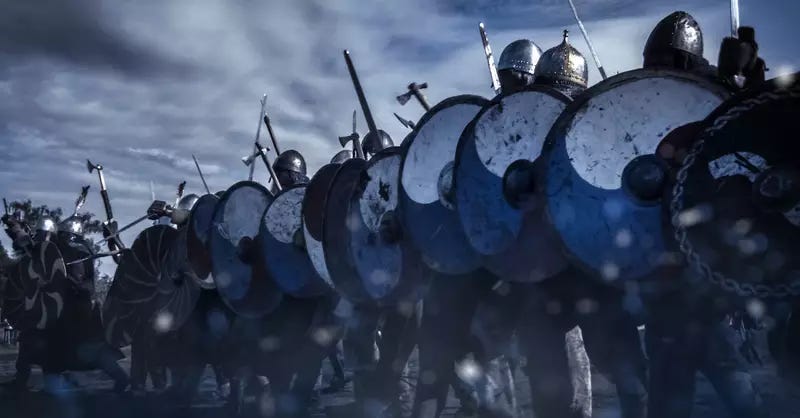
This is exactly what happened under the reign of King Jehoshaphat. Judah looked as if it was going to be overrun by a powerful army. Rather than despair, however, the king called the people together for prayer and praise.
Then Jehoshaphat stood up in the assembly of Judah and Jerusalem at the temple of the LORD in the front of the new courtyard and said:
“O LORD, God of our fathers, are you not the God who is in heaven? You rule over all the kingdoms of the nations. Power and might are in your hand, and no one can withstand you. O our God, did you not drive out the inhabitants of this land before your people Israel and give it forever to the descendants of Abraham your friend? They have lived in it and have built in it a sanctuary for your Name, saying, ‘If calamity comes upon us, whether the sword of judgment, or plague or famine, we will stand in your presence before this temple that bears your Name and will cry out to you in our distress, and you will hear us and save us.’
“But now here are men from Ammon, Moab and Mount Seir, whose territory you would not allow Israel to invade when they came from Egypt; so they turned away from them and did not destroy them. See how they are repaying us by coming to drive us out of the possession you gave us as an inheritance. O our God, will you not judge them? For we have no power to face this vast army that is attacking us. We do not know what to do, but our eyes are upon you.” (2 Chr. 20:5-12)
Notice the confidence inspiring content of the prayer. Jehoshaphat started by ascribing to God all power and then backed up this claim by recounting what God had done in the past in giving Israel the land. With his mind focused on God’s faithfulness in the past, Jehoshaphat could look confidently towards the future, knowing that God is trustworthy and will keep his promises. When asked to step out in faith and face the army, Jehoshaphat obeyed, even though it looked like a fool’s errand, and God provided a great victory (2 Chr. 20:14-29).
God would have done the same for the Israelites at Kadesh Barnea, but they refused to remember all that he had done and were therefore unwilling to obey in faith. They focused on the strength of the enemy rather than the strength of God. In later years their ancestors would make the same mistake in the valley of Elah. Thankfully, there was one among them who had experienced and remembered God’s power and goodness.
It is one of the most famous tales in the history of the world, but let’s take a moment to reacquaint ourselves with the story of David and Goliath.
Israel was at war with the Philistines and the two armies had drawn up battle lines on either side of the Valley of Elah, with the Philistines employing an interesting strategy.
A champion named Goliath, who was from Gath, came out of the Philistine camp. He was over nine feet tall. He had a bronze helmet on his head and wore a coat of scale armor of bronze weighing five thousand shekels; on his legs he wore bronze greaves, and a bronze javelin was slung on his back. His spear shaft was like a weaver’s rod, and its iron point weighed six hundred shekels. His shield bearer went ahead of him.
Goliath stood and shouted to the ranks of Israel, “Why do you come out and line up for battle? Am I not a Philistine, and are you not the servants of Saul? Choose a man and have him come down to me. If he is able to fight and kill me, we will become your subjects; but if I overcome him and kill him, you will become our subjects and serve us.” Then the Philistine said, “This day I defy the ranks of Israel! Give me a man and let us fight each other.” On hearing the Philistine’s words, Saul and all the Israelites were dismayed and terrified. (1 Sam. 17:4-11)
This taunting continued for over a month until one day the shepherd boy David arrived to check on his brothers and see how the battle was going (1 Sam. 17:16-20). While David was talking with the troops, Goliath made his daily appearance within earshot of the youngster (1 Sam. 17:23). David asked around about what would be done for the man who killed Goliath and word of his inquiries got back to King Saul, who summoned David (1 Sam. 17:25-31).
In the discussion that followed, notice what gave David the confidence to face Goliath. David was not afraid of the mighty soldier because he was aware of what God had done in the past.
David said to Saul, “Let no one lose heart on account of this Philistine; your servant will go and fight him.”
Saul replied, “You are not able to go out against this Philistine and fight him; you are only a boy, and he has been a fighting man from his youth.”
But David said to Saul, “Your servant has been keeping his father’s sheep. When a lion or a bear came and carried off a sheep from the flock, I went after it, struck it and rescued the sheep from its mouth. When it turned on me, I seized it by its hair, struck it and killed it. Your servant has killed both the lion and the bear; this uncircumcised Philistine will be like one of them, because he has defied the armies of the living God. The LORD who delivered me from the paw of the lion and the paw of the bear will deliver me from the hand of this Philistine.”
Saul said to David, “Go, and the LORD be with you.” (1 Sam. 17:32-37)
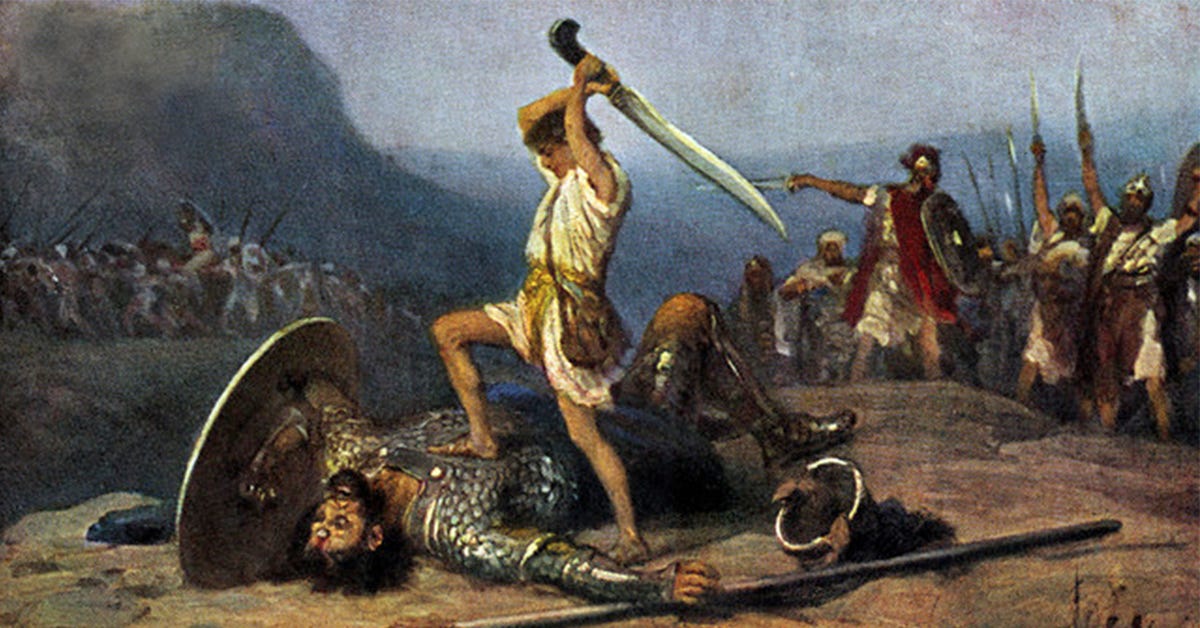
David knew that God was able to help him defeat Goliath because God had helped him defeat strong enemies before. While everyone else looked at Goliath and saw only certain defeat, David remembered what God had done to the bear and the lion and saw sure victory. By keeping his mind on God’s past mighty works, David was able to affirm God’s trustworthiness and take a huge step of faith with confidence.
David was in the very same position as the Israelites at Kadesh Barnea. Both were faced with the option of either following God and stepping into battle with a very strong foe or turning around and running in fear. David looked back, realized God was trustworthy, and took a step of faith. The Israelites didn’t. They looked only at the obstacle in front of them, never looking back at what God had done, and ended up dying in the desert for lack of faith.
May we follow the example of David and not the Israelites. The longer we walk with Jesus and experience his power and goodness, the stronger our faith should be. When faced with one of those situations that seems sure to end in catastrophe, we should be able to look back at all God has done and face the future with confidence, knowing he can handle it. Those that don’t do this are in danger of dying in the wilderness like the Israelites.
Those that do will get to stride boldly into the Promised Land, which is exactly what Joshua did 40 years after the debacle at Kadesh Barnea. One of the two spies who trusted God, Joshua had the privilege of finally leading the Israelites into Canaan. As we conclude this newsletter, let me encourage you with the words that God gave to Joshua as he prepared to cross the Jordon River into Canaan.
Your territory will extend from the desert to Lebanon, and from the great river, the Euphrates – all the Hittite country – to the Great Sea on the west. No one will be able to stand up against you all the days of your life. As I was with Moses, so I will be with you; I will never leave you nor forsake you.
Be strong and courageous, because you will lead these people to inherit the land I swore to their forefathers to give them. Be strong and very courageous. Be careful to obey all the law my servant Moses gave you; do not turn from it to the right or to the left, that you may be successful wherever you go. Do not let this Book of the Law depart from your mouth; meditate on it day and night, so that you may be careful to do everything written in it. Then you will be prosperous and successful. Have I not commanded you? Be strong and courageous. Do not be terrified; do not be discouraged, for the LORD your God will be with you wherever you go. (Josh. 1:4-9)
Thank you for reading American Babylon. This post is public so feel free to share it.
Comments
Nothing yet. Say the first thing.
Sign in to join the conversation.