
ONE Stubborn Thing: Of the 20 countries with the greatest incidence of child mortality, all are in Africa.
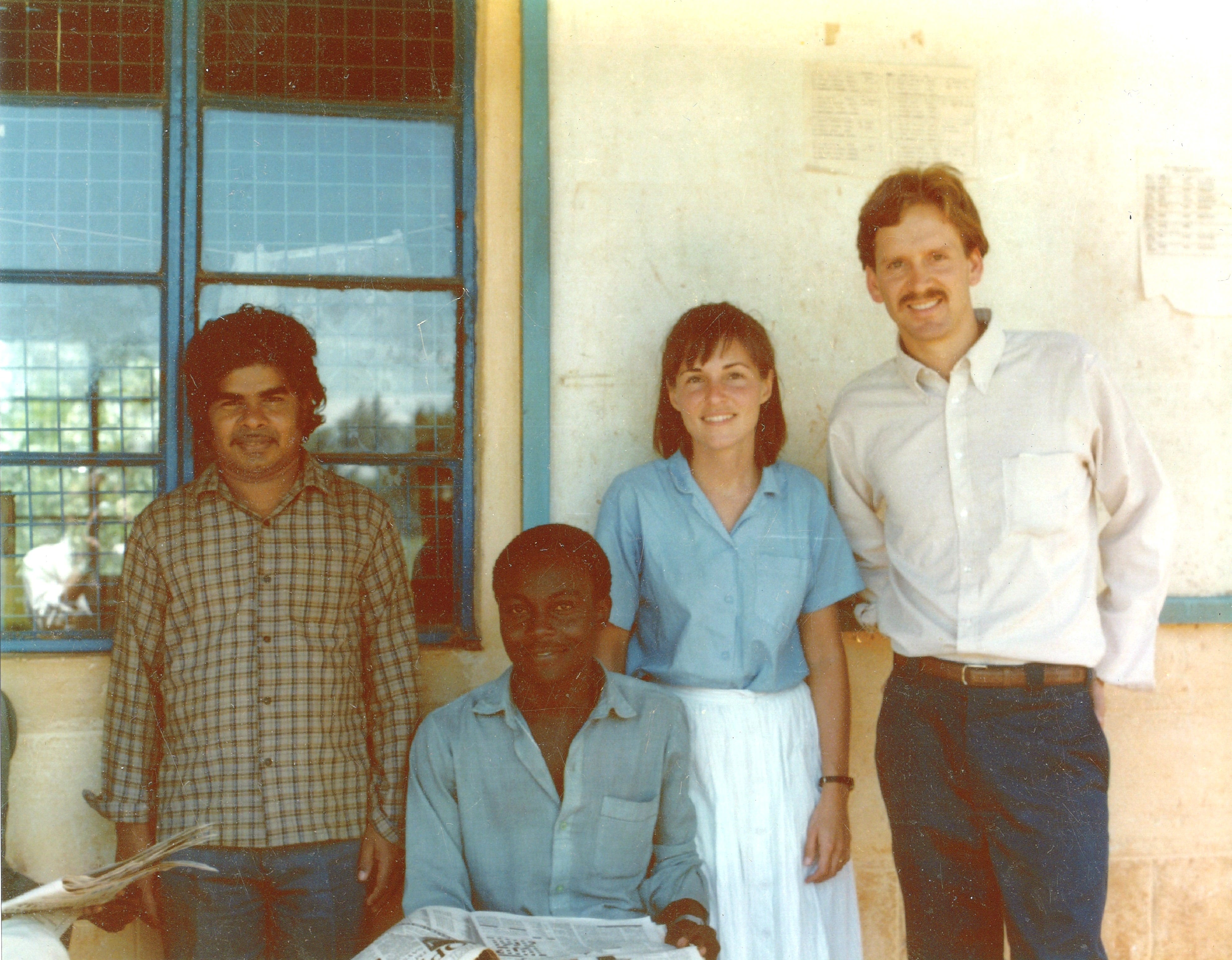
Just after sundown, on our very first day in the little Kenyan village where Sue and I taught school, Thomas, the school’s headmaster, picked me up in his old white Toyota. As we drove over the bumpy mud roads of the surrounding hills, he softly told me there was something he wanted me to see.
There was little electricity in our settlement in those days, so the only light helping our headlights find the way came from the moon and stars of the clear African skies. We eventually reached a clearing where a crowd of people, mostly dressed in white, was gathering. The kerosene lamps and small cooking fires in and around the open area gave it almost a theatrical look.
We pulled the car slowly to one side, quietly got out, and began walking towards the crowd. As we got closer, I could hear an eerie moaning sound drifting upwards from the gathering…a sound I’ll never forget, but one that I would hear more than once in the months that followed. Not crying or screaming, but wailing…a melodic pouring out of sadness, grief, and despair. Some were hugging each other. Some were hugging themselves and slowly rocking from side to side.
As we got near the front, I saw what had drawn so many villagers from their homes that evening—the bodies of two small children, wrapped in white sheets, lying on a single bed-like platform. There was a woman seated on a small stool just in front of them, and several other women rested their hands on her shoulders. The wailing continued, while some softly sang.
We stood there quietly for a few moments, and then Thomas stepped forward and put some money in a small basket placed off to one side. After he returned to my side, he nodded to me, and we slowly returned to our car.
As we drove back home, Thomas said, “Mwalimu (teacher), I wanted you to see this.” He went on to say the gathering was a remembrance ceremony for one year-old twin boys who had just died after several days of illness. “What was it?” I asked, seeking clarity on the illness. He shrugged his shoulders, and said, “They died because they were poor.”
I’ve never forgotten that moment.
There are lots of reasons why donor nations dedicate the largest part of their foreign assistance towards global health. There are lots of reasons why Africa receives the largest part of that support.
The Trump Administration’s America First Global Health Strategy (AFGHS) asserts its support for global health is part of making the U.S. “safer, stronger, and more prosperous.” They’re right. In the most obvious sense, investing in health infrastructure overseas is a way of preventing or containing outbreaks of terrible diseases like Ebola closer to their source. And since American private enterprise —from pharmaceutical research and production to innovative delivery mechanisms like San Francisco-based Zipline drones— is playing an increasingly important role in our global health initiatives, these funds foster new growth and investment opportunities for American business.
The Administration also emphasizes that our support for global health makes sense because it builds on proven success and things we’re good at. As the AFGHS states, “Over the last 25 years, the United States global health programs have…saved over 26 million lives through the President’s Emergency Plan for AIDS Relief (PEPFAR) and millions of additional lives through other global health programs, [and] prevented 7.8 million babies from being born with HIV/AIDS.”
But there are countless other reasons to support generous funding for global health programs. Some are economic: businesses in the developing world need a healthy workforce to be productive partners in trade and economic growth. Some are strategic: helping partner governments attack “drivers of despair” can help stabilize countries and reduce sources of conflict.
Many of us are simply moved by conscience and calling. Mike Gerson, who served in the Bush White House as PEPFAR was being created and later served as a Policy Fellow with ONE, used to say that our assistance overseas is “good for our soul.”
In my case, it’s even more personal than that. It goes back to a small village in Africa. I will never forget what I saw and heard that first night in Kenya. Bono is right: where children live shouldn’t determine whether they live.
No posts
Comments
Nothing yet. Say the first thing.
Sign in to join the conversation.