
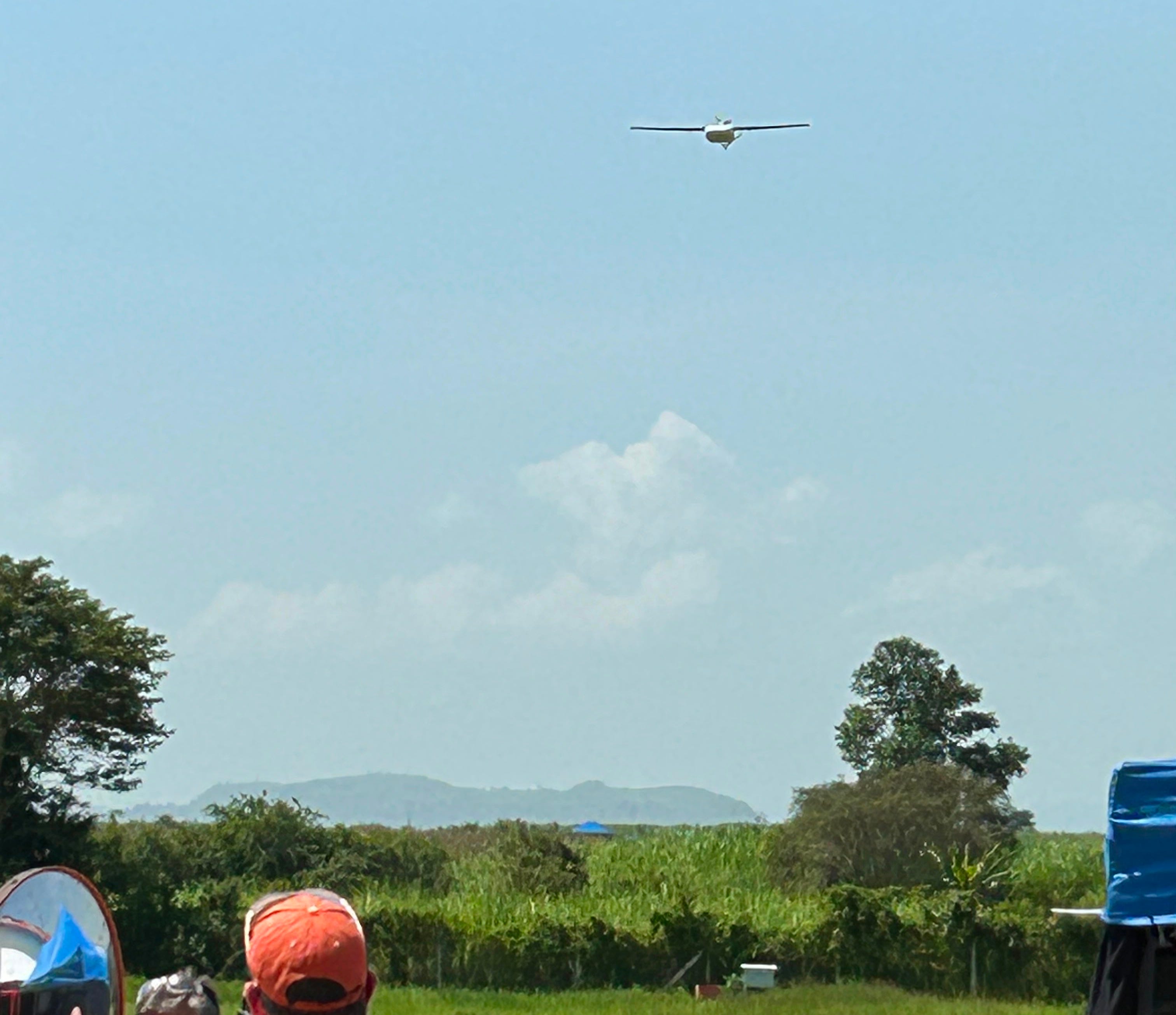
A Zipline Drone Takes Off in Kisumu Kenya
Stubborn Thing: Africa has a space agency.
Space exploration is making news again. NASA is basking in the glow of its Artemis II success, and has reaffirmed plans for, first, a permanent base on the moon and, second, a manned mission to Mars. Elon Musk’s SpaceX has carried out multiple to-space-and-back missions, and pledged itself to the “ultimate goal of enabling people to live on other planets.” Jeff Bezos’s Blue Origin, with its New Shepherd rockets, has carried nearly a hundred high profile “space tourists,” ranging in age from 18 to 90, to the edge of space. China has secured its place among the world’s top space powers with its “Long March” rockets, Shenzhou crewed spacecraft, and Tiangong space station.
But while all of these developments have rightly captured the public’s attention and imagination, another space program is making rapid progress on a path that, while not immediately extending mankind’s reach upward into the heavens, is quietly bringing the fruits of that reach to hundreds of millions of people back on earth.
Africa has a space agency. And just as African entrepreneurs have led the world in finding smart, cost-effective, and innovative applications of frugal technologies like civilian drones, 3-D printing, and smart phone apps to improve lives and livelihoods in rural communities across the continent, African space entrepreneurs are doing the same with space technologies. (You can read my previous Stubborn Thing on the subject here.)
CONTINENT-WIDE COORDINATION
The African Union Assembly formally adopted its African Space Policy and Strategy in 2016 in an effort to help coordinate the many space-related initiatives that were springing up in parts of the continent. By early 2025, African Union (AU) leaders moved to formally establish the African Space Agency (ASA) and place its permanent headquarters in Cairo.
They built the ASA around three broad purposes: continent-wide coordination of space activities, maintaining strategic autonomy from other space powers, and establishing a unified regulatory framework that would welcome private investment. The ASA’s governance rests with both elected scientific advisors and political representatives from AU’s member states. The overriding objective in all of the ASA’s policies and practices is to reduce unnecessary duplication of resources and efforts among African states.
AFRICA’S SPACE INVESTMENTS ARE PICKING UP SPEED
Africa’s moves in space aren’t simply the “paper exercise” of establishing the ASA. Already,19 African nations have launched 69 satellites into space, and according to the ASA, another 120 are slated for launch by 2030. To keep this pipeline going, the Egypt-based African Development Satellite Initiative (AfDev-Sat) has trained more than 70 engineers from across the continent on designing and assembling satellites.
The ASA is working to coordinate how space resources —in particular, satellites and satellite data— are applied to development challenges in environmental and disaster management, agricultural and food insecurity, communication services for rural communities, the extension of education and health care to rural areas, and conflict mapping and mitigation.
The early results are encouraging. For example, thanks to African space programs:
• Farmers are able to receive by SMS/text message satellite-driven weather forecasts accurate down to an acre. Agricultural leaders are turning to satellite data to significantly strengthen the accuracy and timeliness of early warning systems for extreme weather.
• Satellites are helping authorities monitor deforestation, predict breeding sites for locust swarms, and map out optimal locations for water wells and sites for extracting oil and critical minerals.
• Law enforcement officials are using satellites to detect illegal mining, monitor territorial waters for illegal fishing, and conduct border surveillance.
• Private internet providers are using satellites to expand the reach of broadband in rural areas and help students and teachers access online learning platforms.
• Public officials are turning to satellite-based technology to bring telemedicine services to remote communities and link remote health centers with health care specialists.
CONCLUSION
President George W. Bush used to speak of the “soft bigotry of low expectations” that causes people to be left out of important conversations and opportunities. In some ways, it’s that soft bigotry that has kept African leaders —both public and private sector— from being included in the global push to explore and better understand outer space. But while most of the world is focused on the headline-grabbing accomplishments of the biggest space powers, Africa’s space industry is rapidly producing space breakthroughs that create real-world benefits for real-world people. In a very real sense, we have much to learn from their ingenuity. While we look to the heavens, they bring the heavens to earth.
Comments
Nothing yet. Say the first thing.
Sign in to join the conversation.