

Medieval horror is a genre of fiction that sets its terror in the European Middle Ages, roughly 500 to 1500 AD, and draws its dread from the documented catastrophes of the period: the Black Death, famine, religious persecution, and a worldview that treated the supernatural as plain fact. What separates it from sword-and-sorcery fantasy is its refusal to invent. The strongest work in the genre, from Between Two Fires on the page to A Plague Tale on the screen, lands because the real Middle Ages were worse than anything a writer would dare make up. This field guide maps the best books, films, and games, the figures that recur across them, and the real plague, inquisitors, and archaeology underneath, then asks why one period keeps producing our most durable nightmares.
Medieval horror is a genre of fiction that sets its terror in the European Middle Ages, roughly 500 to 1500 AD, and is separated from medieval fantasy by its grounding in documented plague, persecution, and folklore rather than invented magic.
Its dread comes straight from the record: the Black Death reached Europe at Messina in 1347 and killed a third to half the continent, flagellant brotherhoods scourged themselves through plague-struck towns until Pope Clement VI condemned them in 1349, and the witch-hunting manual Malleus Maleficarum appeared in 1486.
The modern revival centers on Christopher Buehlman’s Between Two Fires (2012), with Ottessa Moshfegh’s Lapvona (2022) at the literary end, Christopher Smith’s Black Death (2010) on film, and A Plague Tale: Innocence (2019) in games.
Six archetypes recur across every medium, each standing in for a different corruption of the age: the Grand Inquisitor, the Necromancer, the Witch, the Monk, the Revenant, and the Beast.
A 2017 study led by Simon Mays at the deserted village of Wharram Percy in Yorkshire found 137 bones marked by knife cuts, burning, and deliberate breakage, the likeliest sign that villagers destroyed their own dead to keep them from rising as revenants.
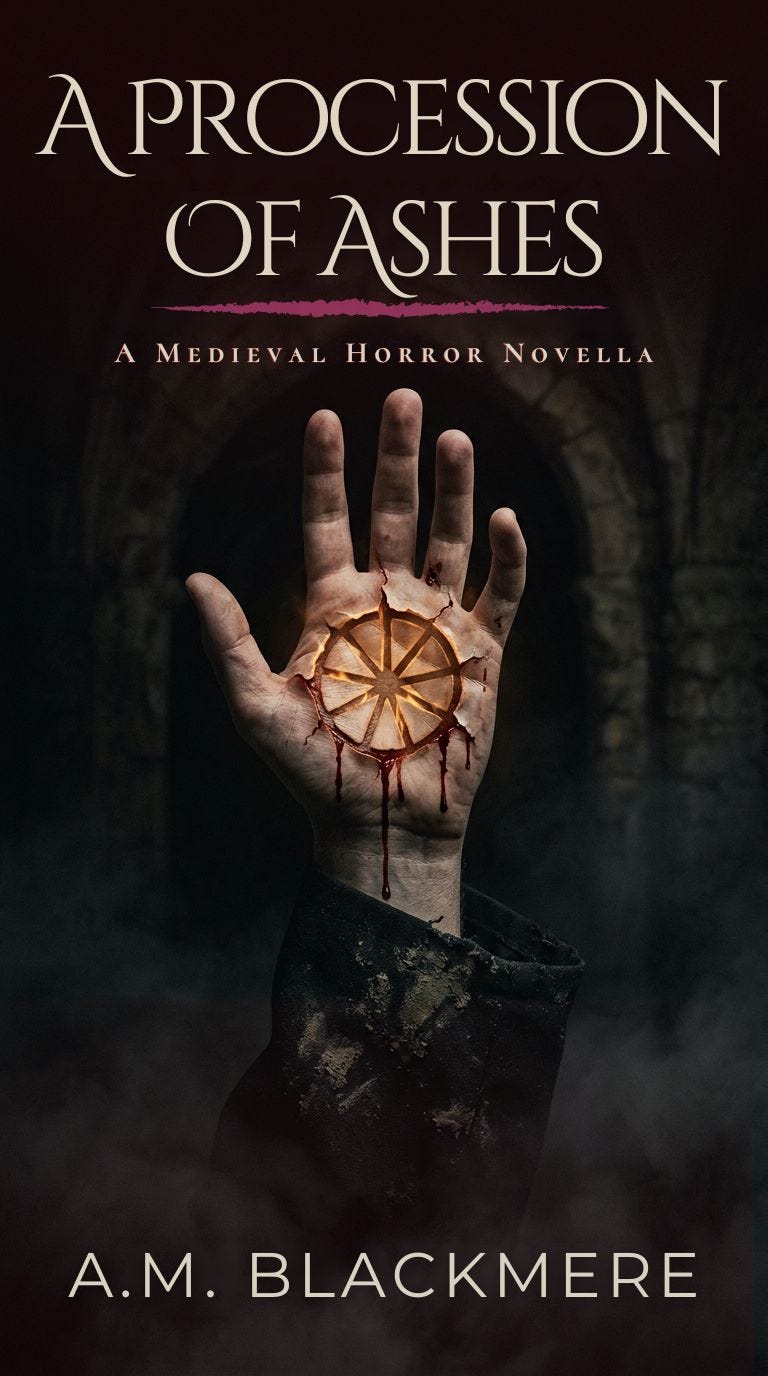
The same documented history, the 1349 processions and the bargaining with a silent heaven in the language of blood, is the ground beneath A Procession of Ashes, set in plague-hollowed Piacenza.
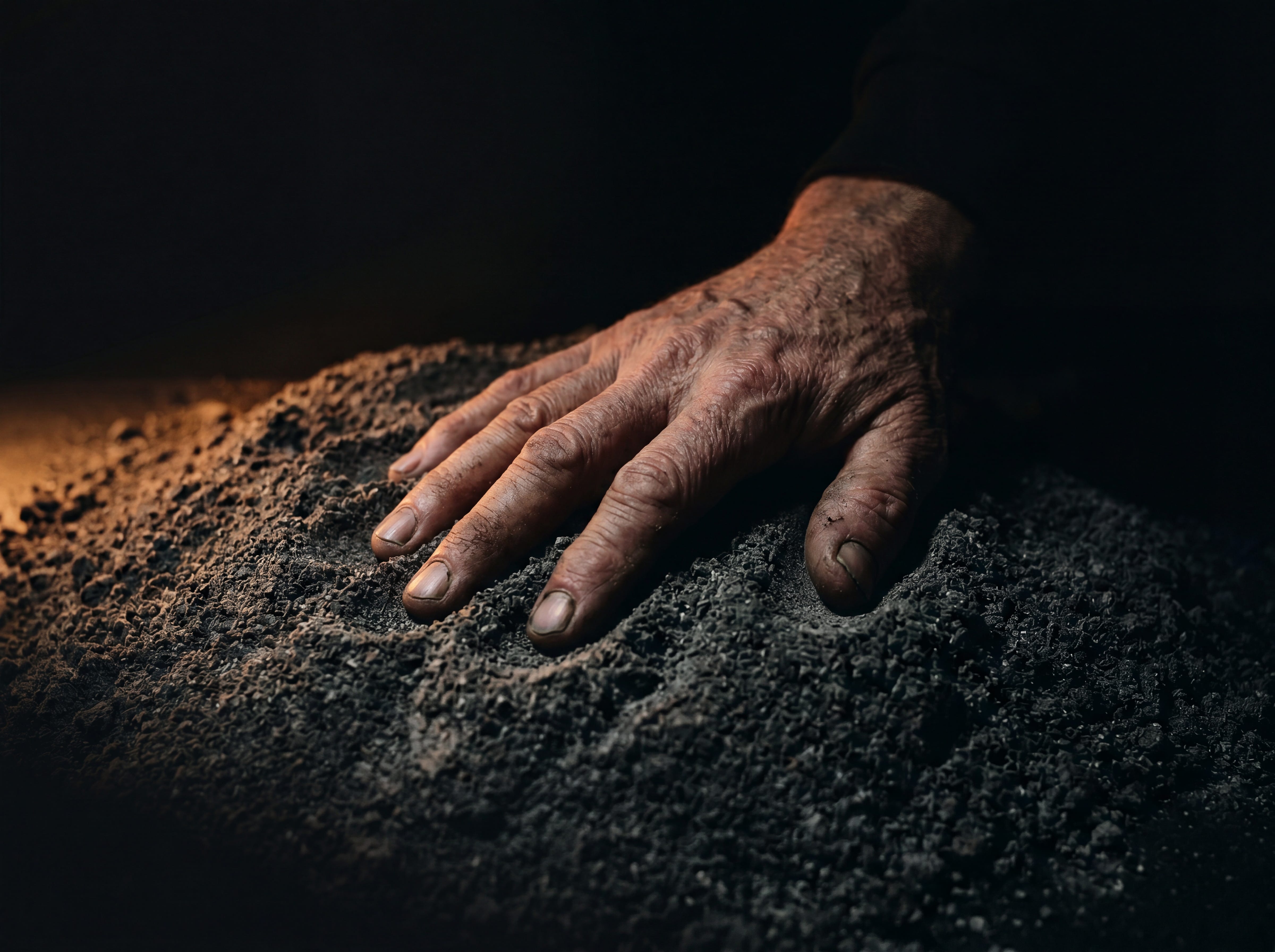
The grave is too shallow because the ground is already full. The digger knows it and digs anyway, because the alternative is leaving the body in the street where the dogs are. It is the autumn of 1348, somewhere in Europe, and the bell that should toll once for each death has stopped tolling. There are too many deaths to count. The priest who should say the words is three weeks dead himself. A woman kneels at the lip of the pit with a child sewn into a sheet, and she is not weeping, because weeping is for people who still believe the weeping will be heard.
That is the territory of medieval horror. Medieval horror is a genre of fiction that sets its terror in the European Middle Ages, roughly 500 to 1500 AD, and draws its dread from the documented catastrophes of the period: plague, famine, religious persecution, and a worldview in which the supernatural was treated as plain fact. What separates it from sword-and-sorcery fantasy is its refusal to invent. The strongest work in the genre lands because the real Middle Ages were worse than anything a writer would dare make up.
This is a field guide to that genre. Below are the best books, films, and games, the recurring figures that haunt all of them, and the real plague, inquisitors, and archaeology underneath the fiction. Read it as a map of where to start and a record of why one period keeps producing our most durable nightmares.
Most of what people picture when they hear “medieval horror” is a mix of later inventions and inflated legend. Four corrections clear the ground.
1. The plague doctor in the beaked mask is a medieval image. It is not. The full beaked costume was designed by the French physician Charles de Lorme during a 1619 plague outbreak in Paris, nearly three centuries after the Black Death. The earliest known illustration of it is a 1656 engraving by Gerhart Altzenbach. No one who lived through 1348 ever saw one.
2. The Inquisition burned millions of witches in the Middle Ages. The great witch hunts came later, mostly between 1450 and 1750, and they peaked in the early modern period rather than the medieval one. The most influential witch-hunting manual, the Malleus Maleficarum, was not printed until 1486, at the very end of the Middle Ages. The Inquisition’s reputation in fiction runs well ahead of its documented body count.
3. Medieval people were helpless fatalists who only prayed and died. They reached for competing explanations. Physicians blamed corrupted air and the planets. The medical faculty of the University of Paris, asked in 1348 to explain the plague, attributed it to a conjunction of Saturn, Jupiter, and Mars that had occurred in 1345. Towns shut their gates. Others went looking for someone to blame, which is where the massacres started.
4. It is all invented dark fantasy. Much of the genre’s most disturbing material comes straight from the record. Flagellant brotherhoods really did march from town to town whipping themselves bloody. Villagers really did dig up and mutilate their own dead to keep them from rising. The history did not need embellishment.
The Black Death reached Europe aboard Genoese galleys that put in at Messina, Sicily, in 1347. Over the next four years it killed an estimated third to half of the continent’s population, and by some local accounts as much as 60 percent. Death came fast: swollen black buboes at the groin and neck, fever, and often a corpse within days. The scale broke the systems built to explain suffering. Priests died alongside their parishioners. Manors emptied. The Church prayed and the dying continued.
Without any idea of germs, the cause was open to interpretation, and every interpretation pointed somewhere darker. Plague was read as the punishment of God or the work of the Devil. Bad weather, failed harvests, and madness were filed under the same heading. The line modern readers draw between a natural disaster and a supernatural one did not exist, which is the engine the whole genre runs on.
Some answered the terror with their own bodies. The flagellant brotherhoods, the Brethren of the Cross among them, processed through plague-struck towns in 1348 and 1349, stripping to the waist and scourging themselves in public rituals meant to buy back God’s mercy with blood. The movement grew large enough and strange enough that Pope Clement VI condemned it in 1349. Institutional dread had a second face as well. The machinery of the medieval Church for enforcing belief hardened over the period into the Inquisition, and the witch-hunting handbook it eventually produced, the Malleus Maleficarum of 1486, usually credited to the Dominican inquisitor Heinrich Kramer, codified interrogation and torture for the panics that followed.
The common thread is the body. Medieval horror lives in flesh: the buboes, the self-inflicted wounds of the penitents, the corpse that will not stay buried. The body was the place where the unseen forces of the age became visible, and that is exactly where the fiction still goes to frighten us.
Every horror in that last section was real. That is the ground my own novella stands on.
A Procession of Ashes is set in Piacenza in the autumn of 1349, in a city the plague has already hollowed out. A flagellant company called the Brotherhood of Broken Flesh walks in through the gates behind a man who promises the dying a way to bargain with a silent heaven. Father Matteo, the parish priest, watches his congregation drift toward this new shepherd while his own faith goes quiet. I invented none of the history. The processions, the penitential brotherhoods, the bargaining with God in the language of blood were all documented in 1349. If you have read Christopher Buehlman’s Between Two Fires or Umberto Eco’s The Name of the Rose, you already know this register: dread built from the record rather than from spectacle.
The genre’s roots are Gothic. Horace Walpole’s The Castle of Otranto (1764) invented the haunted-castle template and used the medieval past as a stage for moral allegory. Matthew Lewis’s The Monk (1796) pushed further into corrupt clergy and open supernatural transgression. It is worth holding the distinction between that early Gothic and what came later: the eighteenth-century writers treated the Middle Ages as ornament and allegory, while modern period horror treats the same era as documented reality, mud and all.
A pulp lineage runs between the two. Clark Ashton Smith’s Averoigne tales, published in Weird Tales through the 1930s, fused medieval France with cosmic dread. Michael Crichton’s Eaters of the Dead (1976) framed its horror as a recovered manuscript, splicing the real travel account of the Arab envoy Ibn Fadlan onto the bones of the Beowulf legend.
The modern revival is where the genre lives now. Christopher Buehlman’s Between Two Fires (2012), set on the plague roads of 1348 France and shaped around a war between angels and demons, is the cornerstone most readers start from. Ottessa Moshfegh’s Lapvona (2022) turned a medieval fiefdom into a study of famine and human depravity under a hollow faith. The anthology Howls from the Dark Ages (2022) gathered eighteen stories that together map how wide the revival has grown. If you want one entry point, take Buehlman first, then Moshfegh for the literary end of the register.
Film reached the period early. Benjamin Christensen’s Häxan (1922), a silent Swedish-Danish docudrama, tied the witch panics to the Malleus Maleficarum and argued that much of what the Church called possession was untreated mental illness. Italian Gothic took up the inquisitor and the witch a generation later. Mario Bava’s Black Sunday (1960) built its vengeance plot around Barbara Steele and a branded witch; Roger Corman’s The Pit and the Pendulum (1961) and Stuart Gordon’s 1991 version of the same Poe material put the Grand Inquisitor Torquemada at the center of the frame.
Gritty realism arrived with Christopher Smith’s Black Death (2010), set in 1348 England, which pits religious certainty against plague-era despair in a remote village and never resolves whether anything supernatural is happening at all. Folk horror carried the dread into the wilderness: Lukas Feigelfeld’s Hagazussa (2017) follows the slow psychological collapse of an ostracized woman in the fifteenth-century Alps. Robert Eggers’s The Witch (2015), though set in 1630s New England and past the strict medieval line, is the folk-horror cousin every fan of the genre should see, built on the same fear of the isolated woman and the unseen.
The terror is not only a Western inheritance, either. Kaneto Shindo’s Onibaba (1964) and Kuroneko (1968) move the same medieval dread into feudal Japan, trading the plague pit for the reed marsh and the vengeful spirit, and they belong on any serious watch list for the genre.
Games put the player inside the vulnerability instead of watching it. A Plague Tale: Innocence (2019) and its sequel follow Amicia de Rune and her younger brother Hugo across a plague-ravaged 1349 France with the Inquisition at their backs. The engine renders rat swarms by the thousand, up to a reported 5,000 on screen at once, and the only thing that holds the sea of teeth back is light and fire. A supernatural curse called the Prima Macula, an evil carried in noble bloodlines, drives the plot underneath the history.
For players who want the era’s cruelty undiluted, Fear & Hunger is a punishing dungeon crawler built on dismemberment, coin-flip survival, and deliberately transgressive medieval horror. Blight: Survival, an upcoming title built in Unreal Engine 5, promises visceral Hundred Years’ War-era combat against both the living and the infected, with armor painted in blood as a warning of how far the social order has fallen. On the tabletop, Ars Magica remains the deep cut: a role-playing game set in “Mythic Europe,” a version of the Middle Ages where medieval belief is literally true and magic works by the rules the period’s own thinkers imagined.
A handful of archetypes recur across every medium, each one standing in for a different corruption of the age.
The Grand Inquisitor. The horror of institutional power, belief weaponized into surveillance and torture. Torquemada is the model the genre keeps returning to.
The Necromancer. The horror of hubris, a man reaching past the line God drew at death and paying for it. Where the Inquisitor corrupts the system, the Necromancer corrupts the soul.
The Witch. The outsider blamed for a community’s misfortune, almost always a woman. She is the figure through which the period worked out its fear of isolation, of female power, and of the neighbor who is secretly the enemy.
The Monk. The cloister gone wrong, sanctity curdled into appetite. Lewis’s Ambrosio in The Monk set the mold, and the corrupt clergyman has anchored the genre ever since.
The Revenant. The restless corpse that climbs out of its grave to spread disease and assault the living. This is the medieval ancestor of the modern zombie, and unlike the others, we have its bones.
The Beast. The monster that stands in for a community’s collective sin or a violent history, from the Beast of Gévaudan to the nameless thing in the dark beyond the firelight.
In the deserted medieval village of Wharram Percy in North Yorkshire, archaeologists found the receipt. A team led by Simon Mays, a human skeletal biologist at Historic England, working with the University of Southampton, studied 137 human bones pulled from a pit on the site, and published their findings in 2017 in the Journal of Archaeological Science Reports.
The bones, radiocarbon-dated to between the eleventh and thirteenth centuries, belonged to at least ten people, including children as young as two. Seventeen of them carried 76 knife and chop marks, and the cuts clustered around the head and upper body. Several bones had been burned at low temperature, and several long bones had been deliberately broken.
The pattern ruled out butchery for food, which would have left marks at the joints and muscle attachments instead. Strontium analysis of the teeth showed the dead were locals, not outsiders driven off and killed. Mays and his colleagues concluded that the likeliest explanation was the grim one: villagers had decapitated, dismembered, and burned their own dead to stop them rising as revenants. Ordinary people in an English village treated their neighbors’ corpses as a threat that had to be physically destroyed. The folklore left a mark on bone.
The wider horror boom is now measurable. UK sales of horror and ghost stories rose 54 percent in value in 2023 to 7.7 million pounds, the genre’s best year since accurate records began, according to Nielsen BookScan figures reported by The Bookseller. 2024 set a fresh record at just over 8 million pounds, and 2025 ran ahead of it again. Horror is selling because it reflects the anxieties readers are already carrying, and the Middle Ages remain its deepest reservoir.
Two currents are worth watching. “Cozy horror” has softened the genre’s edges for one part of the market, while a harder strain sometimes called fungal or mycelial horror has moved in the opposite direction, treating decay and infestation of the body as the most intimate dread of all. That second current runs straight back to the medieval obsession with the corrupting flesh.
The 2026 release calendar confirms the turn toward history reread as nightmare. Cameron Sullivan’s debut The Red Winter, out from Tor in February 2026, retells the hunt for the Beast of Gévaudan across a reimagined European past that runs from Imperial Rome to Joan of Arc. Mark Lawrence returns to grimdark with Daughter of Crows. Sunyi Dean’s The Girl with a Thousand Faces carries the Gothic-historical mode into wartime Hong Kong. Medieval horror sits at the dark center of that larger wave, and it shows no sign of running out of ground.
What is medieval horror?
A fiction genre that sets its terror in the European Middle Ages, roughly 500 to 1500 AD, and draws on real plague, religious persecution, and folklore. It is distinguished from medieval fantasy by its grounding in documented history rather than invented magic systems.
What is the best medieval horror book to start with?
Christopher Buehlman’s Between Two Fires (2012) is the usual entry point. For the Gothic roots of the genre, read Horace Walpole’s The Castle of Otranto (1764); for the literary end, Ottessa Moshfegh’s Lapvona (2022).
Is medieval horror based on real history?
Often, yes. Flagellant processions, mass plague graves, and corpse mutilation to prevent revenants are all documented events. The 2017 Wharram Percy study in Yorkshire found physical evidence of bodies dismembered and burned to keep them from rising.
What is the difference between folk horror and medieval horror?
Folk horror centers on rural superstition, ritual, and isolation, and it can be set in any period. Medieval horror is defined by its setting in the Middle Ages. They overlap often, as in Hagazussa, but they are not the same category.
What games are like A Plague Tale?
For grim medieval survival, look at the punishing Fear & Hunger and the upcoming Blight: Survival. For medieval belief modeled as a working system, the tabletop role-playing game Ars Magica is the standard.
Go back to the churchyard. The woman with the child sewn into the sheet is not a metaphor. Some version of her stood at the edge of some pit in 1348, and the people who kept the chronicles barely had numbers for how many of her there were.
Medieval horror keeps returning to that churchyard because the ground there is still soft, and because every monster the genre invents is small next to what the record already holds. I write in the period for the same reason readers keep coming back to it. The dark is older than we are, and it has never needed much help to frighten us. The bell stopped tolling a long time ago. The grave is still too shallow.
A.M. Blackmere writes atmospheric medieval and historical horror. I publish field guides like this one and new fiction here every month. If this was your kind of dark, subscribe, and find A Procession of Ashes on Amazon.
Thanks for reading A.M. Blackmere! This post is public so feel free to share it.
Comments
Nothing yet. Say the first thing.
Sign in to join the conversation.