
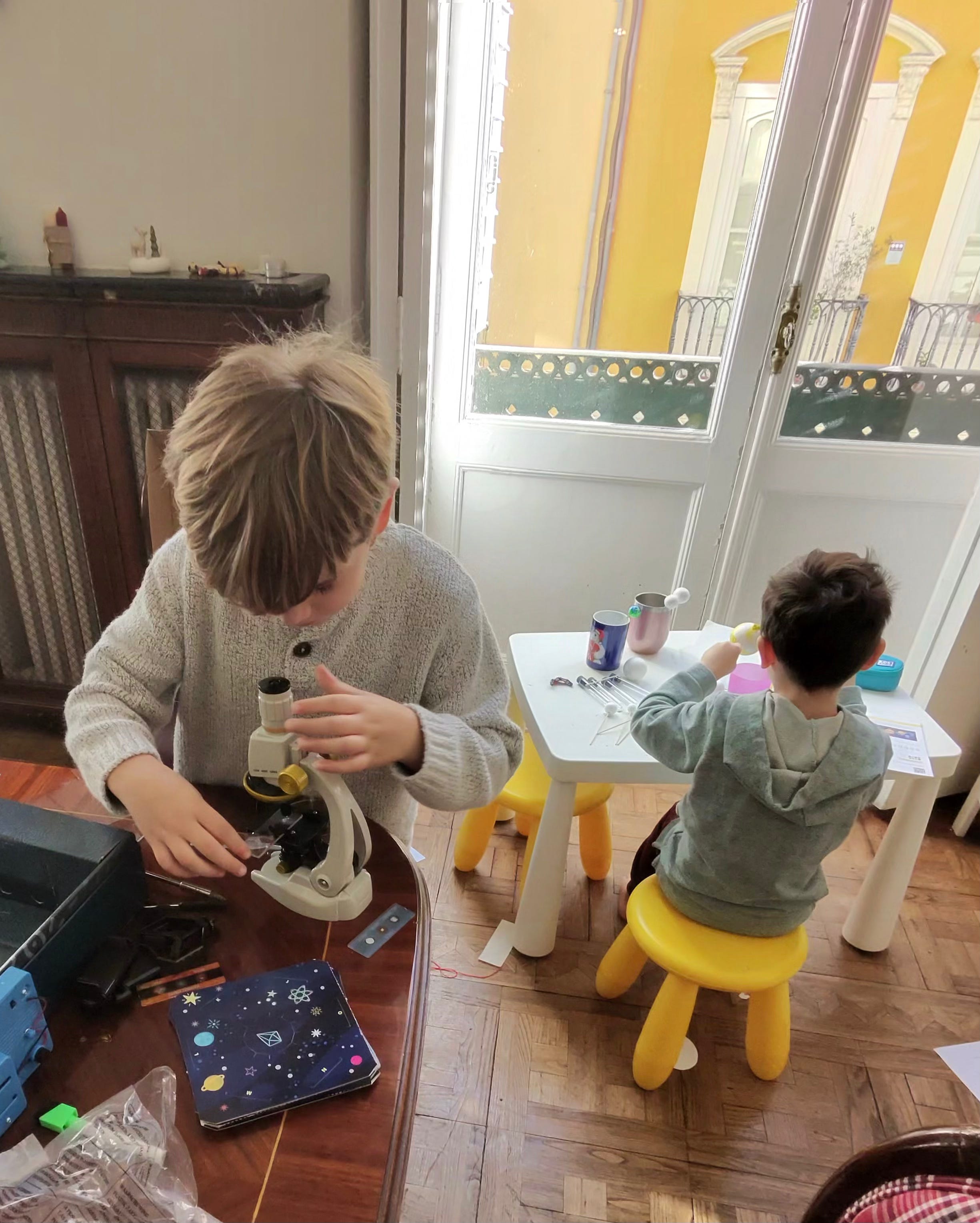
One of my sons loves sports, balls, wrestling on the bed, and farting. Don’t ask.
His brother is a lot nerdier. He can and does spend three-hour stretches reading Harry Potter, loves doing Khan Academy math online, and plays with Beyblades like they’re the second coming of the Easter Bunny.
And for the past several months, I’ve felt like I have a favorite. (Hint: I’m not a nerd.)
I feel guilty even thinking it. Then I start worrying that I’m engaging more easily with one than the other, and from there I go straight into the familiar fatherhood shame spiral:
What kind of dad even thinks this?
Am I screwing one of them up in real time?
Will they feel it before I can fix it?
I almost didn’t write this because even typing the words “favorite child” felt a little blasphemous. But I also know that if something feels this loaded to say out loud, there’s usually something important hiding underneath it.
And I don’t actually think the truth is that I love one of my boys more than the other.
I think the truth is harder, and probably more common: Sometimes one child feels easier to enjoy. Easier to understand. Easier to be light around. Easier to connect with without having to override half my instincts first.
This isn’t the same as loving him more. But it still makes me deeply uncomfortable.
Equal Love, Unequal Ease
I think most of us believe that love should feel symmetrical. Same warmth. Same patience. Same chemistry. Same delight.
But kids are not cookies. And fatherhood is not a model of fairness.
Children come with wildly different temperaments, interests, sensitivities, and ways of seeking connection. And those differences collide with our own personalities in real time.
One child may invite the best of you naturally. The other may invite your growth. One may feel like play. The other may feel like work. One may resemble you in all the flattering ways. The other may expose the parts of you that still need sanding down.
About 100 years ago, Alfred Adler argued that birth order changes how children experience the same parents. And newer research suggests he was onto something: younger siblings often get more warmth, while older siblings tend to get more freedom and less control. So yes, some unevenness is a natural family tendency. That does not make it harmless, but it does make it common. Our kids will experience us differently. The harder question is how to notice these patterns before they harden into one child feeling less loved or less chosen.
My more athletic son often meets me in a part of life where I don’t have to try so hard, such as through movement, roughhousing, and action. Immaturity disguised as bonding (according to their mother). It’s immediate. It’s physical. It’s low-friction.
My nerdier son asks something different of me. He asks me to enter worlds I don’t naturally live in. To slow down. To care about things I would not care about on my own. To connect on his terms, not mine.
It can feel like work. Not resentful work. But work nonetheless.
As I realized after my conversation with Ambitious Dad Maurice Philogene, our kids don’t only try to connect with us by stepping into our world. Sometimes they invite us into theirs. I wrote more about that dynamic in The Boring Stuff Is the Point.
The hard part is not sitting on the floor. The hard part is entering their world without quietly trying to drag them back into yours.
Where the Real Danger Lives
The more I’ve sat with this, the more I think the real issue is not whether parents sometimes feel closer to one child in a given season. It’s whether we confuse ease with love. Whether we confuse chemistry with character. Whether we confuse “this child currently asks less of me” with “this child matters more to me.”
That confusion is dangerous, because kids are emotional detectives. They may not be able to articulate it, but they can absolutely feel where delight comes easily and where it has to be manufactured. They feel where we are playful and where we are merely dutiful. They feel where our attention is generous and where it is tight.
Ambitious Dad Andy Mallon put it even more sharply: “You can fall into a trap with your kids where you focus on what your kids mean to you rather than what you mean to them.”
That is empathy times a hundred because the question is not: which child feels easier right now? The important question is: what does each child feel from me right now?
The danger is not the thought itself. It’s when one child starts to feel more chosen than the other.
What This Is Revealing in Me
Once I asked the better question, I had to get more honest. If one child feels easier to enjoy right now, it may be worth considering:
Is this child simply in a phase that asks less of me emotionally?
Does this child enjoy the kinds of play or conversation that already feel natural to me?
Is the other child asking me to slow down, stretch, or enter a world I don’t naturally value?
Am I mistaking ease for closeness?
Am I drawn to the child who feels more like me?
Is one child getting more of my delight while the other gets more of my management?
Is this about them, or about what each of them stirs up in me?
That last one is probably the hardest question of all. Because fatherhood has a way of doing that. The children who do not fit our natural wiring often become the ones who deepen us most, if we let them.
The Work
The work, then, is not pretending I feel identical things with both of my boys in every season. (And if you haven’t already noticed, I don’t.)
Instead it is more like:
Noticing when one child gets the more playful version of you and the other gets the efficient one
Spending one-on-one time with the child who currently feels less intuitive to you
Entering their world before you feel naturally interested
Letting them teach you the thing you would normally dismiss
Asking not just “Who feels easier right now?” but “Who feels more chosen right now?”
Giving more intention where ease is absent
Because the danger is not the thought itself. The danger is when one child starts to feel more chosen than the other.
Same Same but Different
Before I started writing this I did fear that I had a favorite child. But part of the joy of doing this work is flushing out my thoughts. Now I know, I have favorite seasons, not children.
And I will never let fatherhood be a loyalty test to the child who comes most naturally to me. Instead, I will take it as my invitation to keep growing and becoming the kind of dad who can enter each child’s world without needing it to look like his own.
And yes, some days this will feel like dragging a shopping cart with one broken wheel down the candy aisle with two toddlers tugging at my arms and begging for everything.
But I think that’s the job. Not perfect sameness. Just the courage to notice where love comes easiest, and the maturity not to stop there.
Thanks for reading Ambitious Dads ! Subscribe for free to receive new posts and support my work.
Comments
Nothing yet. Say the first thing.
Sign in to join the conversation.