
Note from Adam: I’ve had the privilege of getting to know Sarah and Oscar over the past year. I was so moved by Sarah’s new film that I joined the project as an executive producer and ended up distributing it. Since then, Sarah has become a close friend and a collaborator on several projects. Oscar and I connected through Instagram (!!!) and formed a lovely friendship over shared passions and a deep respect for one another’s work. I think he’s one of the most intelligent and thoughtful critics working today (and also a super talented curator and visual artist to boot). I introduced Sarah and Oscar a few months back, because I thought they would get along and have a lot to talk about. Oscar ended up interviewing Sarah, and asked if I would be interested to publish it on AMAUTEUR. How could I not? Take it away, Oscar!
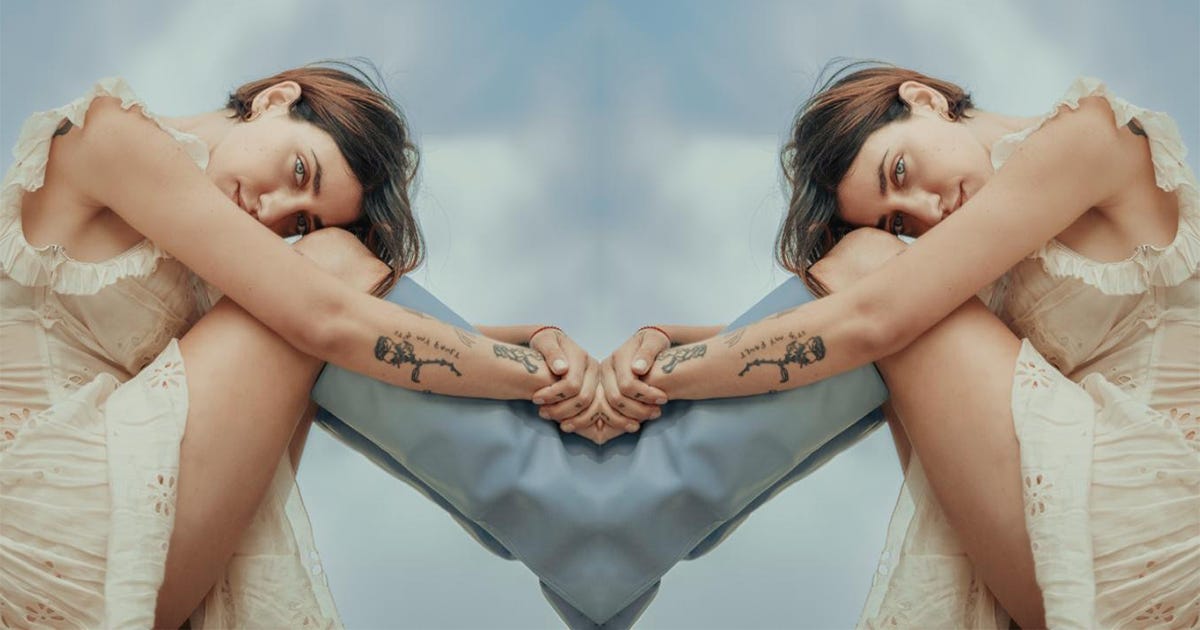
The cinematic is both process and site, encounter and revelation: a point of celluloid contact with the unreachable past. This sentiment permeates the practice of Sarah Benjamin, whose work explores the spaces of oneself that only cinema could lay bare. For Benjamin — Jerusalem-born, New York-based — the dialectic of image and sound becomes the means of confronting the complexity of her childhood and adolescent experiences. Often including non-professional actors and those whose realities exist in intimate proximity to their on-screen characters, the artist’s films — lyrically intertwining the real and the oneiric, the particular and the universal — reflect upon the struggles of negotiating one’s cultural and personal identities.
Leaving her home at age twelve, Benjamin spent time on the streets of Jerusalem before relocating to New York at eighteen. While heavily engaged with photography — with work featured in publications such as i-D magazine — as a means of capturing the diversity of her cultural landscapes, Benjamin soon turned to street casting, working with artists including A$AP Rocky and Tyler, the Creator. Encouraged by close friends and collaborators, Benjamin began slowly experimenting with the cinematic artform.
Following the success of her short films Arava (2023) and Meow (2025), Benjamin is currently co-writing her debut feature film, Angel Rat, with her partner, Yasha Gruben. Alongside this, she will soon begin an MFA in Contemporary Art Practice at the Royal College of Art in London. She has explored her filmic work in installation settings, attending to the kinship between cinema and exhibition. Outside of her filmic achievements, Benjamin collaborated with journalist Wilson Fache, who was awarded the prestigious Albert Londres Prize, contributing a photographic series, Terminus: a documentation of the unseen realities inside Tel Aviv’s former central bus station. Benjamin continues to work in casting, with her agency, Memoria Di, featured in publications such as Dazed magazine and The New York Times.
Oscar Bloomfield: Your journey to filmmaking is particularly unique. Can you share a few words on how your experiences in street casting came to inform your filmmaking practice?
Sarah Benjamin: To this day, I really only know the same films that I knew when I was sixteen—I don’t have extensive film knowledge. Growing up, my mum loved a lot of movies, which was sort of unusual considering the landscape. I grew up knowing who people like Wim Wenders and Jim Jarmusch were. My understanding of filmmaking came when I was working on some street casting in New York. I remember seeing Andrea Arnold’s American Honey — everyone was talking about it, and how the lead actress was discovered on the beach. The film completely blew me away, primarily because I’d never seen anything that felt so close to my experiences. I came to realise how the camera is a subjectivity, but it’s also the portrait of the person that’s leading. The camera dances with us and lives within us — it can capture the things that we miss.
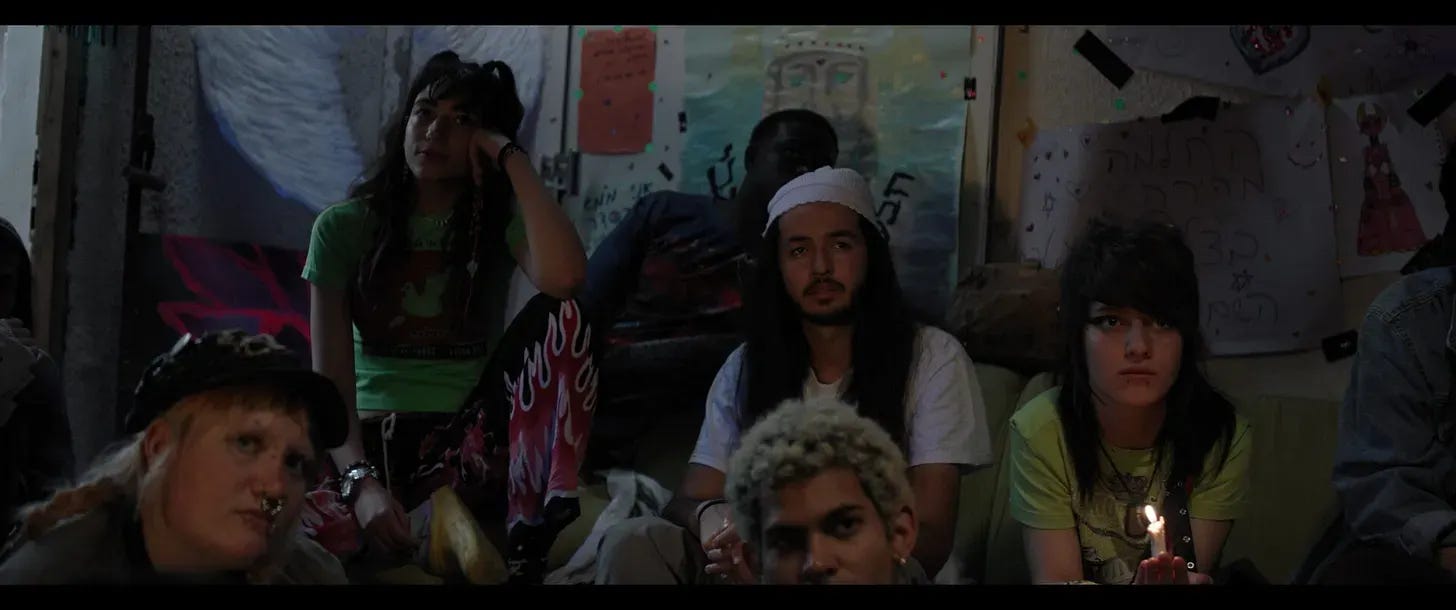
I began to do more castings for films. I bought a camcorder and started filming the people who were auditioning. I had so much fun getting rid of the tripod and being free with the camera. Filming auditions was really where I began to understand how to move in the world of cinema. I also came to understand what I really care about. Initially, I tried to make documentary films exploring the subjects of my narratives, but this wasn’t for me. I’m way too soft when someone starts sobbing, I turn off the camera and give them a hug [laughs]. For my first film, Arava, I approached the filmmaking as I would my casting: bringing a bunch of people from that world into a space and seeing what naturally transpires. I constructed the script around these actors’ experiences, mixing them with my own memories.
OB: You mention Wenders and Jarmusch. What were some of your other early influences?
SB: I’m obsessed with Tom Waits. I think he’s the most incredible human to ever live. I learned English through listening to his music. People around me learned English from Facebook, and I learned it from listening to these horrifying sounds over and over again. I was obsessed with them. Then I started watching the early Jarmusch films. Growing up, there was not a lot of access to films — I couldn’t watch things online. I remember someone going super far away to burn a CD for me. It was like a half-a-day trip. Typically, if I wanted to watch a film, I would need to go buy it. $20 or whatever was a lot of money, so you’d just watch the film repeatedly. I’ve seen Down by Law (1986), Dead Man (1995), and Alice in the Cities (1974) countless times. I also loved a film by Israeli director Oded Davidoff that captured the lives of Jerusalem street kids. It was a different context, but it was a world that felt very close. I was like: “Wow, someone can actually find our world interesting?” That was mind-blowing to me.
OB: Realism is such a grounding facet to your work. How has filmmaking allowed you to process the past, and continue to understand it through these actors that you work with?
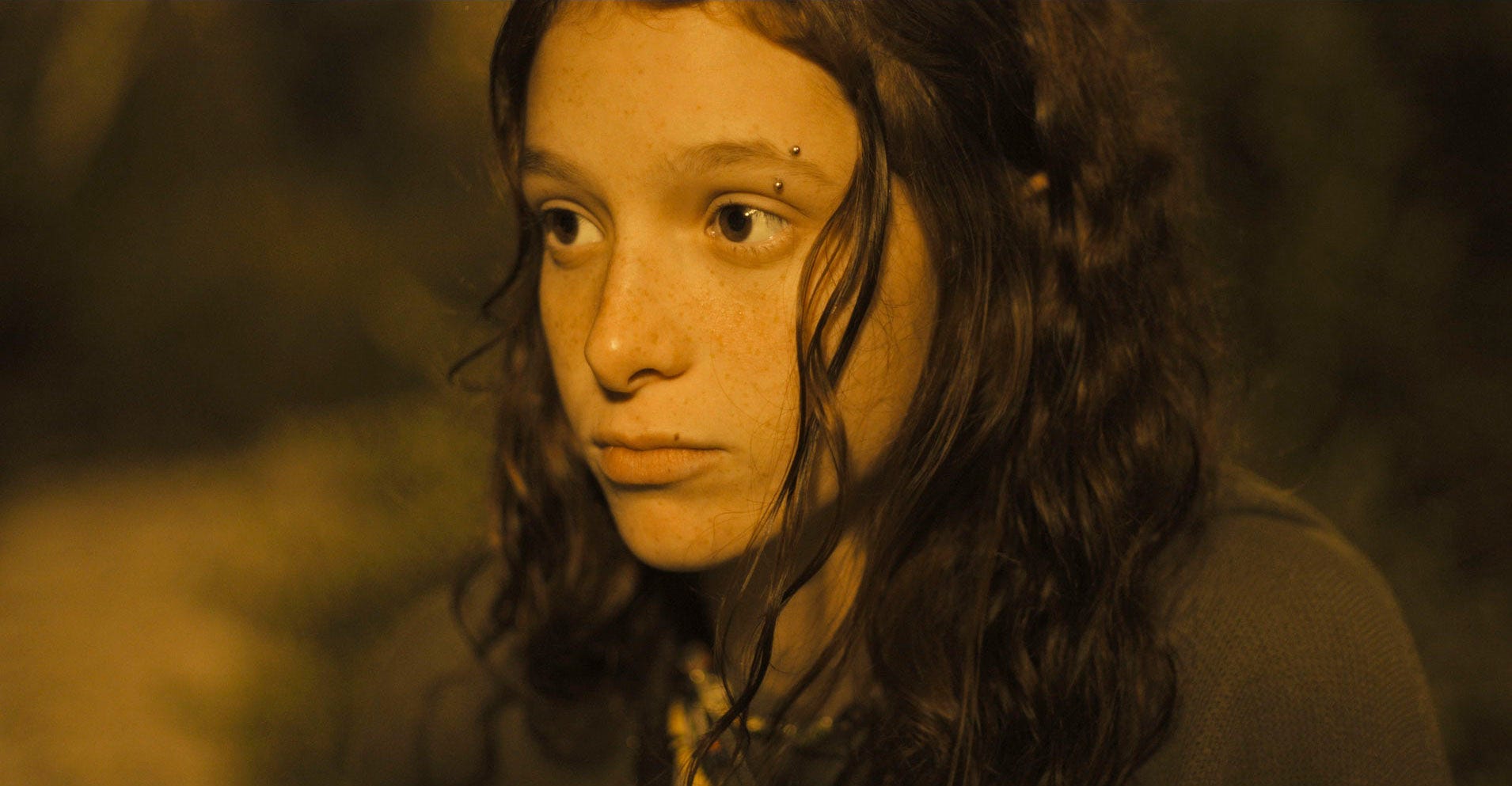
SB: As I write a lot about things that really happened to me, and things that come from my memory, I often struggle to distance the real from the fictive. Particularly in Meow, I try to balance my own experiences and the things that the non-actors I work with naturally bring into the project through the inner world of the character. The foundation of my work is always in the realism: the things that really happened in this world — either to myself, or the actors playing these characters. It’s worth mentioning that the figures that I often cast are in close proximity in real life to the characters I write about; that in and of itself produces a particular sense of realism. Sometimes these people bring forth way more than I can come up with when attempting to explore my own life through these stories.
Filmmaking has really been the only thing that has allowed me to continually edge closer to understanding my past. I had an amazing mentor and screenwriting coach who once told me: “You don’t need a therapist; you need to write a script.” In many ways, I did not have the easiest upbringing. I didn’t grow up in an environment that allowed me to develop in a ‘normal’ and ‘healthy’ way. I think a lot of the adventures that came from leaving my house, living on the streets for four years, and traveling with all these punks positioned me within an adult world, but one that was equally fantastical. There were so many moments within those years, where I was like, “wow, this feels like a fucking movie.”
I only started making films when I was in my thirties. Until then, and for several years, I had complete memory blocks — I didn’t remember anything that happened during many periods in my life. When I sat down for the first time to write Arava, I really asked myself: “What the hell happened when you were 15 or 16?” Through this process of screenwriting, things started coming back to me. Writing allowed me to confront things that I otherwise couldn’t.
OB: Despite your protagonists assuming the roles of vagabonds and moral outcasts, they are still drawn to their belief systems. Can you speak about this tension between devotion and rebellion that your work engages?
SB: I grew up in Jerusalem in the nineties, which was a patchwork of different religious segments and groups. This kind of environment fuses everyone together, so you’d have lots of different interpretations of Judaism. You have subcultures like punk and youth cultures, and they all kind of intersected in an interesting way and offer different things. A lot of the teenagers that I write about leave one religious sector — the Orthodox sector — and find themselves rebelling by joining a more spiritual, psychedelic branch of Judaism, which is called Breslov. People say the Breslovs are kind of like the Terence McKennas of Judaism. Jerusalem was a real spectrum. You had complete secular people or punks, and teenagers that you could find in London or anywhere else in the world. Then you have the super religious Orthodox teens, and the whole spectrum in the middle — the street culture, the street kids.
I was twelve when I left my house and started hanging out in the city centre downtown with the street kids. That’s when I was exposed to different influences — it was the first time I heard English music. I formed this kind of hybrid existence. Similarly to my character Arava: she is a total punk yet still believes in God when she comes back from rehab, even though she will never admit it to her friend; she’s hiding her love for this friend of the same gender yet goes and praises the saints in the grave. It’s like various worlds coming together, which is exactly how my childhood was. I really try to capture this convergence in my films, where I take a niche experience and universalise it in a way that only cinema could.
OB: Within your films, both visual and auditory fields are sources of experiential understanding. Can you discuss your fascination with sound?
SB: I’m obsessed with sound. There are sensations that I could never capture through two-dimensional images. For a long time, I have believed that the most personal things are the air and the light surrounding us. For me, those are the things that feel like home. I thought photography and film capture them equally. I later realised how important sound is in relation to these atmospheric elements. Audio — whether diegetic or non-diegetic — really deepened my relationship with cinema. The ability to use sound makes all the difference. Moments without music — or any sound — are equally fascinating to me: silence carries so much weight. Sound, or its absence, is incredibly powerful.
OB: In drawing on your own experiences, your work powerfully destabilises stereotypical depictions of Israeli identities.
SB: This destabilisation is a strong motivation for me. For instance, in Meow, I cast an Israeli actress of Yemenite heritage in the lead role. Seeing this girl on screen complicated familiar notions regarding Israeli identity and its broader relationship with the Middle East. My family, for instance, came from Iraq. It was hard for me to explain to people in America that there were Jews in Iraq for thousands of years — that there’s a rich history, specifically Iraqi Kurds, who are like a minority of a minority. All these stories are largely invisible in the two-dimensional, flat stereotypical representations of Israeli life. I want to create more personhood-focused stories from Israel, as I wanted to see them, and nobody was making them. You have all your expected politicised worlds and characters everywhere, but a teenage girl story was nowhere to be seen. Don’t get me wrong, the place I grew up in was volatile — marked by political upheaval, instability, and lack of security. I’m not trying to craft a neutral representation, these characters are extremely troubled from their circumstances, but they’re also human. These individuals are dealing with issues that are particular to their environment and identity, but, at the same time, they’re universal coming-of-age struggles — such as being in love with your best friend and the complexity of understanding one’s sexuality.
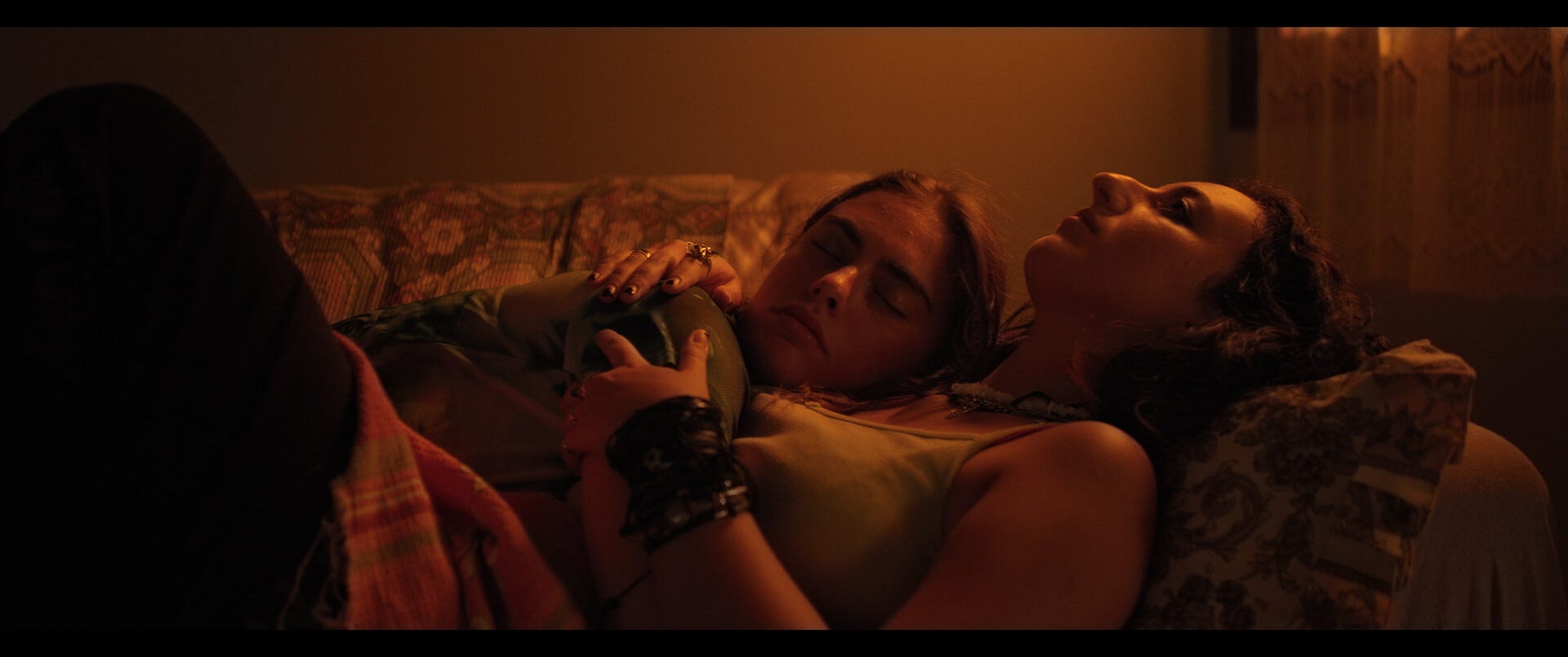
It has always been of the utmost importance to stick to my experiences and truths, without trying to overly explain anything. It has been beautiful to receive comments from people who tell me that they’ve never seen Jewish communities, or Israeli life, depicted like this. This feedback makes me particularly happy, as I hope my cinema can offer a bit of perspective, a bit of nuance to these worlds.
OB: It’s the possibility of edging closer, of gaining the curiosity to think and to question that lies at the heart of the cinematic medium.
SB: 100%. My growth as an artist stemmed from watching and learning about artists who challenged the status quo of their time. Admittedly, in my nature, I’m the opposite of a people pleaser. If people want me to do something, I will likely do the opposite. Many times, my friends have suggested I stop making films about teenagers in Jerusalem, that they’re not financially or economically productive. “Make an American film,” they suggest, “you’re essentially an American by now, it’s going to be so much easier for you to make an American film!” It’s important to me — regardless of how difficult it is — that I remain steadfast in my experiences and understanding of the world. My films are based on my childhood, so no one can tell me that my lived experience doesn’t exist and isn’t valid. It’s important for stories such as mine to be put into the world.
Oscar Bloomfield is a Film Studies PhD student, arts writer, and academic based between Australia and Europe. His doctoral research concerns the cinema of Michelangelo Antonioni, where he explores how Antonioni’s cinema unsettles both ontological and epistemological certainty. Oscar writes for both specialised and general audiences, spanning film studies, contemporary art, and design. He has interviewed a range of established international artists, including Apichatpong Weerasethakul, Julius von Bismarck, Lucile Hadžihalilović, and Nick Modrzewski. Alongside his written practice, Oscar has presented a series of visual work in both Australia and internationally, having recently completed a solo exhibition, consisting of three interrelated films, at Quality Gallery in Melbourne.
No posts
Comments
Nothing yet. Say the first thing.
Sign in to join the conversation.