
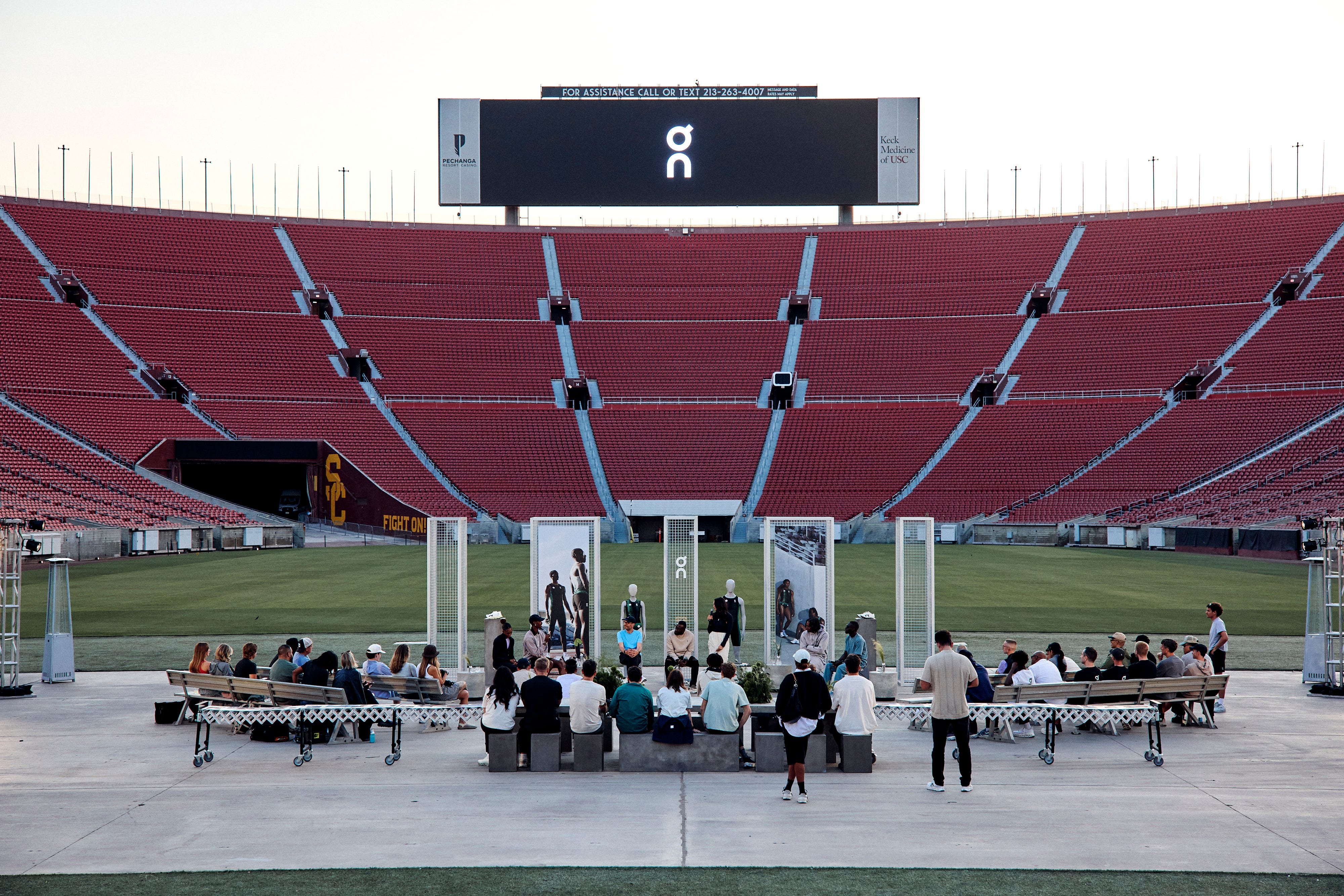
Hey ya’ll, it’s Matt. On invited us out to LA for a PR event and I had to skip out because 5th grade promotion is a far bigger deal in my world. Being in LA already, Deanna was able to make the trip. We are starting to see brands with ambition around the LA28 games lay groundwork for their presence. On showed out with an event inside the site of the track and field events at those LA28 games, the LA Coliseum - bravo.
I have multiple balls in the air at the moment including two different photo/video productions. I spent last week filming at the Hoka athlete Training Camp in Flagstaff. Can confirm: the Hoka men and women are training HARD and Western States is going to be an absolute barnburner. A lot of fun was had outside of running including a disc golf outing (folf? frolf?) where Hans showed us all how it’s done. Hayden had a moment of magic with the shot below and I may need to hire Adam Peterman on a future production for the unbelievable intuition to grab this clip.
Now here’s Deanna to break down the OAC Sprint Team…
The last time I laced up spikes, stepped back into blocks, and placed my pointer fingers and thumbs on the start line was about 15 years ago, when my high school soccer team was told to run track in the spring.
I joined the track team to stay in shape for the fall and to run with friends. I was a third leg runner in the 4x100 and 4x400, and sometimes jumped into the 200 at the last minute if a teammate was racing back to back events. I never took it too seriously. And because of that, I never really learned what it takes to train like a true sprinter. Where 1/100th of a second determines whether you podium or not. In high school you still feel part of a team. As an elite sprinter, the sport is traditionally much more individual.
Last week I was invited to find out what that actually looks like. And no, I was not the one running. I jumped off a press bus at Mt. SAC’s Hilmer Lodge Stadium at 10:00am, already 80 degrees out with not a sliver of shade in sight. The smell of hot rubber and the echo of shoes on metal bleachers transported me back in time. But as we navigated around the outside of the track, there it was. The historic phrase etched in stone: “WHERE THE WORLD’S BEST ATHLETES COMPETE.”
Today On was announcing a new team to join the On Athletics Club. And that new team is a sprint team. Instead of launching at a race, they decided to do it here. Where the athletes train every day. Where the work actually happens. A sport historically defined by the individual. A brand betting everything on the team. I was there with a voice memo app and a lot of questions.
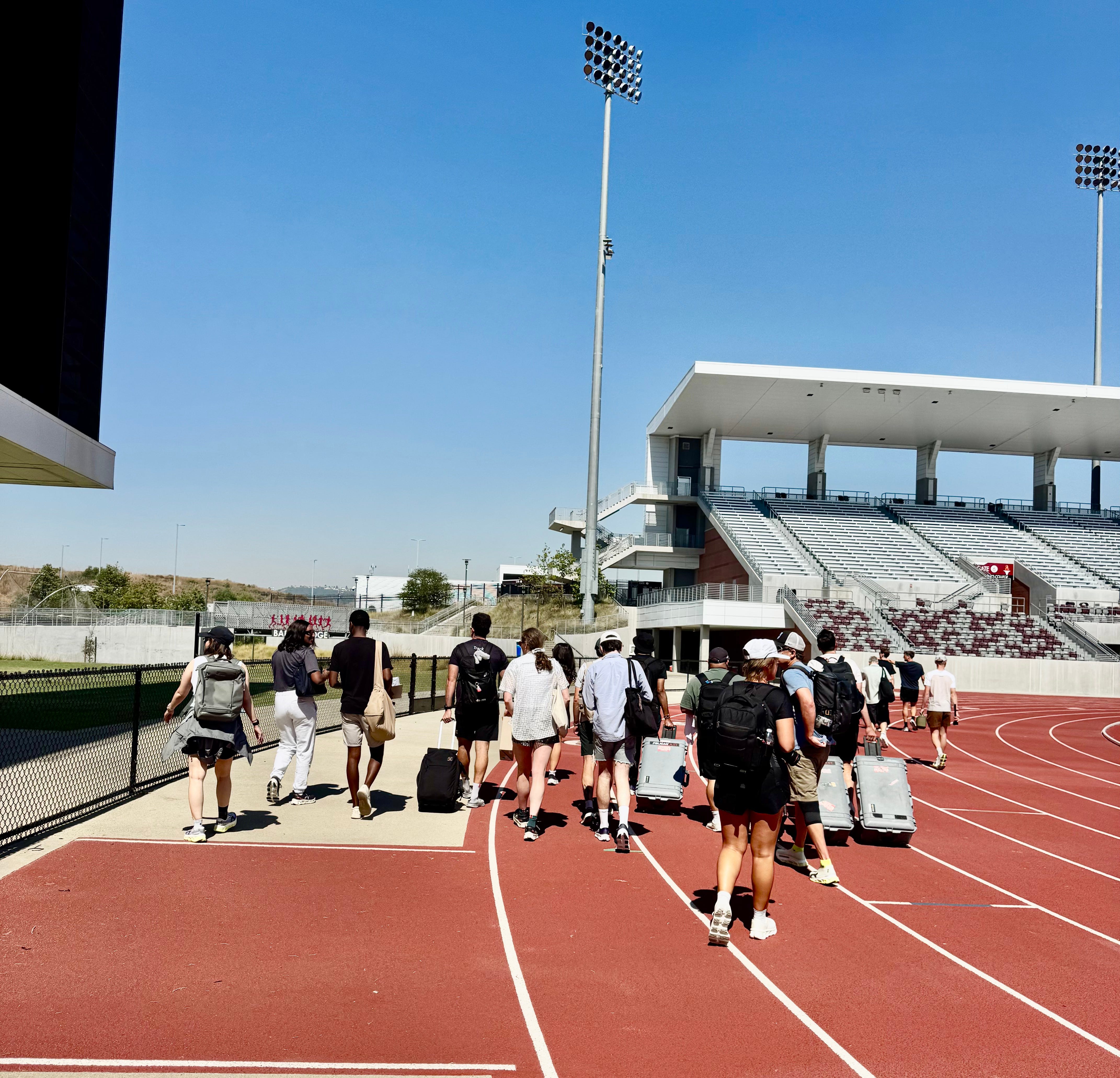
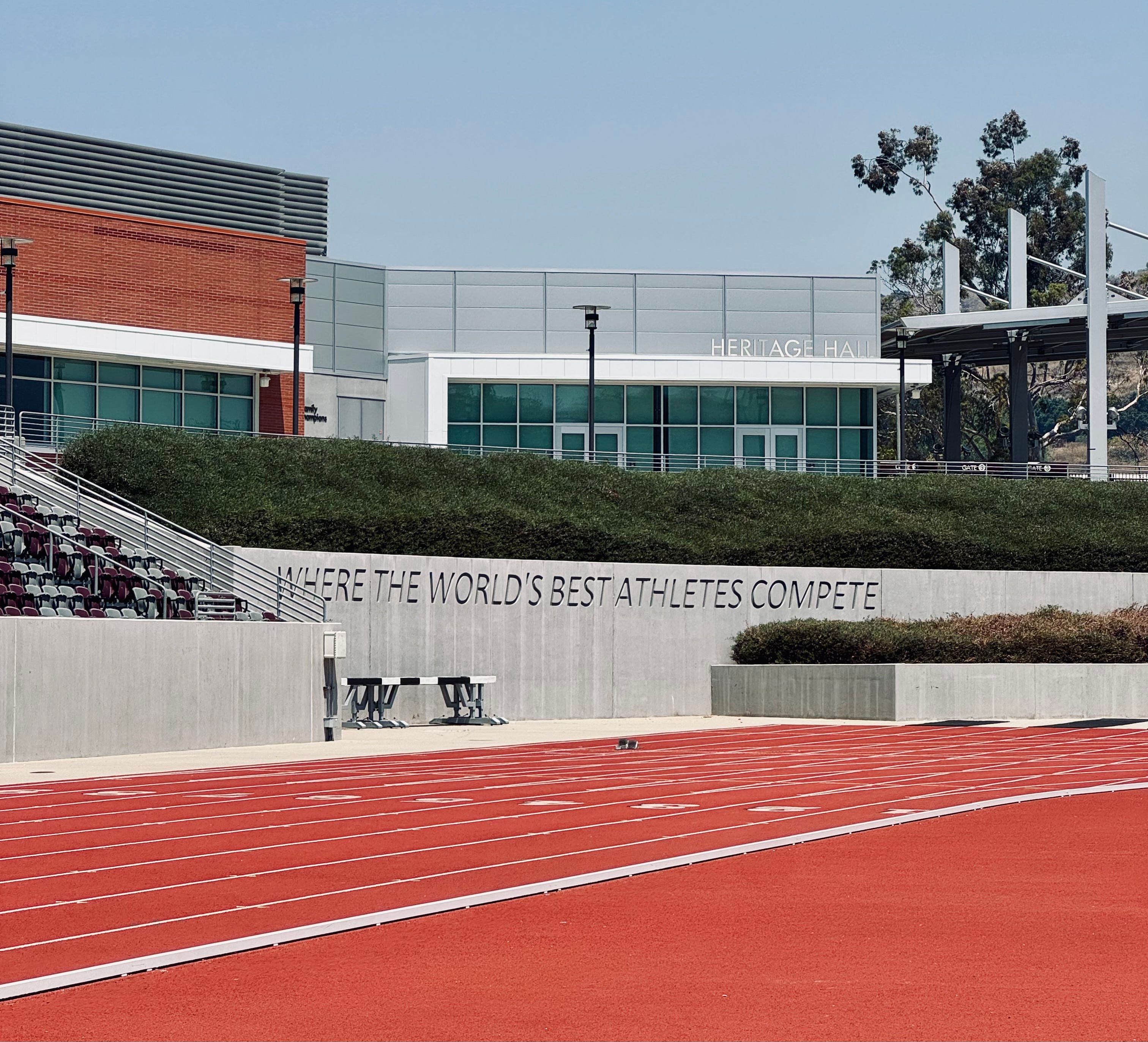
What does it take to build a sprint team vs. signing athletes and a logo on a kit? How is this approach different (or the same) as other OAC teams?
The On Athletics Club isn’t new. Since 2020, On has been building professional running teams with one thing in mind: the long game.
Right now there are three distance-focused elite teams. OAC Global in Boulder, Colorado where runners train 5,400 feet up, disappearing into the altitude and the quiet. OAC Europe in St. Moritz - 5,900 feet, Alpine trails, a track sitting pretty in the middle of town. OAC Oceania trains out of Melbourne - coastal paths and urban tracks. Each one built around the same idea: bring the right athletes together, give them space to grow as people and as professionals, and trust that when you rise together you rise higher than you ever would alone.
“We looked at professional distance running and thought, why don’t we take more of a team spirit to the track? Why don’t we use the models that exist in other sports?”
- Flavio Calligaris-Maibach, On’s Head of Athlete Strategy and Partnerships
Then there’s the OAC sprint team. Based in Los Angeles. No quiet trails. No controlled isolation. No altitude. These athletes have landed in one of the loudest, most chaotic, most alive running meccas in the world.
“The OAC Sprint is not only about 2028. Doing this here, in the hometown of the Olympics, is important as a long-term commitment to where we will go in sprints.”
- Flavio Calligaris-Maibach
Each OAC location was chosen deliberately. Altitude where it helps. Isolation where it matters. What stayed the same was three important steps. Find the right place, give them full infrastructure, and get out of the way. But getting out of the way requires something most brands struggle with: mutual trust. Trust in the coach. Trust in the athletes. Trust in the product. Trust that if you build the right environment and then step back, something real will grow.
“Our support should not start and end with the contract and with products. We believe we should not manage athletes. This should be a partnership.”
- Flavio Calligaris-Maibach
The word “partnership” kept coming up. In how the On team spoke about their coaches. In how they develop products with athletes rather than for them. And in an athlete-led initiative called the Compass Program, an app that gives every OAC athlete access to financial advisors, mental health support, career coaching, and medical fast lanes. Just another layer of the 360-degree infrastructure, because an athlete who is stressed about their taxes or scared about what comes after their career is an athlete who can’t fully trust the process. And without trust, the whole thing falls apart.
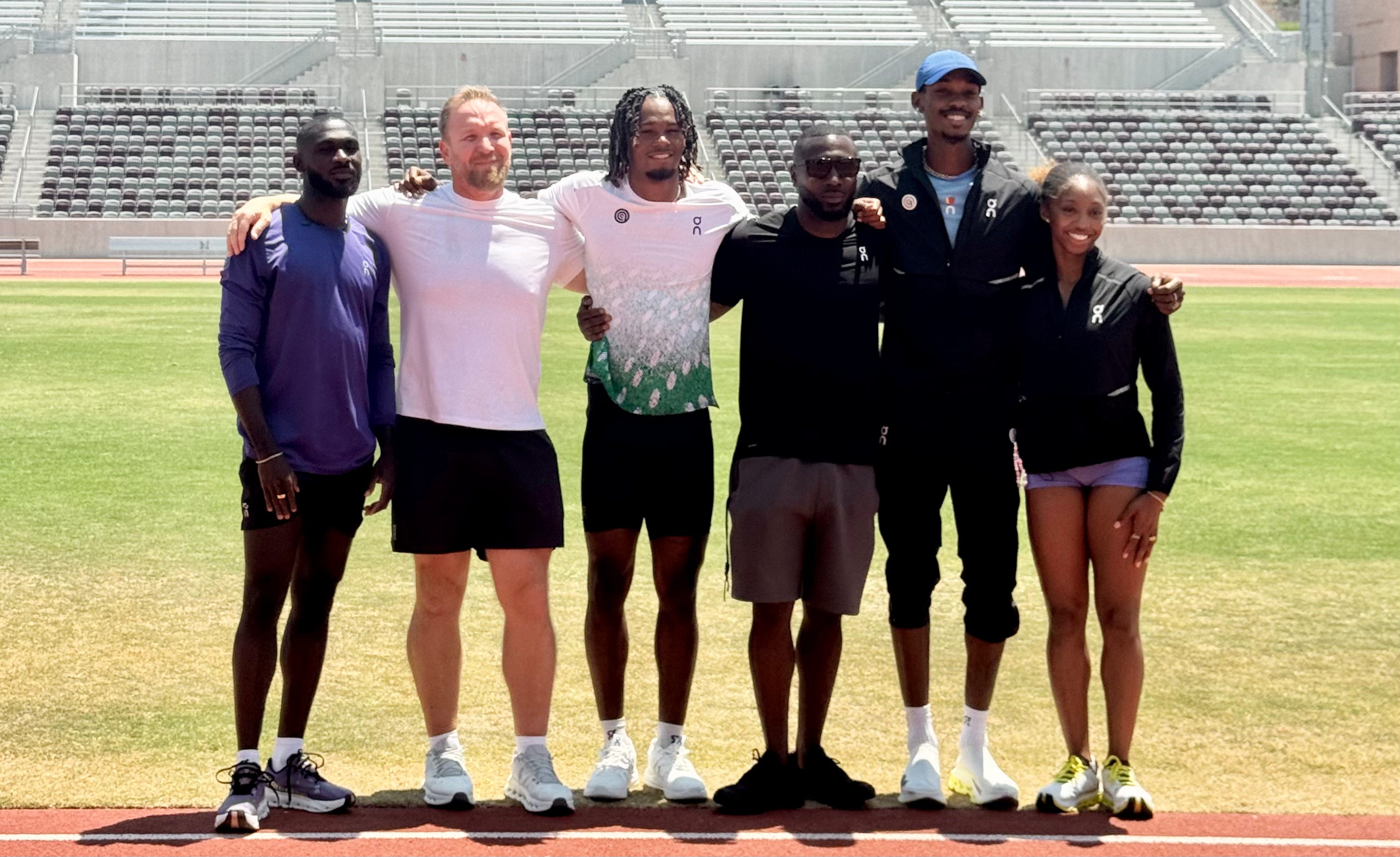
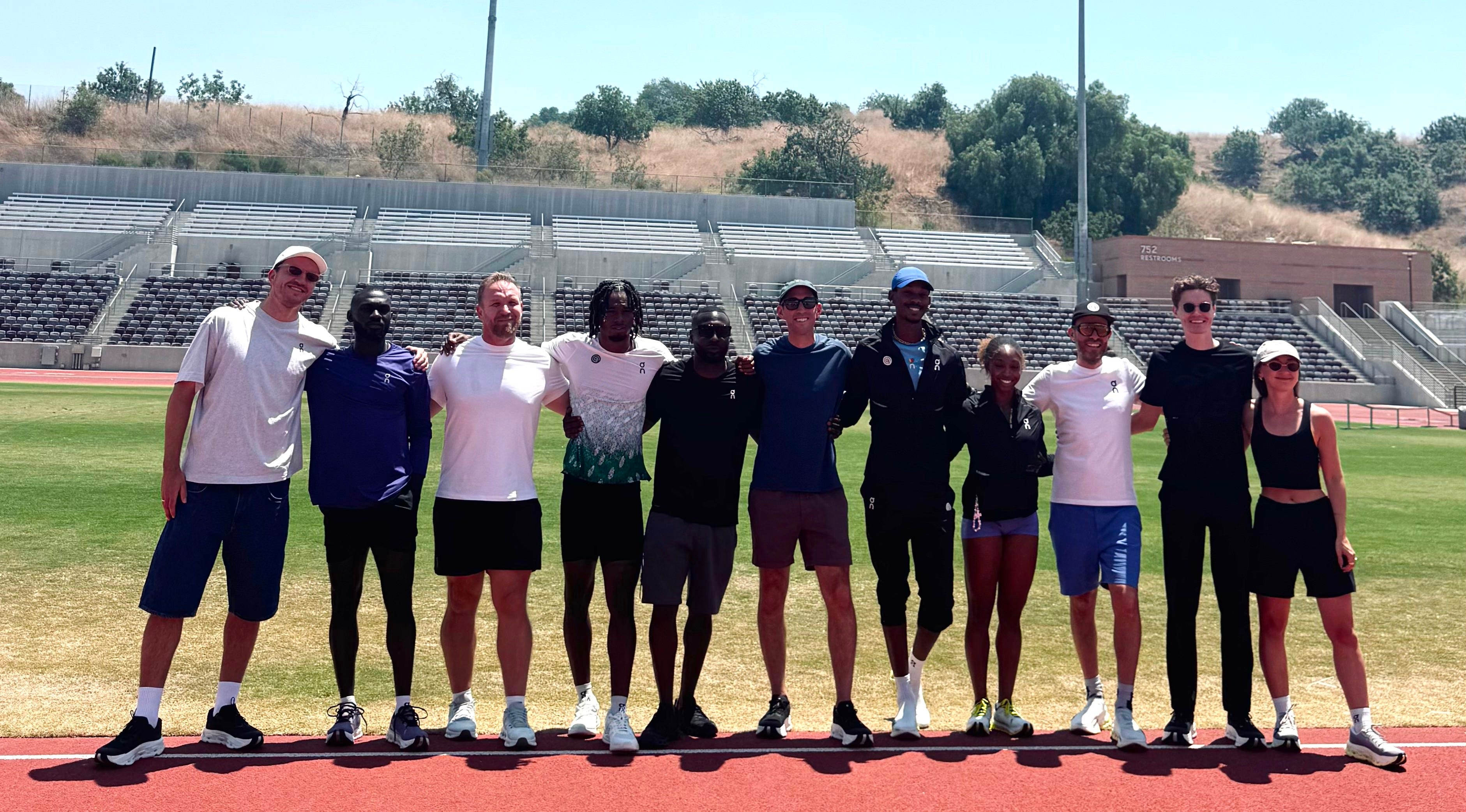
May 20th, 2026 was the date On officially announced the OAC Sprint Team. Almost two years to the day before LA28. The location makes sense on paper. LA has the facilities: the Coliseum, Mt. SAC, areas with decades of sprint history. And unlike athletes in Boulder or St. Moritz or Melbourne, sprinters need tracks, weight rooms, competition, and ya know…speed.
But none of it works without the right person leading it. So my next question was:
Who do you trust to build something like this from scratch?
Echoed across most of the On team, finding the right coach was step one. Before product, before athletes, before anything. They were looking for a unicorn. Someone who could coach at the highest level, build culture, and carry the brand’s values without losing himself in the process. Insert John Bolton, “JB”.
“The coach is the closest person between the athletes and the brand. You need to make sure the coach lives a big dream, is strong in terms of skills and background, but moreover is a great personality who can connect with and develop athletes. Finding that rare unicorn, we’re super proud that JB took that assignment.”
- Flavio Calligaris-Maibach
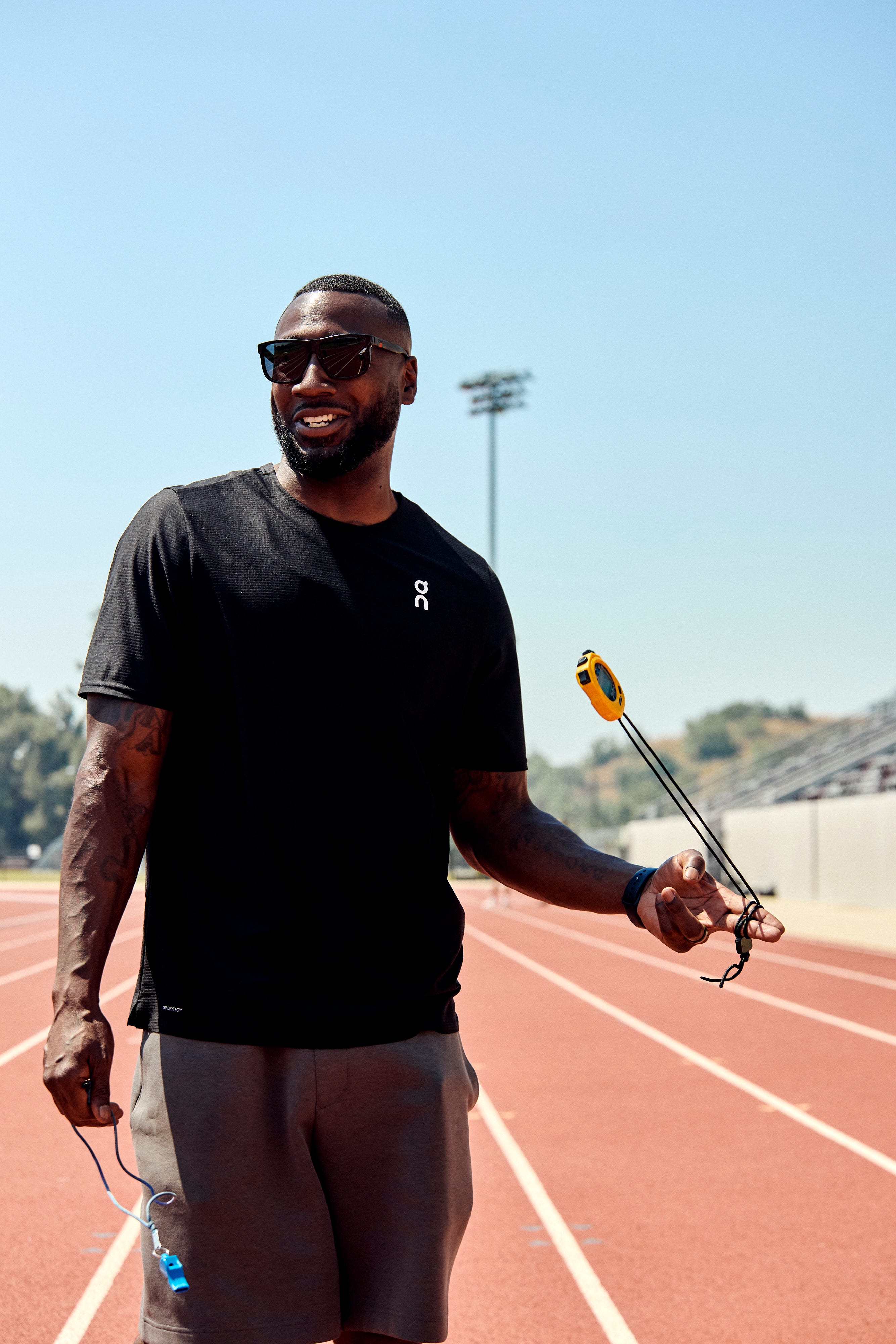
JB reminded me of my collegiate soccer coach. Very competitive, a little cocky, tells it to you straight, and walks around like he has something to prove, knows he will, and can’t wait to do it. But you can tell right away that he’s the coach who will be in your corner, giving you confidence when you don’t have it.
I’m not sure what I expected. Maybe someone more formulaic? Stoic? Secretive? A “This is how it’s always been done so this is how we’re going to do it” kind of coach. But JB was the exact opposite. Similar to how On shows up, he’s an open book. He experiments with his program and tailors it to each athlete while holding a larger philosophy as the north star. He jokes around, but matches his athletes’ determination and hunger to win. It feels like he has nothing to lose and everything to gain.
When asked what he looked for in recruiting the athletes, he kept it simple:
“The mindset. All of them, we all share the same goal. We all want medals. We all want to win. We want to be on that podium. They push each other in training, they hold each other accountable. That’s what you’re looking for in a group.”
As an athlete, he’s got your back. And from everything I observed that morning at Mt. SAC, his athletes already know it.
The last piece to this puzzle was a question I had for the athletes, the rising stars.
Why On?
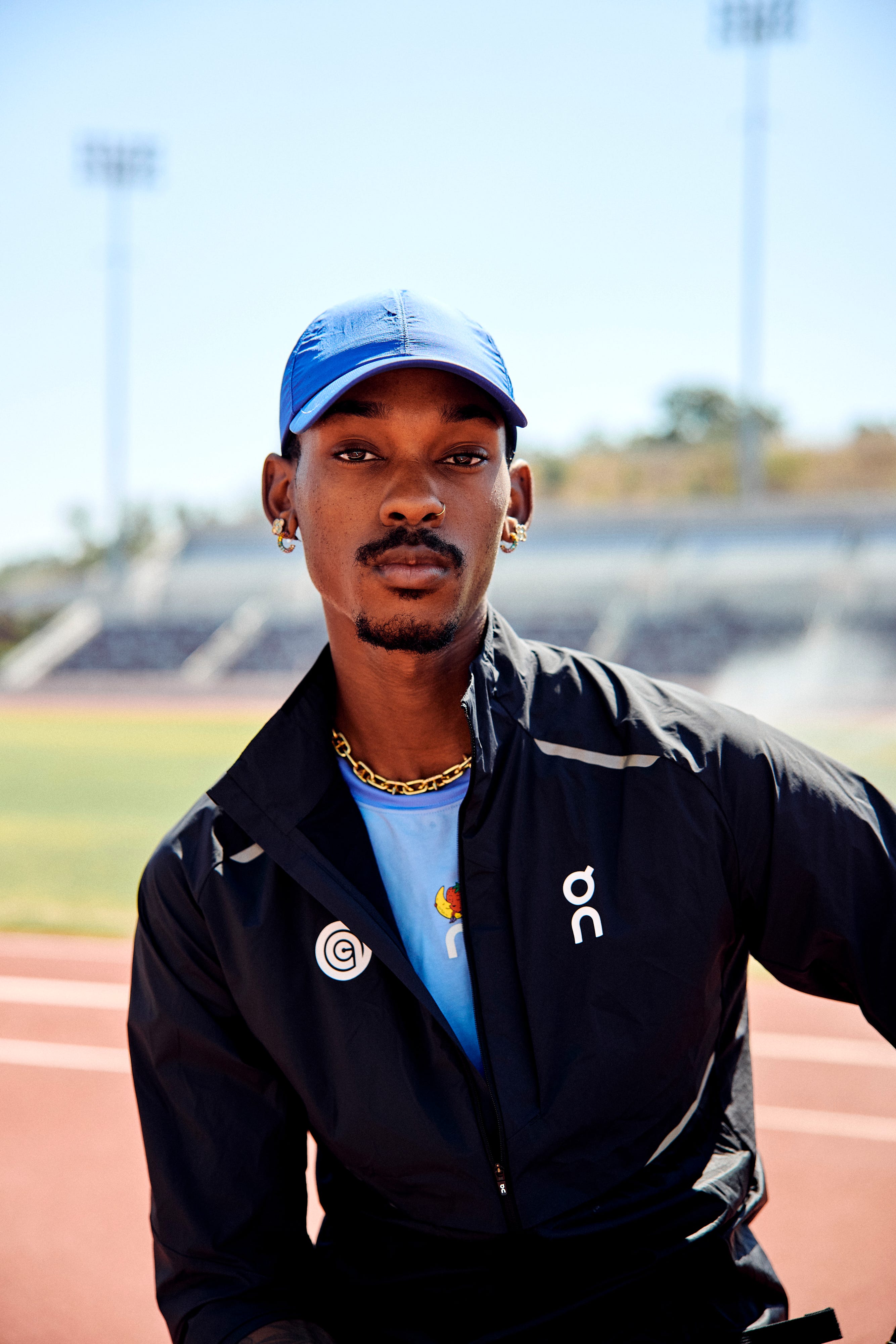
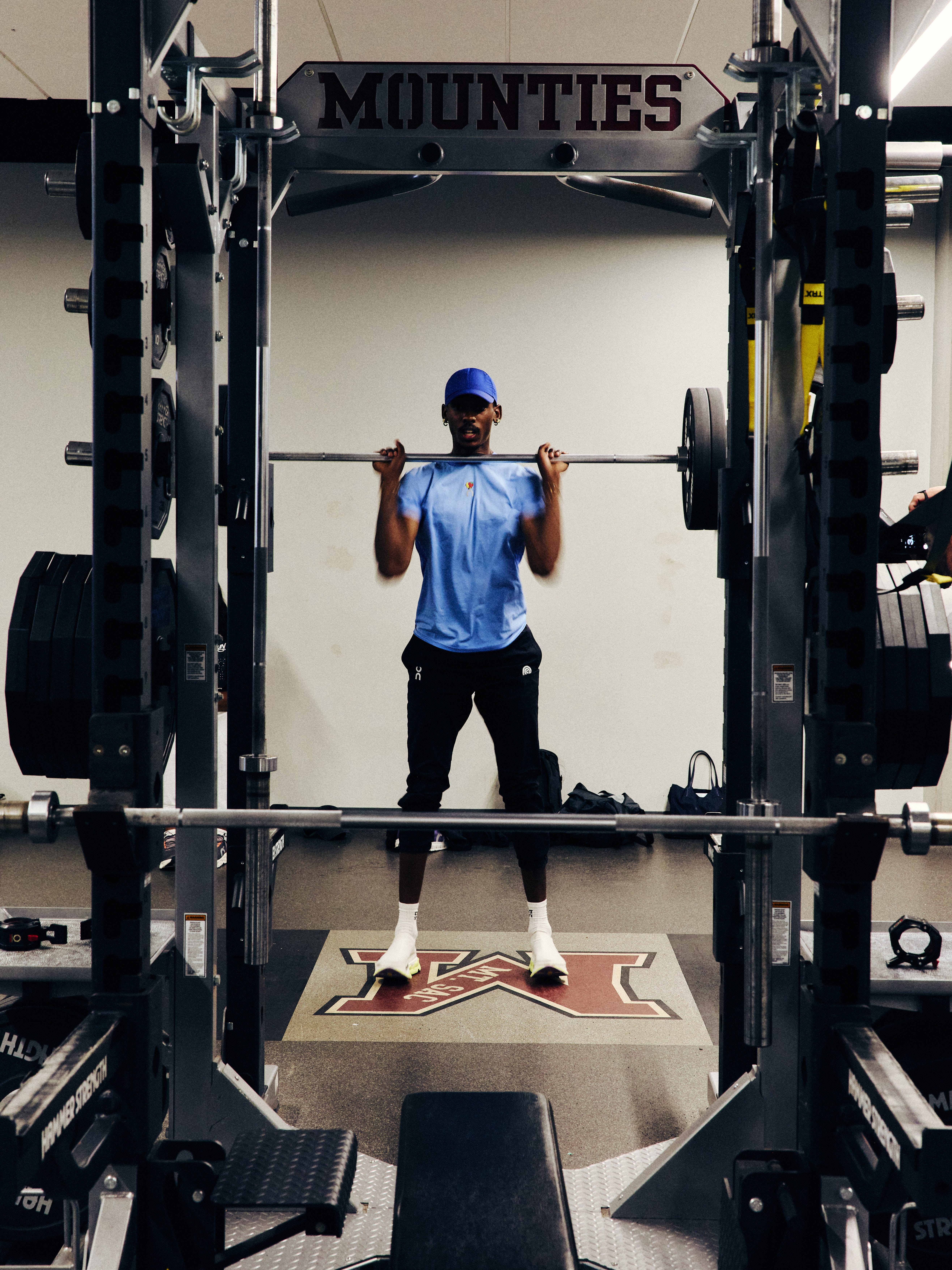
I spoke with sprint athletes Johhny Brackins and Benjamin Azamati. Johnny, who had just graduated from USC and was tasting sponsorship for the first time did not expect to find On or to be on a team. His expectation of going pro was to either sign with a running company, training (and racing) on his own, or join a large race-specific team where athletes from a variety of brand sponsorships train together. He chose On because he liked the idea of being a part of something that was still becoming.
“I’m part of the original version of it.”
- Johnny Brackins
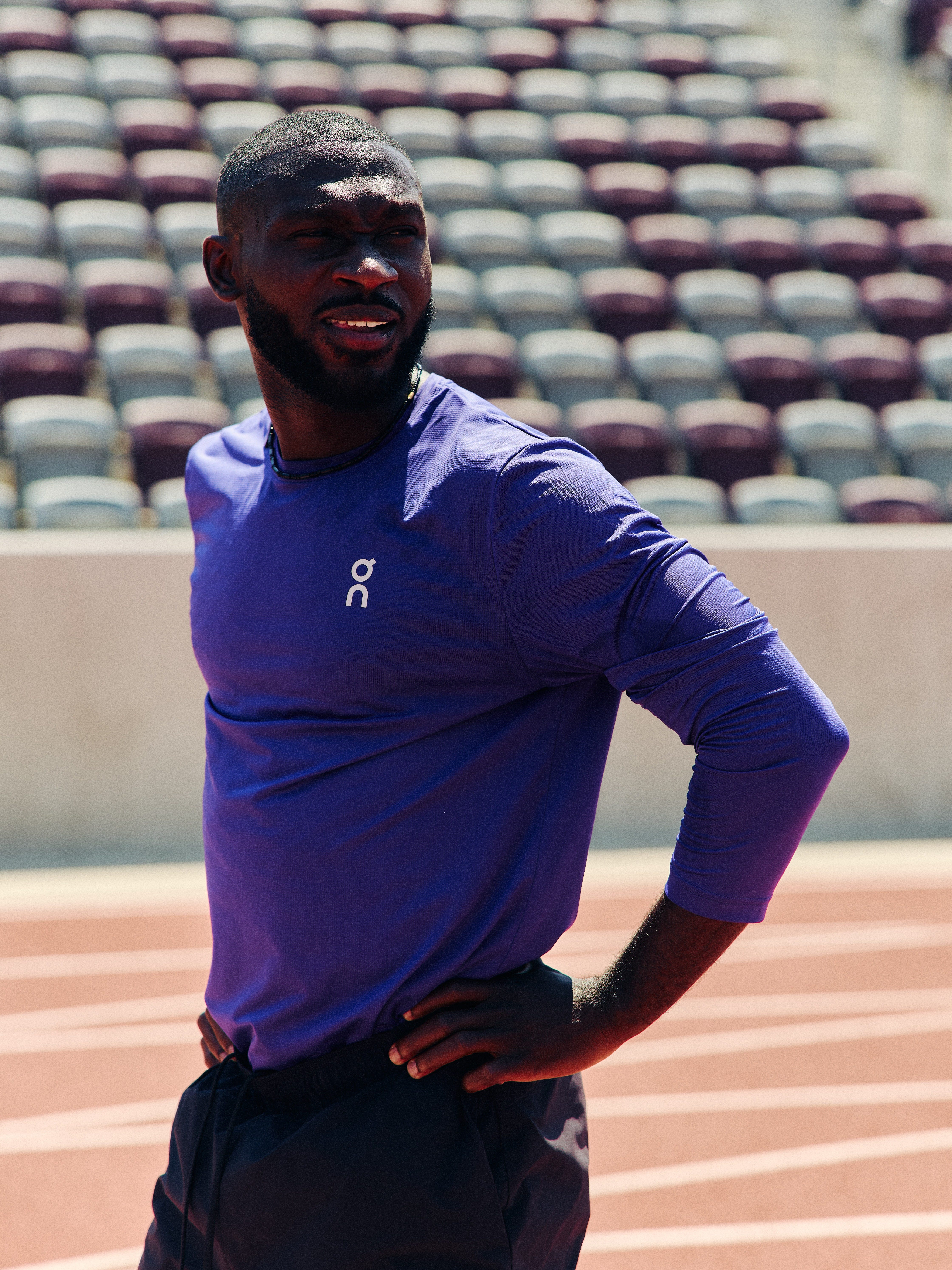
Ben on the other hand has already been to the Olympics twice, representing Ghana and Asics. His switch to On gives him something new. Athletes eating together, testing products together, pushing each other in workouts until someone is “barking.”
“The training environment shapes who you are, affects everything. It feeds your confidence, and anytime you step in a race, you know how you have prepared. These guys are great. They work very, very hard, and that shapes who you are when you get into the race.”
- Benjamin Azamati

But here’s the question I’m left with: is On setting a new standard for how brands show up for athletes, or are they just the first ones to say it out loud?
I’ll be honest, On was never really on my radar. They’ve always been more of a quiet, community-focused presence in the background. But I wasn’t really sure what their niche was. Being part of this launch changed that. It was intimate and honest, and it reflected everything I had subconsciously already observed about the brand. Always putting the runners before the logo. Always playing the long game.
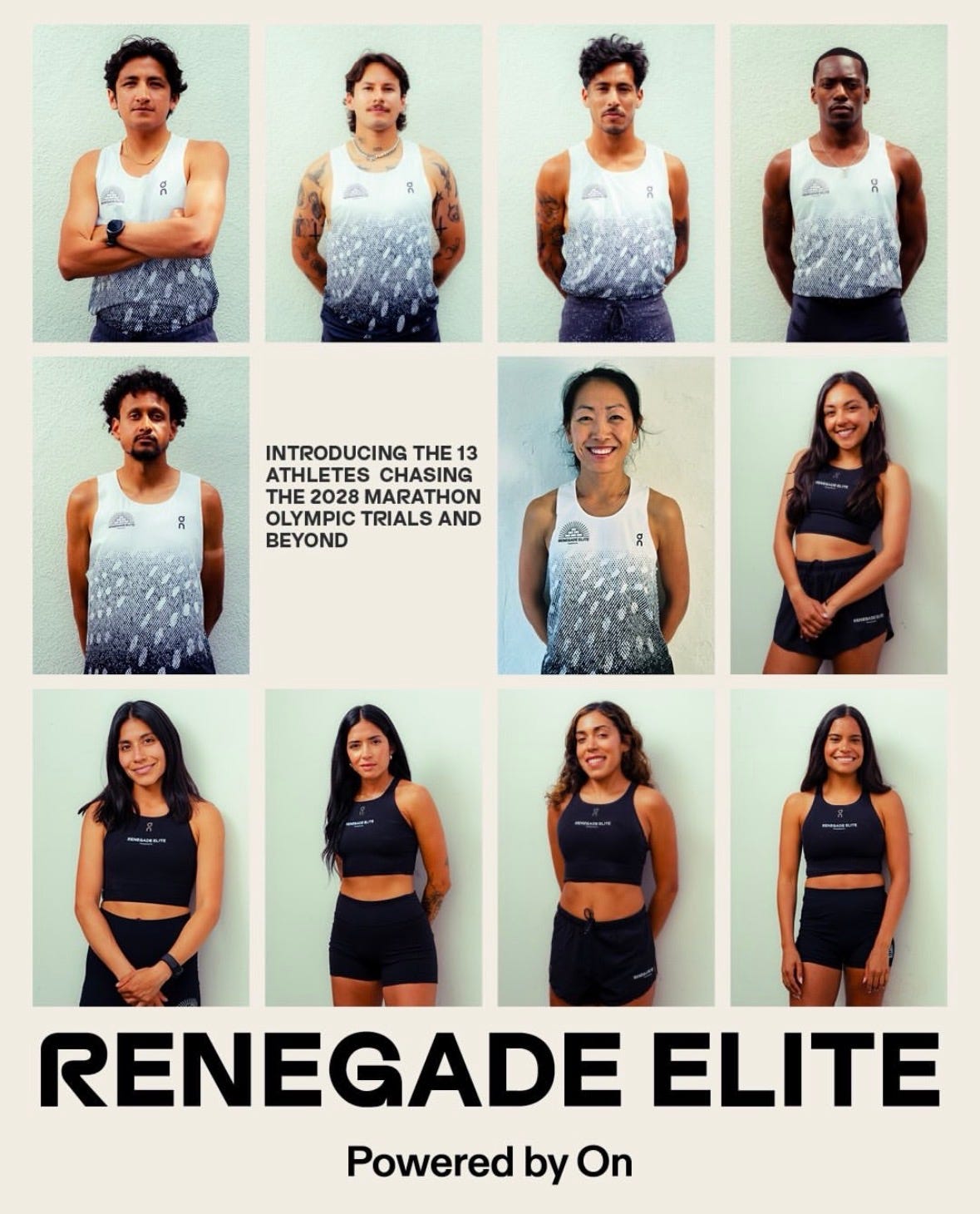
On has been building something in LA for a while now. And (imo) all very organically. Trusting the locals to know how to best serve their own space. A great example of this is the recent announcement of Renegade Elite, a marathon focused team of 13 athletes training toward LA28, coached by Nell Rojas. On-sponsored, but run by Renegade and the community. Shoutout to my girl, Kayla! (bottom right)
After Mt. SAC, the invited press loaded back up into one van. I want to note that we were mostly writers with a passion for running and runners. No influencers, no big media setups. Which says something about what this brand is building. The whole lot of us fit into one sprinter van and it felt intentional. Like the On team was just as excited for us to network and connect with each other as they were to tell us about the launch. This was my first such event, so I can’t say how it normally goes. But this felt special.
We headed to the Coliseum for the finale. Where the newly minted On Sprint Team, and the rest of us, got to envision a day two years from now when these athletes might be competing for Olympic medals. Just under 50 people total and the Coliseum entirely to ourselves. To connect, see the kits and the spikes, and have an open conversation about the future of running. Not just On’s future. The community’s.
Comments
Nothing yet. Say the first thing.
Sign in to join the conversation.