
There’s a moment every scientist chases, the instant an idea too strange to say out loud becomes something you can hold in your hands. It’s not discovery in the textbook sense, it’s a feeling that runs through the body like voltage. That’s what it felt like when we became the first team in the world to gene edit horse embryos.
People call us “the unicorn company,” and they mean it as a joke or a metaphor. But we mean it literally. We’re trying to make new kinds of animals, healthier, smarter, higher performance maybe even mythical and we are making insanely fast progress, every day one step closer.
That night, the one we edited those embryos, the lab felt different. No one spoke above a whisper. We all gathered in the back room lit only by the microscope’s glow. The only sound, a click as the microneedle injected life with new instructions editing the genome and inserting something new.
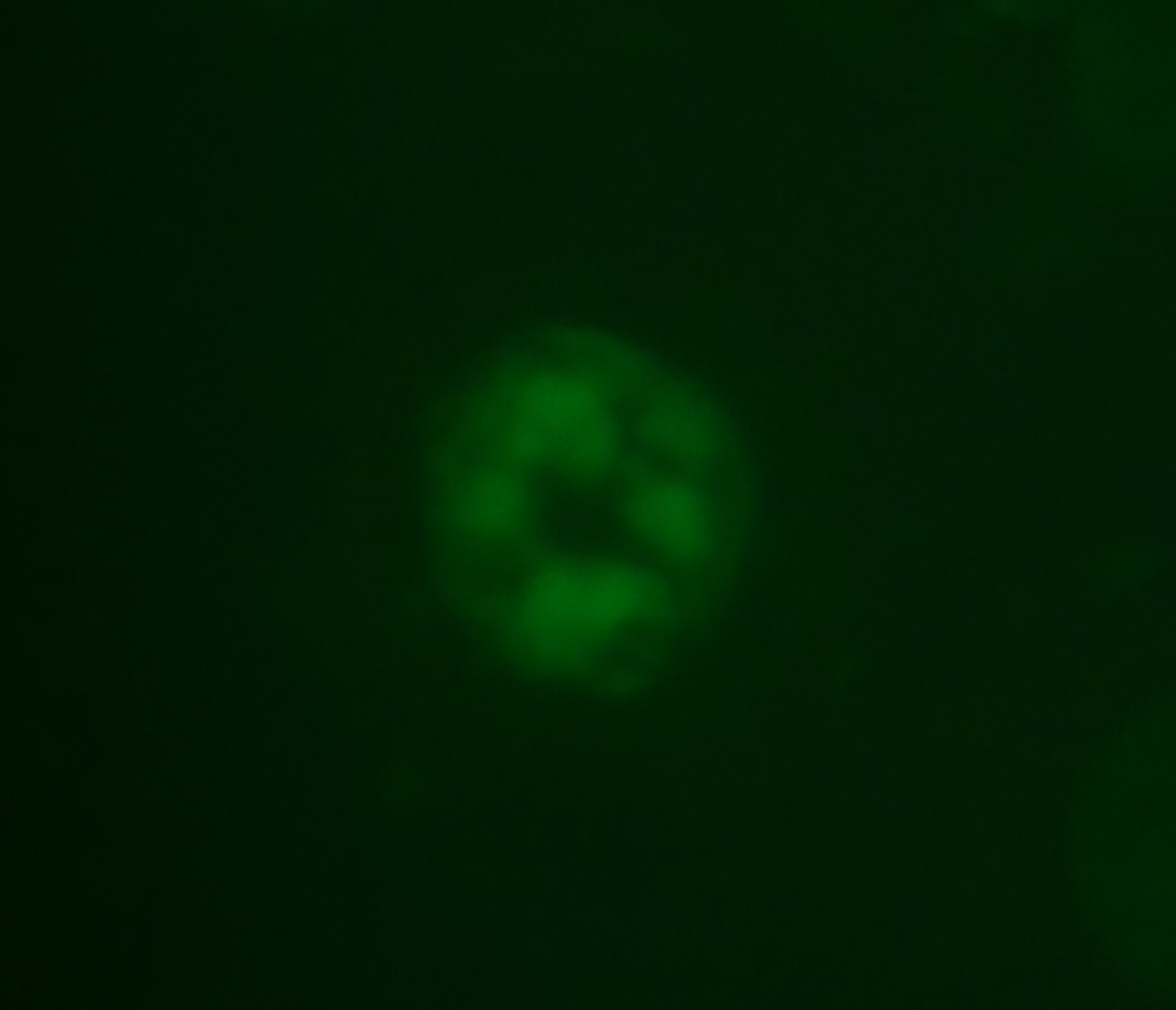
It was as epic as it was agonizing because you don’t get instant feedback in biology. Living things take time. The embryos rest in their broth to keep them alive, surrounded by a balance of nitrogen, CO₂, and oxygen that imitates the inside of a living body. And then, days later, if everything went right, the jellyfish gene we slipped into their DNA switches on and the embryos glow. A pulse of green light in the darkness. Proof that the code took. And it did. One of the many things we have been working towards.
That glow hits differently when you realize how rare it is. Across all of history, fewer than 15 mammals have ever had their embryos directly gene edited. Never a horse. Not once. As far as what is publicly available. Despite centuries of selective breeding and billion dollar equine genetics industries, no one had crossed that frontier. It’s a strange thing to live in an age where we can grow meat in tanks and print DNA on demand, but lots of biotech is still running like its the 1980s.
That’s the space we live in, the space between the lab and the farm, between science and life. It’s a unique space where I feel like I belong. I grew up on a farm in Indiana and I’ve always believed that biology belongs to everyone, not just people in white coats. That’s why I built DIY labs, why I once tested a covid vaccine on myself, why I keep pushing. Real innovation happens when the walls between worlds come down.
There’s this quote from William Gibson that the future is already here, it’s just not evenly distributed. That’s what drives me. Every time a technology escapes its original boundaries, it reshapes civilization. Printing presses. Electricity. Computers. And now, gene editing.
Understand, in the end were not doing this just to make glowing animals or chase legends. Life doesn’t evolve on its own anymore, we’re the ones holding the code now. What began as a handful of glowing embryos is the opening act of a new biological era, where creation becomes a tool, not a miracle. We’re building the systems that let humanity design reality itself, meat that isn’t made through suffering, organs that grow an unlimited supply of and maybe even intelligence that doesn’t stop at our species. These embryos are just the beginning. The real story is that life itself has entered its programmable age.
I’ll be doing a live stream, today, Monday Nov 10th at 1230PT with Substack CEO Chris Best if you want to hear more.
No posts
Comments
Nothing yet. Say the first thing.
Sign in to join the conversation.