
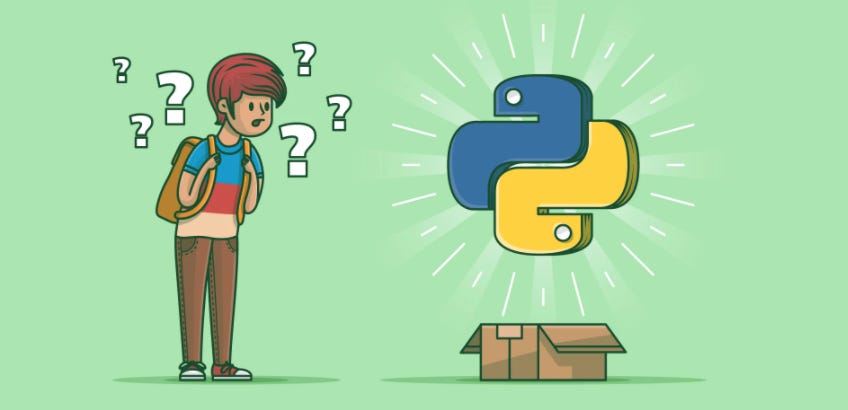
A programming language is nothing but a way to talk with computers. It is the medium through which you give your computer a set of instructions to follow.
For example if my teacher gives me a set of instructions say:
Stand up,
Open page 42 of your English textbook,
Read from line no. 2 to line no. 10.
These are nothing but some set of instructions given to me by my teacher, now of course i am not a robot duh!!! but still the idea is the same, you give a set of instructions to your computer and the medium of communication between you and your computer is the programming language, in our case python .
Now that it is very clear to you what a programming language is, you must be wondering what this next sub topic is about, what the hell is an interpreter??
Think of it as another language needed by the computer to understand what your set of instructions are, now what does that mean?
A computer can only communicate through binary codes 0’s and 1’s as we all have studied in our previous classes at some point or the other, so does this mean python is also a combination of 0’s and 1's?
No, not at all, python is a simple language built around English alphabets. So how does it communicate with the computer?
By now i am guess most of you would have figured out what an interpreter is, but still if you haven’t, don’t worry it is very simple, an interpreter acts as a mediary between python and our computer and converts our code into a binary combination of 0’s and 1’s.
To run a python code you need to download a python translation service or a python virtual machine in your computer systems. Now there are two ways of going with this. Either you can download the python virtual machine in your local system (i.e your computer) or you can just run it online using online editors which are nothing but platforms with inbuilt interpreters for you to run your python code . The choice is yours, i am linking both the resources, the rest is up-to you.
print(‘Aman Tulsyan’)
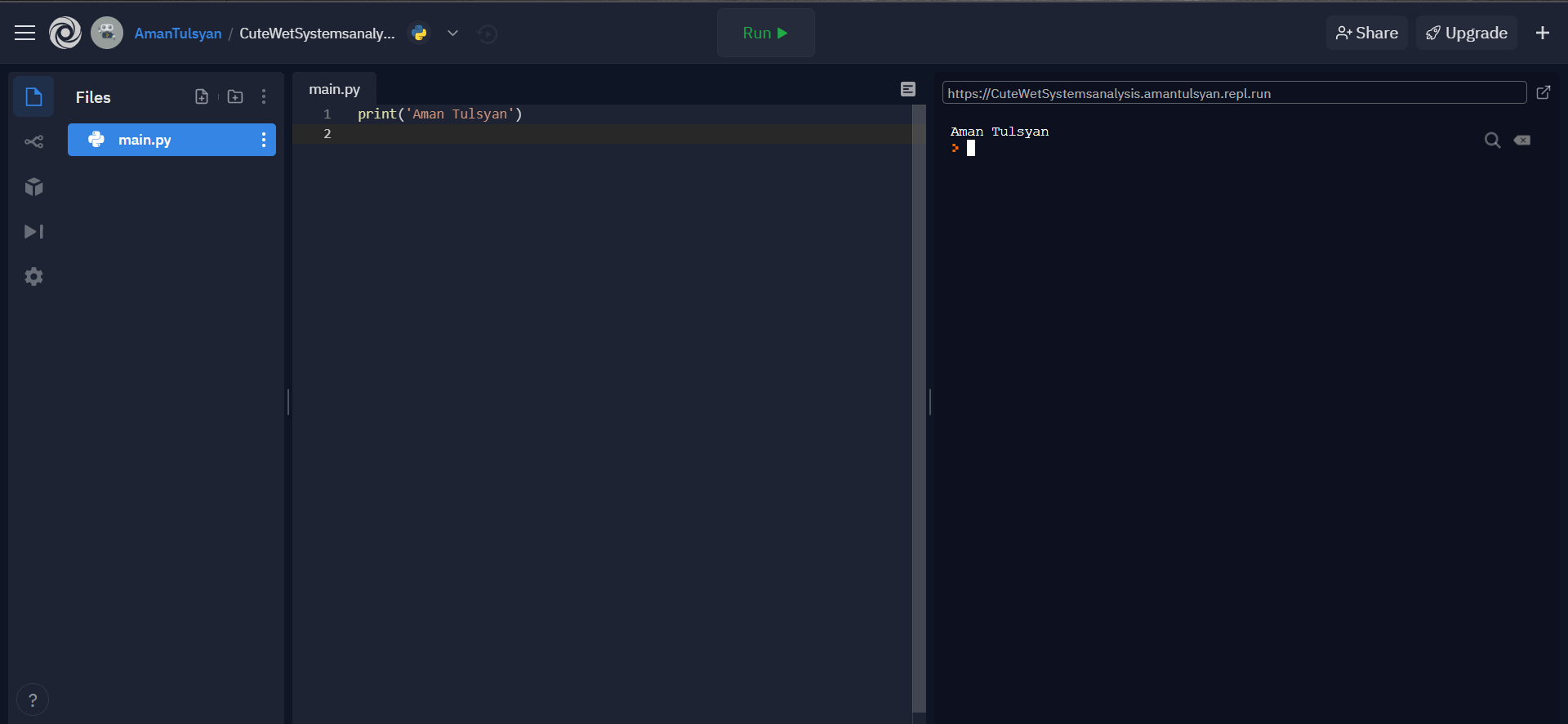
Now you might be little confused of the jargon i have written above, just to give you a perspective clarity, remember the first time you were learning English alphabets or any other language as a matter of fact. Didn’t it all seemed vague at the starting?
Yes it was very vague but after going forward with the learning process it was easier to connect the dot backwards.
Similarly think of the print(‘Aman Tulsyan’) as a syntax, or a set of instructions to perform a specific task or give a specific output because unlike us computers don’t have brains to interpret whatever we say and give an output according to our context.
Therefore, you need to be very specific when you are talking with a computer and print(‘Aman Tulsyan’) is one form of that specificity which prints the text inside the brackets on the computer screen.
Why are there so many languages in the world when people can communicate through one?
There is no specific answer to this particular question and from what i perceive, it all revolves around the idea of communities.
The course from which i am learning
This newsletter is a documentation of my skills and my learning journey. In no way am i a teacher, but still i will try my best to provide value through this newsletter and will try to be consistent. If you have any doubts regarding the learning process or want to know the resources through which i am learning, feel free to connect with me :))
No posts
Comments
Nothing yet. Say the first thing.
Sign in to join the conversation.