
We can ignore reality, but we cannot ignore the consequences of ignoring reality.
Ayn Rand
Chapters 7 and 8 of Offit’s book are mostly about the history of smallpox and don’t reference any studies on vaccine safety or effectiveness. I’ll skip those chapters for now and may come back to them later.
Chapter 9. The mean season
After wrapping up with Barbara Loe Fisher, Offit moves in Chapter Nine to a new generation of vaccine opponents.
He starts with Jenny McCarthy’s story, giving a detailed account of her background. Her son developed autism after receiving vaccines—a claim Offit, of course, rejects, since by 2007, when McCarthy told her story on The Oprah Winfrey Show, studies had already been published supposedly proving there was no link between vaccination and autism.
He then turns to venture capitalist J.B. Handley, whose son was also injured by a vaccine. Handley founded the organization Generation Rescue, which Offit classifies as “anti-vaccine.” The author goes on to review Jim Carrey’s filmography, lamenting that Carrey too had joined the anti-vaccine movement. Finally, he criticizes popular talk-show host Bill Maher, who refuses vaccination himself and advises others to do the same.
It’s worth noting that in his earlier book Autism’s False Prophets (2008), Offit had already attacked Generation Rescue founder J.B. Handley. In that book, he included a made-up conversation that never happened. Handley sued him, and as a result, Offit revised the book. Both he and Columbia University Press donated $5,000 each to a UCLA autism research fund. Offit also sent Handley a personal letter expressing regret for his remarks.
Offit:
Handley’s notion of a gentler, better time before vaccines wasn’t new. One month earlier he had made a similar suggestion. During his April 2009 appearance on Larry King Live, Handley, referring to the notion that babies were getting too many vaccines too soon, said, “Larry, we have no idea what the combination risk of our vaccine schedule looks like. At the two-month visit, a child gets six vaccines in under fifteen minutes. The only way to test that properly would be to have a group of kids who get all six and a group of kids who got none and see what happens. They don’t do that testing. They have no idea.” Handley was asking for a study of vaccinated and unvaccinated children. One result is certain: given recent outbreaks of Hib, measles, mumps, and pertussis, unvaccinated children would suffer and possibly die from preventable infections. It would be, of course, an entirely unethical experiment. No investigator could prospectively study children who are denied a potentially lifesaving medical product. And no university’s or hospital’s institutional review board worth its salt would ever approve such a study. Handley’s proposal harkens back to a dark time in our history when—between 1932 and 1972—investigators prospectively studied four hundred African-American men from one of the poorest counties in Alabama to see what would happen if their syphilis went untreated. It was called the Tuskegee Study. Withholding antibiotics that could have cured them, it was probably the most unethical medical experiment ever performed in America.
The abovementioned Tuskegee study deserves more than a few lines. It was overseen by the CDC. For forty years—fifteen of them when syphilis was treated with arsenic, and another twenty-five after penicillin became the standard treatment—until the experiment was stopped in 1972, CDC scientists simply watched as people infected one another with syphilis, gave birth to children with congenital syphilis, and died from the disease. The participants were never told they had syphilis. They were told they were being treated for “bad blood.” Instead of real therapy, they were given placebos and subjected to diagnostic procedures falsely described as treatment. To obtain consent for spinal taps, the researchers told participants it was a “special free treatment.”
Throughout the entire forty years of the experiment—during which the Nuremberg Code was adopted—not a single CDC employee publicly stated that the study might be unethical. And it wasn’t only CDC staff who stayed silent. The experiment wasn’t secret; reports about it were published in medical journals. But medical literature was read only by physicians and scientists, none of whom raised objections. Only one doctor, in 1965, sent a protest letter to the CDC, which was ignored. On the contrary, CDC researchers wrote that now that syphilis had become curable, the Tuskegee study was “more important than ever,” as it offered “the last opportunity to study the natural course of the disease.”
During World War II, 256 participants were drafted into military service. In army clinics they were diagnosed with syphilis and prescribed treatment, but CDC officials prevented them from receiving it. The U.S. Public Health Service requested that these men be removed from the list of those eligible for therapy “to ensure the continued effectiveness of the study.”
The experiment was not stopped by a doctor or a nurse, but by a social worker, Peter Buxtun. For eight years he tried to raise concerns, but was ignored. The CDC insisted the experiment should continue until the death and autopsy of every participant. In 1972 Buxtun resigned, took the story to the press, and only then was the study terminated. The CDC never apologized. The head of the venereal disease branch publicly complained that the Tuskegee experiment had been “stopped too soon.” Formal apologies were issued only in 1997, after a special committee spent two years reviewing the case and officially recommended that Bill Clinton apologize. No one was convicted. No one was even fired.
This was far from the only experiment of its kind. In the late 1940s, for example, scientists from the U.S. Public Health Service carried out a series of medical experiments in Guatemala. Guatemalans were deliberately infected with sexually transmitted diseases without their knowledge or consent, in order to test the effectiveness of penicillin. Many participants were infected through prostitutes sponsored by the U.S. government. Others were infected through cuts and abrasions on their skin, genitals, forearms, and faces. Some were even injected with the infection via spinal puncture. Barack Obama formally apologized for this experiment in 2010.
Could such experiments happen today? It is commonly believed that today’s physicians and scientists are highly ethical, and that such things are impossible now. In truth, the physicians and researchers of that time were not immoral people. They acted according to the norms of their society. Failing to treat poor or black patients who could not afford care was not considered unethical. We judge them by the ethical standards of our time and assume that such conduct could never occur today. Yet the same pattern continues. We are no more ethical than past generations. Physicians and scientists are not more moral; only the accepted norms have changed.
The whole-cell pertussis vaccine was removed from immunization schedules in developed countries, yet it continues to be used throughout the rest of the world. No one calls that unethical.
The mercury-based preservative thimerosal was eliminated from children’s vaccines in developed countries, but is still used elsewhere. No one calls that unethical.
The live polio vaccine was withdrawn from vaccination programs in developed countries, but remains in use across most of the world. No one calls that unethical.
The tuberculosis vaccine, recognized as only marginally effective, was dropped from schedules in developed countries, but continues to be administered everywhere else. No one calls that unethical.
Tens of thousands of doctors and scientists who read the reports on the Tuskegee study saw nothing wrong with it. Hundreds of thousands of doctors and scientists today, knowing that outdated and riskier vaccines continue to be used in less developed countries long after they were abandoned in the developed world, see nothing wrong with that either. Doctors and scientists have not become more ethical. Only the norms have changed.
***
Chickenpox
Offit:
The chickenpox vaccine was first licensed and used in the United States in 1995. Although many people think of chickenpox as a benign disease—a simple rite of childhood passage—it isn’t; every year chickenpox causes children to be hospitalized and to die. The virus, which disrupts the skin with painful blisters, allows entrance of bacteria like Streptococcus pyogenes. Dubbed “flesh-eating bacteria” by the press, streptococcus causes serious and occasionally fatal diseases like necrotizing fasciitis (a deep-seated infection that dissects rapidly through muscles, necessitating emergency surgery) and pyomyositis (in which muscles liquefy from massive inflammation).
Necrotizing fasciitis, as well as streptococcal and other bacterial complications of chickenpox, are primarily associated with the use of ibuprofen before and during the illness. Ibuprofen increases the risk of necrotizing fasciitis elevenfold and the risk of invasive streptococcal infection fourfold. In addition, during streptococcal infections, ibuprofen and other NSAIDs (nonsteroidal anti-inflammatory drugs) can lead to toxic shock and multiple organ failure. A mouse study showed that administration of NSAIDs resulted in a twenty-twofold increase in the number of streptococcal bacteria in injured muscle tissue.
Paracetamol use during chickenpox is associated with a 50% higher risk of complications. It also prolongs the course of the disease.
Thus, most of the complications Offit attributes to chickenpox itself are in fact complications of drug treatment, not of the infection. We will return to this point later.
Offit:
Worst of all: you never get rid of chickenpox. Even after people recover from the infection, the virus lives silently in nerve roots, occasionally reawakening later in life causing shingles, one of medicine’s most debilitating diseases.
That’s true. However, the chickenpox vaccine is a live vaccine, and the vaccine strain of the virus persists in nerve tissue just like the wild strain. Moreover, vaccination does not prevent subclinical infection with the wild virus, so vaccinated children can carry both strains—the vaccine strain and the wild one.
Therefore, the vaccine does not protect against shingles. In fact, in some cases, it can itself cause shingles [1] [2]. There have been documented cases where the vaccine strain led not only to shingles but also to meningitis or encephalitis, either shortly after vaccination or years later: [1] [2] [3] [4] [5] [6] [7] [8] [9] [10] [11].
In some cases, the vaccine has resulted in death: [1] [2] [3] [4] [5] [6].
The live shingles vaccine, which is essentially the same as the chickenpox vaccine but with a higher dose, has also occasionally caused death: [1] [2].
According to a 2025 study, the non-live shingles vaccine (Shingrix) increased the risk of shingles elevenfold during the three weeks following vaccination.
One might argue that no vaccine is absolutely safe and that, while people may rarely die from vaccination, far more die from chickenpox itself.
To this I would reply that in 1873, the great French physician Armand Trousseau wrote in his classic work on clinical medicine: “No physician has ever seen a patient die of chickenpox.”
Why, then, did no one die of chickenpox in the past, while deaths sometimes occur now? To answer this, we can turn to a 1968 article published in JAMA. The authors note that “sporadic reports of fatalities have appeared, but chickenpox is considered one of the more benign infectious diseases of normal children and serious complications are extremely rare.”
The paper describes a unique case: five healthy children in one family all contracted chickenpox, and two of them died. The authors write that this case was “unprecedented in the world literature, and appeared worthy of documentation and investigation in some detail“.
Since there was no vaccine at the time, the authors did not conclude with a standard modern remark about the importance of vaccination, which would have ended the discussion there. Instead, they carefully described the children’s symptoms, the treatment they received, and considered what could have caused such an outcome.
The first case was a nine-year-old boy. On April 2, he developed a fever and rash.
The next day, he experienced weakness, headache, and cough.
On the morning of the third day, his mother began giving him phenoxymethyl penicillin (an antibiotic) and aspirin every four hours. That evening, the family physician examined him and noted that the boy did not appear acutely ill. He diagnosed broncho-pneumonia and prescribed another antibiotic, demeclocycline hydrochloride, every hour and a half. The next day, the boy suddenly died—three days after the onset of the illness.
On April 7, his six-year-old sister fell ill. She first developed an upper-respiratory tract infection (a common cold). She received intravenous antibiotics every five hours for three days and recovered.
On April 14, she developed the chickenpox rash. Phenoxymethyl penicillin was started immediately, administered every four hours.
On April 16, she was hospitalized and given three doses of nafcillin sodium (250 mg intramuscularly), two doses of aspirin (1.5 g), gamma globulin (2 cc intramuscularly), diphenhydramine hydrochloride elixir (an antihistamine, 10 mg orally), and pentobarbital (a sedative, 30 mg rectally). That same day she developed convulsions and disorientation, and on the fourth day after the appearance of the rash, she died.
The remaining three children were treated in roughly the same way—large doses of antibiotics, though without aspirin. All were hospitalized but survived.
Then the authors ponder why such an innocent infection ended so tragically. The children lived on a farm. Could some toxic substances be to blame? No, there were none on the farm. Could the children have been unhealthy? No, they all easily and quickly recovered from measles, mumps, and rubella. Their parents and relatives had also had chickenpox in childhood without any problems. Could it have been a particularly virulent strain of chickenpox? Apparently not—no differences between strains had been documented. And there were no other severe cases reported in the area, they note. Could the children have had some genetic defect? That doesn’t seem likely either, since they easily recovered from other infections, the authors conclude.
The paper does not reach any conclusions; the authors remain puzzled. Yet reading this article today, it is quite clear what happened. The two children who died had been given aspirin, while the three who survived had not. The authors make no note of this fact. However, their description of the symptoms matches those of Reye’s syndrome.
Reye’s syndrome is an acute liver failure accompanied by encephalopathy. This disease appeared only in the 20th century and was so rare that, although it was first described in 1929, it was recognized as a distinct syndrome only decades later, in 1963. At the height of its incidence, in 1980, only 555 cases of Reye’s syndrome were recorded in the United States.
The link between Reye’s syndrome and the use of aspirin during viral infections was established only in the early 1980s. In 1968, it never occurred to physicians that aspirin might have anything to do with the deaths of children—the drug was considered perfectly safe at the time.
In a 1981 paper led by Stanley Plotkin, which described ten deaths from chickenpox, Reye’s syndrome was identified as the immediate cause of death in seven cases, although aspirin was not mentioned at all in that article.
Even from these two publications, it is clear that most deaths from chickenpox were iatrogenic. That is why Armand Trousseau and his contemporaries never saw deaths from chickenpox. They did not treat it—the illness resolved on its own. People began dying of chickenpox only when doctors started treating it.
It is also worth noting the enormous doses of antibiotics that all these children received at the first signs of a cold or chickenpox. In a 2019 experiment, mice infected with influenza had an 80% survival rate. But when antibiotics were given before infection, only one-third survived. In mice that received antibiotics two days after infection, the viral load in the lungs was five times higher.
According to a large Taiwanese study published in 2022, the use of antibiotics during the first two years of life increases the risk of clinically manifested chickenpox. This suggests that antibiotics may have contributed to the more severe course of illness in all the described children.
At this point, the reader might object: today we already know that aspirin is contraindicated in chickenpox, and Reye’s syndrome has nearly disappeared. Yet deaths from chickenpox in children still occur.
But do they really die from chickenpox itself—or from its treatment? Unlike the abovementioned article, modern medical literature rarely provides a full case history or a detailed account of treatment. Today, physicians tend to favor statistics over clinical observation.
But even today such cases are still reported, though not with the same level of detail as in the past.
In a 1998 paper, CDC authors reported that in the five years before the start of vaccination, 43 children had died of chickenpox. They gave detailed descriptions of three deaths of previously healthy children that occurred in 1997. They emphasized that none of them had been vaccinated against chickenpox and concluded that the disease can be dangerous and that vaccination is important.
What do all these cases have in common? The children were given fever-reducing medication. In the first case it was acetaminophen; in the second, the drug was not specified; in the third, an antipyretic was not mentioned directly, but the child was taken to a doctor with fever and cellulitis, which indirectly suggests that an attempt was made to bring the fever down.
There are many studies showing that the use of antipyretics can contribute to complications and even death. However, the CDC authors did not consider that antipyretics might have played a role in these children’s deaths—just as the authors of a 1968 paper did not consider that aspirin given during chickenpox might have been fatal. Only a very small percentage of children who were given aspirin for chickenpox developed Reye’s syndrome, which is why the link between aspirin and Reye’s syndrome remained unclear for so long. The same dynamic exists today with other fever reducers. Most children take them during infections without any serious consequences. But sometimes, very rarely, they die.
Offit:
Shingles [is] one of medicine’s most debilitating diseases. Shingles is so painful that it has at times led to suicide. And shingles doesn’t only affect the skin; sometimes when the virus reawakens it causes strokes, resulting in permanent paralysis. Chickenpox is a disease worth preventing. And, thanks to the chickenpox vaccine, American children are now much less likely to catch it.
Shingles, once considered a disease of old age, has been increasingly affecting younger people since the introduction of chickenpox vaccination. What provides protection against shingles is regular exposure to the chickenpox virus—the so-called exogenous boosting (more details about it here). When such exposures become less frequent, immune memory weakens and the incidence of shingles rises. This is why, after childhood chickenpox vaccination was introduced, a separate shingles vaccine had to be developed for the elderly.
Chickenpox in childhood is also linked to several protective effects. Contracted before the age of eight, it is associated with an 88% lower risk of asthma, an 84% lower risk of allergic rhinoconjunctivitis, a 43% lower risk of atopic dermatitis, and an 89% lower risk of allergic sensitization. Another study found a 45% reduction in the risk of atopic dermatitis and a 96% reduction in the risk of its severe form. A 2009 study showed that having had chickenpox protects against allergies and asthma, whereas vaccination does not produce this effect.
In addition, several studies link a history of chickenpox with lower risks of glioma (a type of brain tumor), Hodgkin’s lymphoma, lymphocytic leukemia, ovarian cancer, Parkinson’s disease, and coronary heart disease. Shingles, too, has been associated with a twofold reduction in the risk of glioma.
Given these findings, can we really claim that natural chickenpox infection is worse than vaccination—and that the vaccine provides a net benefit, even if it were completely safe?
*****
A more detailed article about chickenpox vaccine studies: https://en.scibook.org/content/vaccines/varicella
Chapter Nine includes a total of 53 footnotes which include 5 studies:
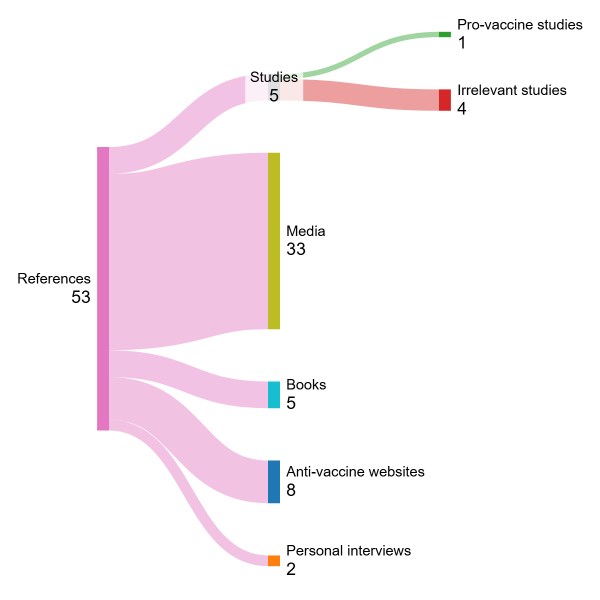
The studies cited tell us that:
Studies unrelated to vaccination (3 footnotes)
Studies already discussed in previous chapters (1 footnote)
1 study is presented as evidence of vaccine effectiveness.
No posts
Comments
Nothing yet. Say the first thing.
Sign in to join the conversation.