
This newsletter deviates from my usual format to share in-depth essays on my trip to Denmark in the summer of 2025 and the many wonderful textile (and textile adjacent!) encounters I had while there. There’s also a bit of regular studio news, because there’s some exciting events coming up, too!
There’s a Part 1, Part 2, Part 3, and Part 4 about Denmark that you may like to catch up with first. This newsletter may be clipped in your inbox — I encourage you to click on the title (February 2026) to visit this post in your browser so you don’t miss anything. Thanks!
Thank you to everyone who came out and visited Soft Curve, Hard Line at the DesignTO Festival. Toronto was walloped with a huge snow storm and bitter temperatures (-22℃!) during the festival that made standing on a sidewalk to look in a shop window heroic.
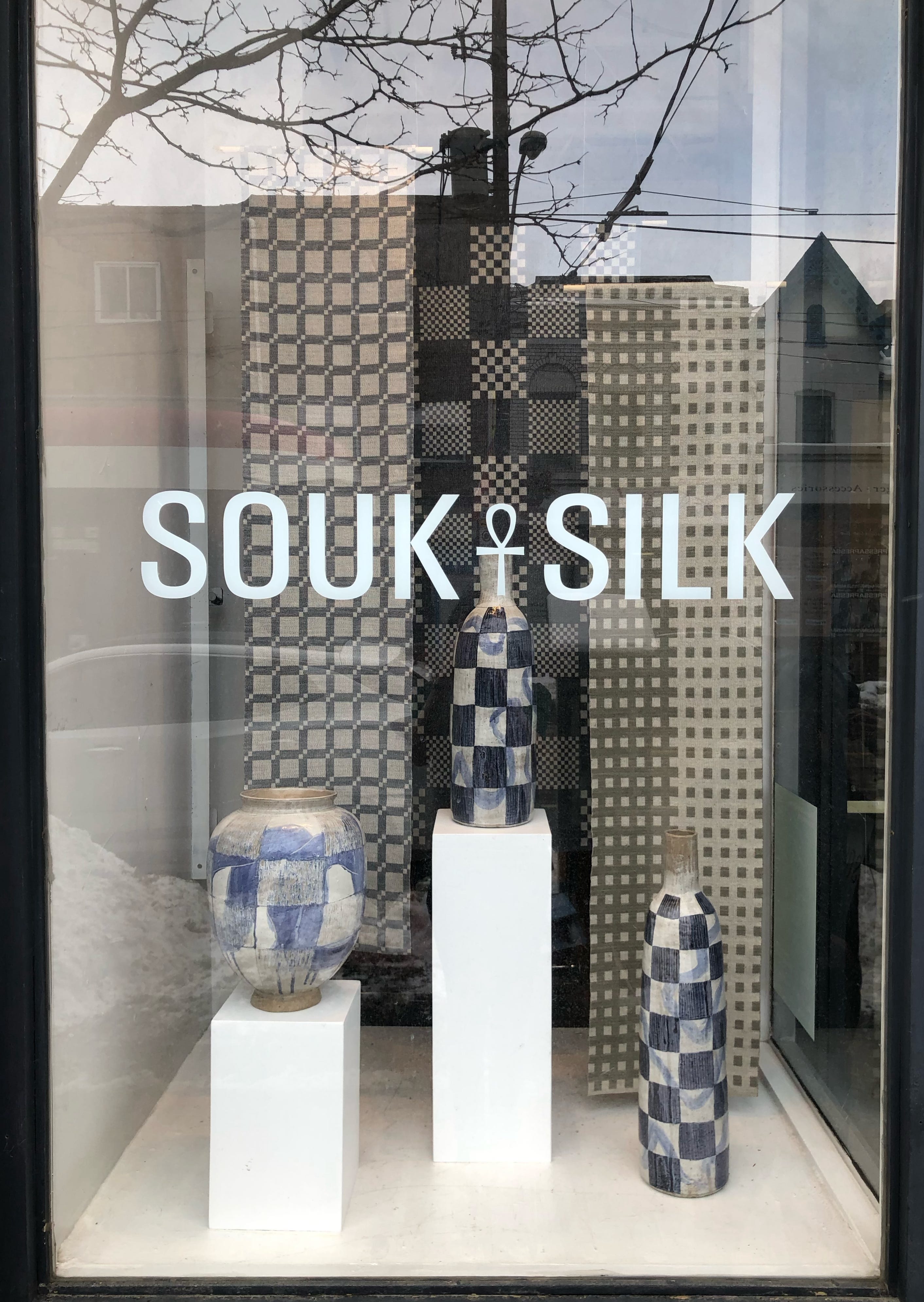
This is the…. ?th time I’ve collaborated with Helen (4th? 5th? enough times that I can’t keep track), and I always find our material dialogue nourishing and resetting. Other than my proposal (which was along the lines of: “we both like checks, let’s make something with checks!”), we didn’t really talk in depth about what we would make, trusting our senses and each other to make sympathetic work. I was so pleased with the final installation, which looked even better than what was in my mind’s eye. What a treat to participate in DesignTo together.
Thank you very much to the Ontario Arts Council and Government of Ontario for their exhibition assistance support.
Coming up in a few short weeks is Landmade 2026!! Landmade began in 2017 with the idea that there needed to be a market for and by local fibre farmers to sell wool, fleece, and other products from their farms and to connect with the makers — a farm-to-table event for knitters, crocheters, weavers, and other curious folks.
In 2024, Landmade began collaborating with Toronto Metropolitan University to create a 2-day event that expands on the original market format to include talks, workshops, and exhibitions. I’m so pleased to say that Fashion x Landmade is BACK for year two at The Creative School, TMU, and will be taking place on Friday March 6 and Saturday March 7, 2026.
Landmade is free and open to anyone who wishes to attend. Each day will feature a marketplace with different farmers and producers, but Friday has a speakers series, and Saturday will host Skills Building Workshops — and I’m teaching one!
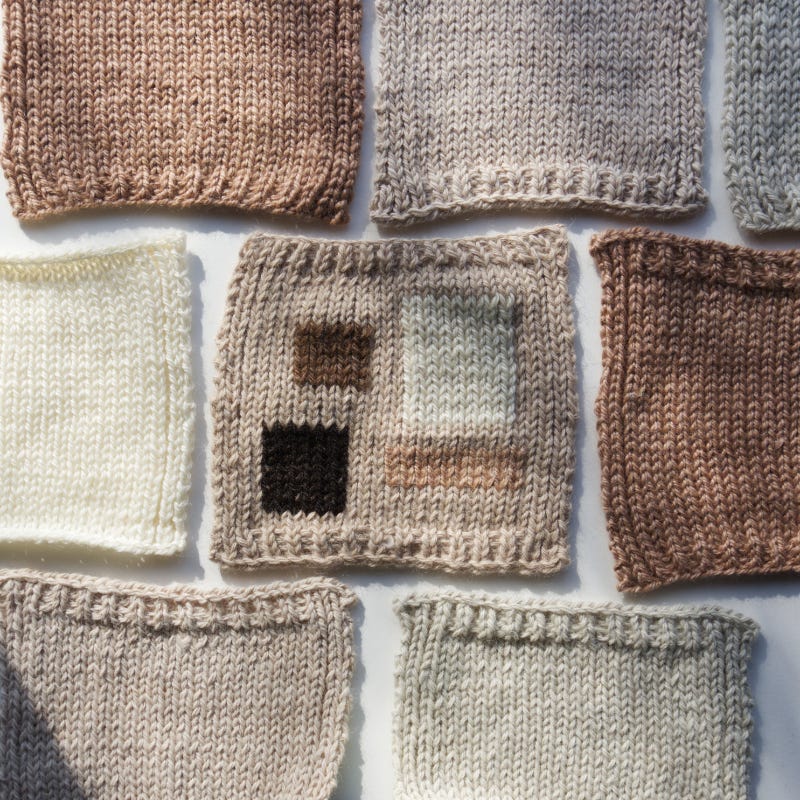
Amend/A Mend is an intro to knitwear mending and will be happening from 1:45-3:00pm on Saturday March 7, 2026. It costs $35 to participate and limited to 8 people. During the workshop I’ll introduce you to a basic repair method, which you’ll practice using swatches knit made from Ontario wool and alpaca yarn from Lickety Spit Fibre Farm. You don’t need any knitting or making experience to join us, and all materials will be provided. You’ll also get a little zine I made in 2015 to help remind you of what you’ve learned.
If you would like to sign up, registration is open now. Please visit this link to purchase your ticket, and I’m looking forward to seeing you at Landmade!
Full program details and information about other participants can be found at www.landmadefibre.ca.
This is the last planned instalment about my trip to Denmark in July 2025. I’ve gotten so many nice messages and comments; thank you! There may be more I’ll write in the future, but for now I’ll do my best to wrap things up.
In this last essay, I will tell you more about what I made and learned while working at Det Vilde Spinderi (DVS) (it wasn’t ALL gallivanting all around Denmark and Sweden…).
The kernel of my application to attend DVS began in the autumn of 2024 when I bought a knitting machine at a thrift store auction. I’ve never been terribly interested in knitting machines; I like the tactile and hands-on process of hand knitting, but recurring tendinitis in my right arm does limit the time (and to be honest, desire — pain is no fun) to knit. I had two knitting machines in my classroom, too, and I felt like since I teach hand knitting, I ought to be able to tell students what the next steps could look like.
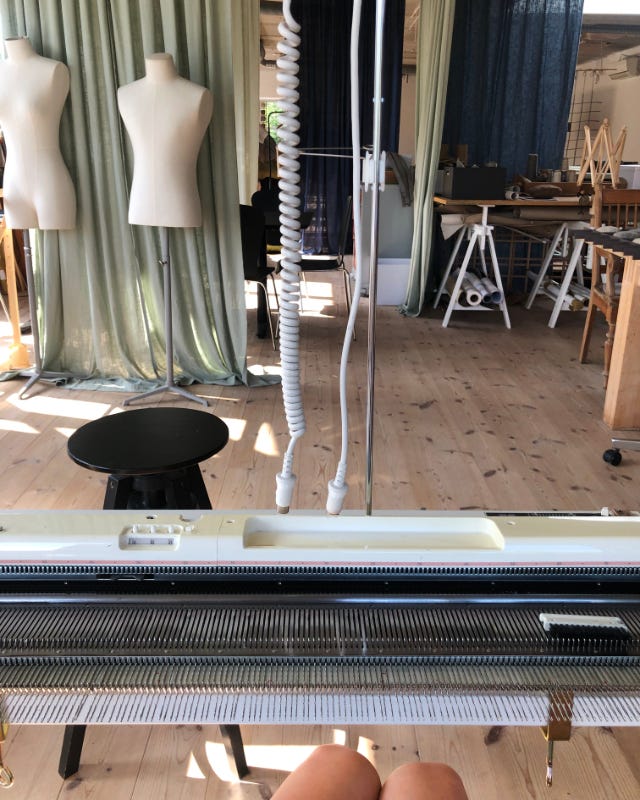
Domestic knitting machines are long, thin, metal and plastic rectangles; they look much like a keyboard, but instead of keys, there is a row of latch hooks. These hooks act like individual knitting needles that create, support and work each stitch. When you are actively knitting, you use your hands to move a carriage along the needle bed. The carriage places your working yarn into a stitch and knits it by moving the needle forwards and back as it passes across the bed.
Like any tool, using the knitting machine has benefits and drawbacks. For starters, yes, it’s much faster to knit on machine than it is by hand. However, any shaping or effects like increases or decreases are still hand-manipulated, so it still feels very hands-on — there’s no pressing a button (at least, not on my machine!) and having it whizz away and make something for you.
Unless you’re using other tools, like punchcards, the machine only knits stockinette fabric, and, unlike hand knitting where you look at the front of your fabric as you knit, the back of the knitting faces you while you’re working on the machine, which I sometimes find a bit disorienting. Machines also come in one gauge, so you need an entirely different machine to knit a thick yarn than you do to knit a thin one.
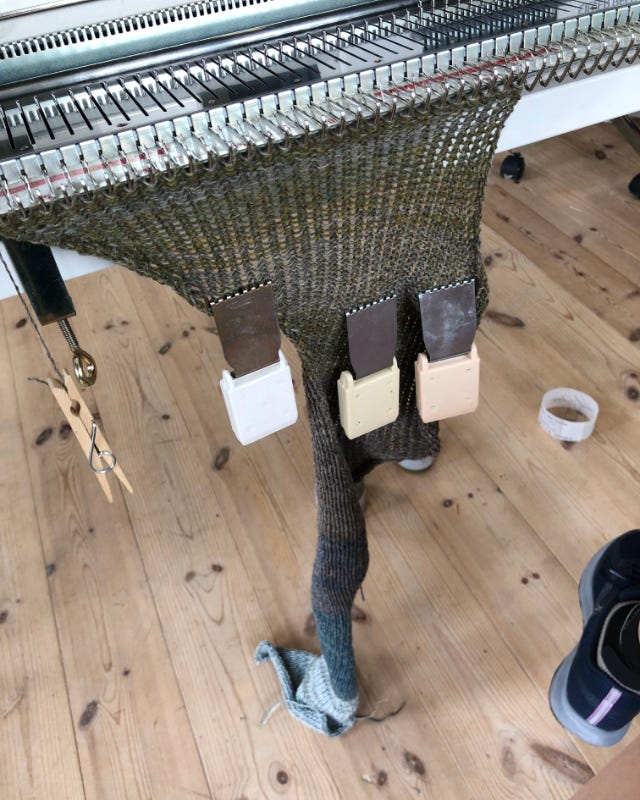
Being naturally curious and already having good technical and problem-solving skills from weaving, learning to use the knitting machine has been fairly straightforward, though there’s plenty more to learn, and I’ve mainly made flat things and one sweater (and two un-successful ones too).
Knitting offers a different visual language than weaving. Where weaving is flat, non-stretchy, and pattern is controlled and, in some senses, limited by how you program the loom, knitting is the opposite. It has stretch, it can be circular, textured, and you can completely change your pattern and material, down to a single stitch, at any time.
I applied to go to DVS to focus on gaining competency with the knitting machine with the idea that it might benefit my practice as an artist as well as an educator. I knew that just staying home to do this on my own machine was possible, but the value in doing an artist residency is that you get to live outside of the routine and distractions of everyday life — as well as the pleasures of encountering new cultures, people, and ways of working. And my loom is a huge distraction! There is always the small voice in my head encouraging me to work on a pattern idea or get ahead on the next project or, alas, the most annoying voice that is distracted by whatever passing thought or “what if…” crosses my mind. Sometimes you have to clear space and the residency experience is a nice way to leave all of that behind.
DVS is equipped with two knitting machines, and I used both to experiment with gauge and colour. I practiced in advance with my own machine so I had basic skills when arrived and could focus on a question I had set out for myself — how could I knit a curve?
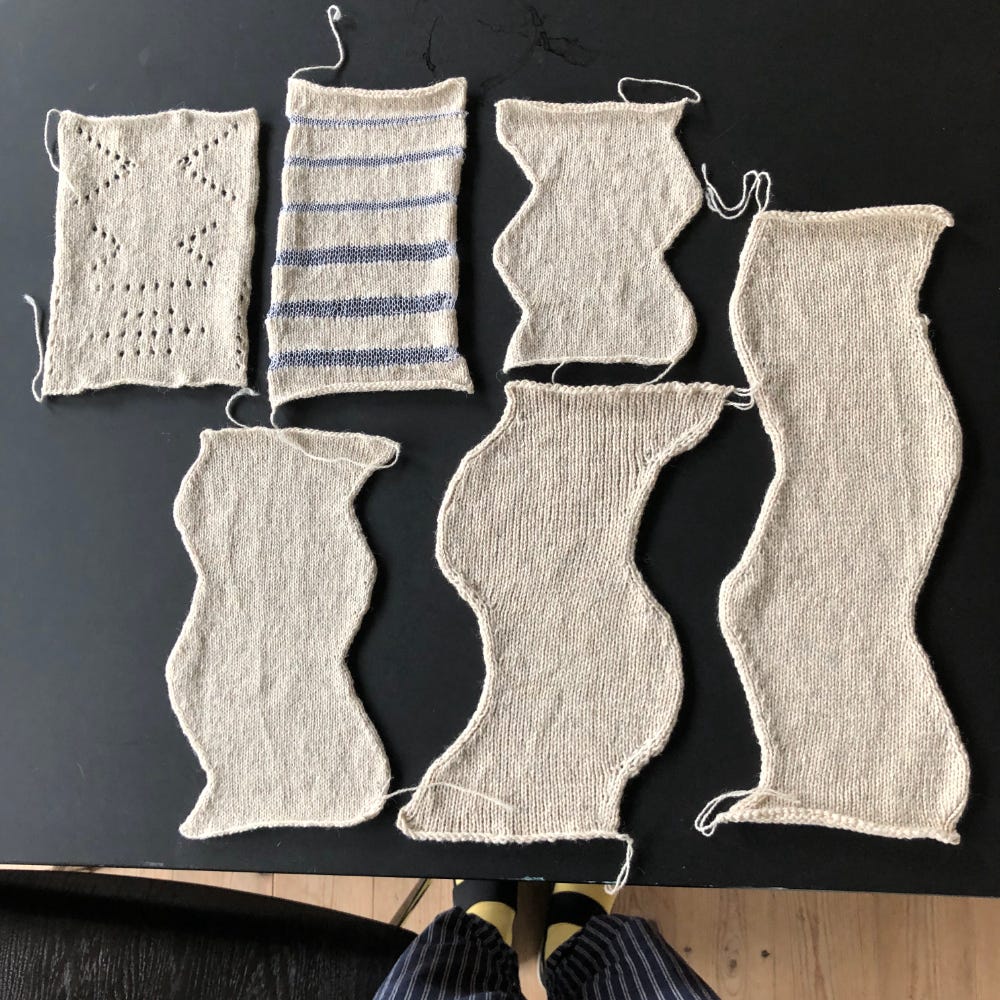
Shaping is an essential part of making knitted things that are not just rectangles, and is especially essential for garments, which have heels and arm holes and areas that expand (such as around your bicep) or contract (around the wrist), so curves felt like a good method for moving away from the rectangle.
In the months before visiting DVS, the ocean was never far from my mind, as was the German word for beach, strand. Down the Øresund and across the Baltic is the seaside town where my grandparents grew up, and I found myself often thinking of them, not only because of the geographic closeness to where my family is from, but also because the last time I was in Denmark was with them.
In English, strand means “a thin thread of something, often one of a few, twisted around each other to make a string or rope”— the obvious textile reference — but it is also defined as “a part that combines with other parts to form a whole story, subject, or situation.”1 Strand, then, is also one of the many textile words our language uses to describe and contain our experiences.
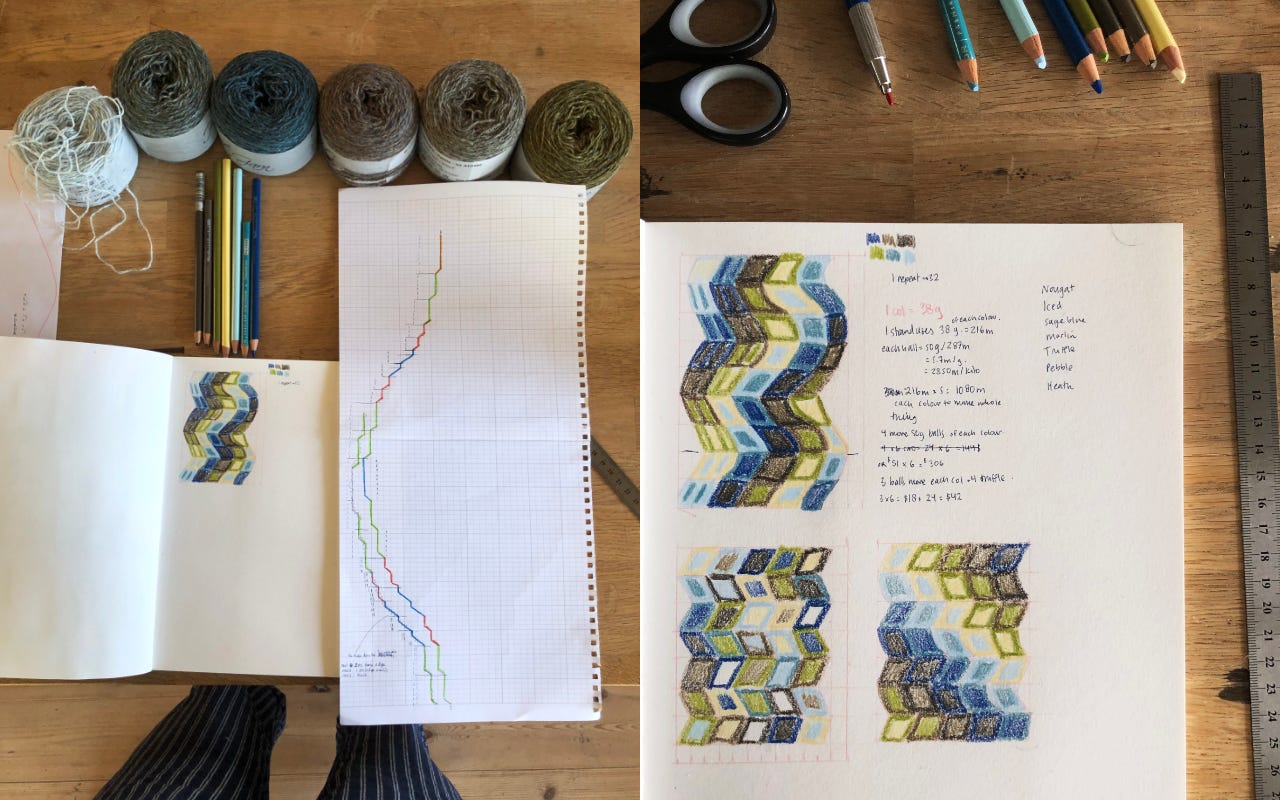
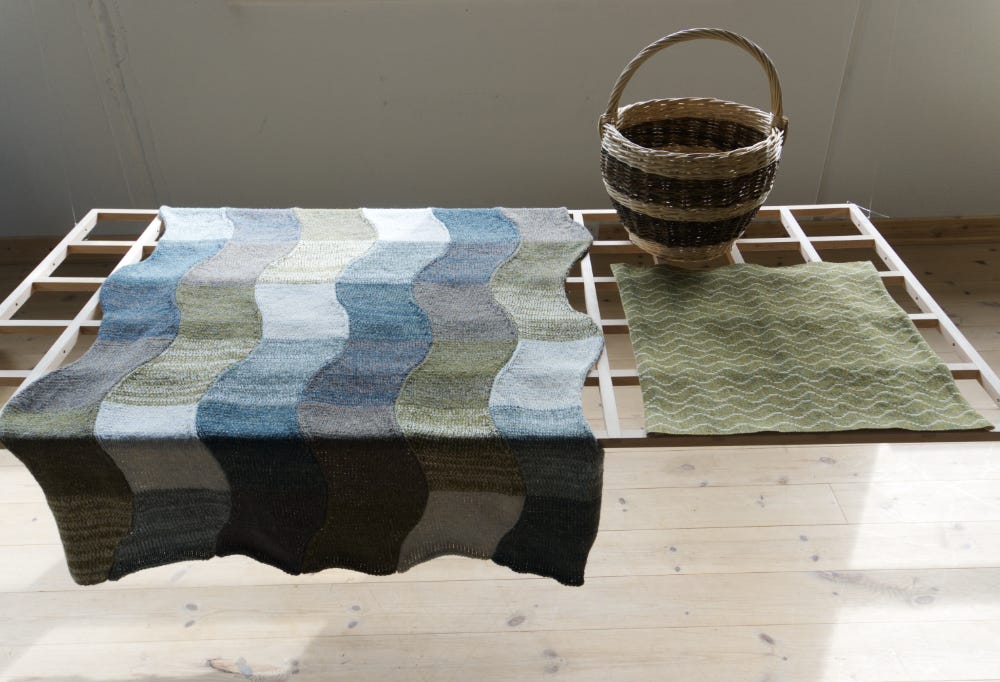
I began by making many samples to test the yarn, rate of increases and decreases, and gauge. Once I had figured out my ideal curve, I drew a sketch and began to knit long, skinny, wriggling strands. With a palette of seven colours of wool yarn, I knit each strand by beginning with two colours, swapping one hue out for another at the completion of each curve. This created seven marled blocks of colour in each strand and an overall organization to movement to the pattern and colours.
As I finished and washed each strand, I would link it with the prior one until I had created six in total; the resulting piece is roughly the size of a lap blanket. It is flat but the shape curves in and out at the edges. Weaving is all about right angles, so making this completely wiggly piece was a fun exercise in shape and form.
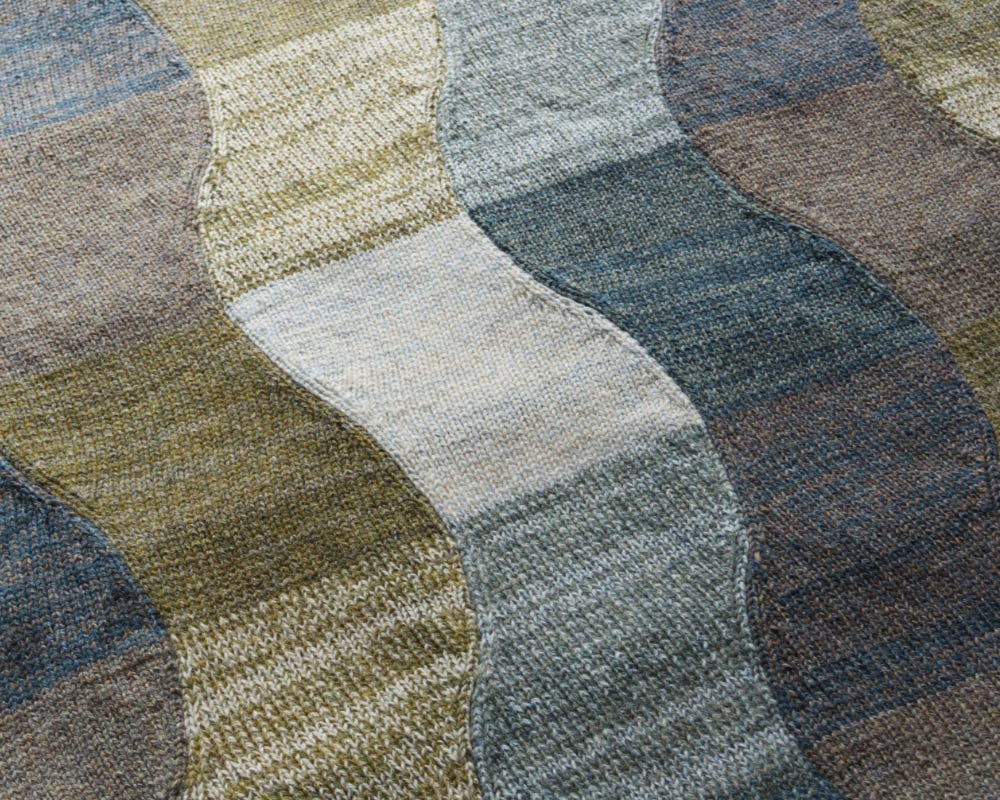
The residency also has loom with a Toika ES unit, which sits where the upper jacks are on Scandinavian-type looms. All shafts are fed into this unit with Texsolv cords, and once you’ve drafted your pattern using WeavePoint software, you plug the unit into your computer and press a pedal to lift and lower the shafts. The loom at DVS has 24 shafts - sixteen more than I have in my studio, so trying it really felt like an obligation!
Continuing on with my motif, the curve, I plotted three unique curving strands using a block weave, and repeated them across the width of my cloth. I used cotton weaving yarn I’d bought in Sweden and leftover yarn from knitting.
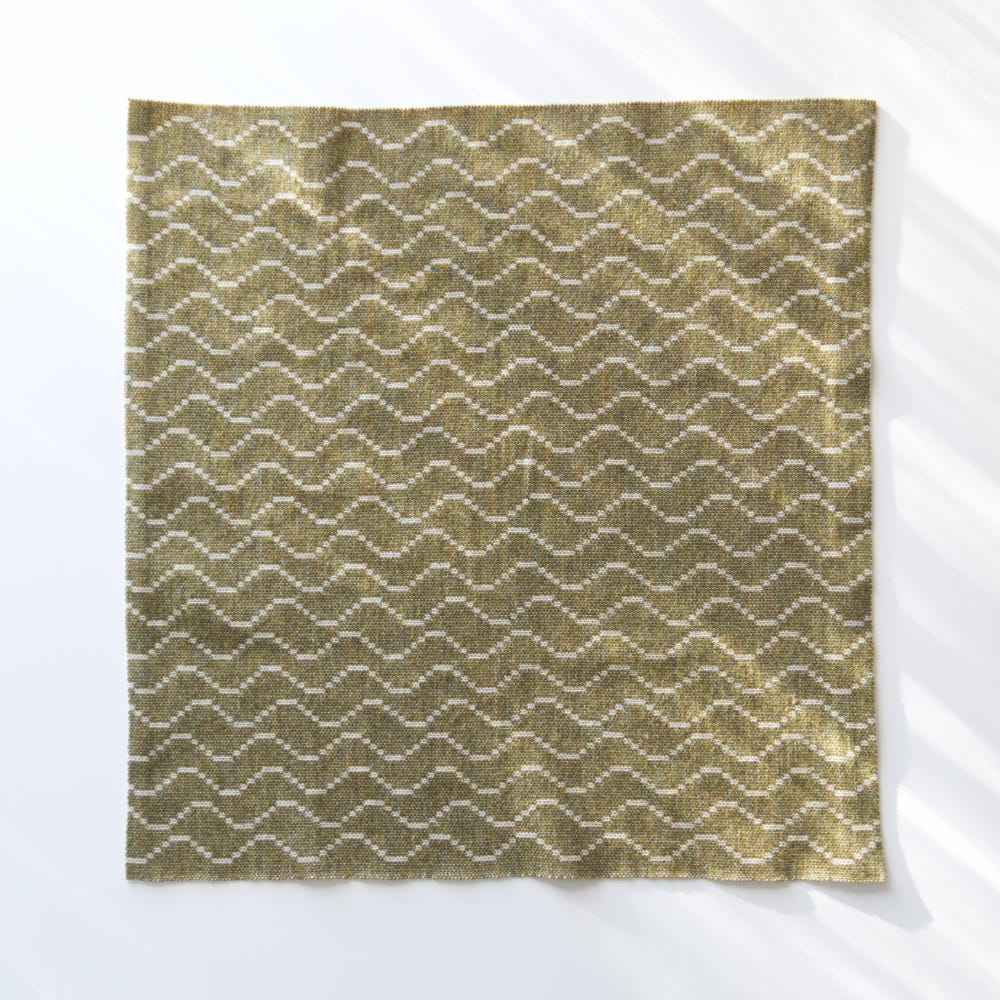
Weaving was fairly straightforward using the unit, if a little boring — I found I missed the material feedback, physicality of pressing treadles, and the embodied understanding of where I was in the pattern. But at the same time, the computer unit allowed me to weave something that would have been next to impossible with a traditional set up —I wouldn’t have had enough treadles!
(For the non-weaver readers, the treadles (pedals) of your loom are connected to the shafts, which hold the threads. You “program” each treadle to lift a whichever shafts needed to make your pattern work, but looms generally have a fixed amount of treadles; four shaft looms usually have six, eight shaft have ten, and so on. My pattern would have needed many more treadles than would exist or be practical to use, so the computerization made a monumental task possible!).
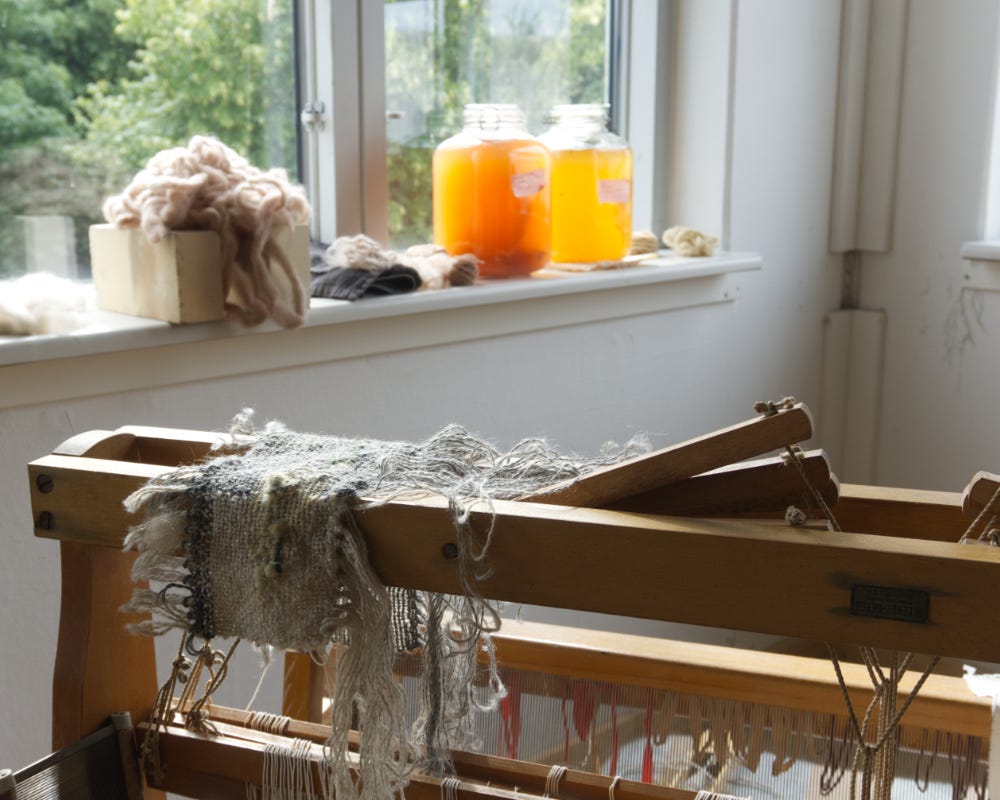
During the same weekend as Ovnhus, the mill held an open house so my two fellow residents and I had a small exhibition to share what we’d made.
I exhibited a trio of pieces: my knit curves, my woven strands, and my finished basket — or, in Danish, my kurv. I really love the delightful symmetry of kurv sounding much like the English curve, and all the sinuous strands of wool and willow interlacing and looping together to make three very different material forms.
I see the knit piece as vertical curves, working upwards; the woven piece more like waves or strands of seaweed, moving horizontally; the basket is curves round and round in a spiral that holds space and shape.
The privilege of being able to attend a residency like this and make time and space to try something new is a wonderful thing, but the best part of the experience was all the wonderful people I met, many of whom I haven’t shared or introduced through these essays.
I had many thoughtful conversations with Gertrud in Copenhagen, and Pia and Peter at DVS; meals and hellos with Gitte, Soren and Jes at K12; forest chanterelles and eco-prints with new friends Iben and René. And of course, so much making, eating, and adventuring with my two exceptional co-residents, Alisha and Yili, who worked on weaving, felting, and dyeing projects while I knit and wove. The real gift of this residency was time with you!
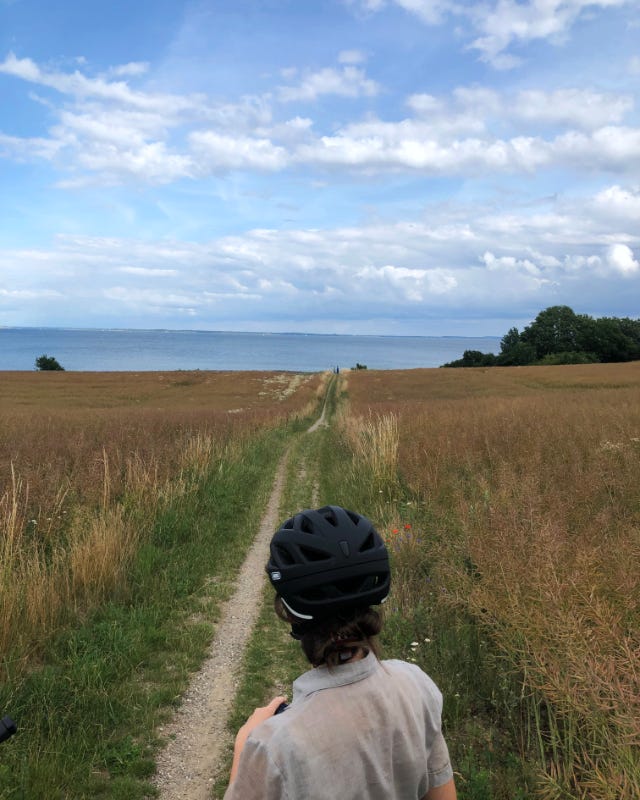
I would like gratefully acknowledge the support of the Canada Council for the Arts, for my residency at Det Vilde Spinderi, as well as the support of the Guild of Canadian Weavers.


Comments
Nothing yet. Say the first thing.
Sign in to join the conversation.