
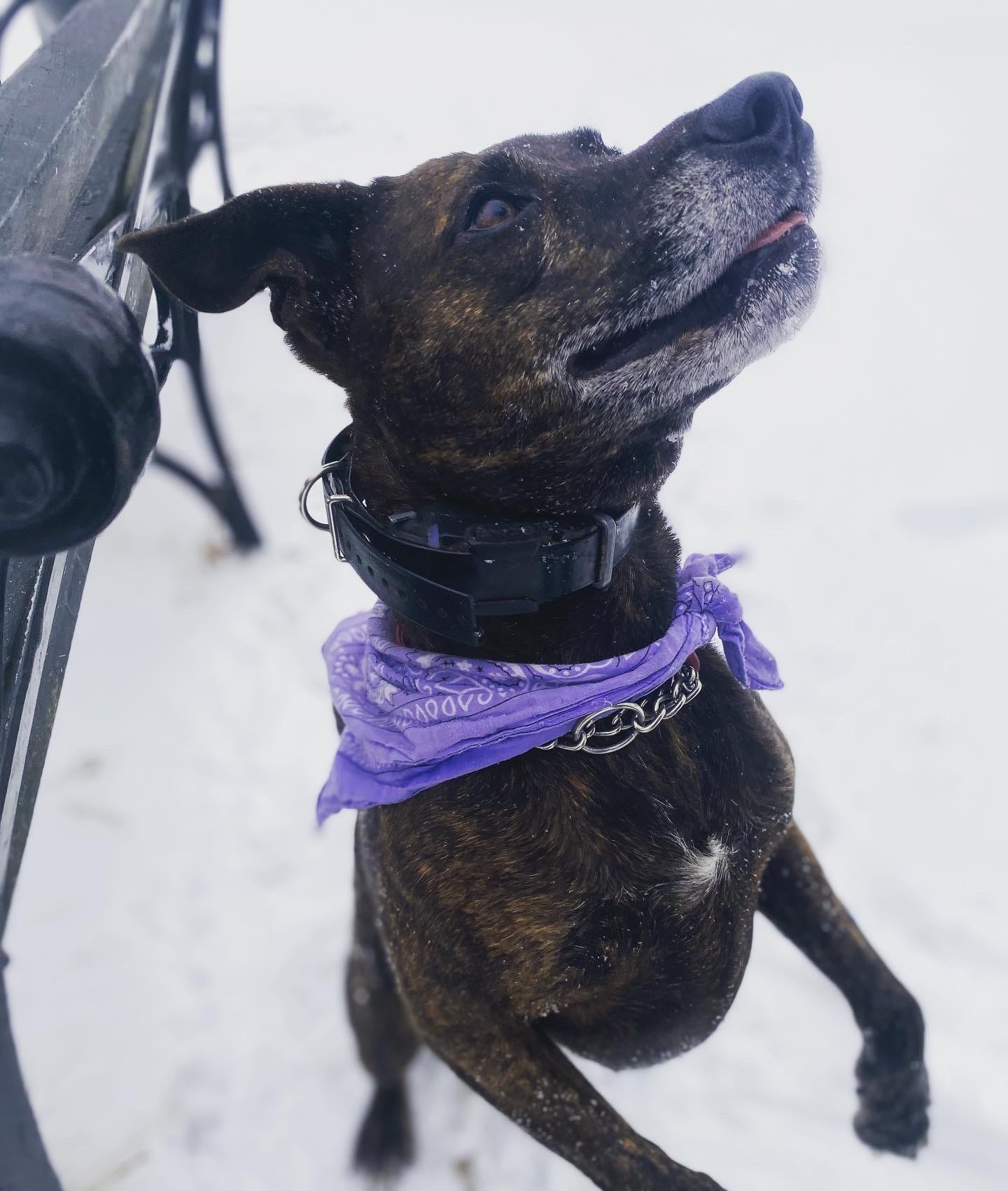
Earlier today we had to say goodbye to Sadie, our 14 year old rescue dog, a lab/pit mix with bright eyes, a helicopter tail, and a deep love for eating trash.
Indulge me. I have some things to say about her, dogs, love, grief, and adulthood.
The first thing you need to know is that while she was the best dog, Sadie was not a particularly good dog.
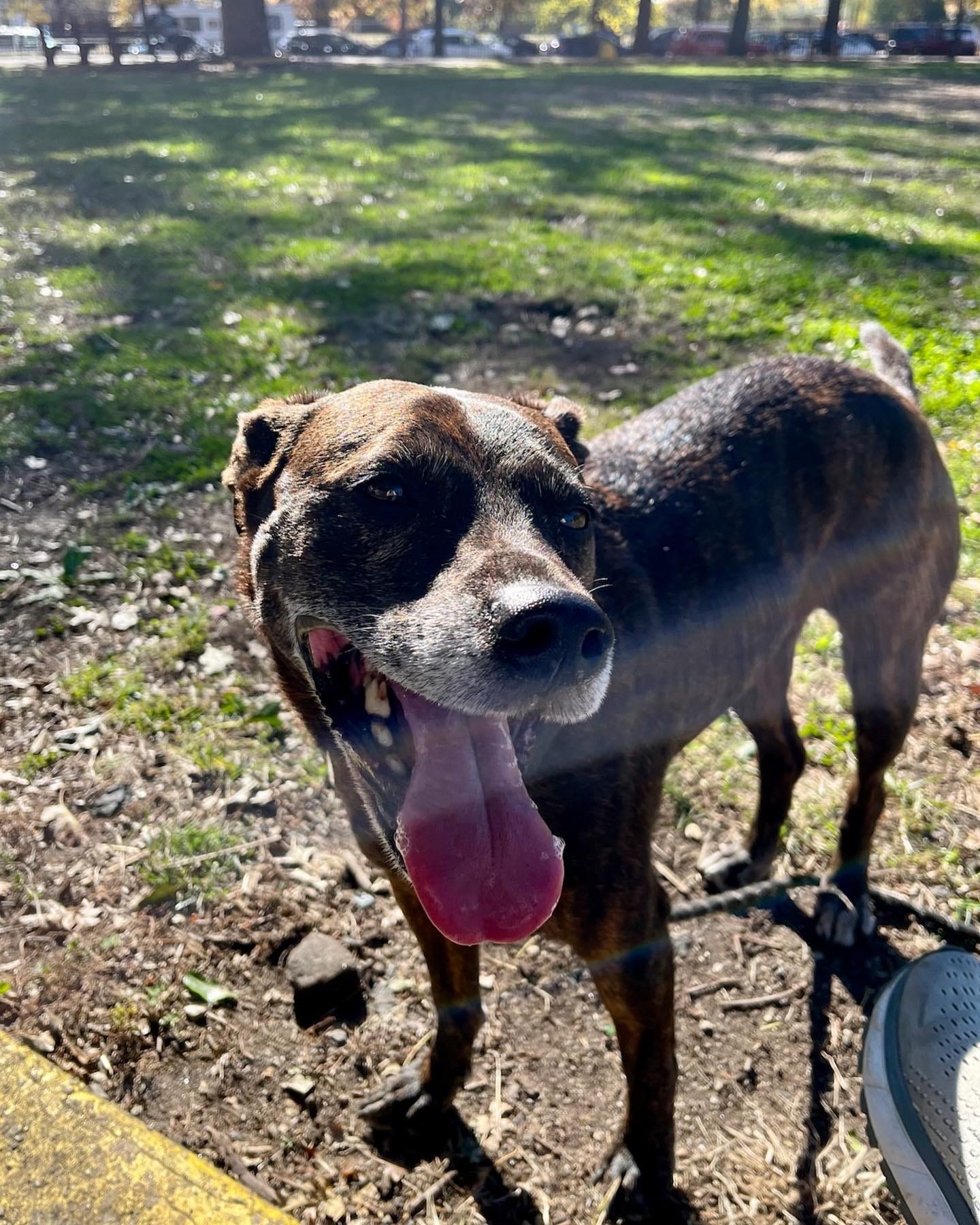
She was not well-behaved. She didn’t like other dogs, kids (more on that in a bit), skateboarders, people wearing hats, bikers on the sidewalk, motorcycles, or delivery men, among others.
Sadie didn’t hide her emotions — when she was mad, she’d bark. When she was happy, she wagged with her full body, all 50-ish pounds of her whipping back and forth, jumping five or six feet up to your face to literally kiss you with her wet nose when you walked in the door.
Much to the chagrin of every dog trainer I ever worked with, Sadie slept in bed with me (and later, us), usually snuggling up in the crook of my knees with her head resting on my thighs, or in a cinnamon bun at our feet, or sometimes between us with her head on a pillow like a person. When I got pregnant, she took over the pregnancy pillow, which made a perfect Sadie-sized circuit for her.
She was joyful, ferocious, silly, snuggly, and for better or worse, she was annoyingly smart — she was my “circus dog” after she quickly learned sit, down, stay, wait, paw, play dead, and how to go through my legs. She got a thrill out of doing doggy push-ups — going from sit to down and back again over and over again.
I often joked that Sadie was an evil genius. Her ability to break into trash cans was unmatched. Sometimes on walks she’d stop, crawl underneath a parked car as I tried to yank her leash, and then come out proudly with a full pizza or roast chicken in her mouth, eager to scarf it down.
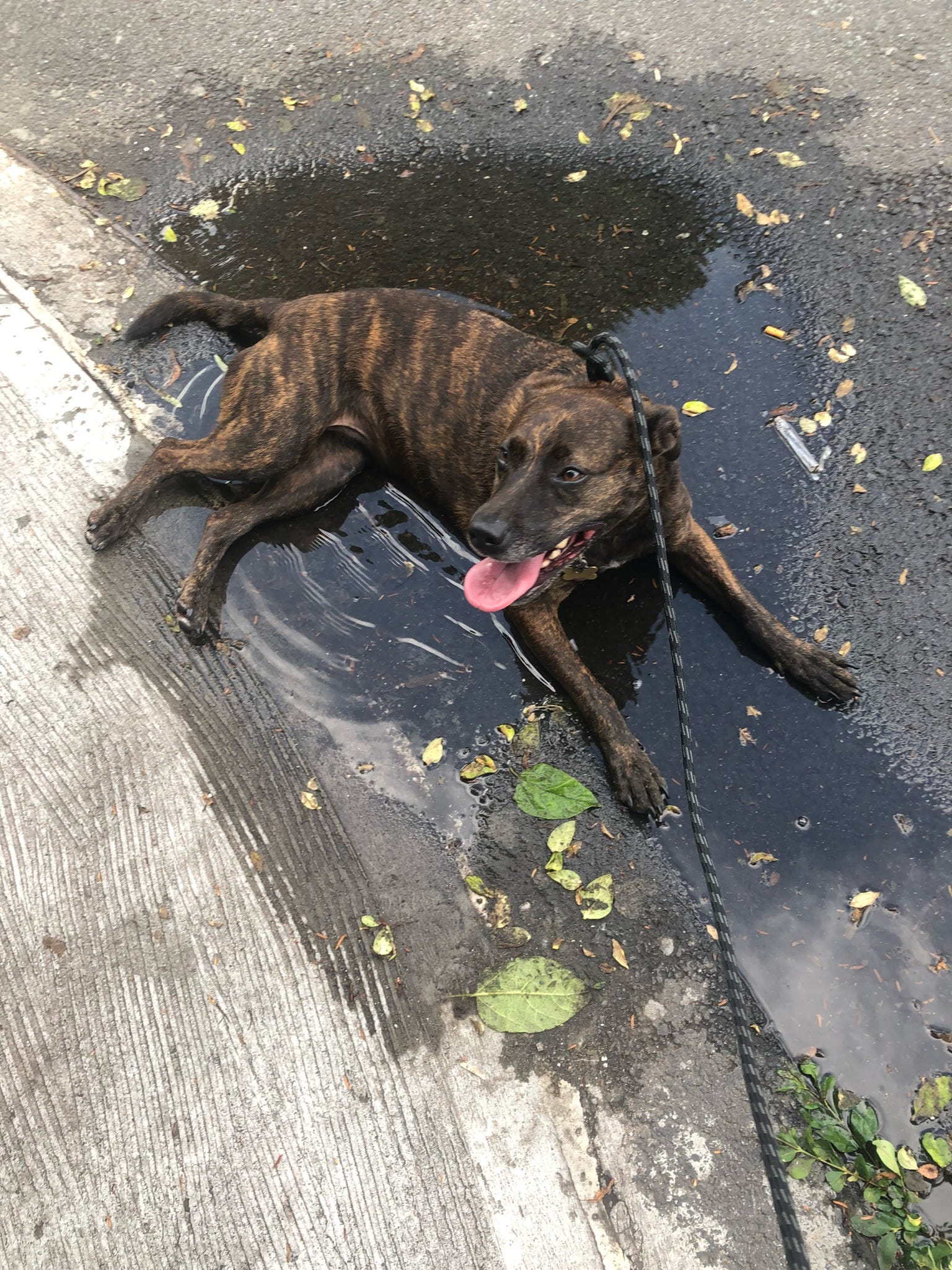
Her energy was seemingly limitless. If given the choice, she’d walk for hours, occasionally resting in a puddle to cool off like the tiger frolicking in the pond at the zoo.
She was a puller — I tried dozens of different types of collars and leashes over the years, plus click training and treats and all kinds of obedience tricks, but she was indomitable.
Like all fierce girls, she was, of course, beautiful. Her brindle fur shimmered in the sunlight. A man in Chicago once stopped me on the street to tell me he wanted to skin her and wear her as a coat. (We started going a different route on walks after that.) I bathed her occasionally, in my tub or at wash-and-go places in whatever city we lived in, giggling as she tried to bite the blowdryer.
Sadie ran away whenever she got a chance — from my parents’ old house in rural VA while I was recovering from knee surgery and couldn’t chase her, leaving my sister to find her on the neighbor’s front porch three houses down.
She sprinted into the woods of Connecticut at my in-laws, gone for nearly an hour — although my husband later told me he found her within a few minutes and it was the two of them that were lost together for most of the hour.
She ran away from lake houses and cabins in the mountains, taking great joy in the hunt. And yet: She always, somehow, came back, galloping through the snow with her tongue hanging out of her mouth, a big smile on her face. She was never trying to escape, only trying to explore.
She dug up plants, destroyed my pants, my couches, our garden (many times over), and an immeasurable amount of rawhides/bone marrows/kongs/”indestructible” toys.
Forever my junkyard dog, she had a stomach of steel. She could eat anything and everything — chicken wings, peanut butter, massive steaks. The only thing that really fucked her up was chili, which I learned the hard way. My husband was appalled when after our first meal at my home together, I put my dinner plate on the floor for her without a second thought so she could do what I called the doggy pre-rinse.
Her preferred method of eating kibble was to pick up the bowl, empty it across the floor with a dramatic toss, and then slowly gobble it up piece by piece. This would shock new people and deeply entertain me in the process.
Sadie was a force. Like any dog owner who’s spent a lot of time reading Reddit, I’m acutely aware: Her poor behavior was mostly my fault.
Objectively, adopting a dog was a crazy thing for me to do.
I rescued Sadie when I was 23 years old, a few months off the Obama campaign and settling down in Chicago for my next job.
I was living alone, gainfully employed, and extremely confident in my own capacity. My mom told me this would be a mistake; I ignored her.
I remember the library parking lot where I met Sadie at New Leash on Life’s adopter event — this scrawny brindle pup, barely a year old, that the rescue group had pulled out of animal control at the last minute after she’d been found outside in the cold Chicago winter. She was pulling at her leash to come over to me and give me kisses, flinging her hungry body against mine, desperate for affection I was happy to give.
I officially took her home on May 12, 2013 — the first pic of her on my crappy iPhone was blurry because I could barely get her to stand still.
That first year in Chicago, Sadie and I got to know each other. I had only moved in to my apartment six weeks before — I quickly learned that walking the dog was the best way to get to know a new place, a fact I’d take advantage of as Sadie would ultimately live with me in six apartments across four different cities.
Sadie and I moved from Chicago to Florida, snuggled up in the backseat as I recovered from yet another knee surgery while a friend drove us across the country. (She of course ran away from that Florida apartment within a few days — I was still on crutches so my new coworkers I’d barely introduced myself to had to chase her four blocks.)
She liked Florida, especially when we’d walk the 10 minutes to the park along Tampa Bay, where she’d take in the sunrise. My apartment had termites (or some other kind of bug?) in the walls, and she’d bark and jump up at the sounds in the night. I found a nice woman in the area who’d stay with her when I traveled across the state — she’d send me updates about how Sadie was always chasing the geckos.
After Florida, Sadie was my companion in DC, in the dark basement apartment off U Street where we lived for a few months as we figured out what was next.
There she got me in trouble by nipping the hand of some guy who wouldn’t stop cat-calling me outside a bar on St. Patrick’s Day, even as I ignored him.
Her victim — she barely broke skin! — freaked out and beckoned the police over, who wrote me and Sadie up, necessitating a visit by animal control to our home a few days later.
I was terrified Sadie wouldn’t behave and things would escalate. Instead, she licked the officer’s fingers and curled up on their feet to fall asleep as I showed them all her vaccination paperwork.
Finally, Sadie came with me to New York in 2015, where she’d spend the majority of her life.
Our first apartment was a small one in a neighborhood near Prospect Park that cost me an extra $100 a month as a pet fee. I was working on the presidential campaign and was in the office around the clock; my super took on a side hustle walking Sadie for me for extra cash and would send me pictures of her eating a plate of jerk chicken from one of the neighborhood spots.
For six weeks in early 2016, when the primary was at its peak, Sadie went to live with my sister in Philly — there, my sister would treat her to hamburgers from the food carts outside the university.
When I got home on Election Night, wrung out from crying, I took Sadie out at 4 a.m., just to pace the neighborhood because I couldn’t sleep.
In the weeks after, when I was so depressed and heartbroken I could barely function, Sadie was the only reason I got out of bed and out of the house.
We’d go for long walks through the park, looping the lake as she’d bark at the ducks and lunge at the bikers. She kept me structured: There was no time for wallowing when the dog needed me.
She sat on the couch next to me, sometimes putting her head on my keyboard as I worked on the strategic plan for Run for Something — my cofounder, Ross, and I would often joke it was the two of us and our two dogs who started the thing.
Over the 10 years of RFS, I’m confident that Sadie has heard the spiel so many times she could do it if she could speak. Her barking has appeared on podcasts, her squeaky toys can be heard in the background of calls, her little face has been in my Slack profile pic for most of the last decade.
She was my most consistent coworker, my best audience, my comfort during the hardest days, and my forcing mechanism for routine during the craziest ones.
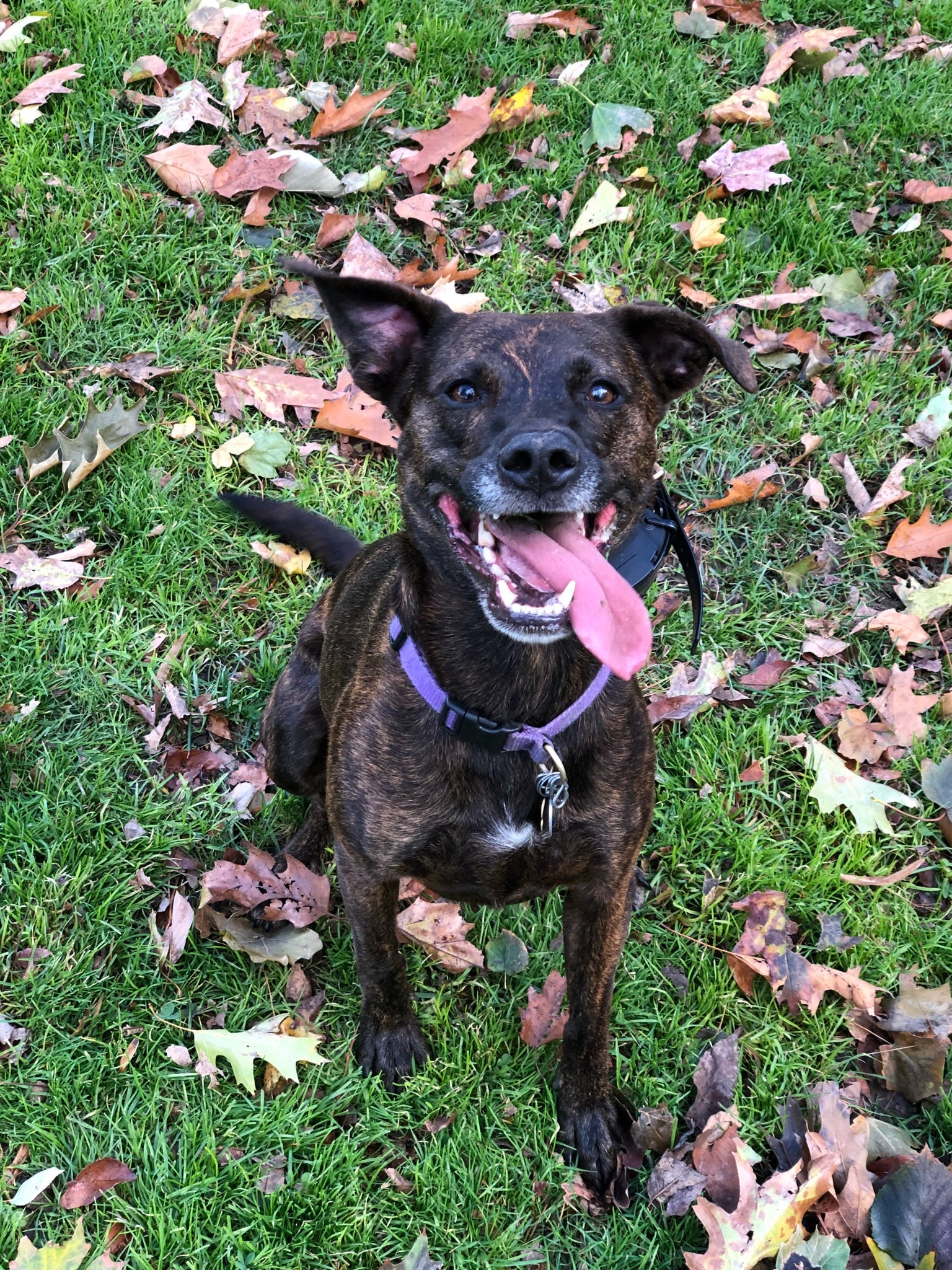
Sadie was synonymous with my identity as an adult.
She was the dog of my 20s who became the dog of my 30s, the dog who was on the back of my first book in my professional headshot (LOL), the one who gave me an excellent excuse to go home when I didn’t want to stay out too late, and who taught me how to be present.
Sadie was my guard dog, my protector — literally and figuratively. I lived alone but was never afraid because there was no way Sadie was letting someone into my home without a bark or ten.
She was an impeccable judge of character. She didn’t really warm up to any of the guys I dated until the one who I ultimately married — the man who came prepared the first time he met with Sadie with a fresh bag of dog treats. (He later told me: He was so nervous he went to the pet store to buy something specific for her and told the guy behind the counter how he’d just started dating this woman he really liked and he wanted to impress her dog, so what did the guy recommend? Instead of being charmed by that, the guy just pointed to some bag on the shelf.)
Sadie did not just like my husband — she worshipped him. He quickly surpassed me in the household rankings, taking over the responsibility for morning walks and often evening ones as well.
He was never a dog person before me, but he quickly discovered the delight in feeding her treats, making her steaks each year to celebrate her Gotcha Day, and getting her buckets of tennis balls.
When she’d freak out in a thunderstorm and hide in the bathroom or our closet, he’d go lie on the floor with her so she wouldn’t be alone in her fear. (Dogs are not kids, but: Watching him care for Sadie was how I knew he’d be a phenomenal dad.)
COVID was a bad, dark, bleak time for everyone, except for Sadie, who was living the best version of her life.
We lived a 10-ish minute walk from some empty open green spaces (they were being remediated for lead, whoops) that became unofficial dog parks, especially for people whose dogs didn’t get along with others. My husband would take her every morning for over an hour to play fetch, tossing and returning a tennis ball until she flopped down in an exhausted heap.
They went to play in rain, snow, sleet, and sun, nearly every day from spring 2020 until we left that apartment in spring 2023. She would trot regally with her head up, tongue sticking out behind a tennis ball, long tail swinging around her like a sweeper.
When we got married in 2021, the only thing I really cared about for the pictures was that Sadie was part of them.
A friend took a car across Brooklyn with her to where we got married and handed Sadie off to us for some pics.
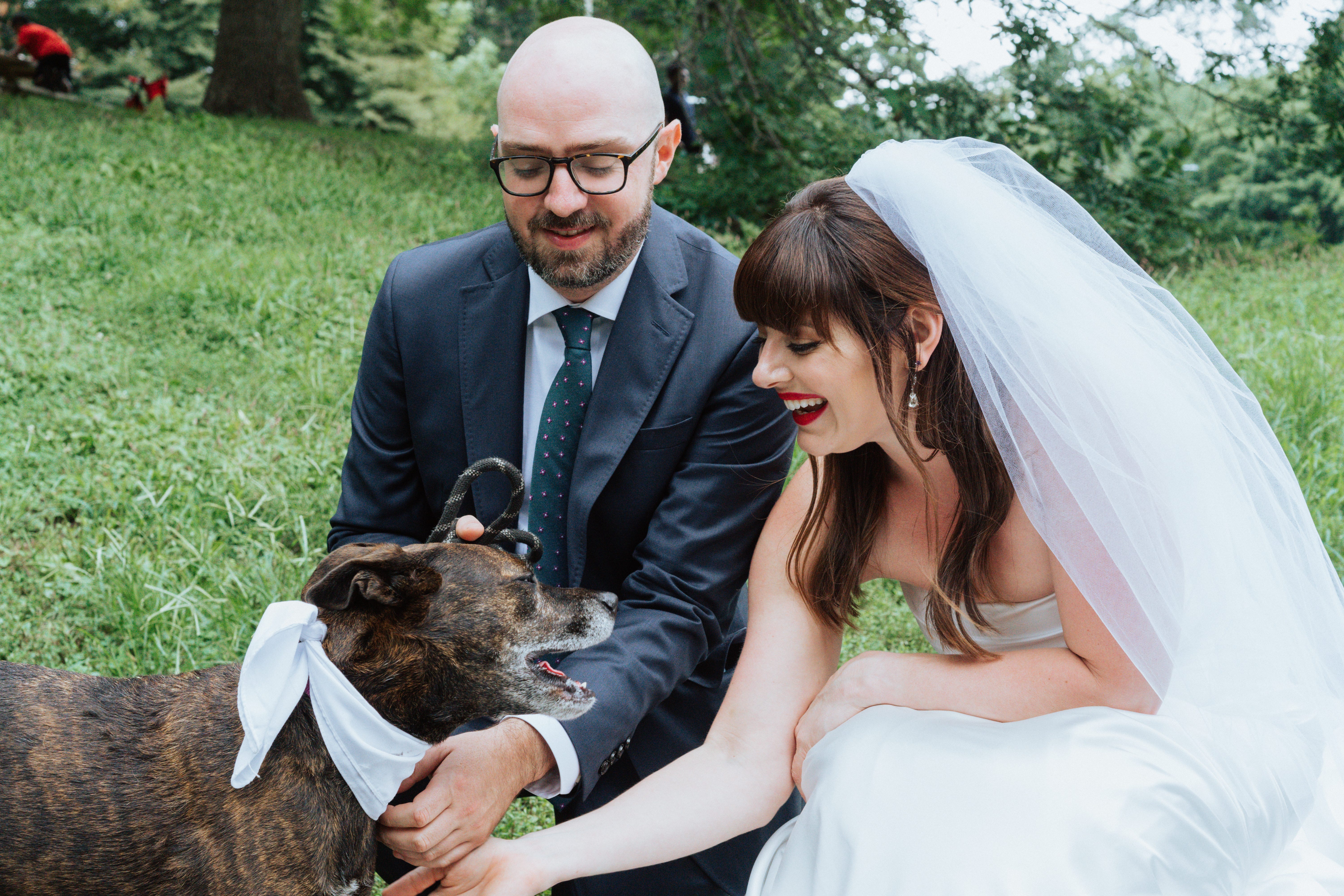
One of those pics hangs in our living room, where our daughters often point to it and say “that’s mama, and that’s dada, and that’s Sadie.”
That’s basically the extent of our kids’ relationship with Sadie.
After my first daughter was born, Sadie became the locus of my post-partum anxiety. I knew she was not a fan of kids and she had a deep dislike for squeaky little creatures (see: squirrels, rats, mice, etc) — I was terrified she was going to eat the baby.
My risk tolerance for danger in this particular area was nil. (The worst case scenario was I have to take a kid to the hospital and then put down my dog — not one I wanted to consider.)
So we created systems for safety as the baby got mobile, and then added even more precautions when our second kid was born.
We worked with an expert trainer (highly recommend her!) to set up our home so that everyone could coexist safely — Sadie would either go in her crate or go upstairs when the kids were out on our main floor, never hanging out in the same space.
We had leashes attached to walls if we needed it, and we operated with an abundance of caution. Many of our newer friends over the last few years are surprised to learn we had a dog because when they come over, she’s in her crate in the back bedroom, sleeping or chewing on a toy.
I scroll through my phone and you can see the tipping point where my focus went from the dog to the kid, then both kids. I’d sometimes ask my husband if he thought Sadie noticed we had less time for her.
“She can’t tell that you take fewer pictures of her, no,” he’d say, gently.
And he’d remind me: When the kids were at school or daycare, Sadie had free reign over the apartment, alternating between napping on the couch, in the sun spots near me next to our deck, or on the bed or floor near my husband as he worked.
The kids knew though —- Sadie was part of our family, even if they didn’t interact with her beyond occasionally tossing treats at her from a distance.
My toddler would proudly tell us: Sadie is my dog! The baby thinks every dog is a Sadie, shouting it at dogs we see on the street. I cried the first time I realized they probably won’t remember her.
To love a dog is to know that one day, if you’re lucky, you will say goodbye.
You will scratch behind their ears one final time, whisper how much you love them, feed them one last treat. You will take them for one final walk, one last undignified squat to scoop shit off the ground into a plastic bag. It will feel like an honor.
It is a tender grief, right on the surface, and for us, it comes at the end of a long goodbye.
Sadie started slowing down a few years ago, and then in 2025 had a year of health issues — a liver mass, Cushing’s disease, an amputated toe after a broken nail got infected, high blood pressure, and more. (My number one advice: Get the pet insurance. You probably won’t need it for most of their lives, but when you do, you’ll be so glad you can make decisions based on their comfort, not on finances.)
A few weeks ago, she stopped wanting to go for walks more than around the block, then just to the corner, then finally, just reluctantly stepping outside to go to the bathroom and then slowly plodding her way indoors. She’d lost a lot of weight. She’d stopped playing, stopped wagging her tail, stopped destroying toys with glee, started having more accidents inside after a decade+ of being impeccably housebroken. She limped up the few stairs we’d gotten for her to climb onto our bed, barely able to make it to the top.
We scoured the internet, conferred deeply with our vet, and ultimately decided: It was time. She was having more bad days than good ones, and at 14 years old, there was no improving from here, only decline.
I am mourning not just my dog but the phase of life she represents, the versions of me who grew with her.
I feel like I don’t know how to be an adult without her — a ridiculous thing to say when I am a married mom of two kids, gainfully employed, fully functioning.
But then, it is Sadie who made me this way. She taught me that I could be a caregiver, that I have the capacity to love someone deeply and fully (even when I sometimes find them incredibly annoying).
It’s not even that she transformed me — it’s simply that who I am as an adult is fundamentally shaped by being her owner.
It was sometimes hard, often expensive, and worth every single penny.
For the first time in 13 years, there is no dog to walk. No kibble to sweep up. No ears to pet, or tummy to rub, or leash to tug on.
Before I was a boss, or a wife, or a mom, or even barely an adult, I was a dog owner. It is foundational to my sense of self.
I miss my dog. I’m so deeply sad. And ultimately, I am so grateful that I got 13 years with the best bad dog I know.
When We’re in Charge is my leadership book for millennials and gen Z trying to do things differently. Pick up a copy in any format you’d like — hardcover, e-book, or audio book (narrated by yours truly) anywhere you get books, including Amazon or Bookshop.org or literally anywhere else. If you have Spotify Premium, you can listen to for free right this very minute. It’ll be out in paperback in September.
Comments
Nothing yet. Say the first thing.
Sign in to join the conversation.