
This week (May 13, to be exact) marks one year since When We’re in Charge was originally published in hardcover.
In honor of my book’s first birthday, some thoughts on the last year on both the macro and micro levels.
When the book came out last spring, we were a few months into the second Donald Trump presidency -- to put it lightly, things were bad, and were only going to get worse.
The federal government was being torn apart, DEI was basically declared illegal via executive order, AI was just starting to break through to the non-technical among us, major corporations across the country were calling workers back to the office as their CEOs showed they may have had a lot of money but they had absolutely no courage -- and closer to home where I live, Andrew Cuomo, a classic asshole boomer with a history of sexual assault, corruption, and ego-driven leadership, was polling at the top of the crowded field in the race for mayor of New York City.
Barely a month later, Zohran Mamdani would shock the world and win the Democratic primary for mayor.
Buoyed by a joyful community-centric campaign that leveraged social media like a born-on-the-internet millennial and demonstrated the kind of responsible authenticity I wrote about in the book, Mamdani expanded the limits of what we could imagine is possible in American politics and more broadly, in leadership. I mean, he could be a case study in nearly every chapter.
He was the most public example of the changing of the guard -- but all across the country, the same thing was happening in companies big and small.
At the end of June 2025, Glassdoor published a survey noting that millennials now make up the largest share of all managers and gen Z made up 1 in 10 of those in charge. If trends continue, gen Z will make up a larger share of managers within a year or two.
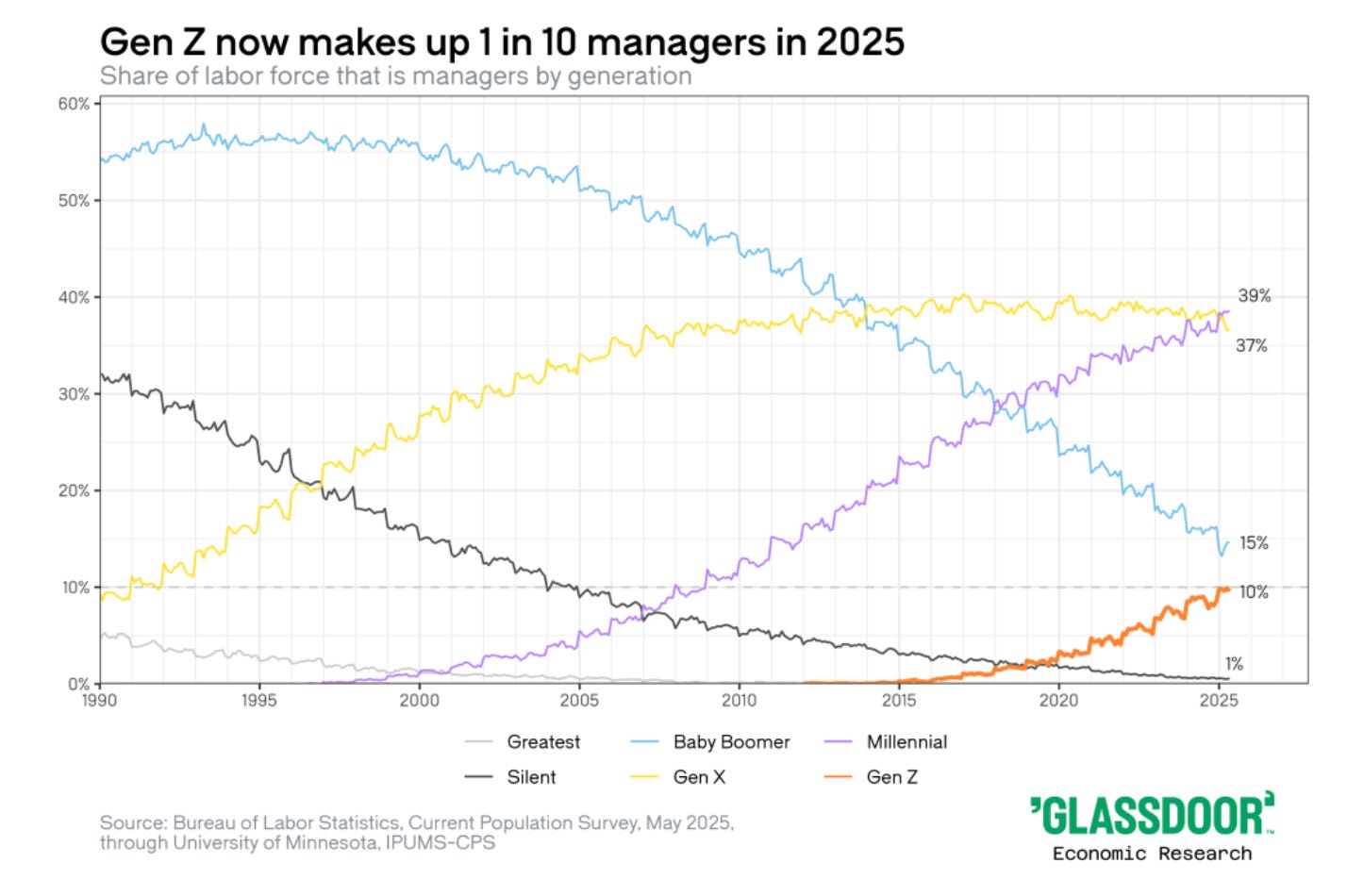
And per Glassdoor’s research, gen Z will likely bring with them “human attitudes around caring for workers.”
All that’s to say: I was right. (I love being right.)
We are not just on the brink of generational change -- the hand-off is happening as we speak. Boomer CEOs are passing the baton to millennials (sorry to gen X) and gen Z is quickly climbing the ranks behind them.
While that’s happening, our national role models for leadership are getting even more hostile, CEOs are abandoning their values and folding to political threats, and AI is rapidly changing everything we know about work and relationships. The future is uncertain.
The need for a new style of wielding power is more urgent than ever. The old playbooks will no longer cut it, if they ever truly did. The leaders that got us into the mess have neither the skills nor stomachs to lead us out of it.
In spite of my smug correctness referenced earlier, I cannot actually predict what the future will hold.
But I can tell you what I hope it looks like: If the 2025-2026 version of America was a backlash against progress, then the backlash against the backlash will be a swing toward more humanity, joy, and connection, both online and in real life.
We need leaders in politics, business, and communities who can embody millennial optimism with teeth -- or to quote one of my favorite memes, leaders that “look like a cinnamon roll but could actually kill you.”
These leaders will not see efficacy and kindness as mutually exclusive. They (you!) will have clear values, strong backbones, and the ability to post through it without becoming the worst kind of troll.
We need business leaders who do not back away from diversity efforts, PTA leaders who will stand up for kids under threat, and hospital administrators who know that care must be paired with compassion. We need parents leading their kids toward kindness in spite of the role models succeeding through hatred.
More concretely, as we collectively prepare for the way AI could change our lives, in some ways for better, and almost certainly in ways that make things much much worse, I believe that the responsible authenticity, transparency, community, and balance that I argued for in When We’re in Charge are even more imperative. Leaders will have to adapt and bring their teams along with them for the ride -- explaining the “why” will be fundamental to leading through change.
It’s already been hard. It’s going to get harder. But I feel more confident than ever that the next generation of leaders has what it takes to show up, lead well, and go home happy. We survived Y2K and skinny jeans -- we can make it through anything.
All of which is to say: the macro argument feels vindicated.
But the micro has been its own education. Publishing a book is mostly pretty anti-climactic. You work for a very long time in isolation, then there’s pub day, and a bunch of attention if you’re lucky, and then…you wait for people to read it.
What that’s meant in practice is that over the last year, I get a steady drip-drip-drip of feedback from readers/listeners.
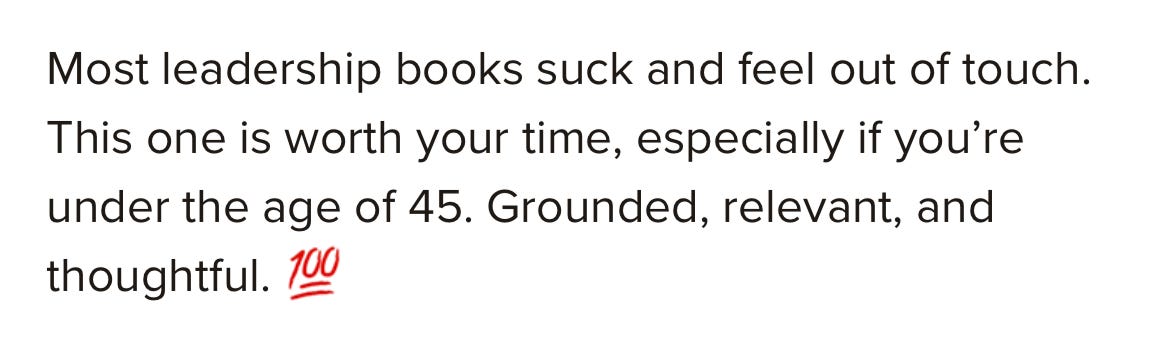
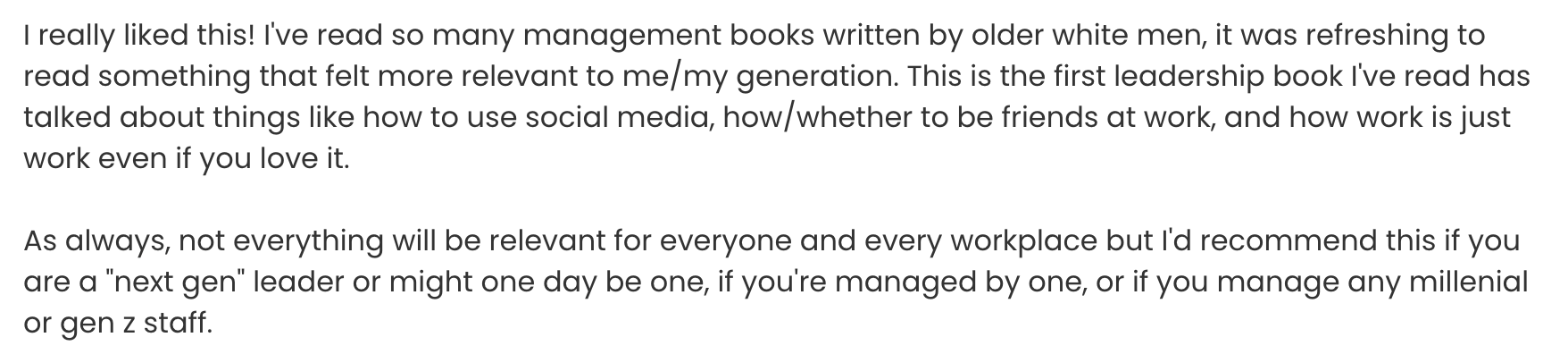
I stupidly look at the Goodreads reviews (the rare way in which I seek out my haters instead of letting them find me) and while there are some gen X haters big mad that I barely mention them at all, mostly people seemed to really like it!
Indulge some bragging, but a few examples of the nicer ones:
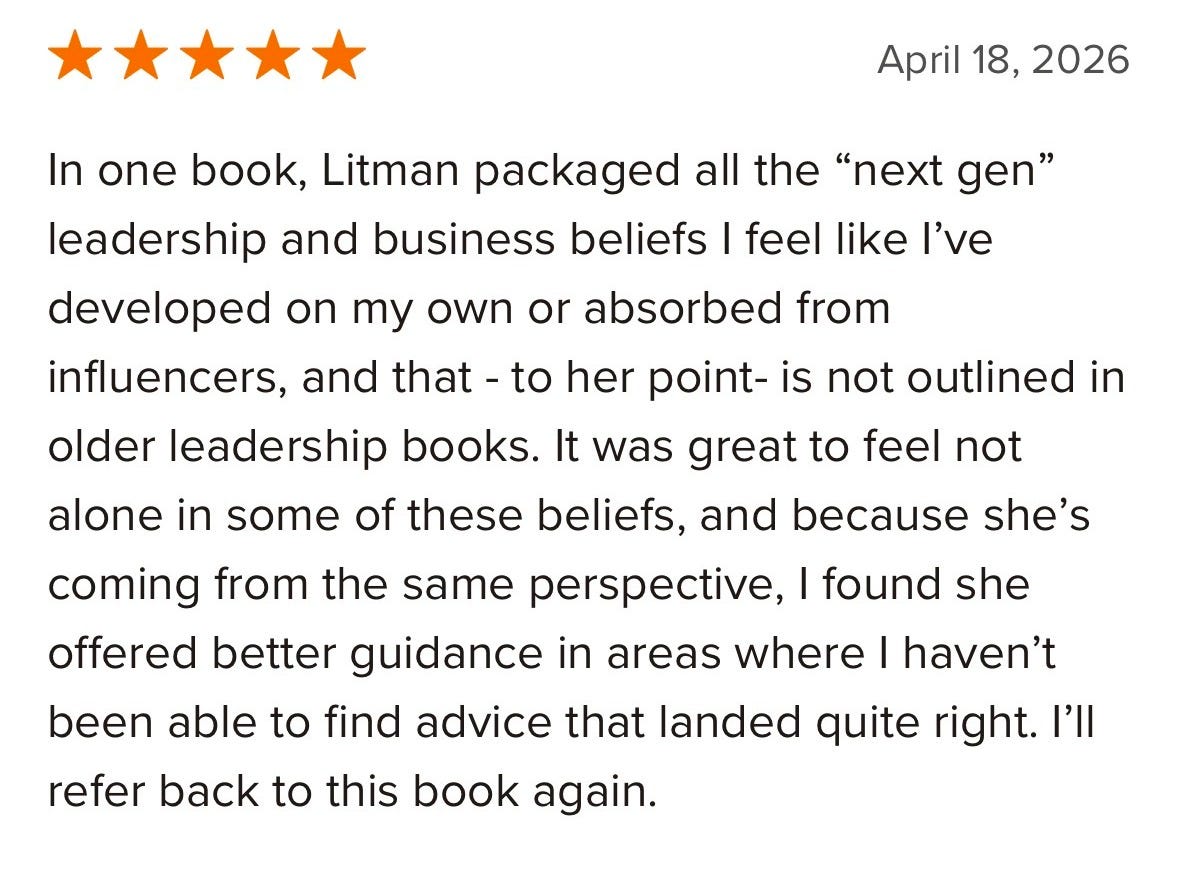
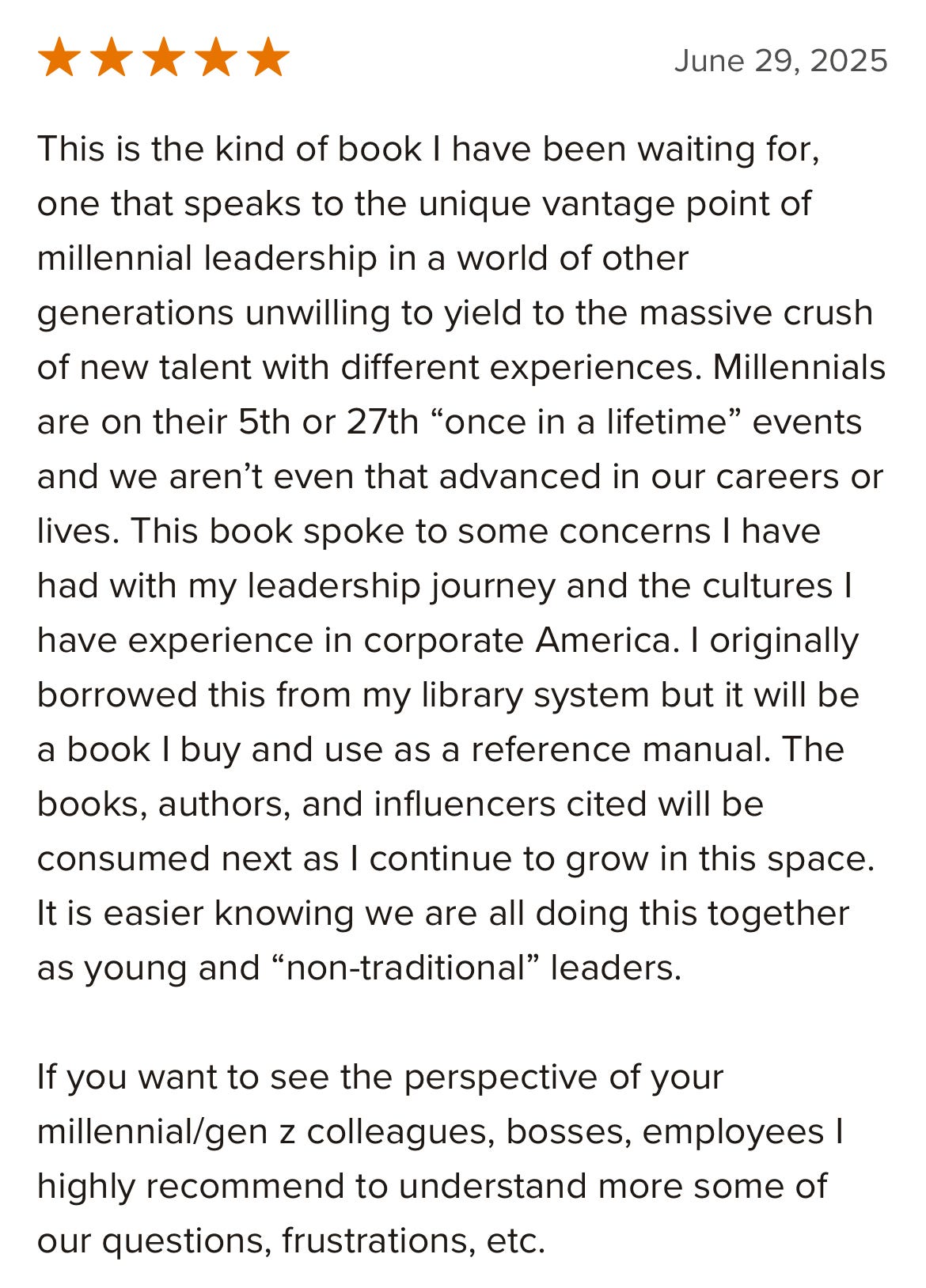
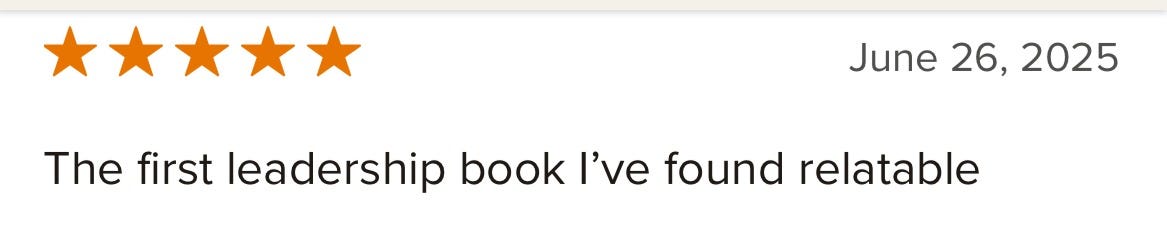
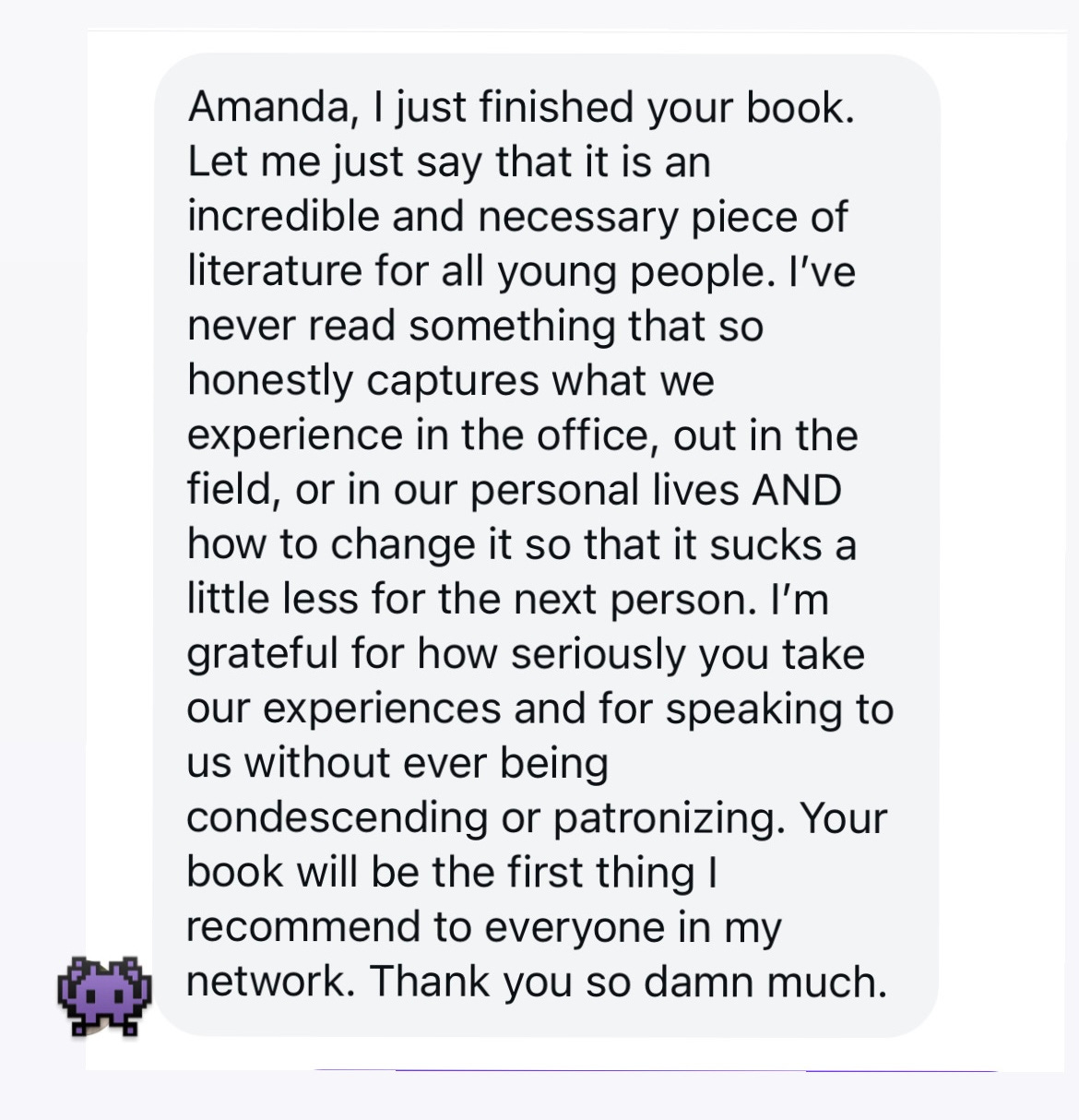
I’ve also gotten scores of DMs and emails from people who read or listened to the book and found it helpful to figure out what to do next, or felt it gave them the language to talk about shit that’s been really hard.
And while it’s not really the kind of book that garners reviews, Fast Company called it a “must-read book for millennial and Gen Z leaders advises those not wanting to follow in their elders’ footsteps” and the Financial Times called it “an ambitious and refreshingly practical examination of modern management” — which was cool!
Obviously there have also been some haters. But I’ve been pleasantly surprised at how little the criticism of the book gets to me. I know my book is not for everyone, but then, I didn’t want to write a book for everyone. I wanted to write for the people who needed it.
Looking back, I am proud of what I wrote, thrilled that many of my readers are finding it helpful, and excited to see the next phase of When We’re in Charge’s life when it comes out in paperback (with a new subtitle! and a new cover!) in September.
A year in, I’m calling it a success. No, the book didn’t hit best seller lists. But it has opened doors to new opportunities, like speaking engagements that I wouldn’t have otherwise been offered or events I wouldn’t have been invited to.
I’m also personally proud that the publication gave me the push I needed to up my personal content creation efforts, which has grown my organization’s reach and also turned out to be mostly pretty fun.
And of course, had I not written the book, I wouldn’t have realized how much I love having a regular writing practice — which is how this Substack came to be, a thing I’ve really come to love doing, even as sometimes I scramble to figure out what to write. (I’m also somehow nearly 30,000 words into a very messy first draft of a romance novel, per my 2026 new years resolution, so we’ll see how that goes).
Anyway. If you read the book, listened to the book, borrowed it from the library or just bought it and never opened it or pressed play, thank you. And if you haven’t bought it yet, pick up the paperback in September. I intend to keep being right.
This time last year: I wrote about how much I love being a mom. ICYMI!
Comments
Nothing yet. Say the first thing.
Sign in to join the conversation.